Sorghum bicolor
(L.) Moench
Sorghum
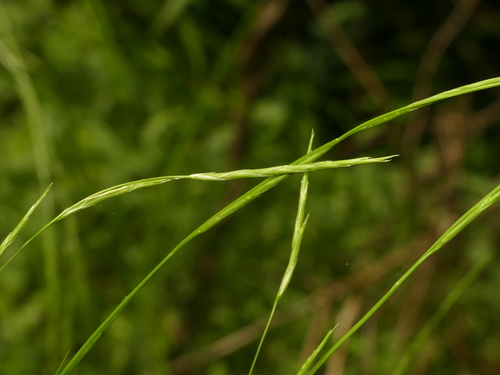
iNaturalist· cc-by
(c) L.J. Lamera, some rights reserved (CC BY), uploaded by L.J. Lamera
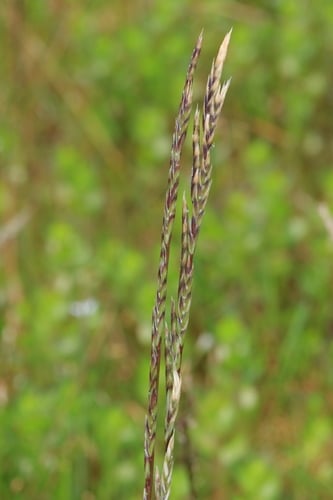
iNaturalist· cc-by-nc
(c) onidiras-iNaturalist, some rights reserved (CC BY-NC), uploaded by onidiras-iNaturalist
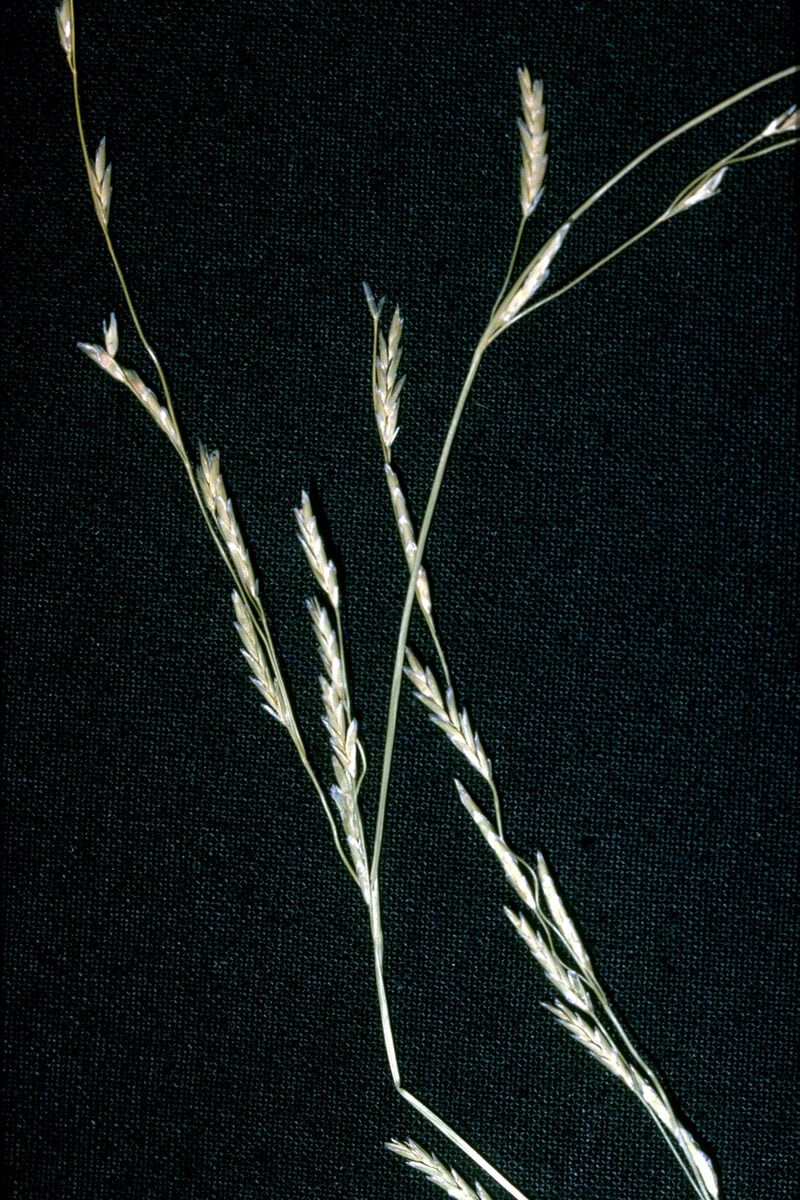
iNaturalist· cc-by-sa
(c) Douglas Goldman, some rights reserved (CC BY-SA), uploaded by Douglas Goldman
Summary
Source: WikipediaA fast-growing annual reaching 5 meters tall, hardy to UK zone 8. Flowers from August to October with seeds ripening September to October. Wind-pollinated hermaphroditic flowers. Tolerates light sandy, medium loamy, and heavy clay soils across mildly acidic to mildly alkaline pH ranges. Requires full sun and can handle both drought and moist conditions.
Description
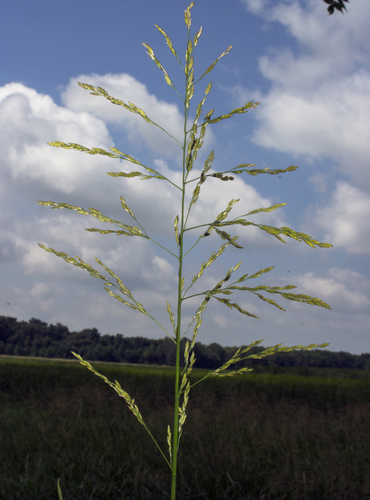
A millet grass. A mature sorghum plant resembles maize. Plants vary in height from 45 cm to 4 m. It is an annual grass with erect solid stems. The stems can be 3 cm across at the base. Under the ground there is a widely branching extensive root system. Prop roots occur near the base. There are a range of different types of sorghum. Some have one main stem while others have many tillers. There are more tillers when plants are widely spaced. The nodes on the stem are slightly thickened. The distance between nodes is shortest near the base of the plant. Short eagerly kinds have 7 leaves while tall late varieties may have 24 leaves. The leaf blade can be 30-135 cm long. Leaves are bluish green and waxy. They have a prominent midrib. The large flower panicle can be 20-40 cm long. The flower occurs at the top of the plant. It can stick upright or bend over. The flower can be open or compact. There are several different varieties. Over 1000 cultivated varieties occur in China.
Edible Uses
The seed can be eaten raw or cooked — used whole like rice, popped like popcorn, or ground into a notably white flour for bread and other baked goods. Sorghum is a staple in some regions, where it is commonly fermented through lactic acid fermentation before eating. Sprouted seed can be eaten raw and added to salads. The germinated seed is also dried and ground into a malt powder used as a fermentation base for local beer production. The stems of sweet sorghum types are chewed like sugar cane, and in the United States a sweet syrup is pressed from them. The sap is also very sweet and can be eaten raw or made into syrup. Some caution is advised with stems, as there are reports that the leaves may contain cyanide. Nutritional content per 100g of dry seed (342 calories): water 12%, protein 10g, fat 3.7g, carbohydrate 72.7g, fibre 2.2g, ash 1.5g; calcium 22mg, phosphorus 242mg, iron 3.8mg, sodium 8mg, potassium 44mg; thiamine (B1) 0.33mg, riboflavin (B2) 0.18mg, niacin 3.9mg.
Traditional Uses
The seeds are eaten as a cereal. Flour is prepared then used for porridge or other dishes. It is used for dumplings, fried cakes and drinks. It cannot be used for bread as it contains no gluten. The stems of some kinds are sweet and are chewed. It is used for beer, and vinegar. The grains can be popped and eaten. The sprouted seeds are eaten.
Medicinal Uses
A decoction of the seed is demulcent and diuretic, used in treating kidney and urinary complaints. The inflorescence is astringent and haemostatic. Leaves and panicles are included in plant mixtures for decoctions treating anaemia. Decoctions of the twigs combined with lemon are used against jaundice. The red pigment is reported to have antimicrobial and antifungal properties and is used as a treatment for anaemia.
Known Hazards
The immature plant is poisonous, especially if slightly wilted, since it can contain the toxins hydrogen cyanide and the alkaloid hordenine. These substances are destroyed if the plant is dried or made into silage. In small quantities, hydrogen cyanide has been shown to stimulate respiration and improve digestion, it is also claimed to be of benefit in the treatment of cancer. In excess, however, it can cause respiratory failure and even death.
Distribution
A tropical plant. It suits the savannah zones in the tropics. It tolerates heat and drought. It can recover from drought even as a seedling. It can tolerate water-logging. It can be grown on heavy or light soils. Sorghum needs short daylengths to flower. Many kinds are adapted to specific daylength and rainfall patterns. It suits hardiness zones 9-12.
Where It Grows
Africa*, Angola, Arabia, Argentina, Asia, Australia, Bahamas, Bangladesh, Benin, Botswana, Burkina Faso, Cape Verde, Central Africa, Central African Republic, CAR, Central America, Chad, China, Congo DR, Congo, Costa Rica, Cuba, Dominican Republic, East Africa, East Timor, Ecuador, Egypt, Eritrea, Eswatini, Ethiopia, Europe, Fiji, France, Georgia, Ghana, Guam, Guatemala, Guiana, Guianas, Guinea, Guinée, Guinea-Bissau, Guyana, Haiti, Hungary, India, Indochina, Indonesia, Italy, Jamaica, Kenya, Korea, Kyrgyzstan, Laos, Lesotho, Malawi, Malaysia, Mauritania, Mediterranean, Mexico, Middle East, Morocco, Mozambique, Myanmar, Nepal, Niger, Nigeria, Niue, North Africa, North America, Northeastern India, Pacific, Pakistan, Papua New Guinea, PNG, Philippines, Portugal, Puerto Rico, Russia, Samoa, Saudi Arabia, SE Asia, Serbia, Sierra Leone, Slovenia, Solomon Islands, Somalia, South Africa, Southern Africa, South America, South Sudan, Spain, Sri Lanka, Sudan, Suriname, Swaziland, Taiwan, Tanzania, Thailand, Tibet, Timor-Leste, Turkey, Türkiye, Uganda, United States, USA, Uzbekistan, Venezuela, Vietnam, Virgin Islands, West Africa, West Indies, West Timor, Zambia, Zimbabwe,
Cultivation
Sorghum seeds will germinate soon after harvest. The seeds also store well if kept dry and protected from insects.
Propagation
Sow seed in April in a greenhouse, barely covering it. Germination should occur within 2 weeks at a minimum temperature of 23°C. Prick out seedlings into individual pots once large enough to handle, and plant out after the last expected frost. Consider providing cloche protection until the plants are growing strongly.
Other Uses
The flowering panicles — particularly from cultivars bred for the purpose — are made into brushes, brooms, and whisks. Several non-edible cultivars are grown specifically for the red pigment found in the leaf sheaths and sometimes adjacent stem tissue, used as a dye for mats, textiles, palm leaf strips, grasses used in basketry and weaving, ornamental calabashes, wool, body paint, and to colour cheese and cattle lick stones. A similar dye can be extracted from the grain refuse (glumes and grain wall) of red sorghum cultivars grown for food or beer. Traditionally, red sorghum dyes were used in funeral hangings decorated with patterned thick threads woven into the weft, known as 'ifala'. Sorghum also provides the violet colours on masks worn during certain dances. Combined with mud, sorghum and other tannin-rich dyes create the patterns on painted cloths from the Korhogo region. The dye is extracted by pressing out the juice, which is then fermented; used with tin- or chrome-mordanted wool or silk, it produces a colourfast red-brown. The use of sorghum dye in hair-dyeing products has been patented. Sorghum flour produces an adhesive used in plywood manufacture. Stems are used for weaving fences, mats, and wattle houses, as well as for roofing and fuel. The plant is an excellent biomass source, and stems can be used to produce fibreboard — Danish scientists have made quality panelling from sorghum stem chips.
Production
Grain is ready for harvest 4-8 weeks after flowering.
Other Information
One of the most important cereals of the semi-arid tropics. It is the most important native African cereal. It is cultivated on 50 million hectares in Africa.
Nutrition
| Part | Moisture | kJ | kcal | Protein | Vit A | Vit C | Iron | Zinc |
|---|---|---|---|---|---|---|---|---|
| Seeds | 1459 | 349 | 11.1 | — | — | — | — | — |
Synonyms
Also Known As
Abantoko, Abokoun, Amabele, Amapemba, Bambaram-basso, Basse-bassi, Batar ainaruk, Beniyhah, Broomcorn, Buadoti, Cantel, Chidomba, Chipira, Daello, Dawa, Durra, Egyptian corn, Feterita, Forage sorghum, Gonkho, Grain sorghum, Great millet, Guinea corn, Hamo, Hnan-pyaung, Indian millet, iPwa, Jagung catel, Jerusalem corn, Jowar, Junelo, Kaffir-corn, Kala-lettok, Kala-pyaung, Kun-pyaung-pyu, Mabele, Mapemba, Mapila, Masasi mantidi, Midjo-cabal, Milho-cavalo, Milo, M'la, Mosong, Nahmo, Namuve, Nhame-quinto, Ntidi, Oka baba, Oka kpikpa, Pampas rice, Quinterim, Rice corn, Saccoline-pyaung, San-pyaung, Sooya, Supurge dansi, Susu, Thidok-lettok, Tiyooti, Waythali-mya-mahlaing, Waythali-thigye
References (83)
- Abbiw, D.K., 1990, Useful Plants of Ghana. West African uses of wild and cultivated plants. Intermediate Technology Publications and the Royal Botanic Gardens, Kew. p 25
- Addis, G., et al, 2005, Ethnobotanical Study of Edible Wild Plants in Some Selected Districts of Ethiopia. Human Ecology, Vol. 33, No. 1, pp. 83-118
- Al-Sodany, Y. M., et al, 2013, Medicinal Plants in Saudi Arabia: I. Sarrwat Mountains at Taif, KSA. Academic Journal of Plant Sciences 6 (4): 134-145
- Ambasta, S.P. (Ed.), 2000, The Useful Plants of India. CSIR India. p 587 (Also as Andropogon sorghum, Sorghum caffrorum, Sorghum caudatum, Sorghum cernuum, Sorghum conspicuum, Sorghum durra, Sorghum gambiense, Sorghum guineense, Sorghum membranaceum, Sorghum subglabrescens,
- Anderson, E. F., 1993, Plants and people of the Golden Triangle. Dioscorides Press. p 221
Show all 83 references Hide references
- Baa-Poku, F. & Asante, I. K., 2020, Use of Neglected and Underutilized Crop Species (NUCS) in some farming communities in the Upper Afram and Upper Dayi River Basins in Ghana. International Journal of Technology and Management Research 5 (2): 48-63
- Baidu-Forson, J.J., et al ,2014,. Assessment of agrobiodiversity resources in the Borotse flood plain, Zambia. CGIAR Research Program on Aquatic Agricultural Systems. Penang, Malaysia. Working Paper: AAS-2014-12.
- Beckstrom-Sternberg, Stephen M., and James A. Duke. "The Foodplant Database." http://probe.nalusda.gov:8300/cgi-bin/browse/foodplantdb.(ACEDB version 4.0 - data version July 1994) (As Sorghum vulgare)
- Bernholt, H. et al, 2009, Plant species richness and diversity in urban and peri-urban gardens of Niamey, Niger. Agroforestry Systems 77:159-179
- Bianchini, F., Corbetta, F., and Pistoia, M., 1975, Fruits of the Earth. Cassell. p 26
- Bodner, C. C. and Gereau, R. E., 1988, A Contribution to Bontoc Ethnobotany. Economic Botany, 43(2): 307-369
- Brouk, B., 1975, Plants Consumed by Man. Academic Press, London. p 389 (As Andropogon sorghum)
- Burkill, H. M., 1985, The useful plants of west tropical Africa, Vol. 2. Kew.
- Burkill, I.H., 1966, A Dictionary of the Economic Products of the Malay Peninsula. Ministry of Agriculture and Cooperatives, Kuala Lumpur, Malaysia. Vol 2 (I-Z) p 2091 (As Sorghum vulgare)
- Bussman, R. W., et al, 2021, Unity in diversity—food plants and fungi of Sakartvelo (Republic of Georgia), Caucasus. Journal of Ethnobiology and Ethnomedicine (2021) 17:72 p 13
- Cobley, L.S. (rev. Steele, W.M.) 2nd Ed., 1976, An Introduction to the Botany of Tropical Crops. Longmans. p 43
- Cundall, P., (ed.), 2004, Gardening Australia: flora: the gardener's bible. ABC Books. p 1359
- D'Ambrosio, U., & Puri, R. K., 2016, Foodways in transition: food plants, diet and local perceptions of change in a Costa Rican Ngäbe community. Journal of Ethnobiology and Ethnomedicine (2016) 12:3 p 27
- Doggett, H., 1979, Sorghum, in Simmonds N.W.,(ed), Crop Plant Evolution. Longmans. London. p 112
- Duarte, M. C., et al, 2022, Diversity of Useful Plants in Cabo Verde Islands: A Biogeographic and Conservation Perspective. Plants 2022, 11, 1313 p 15
- Ertug, F, Yenen Bitkiler. Resimli Türkiye Florası -I- Flora of Turkey - Ethnobotany supplement
- FAO, 1988, Traditional Food Plants, FAO Food and Nutrition Paper 42. FAO Rome p 467
- FAO, 1988, Traditional Food Plants, FAO Food and Nutrition Paper 42. FAO Rome p 471 (Also as Sorghum caudatum, Sorghum conspicuum, Sorghum durra, Sorghum caffrorum,
- Flora of Pakistan. www.eFloras.org
- Fowler, D. G., 2007, Zambian Plants: Their Vernacular Names and Uses. Kew. p 72
- Fox, F. W. & Young, M. E. N., 1982, Food from the Veld. Delta Books. p 298 (As Sorghum caffrorum)
- French, B.R., 2010, Food Plants of Solomon Islands. A Compendium. Food Plants International Inc. p 390
- Glew, R. H., et al, 1997, Amino Acid, Fatty Avid and Mineral Composition of 24 Indigenous Plants of Burkina Faso. Journal of Food Composition and Analysis 10, 205-217 (As Sorghum vulgare)
- Hardwick, G., 2001, Economically Useful Plants for Northern Australia: Master Species List. Crusader eBooks.
- Hedrick, U.P., 1919, (Ed.), Sturtevant's edible plants of the world. p 627 (As Sorghum vulgare)
- Heywood, V.H., Brummitt, R.K., Culham, A., and Seberg, O., 2007, Flowering Plant Families of the World. Royal Botanical Gardens, Kew. p 394
- http://www.botanic-gardens-ljubljana.com/en/plants
- Hussey, B.M.J., Keighery, G.J., Cousens, R.D., Dodd, J., Lloyd, S.G., 1997, Western Weeds. A guide to the weeds of Western Australia. Plant Protection Society of Western Australia. p 70
- Hu, Shiu-ying, 2005, Food Plants of China. The Chinese University Press. p 296
- Huxley, A. (Ed.), 1977, The Encyclopedia of the Plant Kingdom. Chartweil Books. p 184 (As Sorghum vulgare)
- Hwang, H., et al, 2013, A Study on the Flora of 15 Islands in the Western Sea of Jeollanamdo Province, Korea. Journal of Asia-Pacific Biodiversity Vol. 6, No. 2 281-310
- Jardin, C., 1970, List of Foods Used In Africa, FAO Nutrition Information Document Series No 2.p 22 (Also as Sorghum caffrorum, Sorghum caudatum, Sorghum cernuum, Sorghum conspicuum, Sorghum durra, Sorghum elegans, Sorghum margaritiferum, Sorghum mellitum, Sorghum membranaceum, Sorghum nigricans, Sorghum notabile, Sorghum roxburghii, Sorghum subglabrescens,
- Khanal, R., et al, 2014, Documenting abundance and use of underutilized plant species in the mid hill region of Nepal. ECOPRINT 21: 63-71, 2014 (As Sorghum vulgare)
- Kiple, K.F. & Ornelas, K.C., (eds), 2000, The Cambridge World History of Food. CUP p 114, 1853
- Kuo, W. H. J., (Ed.) Taiwan's Ethnobotanical Database (1900-2000), http://tk.agron.ntu.edu.tw/ethnobot/DB1.htm
- Latham, P & Mbuta, A., 2017, Useful Plants of Central Province, Democratic Republic of Congo. Volume 2. Salvation Army p 173
- Lazarides, M. & Hince, B., 1993, Handbook of Economic Plants of Australia, CSIRO. p 225
- Li, S., et al, 2020, Monpa, memory, and change: an ethnobotanical study of plant use in Mêdog County, South-east Tibet, China. Journal of Ethnobiology and Ethnomedicine. (2020) 16:5 p 21
- Lykke, A. M., Mertz, O, and Ganaba, S., 2002, Food Consumption in Rural Burkina Faso, Ecology of Food and Nutrition, 41:119-152
- Macmillan, H.F. (Revised Barlow, H.S., et al), 1991, Tropical Planting and Gardening. Sixth edition. Malayan Nature Society. Kuala Lumpur. p 348
- Maundu, P. et al, 1999, Traditional Food Plants of Kenya. National Museum of Kenya. 288p
- Medhi, P. & Borthakur, S. K., 2012, Phytoresources from North Cachur Hills of Assam -3: Edible plants sold at Hflong market. Indian Journal of Natural Products and Resources. 3(1) pp 84-109
- Menninger, E.A., 1977, Edible Nuts of the World. Horticultural Books. Florida p 151 (As Sorghum vulgare)
- Methodus 207. 1794
- Miguel, E., et al, 1989, A checklist of the cultivated plants of Cuba. Kulturpflanze 37. 1989, 211-357
- Moerman, D. F., 2010, Native American Ethnobotany. Timber Press. p 539
- Molla, A., Ethiopian Plant Names. http://www.ethiopic.com/aplants.htm
- Mutie, F. M., et al, 2023, Important Medicinal and Food Taxa (Orders and Families) in Kenya, Based on Three Quantitative Approaches. Plants 2023, 12, 1145
- Nyadanu, D., et al, 2015, Agro-biodiversity and challenges of on-farm conservation: the case of plant genetic resources of neglected and underutilized crop species in Ghana. Genet. Resourc. Crop Evol. 62(7):
- Paczkowska, G. & Chapman, A.R., 2000, The Western Australian Flora. A Descriptive Catalogue. Western Australian Herbarium. p 116
- Peters, C. R., O'Brien, E. M., and Drummond, R.B., 1992, Edible Wild plants of Sub-saharan Africa. Kew. p 27
- Plants for a Future database, The Field, Penpol, Lostwithiel, Cornwall, PL22 0NG, UK. http://www.scs.leeds.ac.uk/pfaf/
- Plants of Haiti Smithsonian Institute http://botany.si.edu/antilles/West Indies
- PROSEA (Plant Resources of South East Asia) handbook Volume 10 Cereals. p 130
- Purseglove, J.W., 1972, Tropical Crops. Monocotyledons. Longmans p 261
- Rashid, H. E., 1977, Geography of Bangladesh. Westview p 251 (As Andropogon sorghum)
- Rodin, R.J., The Ethnobotany of the Kwanyama Ovambos, Missouri Botanical Garden. p 145 (As Sorghum caffrorum)
- Ruiters-Welcome, A. K., 2019, Food plants of southern Africa. Ph.D. thesis. Univ. of Johannesburg p 90
- Shah, S. K., 2014, Dietary contribution of underutilized minor crops and indigenous plants collected from uncultivated lands and forests in Nepal. in Promotion of Underutilized Indigenous Food Resources for Food Security and Nutrition in Asia and Pacific. FAO. Bangkok p 64 (As Sorghum vulgare)
- Segnon, A. C. & Achigan-Dako, E. G., 2014, Comparative analysis of diversity and utilization of edible plants in arid and semi-arid areas in Benin. Journal of Ethnobiology and Ethnomedicine 2014, 10:80
- Shava, S., et al, 2009, Traditional food crops as a source of community resilience in Zimbabwe. International Journal of the African Renaissance 4(1)
- Song, M., et al, 2013, Traditional knowledge of wild edible plants in Jeju Island, Korea. Indian Journal of Traditional Knowledge. 12(2) pp 177-194
- Swaziland's Flora Database http://www.sntc.org.sz/flora
- Termote, C., et al, 2014, Assessing the potential of wild foods to reduce the cost of a nutritionally adequate diet: An example from eastern Baringo District, Kenya. Food and Nutrition Bulletin, vol. 35, no. 4
- Torre, de la, L., et al, 2008, Enciclopedia de las Plantas Útiles del Ecuador. Herbario QCA. Pontificia Universidad Católica del Ecuador. p 520
- Tredgold, M.H., 1986, Food Plants of Zimbabwe. Mambo Press. p 27
- USDA, ARS, National Genetic Resources Program. Germplasm Resources Information Network - (GRIN). [Online Database] National Germplasm Resources Laboratory, Beltsville, Maryland. Available: www.ars-grin.gov/cgi-bin/npgs/html/econ.pl (10 April 2000)
- van Wyk, B., 2005, Food Plants of the World. An illustrated guide. Timber press. p 352
- van Wyk, Be, & Gericke, N., 2007, People's plants. A Guide to Useful Plants of Southern Africa. Briza. p 14
- van Wyk, B-E., 2011, The potential of South African plants in the development of new food and beverage products. South African Journal of Botany 77 (2011) 857–868
- Welcome, A. K. & Van Wyk, B.-E., 2019, An inventory and analysis of the food plants of southern Africa. South African Journal of Botany 122 (2019) 136–179
- Wheeler, J.R.(ed.), 1992, Flora of the Kimberley Region. CALM, Western Australian Herbarium, p 1220
- Vickery, M.L. and Vickery, B., 1979, Plant Products of Tropical Africa, Macmillan. p 9
- Wiersema, J. H. & Leon, B., 2013, World Economic Plants. A Standard Reference CRC Press. 2nd Ed. p 652
- Williamson, J., 2005, Useful Plants of Malawi. 3rd. Edition. Mdadzi Book Trust. p 232
- Wilson, J.M. & Witcombe, J.R., Crops for Arid lands, in Wickens, G.E., Goodin, J.R., and Field, D.V.,(Eds.) 1985, Plants for Arid Lands. Unwin Hyman, London, p
- World Checklist of Useful Plant Species 2020. Royal Botanic Gardens, Kew
- Zeven, A. C. & de West, J. M. J., 1982, Dictionary of cultivated plants and their regions of diversity. Wageningen. p 39, 75