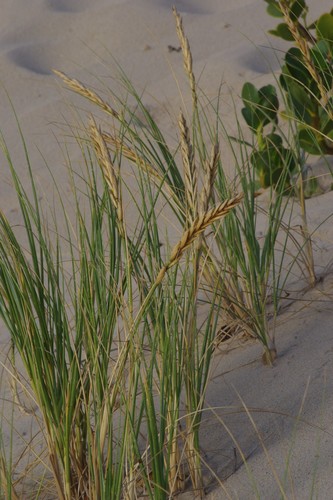
Oryza sativa
L.
Rice
iNaturalist· cc-by-nc
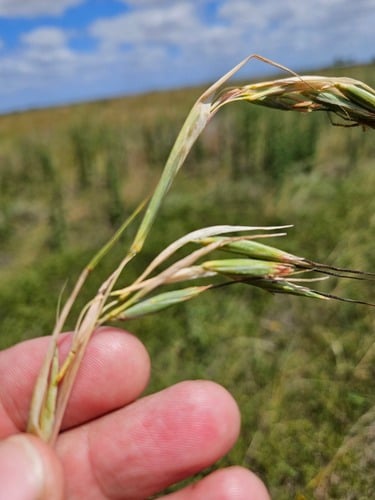
(c) Luis Mata, some rights reserved (CC BY-NC), uploaded by Luis Mata
iNaturalist· cc-by
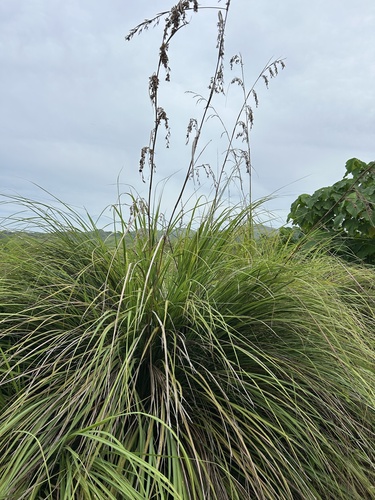
(c) Kim, Hyun-tae, some rights reserved (CC BY), uploaded by Kim, Hyun-tae
iNaturalist· cc-by-nc
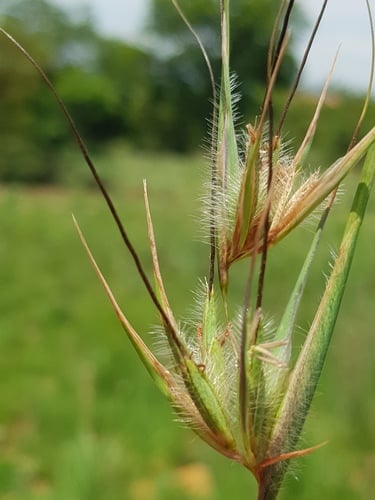
(c) Gabriel Michel MONTEIRO, some rights reserved (CC BY-NC), uploaded by Gabriel Michel MONTEIRO
Summary
Source: WikipediaOryza sativa, having the common name Asian cultivated rice, is the much more common of the two rice species cultivated as a cereal, the other species being O. glaberrima, African rice. It was first domesticated in the Yangtze River basin in China 13,500 to 8,200 years ago. Oryza sativa belongs to the genus Oryza and the BOP clade in the grass family Poaceae. With a genome consisting of 430 Mbp across 12 chromosomes, it is renowned for being easy to genetically modify and is a model organism for the study of the biology of cereals and monocots.
Description
An annual grass with hollow stems. The stems can be 30 cm to 150 cm tall. (Floating varieties can be 5 m long.) The nodes are solid and swollen. The stem is protected by a skin layer which can often be high in silicon. A clump of shoots are produced as tillers from buds in the lower leaf axils. The leaves are narrow and hairy. They taper towards the tip. Each stem produces 10-20 leaves and the seeds hang from the flower stalk at the top. Some varieties are glutinous and cling together when cooked.
Edible Uses
The seed is the primary food product and can be boiled or steamed. It features in a huge range of savoury and sweet dishes worldwide — including curries, Far Eastern cuisines, paella, risotto, and rice pudding. The grain can also be popped like popcorn to make a breakfast cereal. An oil extracted from the seed is used in cooking and as a salad oil.
Traditional Uses
Africa, Angola, Asia, Australia, Balkans, Bangladesh, Benin, Bhutan, Bolivia, Bougainville, Brazil, Brunei, Burkina Faso, Burundi, Cambodia, Cameroon, Central Africa, Central African Republic, CAR, Central America, Central Asia, Chad, China, Colombia, Comoros, Congo DR, Congo R, Costa Rica, Côte d'Ivoire, Cuba, Dominican Republic, East Africa, East Timor, Ecuador, Egypt, El Salvador, Equatorial-Guinea, Eswatini, Ethiopia, Europe, Fiji, French Guiana, Gabon, Gambia, Ghana, Guam, Guianas, Guinea, Guinée, Guinea-Bissau, Guyana, Haiti, Himalayas, India, Indochina, Indonesia, Iraq, Italy, Ivory Coast, Jamaica, Japan, Kazakhstan, Kenya, Korea, Laos, Liberia, Macedonia, Madagascar, Malawi, Malaysia, Mali, Mauritania, Mauritius, Mediterranean, Middle East, Morocco, Mozambique, Myanmar, Nepal, Nicaragua, Niger, Nigeria, North Africa, North America, Northeastern India, Pacific, Pakistan, Papua New Guinea, PNG, Peru, Philippines, Puerto Rico, Rwanda, Sahel, Samoa, SE Asia, Senegal, Seychelles, Sierra Leone, Sikkim, Solomon Islands, Somalia, South Africa, Southern Africa, South America, South Sudan, Spain, Sri Lanka, Sudan, Suriname, Swaziland, Syria, Taiwan, Tajikistan, Tanzania, Thailand, Timor-Leste, Togo, Uganda, Uruguay, USA, Uzbekistan, Vanuatu, Venezuela, Vietnam, West Africa, West Indies, West Timor, Zambia, Zimbabwe,
Medicinal Uses
Rice is regarded as a nutritive, soothing, tonic herb that is diuretic, reduces lactation, aids digestion, and controls sweating. The seeds are taken internally for urinary dysfunction. Seeds, or germinated seeds, are used to treat excessive lactation. Germinated seeds are also taken for poor appetite, indigestion, abdominal discomfort, and bloating. The grains are often cooked with herbs to prepare a medicinal gruel. The rhizome is used internally for night sweats, particularly in cases of tuberculosis and chronic pneumonia; rhizomes are harvested at the end of the growing season and dried for use in decoctions.
Distribution
A tropical plant. It grows in tropical and subtropical countries. Plants are grown in both flooded and dryland sites. It will grow over a range of conditions but is normally between sea level and 900 metres altitude in the tropics. Occasionally it is grown up to 1600 m. In Nepal it grows to about 2800 m altitude. It needs a frost free period of over 130 days. It suits hardiness zones 9-12.
Where It Grows
Coming Soon
Cultivation
Rice can be grown in the moist tropics and subtropics, succeeding at elevations up to 2,500 metres. It grows best in areas where annual daytime temperatures are within the range 20 - 30°c, but can tolerate 10 - 36°c. Growth ceases below 10°c and plants have no tolerance to frost. It prefers a mean annual rainfall in the range 1,500 - 2,000mm, but tolerates 1,000 - 4,000mm. Requires a wet to inundated soil and a position in full sun. Prefers a pH in the range 5.5 - 7, tolerating 4.5 - 9. Depending upon variety, rice can mature a crop of seed in anything from 60 - 200 days. There are many named varieties that have been developed to suit a wide diversity of climates and soil types. These can be grouped into two main forms:- Lowland - this is grown in land that is flooded during the growing season. Upland - this form does not require submersion by water. There are many different cultivars of each form. Some of these cultivars are starchy and are more suited to use in cakes, soups, pastry, breakfast foods etc. Other cultivars have a sweeter, glutinous texture, these are used for special purposes such as sweetmeats. Within these divisions, the varieties are further defined by whether they have short, medium or long grains. Long grained forms usually have the highest value, though short-grained forms are preferred in many countries. Flowering Time: Late Summer/Early Fall. Bloom Color: Cream/Tan. Spacing: 18-24 in. (45-60 cm).
Propagation
Propagate by seed.
Other Uses
Rice straw is woven into hats and shoes and used for thatching, repairing houses, constructing grain storage structures, making ropes, packaging, and bags. In Vietnam it serves as a fuel. In China, India, Indonesia, and Pakistan it is used in paper production. Rice starch is used in cosmetics, laundering starch, and textiles. Oil from the seed is used in soap manufacture and can be made into a plastic packaging material. The grain husks are used as a fuel, as an addition to concrete, for making hardboard, and as an abrasive.
Production
There are about 20 Oryza species. The B Vitamins are in the outer layers of brown rice.
Nutrition
| Part | Moisture | kJ | kcal | Protein | Vit A | Vit C | Iron | Zinc |
|---|---|---|---|---|---|---|---|---|
| Seed white | 11.4 | 1530 | 366 | 6.4 | — | 0 | 1.9 | — |
| Seed brown | 13.5 | 1480 | 354 | 7.6 | — | — | 2.8 | — |
| Seed white | 68.4 | 544 | 130 | 2.7 | 0 | 0 | 1.2 | 0.49 |
Synonyms
Also Known As
Akki, Araisa, Ari, Arishi, Arisi, Aro, Arroz, Arus, Ba, Bak, Beras, Bhat, Bhatta, Biring, Biyyamu, Byeo, Chahai, Chal, Chaval, Chawal, Choka, Dangar, Dao, Dhan, Dhanya, Goyam, Iresi, Kao chow, Kao nyo, Kao, Kome, Mo, Murii, Nasi, Nellu, Nivara, Padi, Pari, Raisi, Reis, Resi, Riso, Riz, Schinkafa, Shinkafa, Sok, Syali, Tandula, Re raiti, Vadlu, Varidhanyamu, Vrihi, Wee, Yimwa
References (75)
- Abbiw, D.K., 1990, Useful Plants of Ghana. West African uses of wild and cultivated plants. Intermediate Technology Publications and the Royal Botanic Gardens, Kew. p 24
- Ambasta, S.P. (Ed.), 2000, The Useful Plants of India. CSIR India. p 415 (Also as Oryza perennis)
- Anderson, E. F., 1993, Plants and people of the Golden Triangle. Dioscorides Press. p 217
- Bernholt, H. et al, 2009, Plant species richness and diversity in urban and peri-urban gardens of Niamey, Niger. Agroforestry Systems 77:159-179
- Bianchini, F., Corbetta, F., and Pistoia, M., 1975, Fruits of the Earth. Cassell. p 26
Show all 75 references Hide references
- Bodkin, F., 1991, Encyclopedia Botanica. Cornstalk publishing, p 747
- Bodner, C. C. and Gereau, R. E., 1988, A Contribution to Bontoc Ethnobotany. Economic Botany, 43(2): 307-369
- Bremness, L., 1994, Herbs. Collins Eyewitness Handbooks. Harper Collins. p 263
- Brickell, C. (Ed.), 1999, The Royal Horticultural Society A-Z Encyclopedia of Garden Plants. Convent Garden Books. p 732
- Burkill, H. M., 1985, The useful plants of west tropical Africa, Vol. 2. Kew.
- Burkill, I.H., 1966, A Dictionary of the Economic Products of the Malay Peninsula. Ministry of Agriculture and Cooperatives, Kuala Lumpur, Malaysia. Vol 2 (I-Z) p 1620
- Chang, T.T., 1979, Rice, in Simmonds N.W.,(ed), Crop Plant Evolution. Longmans. London. p 98
- Cobley, L.S. (rev. Steele, W.M.) 2nd Ed., 1976, An Introduction to the Botany of Tropical Crops. Longmans. p 26
- Coe, F. G. and Anderson, G. J., 1999, Ethnobotany of the Sumu (Ulwa) of Southeastern Nicaragua and Comparisons with Miskitu Plant Lore. Economic Botany Vol. 53. No. 4. pp. 363-386
- Cundall, P., (ed.), 2004, Gardening Australia: flora: the gardener's bible. ABC Books. p 960
- D'Ambrosio, U., & Puri, R. K., 2016, Foodways in transition: food plants, diet and local perceptions of change in a Costa Rican Ngäbe community. Journal of Ethnobiology and Ethnomedicine (2016) 12:3 p 27
- Facciola, S., 1998, Cornucopia 2: a Source Book of Edible Plants. Kampong Publications, p 177
- Fowler, D. G., 2007, Zambian Plants: Their Vernacular Names and Uses. Kew. p 71
- French, B.R., 1986, Food Plants of Papua New Guinea, A Compendium. Asia Pacific Science Foundation p 146
- French, B.R., 2010, Food Plants of Solomon Islands. A Compendium. Food Plants International Inc. p 32
- Hedrick, U.P., 1919, (Ed.), Sturtevant's edible plants of the world. p 454
- Heywood, V.H., Brummitt, R.K., Culham, A., and Seberg, O., 2007, Flowering Plant Families of the World. Royal Botanical Gardens, Kew. p 394
- Hussey, B.M.J., Keighery, G.J., Cousens, R.D., Dodd, J., Lloyd, S.G., 1997, Western Weeds. A guide to the weeds of Western Australia. Plant Protection Society of Western Australia. p 60
- Hu, Shiu-ying, 2005, Food Plants of China. The Chinese University Press. p 292
- Huxley, A. (Ed.), 1977, The Encyclopedia of the Plant Kingdom. Chartweil Books. p 184
- Jardin, C., 1970, List of Foods Used In Africa, FAO Nutrition Information Document Series No 2.p 5
- Kiple, K.F. & Ornelas, K.C., (eds), 2000, The Cambridge World History of Food. CUP p 1843
- Kohila, A. & Kensa, V. M., 2019, Survey of Wild Edible Plants of Dhanakarkulam Panchayath, Tirunelveli District, Tamil Nadu, India. Kong. Res. J. 6(2): 20-27, 2019
- Kuo, W. H. J., (Ed.) Taiwan's Ethnobotanical Database (1900-2000), http://tk.agron.ntu.edu.tw/ethnobot/DB1.htm
- Lamp, C.A., Forbes, S.J. and Cade, J.W., 1990, Grasses of Temperate Australia. Inkata Press. p 208
- Latham, P., 2004, Useful Plants of Bas-Congo province. Salvation Army & DFID p 210
- Lazarides, M. & Hince, B., 1993, Handbook of Economic Plants of Australia, CSIRO. p 177
- Long, C., 2005, Swaziland's Flora - siSwati names and Uses http://www.sntc.org.sz/flora/
- Manandhar, N.P., 2002, Plants and People of Nepal. Timber Press. Portland, Oregon. p 340
- Meertens, H.C.C., 2006. Oryza sativa L. [Internet] Record from Protabase. Brink, M. & Belay, G. (Editors). PROTA (Plant Resources of Tropical Africa), Wageningen, Netherlands. < http://database.prota.org/search.htm>. Accessed 20 October 200919 October 2009.
- Methodus 197. 1794 (As Oryza perennis)
- Miguel, E., et al, 1989, A checklist of the cultivated plants of Cuba. Kulturpflanze 37. 1989, 211-357
- Molla, A., Ethiopian Plant Names. http://www.ethiopic.com/aplants.htm
- Omawale, 1973, Guyana's edible plants. Guyana University, Georgetown p 102
- Paczkowska, G. & Chapman, A.R., 2000, The Western Australian Flora. A Descriptive Catalogue. Western Australian Herbarium. p 111
- Parham, B. E. V., 1972, Plants of Samoa. New Zealand Department of Scientific and Industrial Research. Information Series. No. 85 p 16
- Phon, P., 2000, Plants used in Cambodia. © Pauline Dy Phon, Phnom Penh, Cambodia. p 481
- Plants of Haiti Smithsonian Institute http://botany.si.edu/antilles/West Indies
- PROSEA (Plant Resources of South East Asia) handbook Volume 10 Cereals. p 106
- Purseglove, J.W., 1972, Tropical Crops. Monocotyledons. Longmans p 163
- Rajapaksha, U., 1998, Traditional Food Plants in Sri Lanka. HARTI, Sri Lanka. p 388
- Romanowski, N., 2007, Edible Water Gardens. Hyland House. p 100
- Rosero-Toro, et al, 2018, Cultural significance of the flora of a tropical dry forest in the Doche vereda (Villavieja, Huila, Colombia). Journal of Ethnobiology and Ethnomedicine (2018) 14:22 p 12
- Ruiters-Welcome, A. K., 2019, Food plants of southern Africa. Ph.D. thesis. Univ. of Johannesburg p 89
- Segnon, A. C. & Achigan-Dako, E. G., 2014, Comparative analysis of diversity and utilization of edible plants in arid and semi-arid areas in Benin. Journal of Ethnobiology and Ethnomedicine 2014, 10:80
- Small, E., 2009, Top 100 Food Plants. The world's most important culinary crops. NRC Research Press. p 464
- Solomon, C., 2001, Encyclopedia of Asian Food. New Holland. p 306
- Song, M., et al, 2013, Traditional knowledge of wild edible plants in Jeju Island, Korea. Indian Journal of Traditional Knowledge. 12(2) pp 177-194
- Sp. pl. 1:333. 1753
- Stone, B. C., 1970, The Flora of Guam. A Manual for the Identification of the Vascular Plants of the Island. Micronesica. Journal of the University of Guam. p 184
- Sukarya, D. G., (Ed.) 2013, 3,500 Plant Species of the Botanic Gardens of Indonesia. LIPI p 1153
- Sukenti, K., et al, 2016, Ethnobotanical study on local cuisine of the Sasak tribe in Lombok Island, Indonesia. Journal of Ethnic Foods. 3( 2016) 189-200 p 194
- Swapna, M. M. et al, 2011, A review on the medicinal and edible aspects of aquatic and wetland plants of India. J. Med. Plants Res. 5 (33) pp. 7163-7176
- Swaziland's Flora Database http://www.sntc.org.sz/flora
- Teron, R. & Borthakur, S. K., 2016, Edible Medicines: An Exploration of Medicinal Plants in Dietary Practices of Karbi Tribal Population of Assam, Northeast India. In Mondal, N. & Sen, J.(Ed.) Nutrition and Health among tribal populations of India. p 154
- Torre, de la, L., et al, 2008, Enciclopedia de las Plantas Útiles del Ecuador. Herbario QCA. Pontificia Universidad Católica del Ecuador. p 516
- USDA, ARS, National Genetic Resources Program. Germplasm Resources Information Network - (GRIN). [Online Database] National Germplasm Resources Laboratory, Beltsville, Maryland. Available: www.ars-grin.gov/cgi-bin/npgs/html/econ.pl (10 April 2000)
- van Wyk, B., 2005, Food Plants of the World. An illustrated guide. Timber press. p 270
- van Wyk, Be, & Gericke, N., 2007, People's plants. A Guide to Useful Plants of Southern Africa. Briza. p 10
- Vaughan, J. C. & Geissler, C. A., 2009, The new Oxford Book of Food Plants. Oxford University Press. p 8
- Vickery, M.L. and Vickery, B., 1979, Plant Products of Tropical Africa, Macmillan. p 11
- Welcome, A. K. & Van Wyk, B.-E., 2019, An inventory and analysis of the food plants of southern Africa. South African Journal of Botany 122 (2019) 136–179
- Wheeler, J.R.(ed.), 1992, Flora of the Kimberley Region. CALM, Western Australian Herbarium, p 1194
- Wiersema, J. H. & Leon, B., 2013, World Economic Plants. A Standard Reference CRC Press. 2nd Ed. p 483
- Williams, C.N., Chew, W.Y., and Rajaratnam, J.A., 1989, Tree and Field Crops of the Wetter Regions of the Tropics. Longman, p 149
- Williamson, J., 2005, Useful Plants of Malawi. 3rd. Edition. Mdadzi Book Trust. p 180
- World Checklist of Useful Plant Species 2020. Royal Botanic Gardens, Kew
- Yeshi, K. et al, 2017, Taxonomical Identification of Himalayan Edible Medicinal Plants in Bhutan and the Phenolic Contents and Antioxidant Activity of Selected Plants. TBAP 7 (2) 2017 pp 89 - 106
- Zaldivar, M. E., et al, 2002, Species Diversity of Edible Plants Grown in Homegardens of Chibehan Amerindians from Costa Rica. Human Ecology, Vol. 30, No. 3, pp. 301-316
- Zeven, A. C. & de West, J. M. J., 1982, Dictionary of cultivated plants and their regions of diversity. Wageningen. p 36, 54, 74