Sonchus arvensis
L.
Sow thistle, Corn Sow Thistle
iNaturalist· cc-by-nc
(c) Кузнецова Татьяна, some rights reserved (CC BY-NC), uploaded by Кузнецова Татьяна
iNaturalist· cc-by-nc
(c) erielee, some rights reserved (CC BY-NC)
iNaturalist· cc-by-nc
(c) Sergey Mayorov, some rights reserved (CC BY-NC), uploaded by Sergey Mayorov
Summary
Source: WikipediaSonchus arvensis, the field milk thistle, field sowthistle, perennial sow-thistle, corn sow thistle, dindle, gutweed, swine thistle, or tree sow thistle, is a species of flowering plant in the family Asteraceae. S. arvensis often occurs in annual crop fields and may cause substantial yield losses.
Description
A coarse spiny herb. It grows 25-115 cm high. The lower leaves have backward pointing lobes. They are prickly along the edge. The leaves are 10-25 cm long. The upper leaves have less lobes and do not have leaf stalks. The flowers are yellow disks. Several flower heads occur together in open clusters. The fruit is a dry flattened achene.
Edible Uses
Young leaves can be eaten raw or cooked — added to salads or prepared like spinach. They have a slightly bitter taste and are rich in mineral salts and vitamin C, containing approximately 47mg of vitamin C per 100g and 2% protein by dry weight. Removing the marginal prickles is advisable though not strictly necessary. The stems can be cooked like asparagus or rhubarb. Young roots can also be cooked, and the roasted root makes a coffee substitute.
Traditional Uses
The young leaves, gathered before the flowers appear, can be added to salads or boiled for 5-10 minutes. They are also fried. The roots are used as a substitute for coffee.
Medicinal Uses
The leaves can be applied as a poultice and are said to have anti-inflammatory activity. An infusion of the leaves has been used to treat caked breasts. A tea made from the roots is used for asthma, coughs, and other chest complaints. A tea from the leaves is said to calm the nerves.
Known Hazards
The young leaves, when less than a few inches long and not bitter in taste, can be mixed with other greens to make salad. They can also be boiled in a small quantity of water, changed once. The plant can contain toxic nitrates.
Distribution
It is a temperate climate plant. It grows in waste places and fields and along roadsides. In Indonesia it grows between 50 and 650 m above sea level. In Argentina it grows from sea level to 1,200 m above sea level. It grows in swampy meadows.
Where It Grows
Africa, Alaska, Argentina, Asia, Australia, Balkans, Bangladesh, Bosnia, Britain, Bulgaria, Canada, Central America, Central Asia, Chile, China, Europe*, Fiji, Guatemala, Himalayas, Hungary, India, Indonesia, Ireland, Italy, Luxembourg, Mediterranean, Mongolia, Myanmar, New Zealand, North America, Northeastern India, Pacific, Pakistan, Philippines, SE Asia, South Africa, South America, Tajikistan, USA,
Cultivation
A common garden weed, see notes on its habitat if you want to encourage it. This species has been cultivated for its edible leaves by the Maoris of New Zealand, in Indonesia there are improved varieties selected for their edible leaves. A good companion for onions, tomatoes, corn as well as the cucumber and squash family. In garden design, as well as the above-ground architecture of a plant, root structure considerations help in choosing plants that work together for their optimal soil requirements including nutrients and water.
Propagation
Sow seed in spring directly in situ. As a common garden weed, this species should not normally need any additional encouragement to establish.
Other Uses
The plant is said to have insecticidal properties. It is a good companion plant for onions, tomatoes, corn, cucumbers, and the squash family. It also functions as a dynamic accumulator and is suitable for food forest settings.
Notes
There are about 60 Sonchus species.
Nutrition
| Part | Moisture | kJ | kcal | Protein | Vit A | Vit C | Iron | Zinc |
|---|---|---|---|---|---|---|---|---|
| Leaves | 9.6 | — | — | 19.5 | — | — | — | — |
Synonyms
Also Known As
Banpalang, Birbarangon, Cerraja arvense, Dindle, Huerca, Huring najom puru, Jalynniar, Jangli tamaku, Ki-lan-jiat, Kostrets, Kostriika, Niu she tou, Perennial Sowthistle, Poi botiazgan, Sahadevi bari, Suryafuli, Tempuyung, Tok ruru ao, Yerba del campo
References (44)
- Altschul, S.V.R., 1973, Drugs and Foods from Little-known Plants. Notes in Harvard University Herbaria. Harvard Univ. Press. Massachusetts. no. 5033
- Ambasta, S.P. (Ed.), 2000, The Useful Plants of India. CSIR India. p 584
- Ara, R. I. T., 2015, Leafy Vegetables in Bangladesh. Photon eBooks. p 157
- Bodkin, F., 1991, Encyclopedia Botanica. Cornstalk publishing, p 937
- Bodner, C. C. and Gereau, R. E., 1988, A Contribution to Bontoc Ethnobotany. Economic Botany, 43(2): 307-369
Show all 44 references Hide references
- Burkill, I.H., 1966, A Dictionary of the Economic Products of the Malay Peninsula. Ministry of Agriculture and Cooperatives, Kuala Lumpur, Malaysia. Vol 2 (I-Z) p 2086
- Cormack, R. G. H., 1967, Wild Flowers of Alberta. Commercial Printers Edmonton, Canada. p 395
- Crowe, A., 1997, A Field Guide to the Native Edible Plants of New Zealand. Penguin. p 99
- Denes, A., et al, 2012, Wild plants used for food by Hungarian ethnic groups living in the Carpathian Basin. Acta Societatis Botanicorum Poloniae 81 (4): 381-396
- Devarkar, V. D., et al, 2011, Dietary and Medicinal Significance of Wild Vegetables from Osmanabad Region, Maharashtra (India). Life sciences Leaflets 11:317-332.
- Elias, T.S. & Dykeman P.A., 1990, Edible Wild Plants. A North American Field guide. Sterling, New York p 103
- Esperanca, M. J., 1988. Surviving in the wild. A glance at the wild plants and their uses. Vol. 2. p 241
- Facciola, S., 1998, Cornucopia 2: a Source Book of Edible Plants. Kampong Publications, p 42
- Ghorbani, A., et al, 2012, A comparison of the wild food plant use knowledge of ethnic minorities in Naban River Watershed Nature Reserve, Yunnan, SW China. Journal of Ethnobiology and Ethnomedicine; 8:17
- Hu, Shiu-ying, 2005, Food Plants of China. The Chinese University Press. p 746
- Irving, M., 2009, The Forager Handbook, A Guide to the Edible Plants of Britain. Ebury Press p 159
- Kang, J. et al, 2016, Wild food plants and fungi used in the mycophilous Tibetan community of Zhagana (Tewo Country, Gansu, China) Journal of Ethnobiology and Ethnomedicine. 12:21
- Khasbagan, Hu-Yin Huai, and Sheng-Ji pei, 2000, Wild Plants in the Diet of Athorchin Mongol Herdsmen in Inner Mongolia. Economic Botany 54(4): 528-536
- Kiple, K.F. & Ornelas, K.C., (eds), 2000, The Cambridge World History of Food. CUP p 1855
- Lazarides, M. & Hince, B., 1993, Handbook of Economic Plants of Australia, CSIRO. p 224
- Low, T., 1991, Wild Herbs of Australia and New Zealand. Angus & Robertson. p 33
- Mabey, R., 1973, Food for Free. A Guide to the edible wild plants of Britain, Collins. p 85
- MacKinnon, A., et al, 2009, Edible & Medicinal Plants of Canada. Lone Pine. p 333
- Malezas Comestibles del Cono Sur, INTA, 2009, Buernos Aires
- Martin, F.W. & Ruberte, R.M., 1979, Edible Leaves of the Tropics. Antillian College Press, Mayaguez, Puerto Rico. p 186
- Murtem, G. & Chaudhrey, P., 2016, An ethnobotanical note on wild edible plants of Upper Eastern Himalaya, India. Brazilian Journal of Biological Sciences, 2016, v. 3, no. 5, p. 63-81
- Nedelcheva A., 2013, An ethnobotanical study of wild edible plants in Bulgaria. EurAsian Journal of BioSciences 7, 77-94
- Ochse, J.J. et al, 1931, Vegetables of the Dutch East Indies. Asher reprint. p 140
- Pieroni, A., et al, 2005, Food for two seasons: Culinary uses of non-cultivated local vegetables and mushrooms in a south Italian village. International Journal of Food Sciences and Nutrition, 56(4): 245-272
- Plants for a Future database, The Field, Penpol, Lostwithiel, Cornwall, PL22 0NG, UK. http://www.scs.leeds.ac.uk/pfaf/
- Redzic, S. J., 2006, Wild Edible Plants and their Traditional Use in the Human Nutrition in Bosnia-Herzegovina. Ecology of Food and Nutrition, 45:189-232
- Redzic, S., 2010, Use of Wild and Semi-Wild Edible Plants in Nutrition and Survival of People in 1430 Days of Siege of Sarajevo during the War in Bosnia and Herzegovina (1992–1995). Coll. Antropol 34 (2010) 2:551-570
- Sansanelli, S., et al, 2014, Wild food plants traditionall consumed in the area of Bologna (Emilia Romagna region, Italy). Journal of Ethnobiology and Ethnomedicine 10:69
- Sansanelli, S., et al, 2017, Ethnobotanical survey of wild food plants traditionally collected and consumed in the Middle Agri Valley (Basilicata region, southern Italy). Journal of Ethnobiology and Ethnomedicine (2017) 13:50
- Sawian, J. T., et al, 2007, Wild edible plants of Meghalaya, North-east India. Natural Product Radiance Vol. 6(5): p 422
- Seal, T., 2011, Determination of Nutritive Value, Mineral Contents and Antioxidant Activity of Some Wild Edible Plants from Meghalaya State, India. Asian Journal of Applied Sciences 4(3): 238-246
- Smith, A.C., 1991, Flora Vitiensis Nova, Lawaii, Kuai, Hawaii, Volume 5 p 265
- Sp. pl. 2:793. 1753
- Tareen, N. M., et al, 2016, Ethnomedicinal Utilization of Wild Edible Vegetables in District Harnai of Balochistan Province - Pakistan. Pakistan Journal of Botany 48(3): 1159-1171
- Terra, G.J.A., 1973, Tropical Vegetables. Communication 54e Royal Tropical Institute, Amsterdam, p 76
- Urgamal, M., Oyuntsetseg, B., Nyambayar, D. & Dulamsuren, Ch. 2014. Conspectus of the vascular plants of Mongolia. (Editors: Sanchir, Ch. & Jamsran, Ts.). Ulaanbaatar, Mongolia. “Admon“ Press. 334pp. (p. 199-230).
- Wijayakusuma, H.M.H., et al, 1996, Tanaman Berkhasiat Obat Di Indonesia. Pustaka Kartini. p 131
- Wujisguleng, W., & Khasbagen. K., 2010, An integrated assessment of wild vegetable resources in Inner Mongolian Autonomous Region, China. Journal or Ethnobiology and Ethnomedicine 6:34
- www.wildediblefood.com
More from Asteraceae
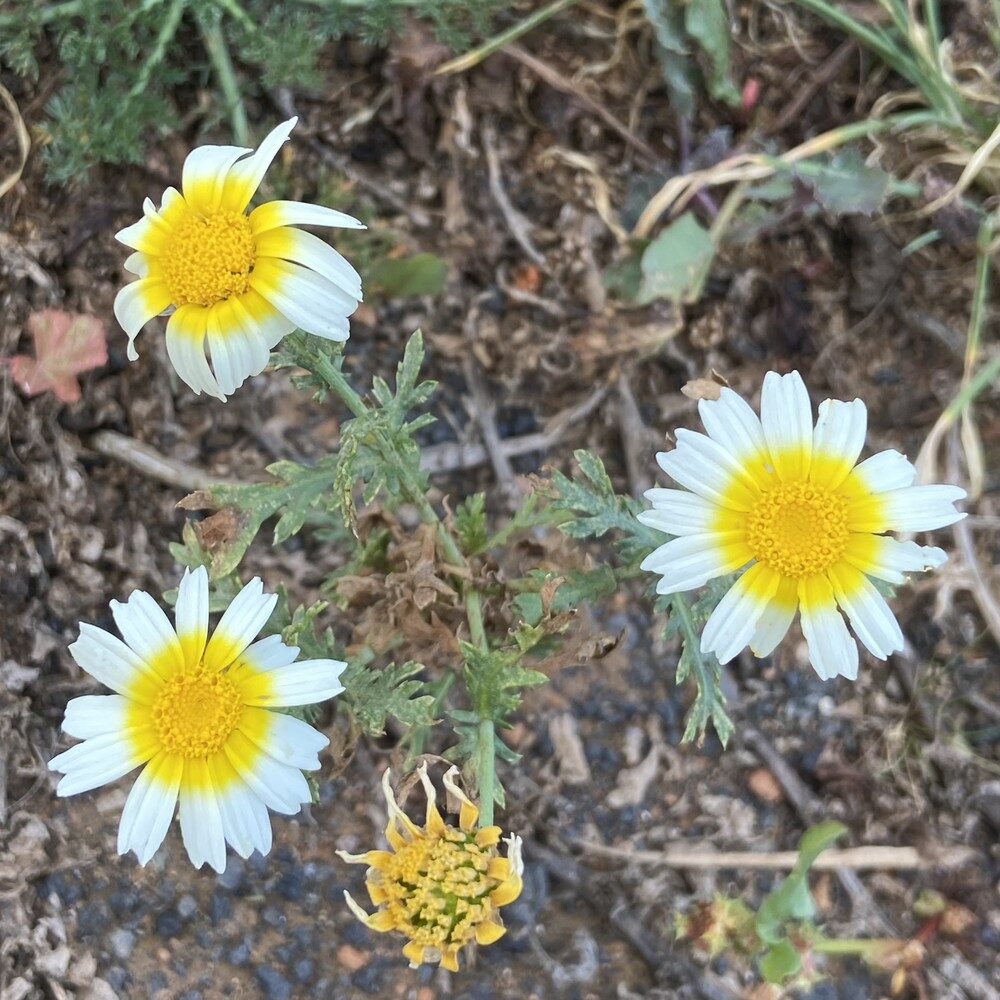
Chrysanthemum coronarium
Chop-Suey Greens
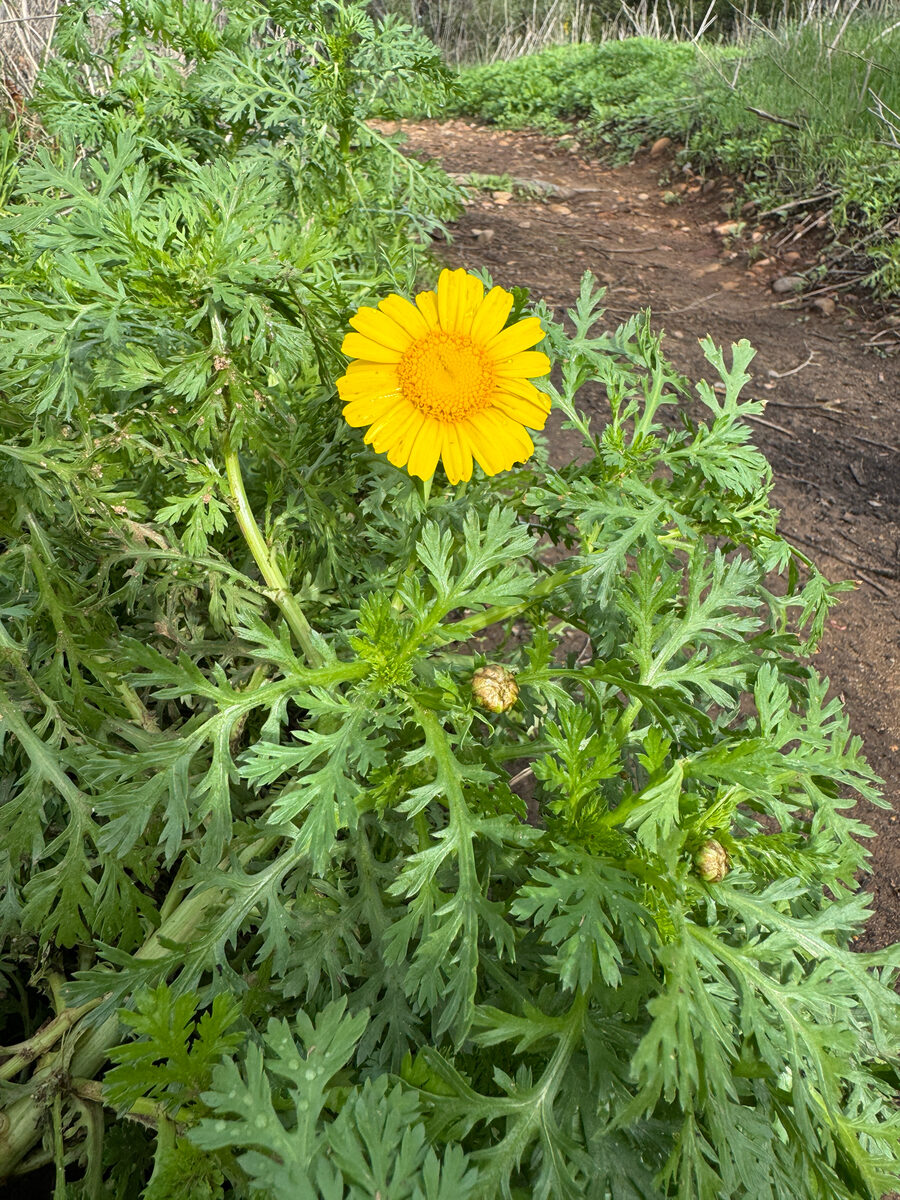
Chrysanthemum coronarium spatiosum
Chop-Suey Greens
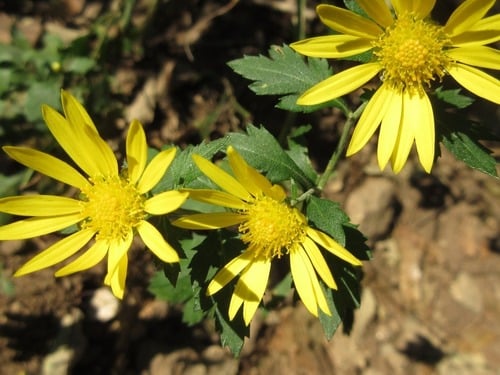
Chrysanthemum indicum
Wild Chrysanthemum, Mother chrysanthemum
Chrysanthemum morifolium
Chrysanthemum, Spider mum
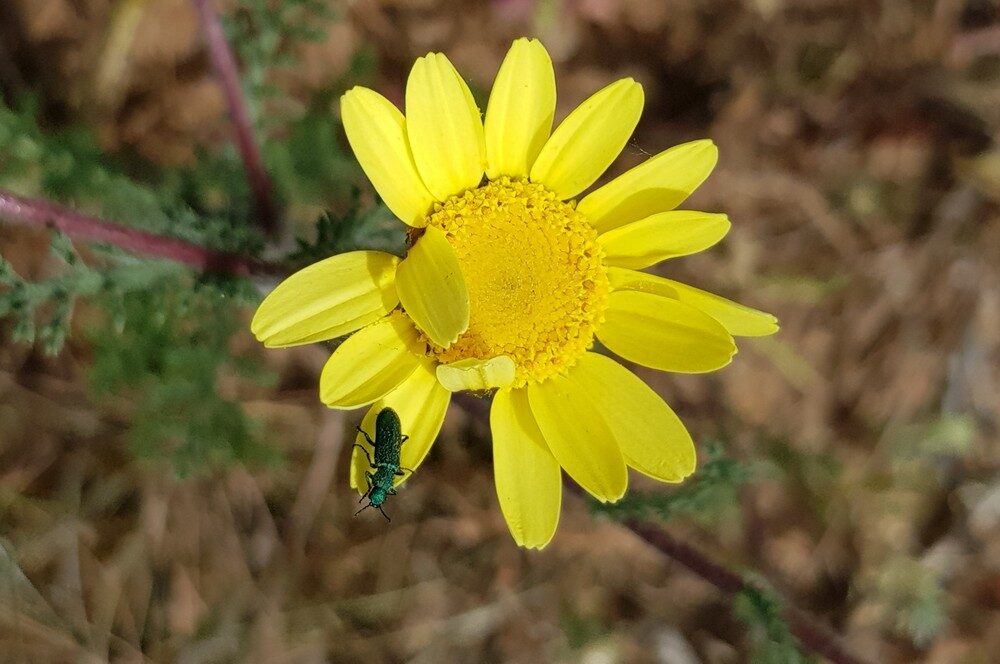
Chrysanthemum segetum
Corn Marigold
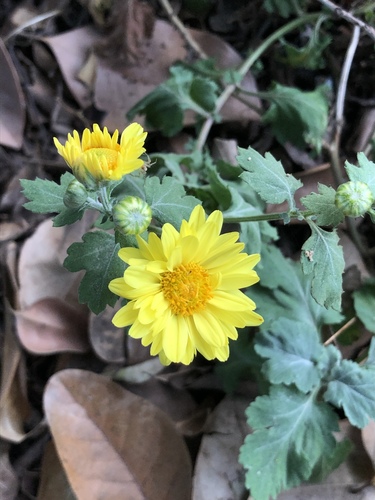
Chrysanthemum x morifolium
Edible chrysanthemum, Mulberry-leaved chrysanthemum