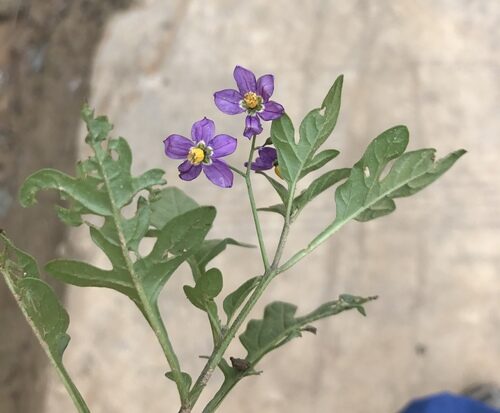
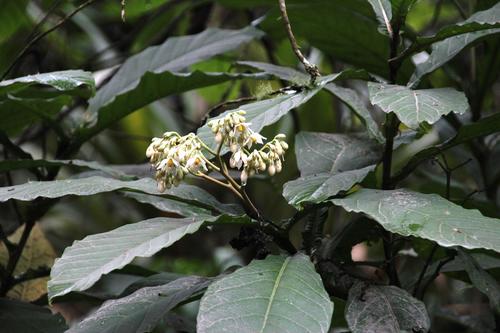
Solanum torvum
Sw.
Pea aubergine
iNaturalist· cc0
no rights reserved, uploaded by 葉子
iNaturalist· cc-by-nc
(c) PeterCopping, some rights reserved (CC BY-NC)
iNaturalist· cc0
no rights reserved
Summary
Source: WikipediaSolanum torvum, also known as pendejera, turkey berry, devil's fig, pea eggplant, platebrush or susumber, is a bushy, erect and spiny perennial plant used horticulturally as a rootstock for eggplant. Grafted plants are very vigorous and tolerate diseases affecting the root system, thus allowing the crop to continue for a second year.
Description
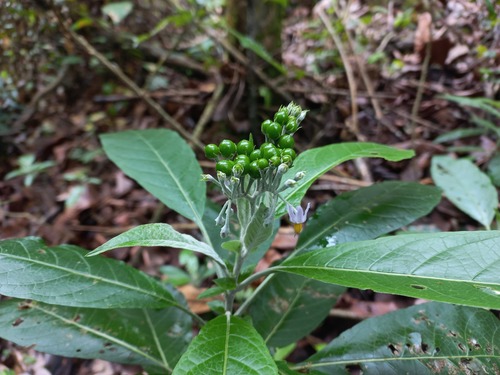
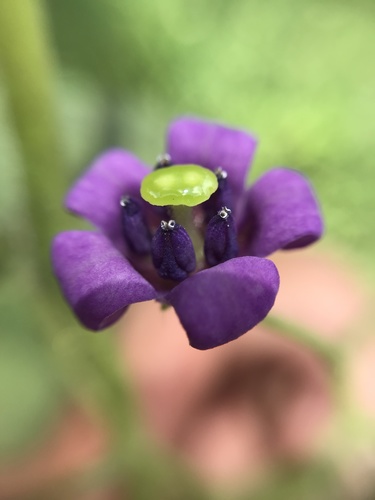
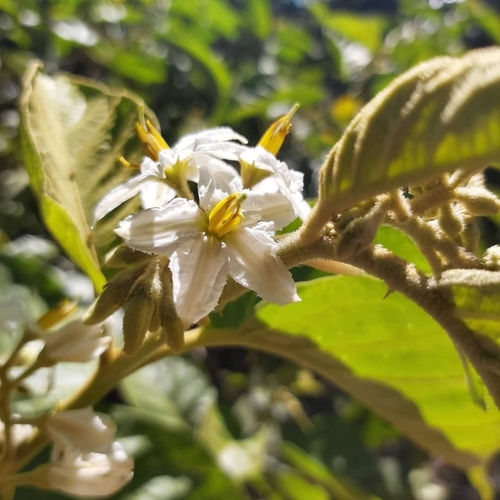
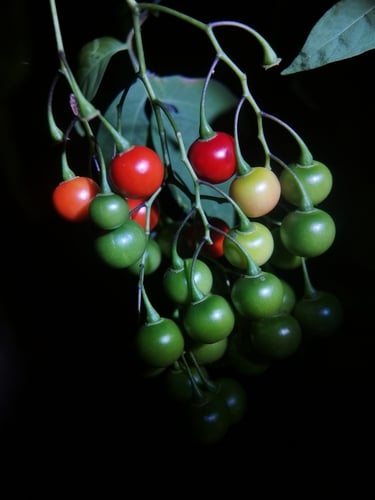
A shrub 1.5-3 m high. The leaves are oblong and 10-25 cm long. They can be entire or lobed. They often have prickles beneath the midrib. The young stem and underside of leaves are hairy. The flower is white and 2 cm across. The fruit are round berries, yellow when ripe. They are about 1 cm across. They grow in clusters. The seed are roughly circular and 2-3 mm across.
Edible Uses
Young shoots can be eaten raw or cooked. The fruit can be eaten raw or cooked — it has a juicy pulp containing many small seeds and a distinctive bitter flavour that tends to be more appreciated by older people. In Asia the fruit is eaten raw or cooked as a side dish with rice, or added to stews, soups, and curries. In the West Indies, half-grown firm berries are boiled and served with foods such as yams or akees, or added to soups and stews. The yellowish, globose berry is 10–15mm in diameter; the immature fruit is green, turning yellow then orange as it ripens. An extract of the plant is sometimes used as a curdling agent.
Traditional Uses
CAUTION: This plant has been shown to contain poisonous compounds. The green unripe fruit are added to curries in Malaysia. They are eaten in soup in Cambodia. They are also used for chutney. They are eaten as a vegetable. They are bitter. They are mixed with other vegetables. They are pickled in Nepal. They are used in soup in China. They are also dried and preserved. The young shoots are eaten raw or cooked. The fruit and flowers are used as a vegetable. The roots are stewed.
Medicinal Uses
Solanum torvum is widely used in traditional medicine. The glycoalkaloid solasodine, found in the leaves and fruits, is used in India in the manufacture of steroidal sex hormones for oral contraceptives. The plant juice is used to treat fevers, coughs, asthma, chest ailments, sore throats, rheumatism, dropsy, stomach aches, and gonorrhoea. Flower juice with added salt is used as eye drops. The leaves are an effective antimicrobial and diuretic; an infusion treats thrush, and a syrup of leaves and flowers is used for colds. Dried, powdered leaves are used medicinally for diabetic patients. Leaves are applied topically to cuts, wounds, and skin diseases. An infusion of leaves and fruits treats bush yaws and sores. The fruit is diuretic and is used for malaria, stomach aches, and spleen problems. A decoction of the fruit is given to children for coughs. Young fruits are used to improve eyesight. A paste of mature fruit is applied as a poultice to the forehead for headaches, and fruit juice is applied locally to ease ant bite irritation. A decoction of the root treats venereal disease; roots are boiled with lime juice added and drunk for malaria. Root juice treats vomiting caused by weakness, and pounded root is inserted into a decayed tooth cavity to relieve toothache.
Known Hazards
Although providing many well-known foods for people, including the potato, tomato, pepper and aubergine, most plants in the family Solanaceae also contain poisonous alkaloids. Unless there are specific entries with information on edible uses, it would be unwise to ingest any part of this plant.
Distribution
A tropical plant. In Papua New Guinea it grows from sea level to 2000 m altitude. In Cambodia it grows between 0 and 1200 m. In Nepal it grows to 1000 m altitude. It grows in open, moist places. It grows in wetlands. In Yunnan in China it grows between 200-1650 m altitude. Photo Brisbane shop. In Yunnan.
Where It Grows
Africa, Andamans, Angola, Antigua and Barbuda - Antigua, Asia, Australia, Bahamas, Barbados, Belize, Benin, Bougainville, Brazil, Burkina Faso, Cambodia, Cameroon, Central Africa, Central America*, China, Colombia, Congo DR, Costa Rica, Côte d'Ivoire, Cuba*, Dominica, Dominican Republic, East Africa, Ecuador, Egypt, El Salvador, Fiji, French Guiana, Gabon, Gambia, Ghana, Grenada, Guadeloupe, Guatemala, Guinea, Guinée, Guyana, Haiti, Hawaii, Himalayas, Honduras, India, Indochina, Indonesia, Ivory Coast, Jamaica, Kiribati, Laos, Madagascar, Malawi, Malaysia, Martinique, Mexico*, Micronesia, Montserrat, Myanmar, Nepal, Nicaragua, Nigeria, North Africa, North America, Northeastern India, Pacific, Pakistan, Panama, Papua New Guinea, PNG, Peru, Puerto Rico*, Rotuma, SE Asia, Senegal, Sierra Leone, Sikkim, Singapore, South America, Sri Lanka, St. Kitts and Nevis, St. Lucia, St. Vincent and Grenadines, Taiwan, Thailand, Tibet, USA, Vanuatu, Venezuela, Vietnam, Wallis & Futuna, West Africa, West Indies*,
Cultivation
S. torvum is an erect or spreading prickly shrub, 1 to 3 m tall. A plant of the moist tropics, where it is found at elevations up to 1,600 metres. Succeeds in full sun and in light shade. Grows well in a range of fertile, moist but well-drained soils. Prefers a pH in the range 5 - 6 (acidic), tolerating 4.3 - 6.8. Plants can tolerate some drought. It grows best in areas where annual daytime temperatures are within the range 17 - 29°c, but can tolerate 12 - 35°c. It prefers a mean annual rainfall in the range 1,000 - 2,000mm, but tolerates 700 - 4,200mm. Heavy rainfall discourages fruit set. The plant is spread by birds that eat the fruits and spread the seeds. It is considered to be a major weed in pastures, along roadsides and in wasteland in the tropics. It also occurs in plantations, but is not found in significant quantities in cultivated land. Often found in disturbed areas, it can form dense impenetrable stands. Solanum torvum is considered to be a serious threat to the productivity and sustainability of pasture. Besides its economic impacts, it competes with native species. The plant commences flowering when 3 - 4 months old and is said to have an economic life of 3 - 5 years. The plant can flower and produce fruit all year round. It can regrow after a fire. There are named forms in Africa and in Thailand. At least one form is free of prickles.
Propagation
Sow seed in a sunny position — fresh seed shows strong dormancy. Sow in a nursery and transplant seedlings after 5–6 weeks at a spacing of 1 metre. Branch cuttings from high-yielding shrubs are also used. Semi-hardwood cuttings 12–15cm long, taken from fresh shoots with leaves removed, will produce roots and new shoots within 3–4 weeks.
Other Uses
The plant is sometimes used as a rootstock for tomatoes (Solanum lycopersicum) and aubergines (Solanum melongena), conferring resistance to bacterial wilt and nematodes. Solanum aethiopicum cv. 'Iizuka' gives better results with tomatoes. Its resistance to a number of pests also makes it useful as a source of resistant gene transfer into useful Solanaceous crops.
Production
Plants start flowering 3-4 months after planting. Fruit are picked regularly staring 2 weeks after flowering.
Other Information
It is a locally popular vegetable. Leaves are sold in local markets.
Notes
There are about 1400 Solanum species.
Nutrition
| Part | Moisture | kJ | kcal | Protein | Vit A | Vit C | Iron | Zinc |
|---|---|---|---|---|---|---|---|---|
| Fruit | 85.4 | 196 | 47 | 2.4 | — | — | 4.6 | — |
Synonyms
Also Known As
Able-he, Akapu, Akrim, Anjang kha, Anzangkha, Bak-kheng, Ban bihi, Ba'o, Bengar betahet, Bhit-tita, Bhurat, Bihi, Bin, Bintorung, Buah ulam, Byako, Ca nhuong, Ca nong, Chepoka, Choondai kai, Chuko wana, Chundaikai, Devil's-fig, Devil’s Figs, Dieng-soh nonag, Ehiishikhokha, Ge lan biu, Gota begun, Hathubhekuri, Hati bhekuri, Hati-khunthai goukha, Hkawhkam-kaju, Jabadane, Jangali behi, Jungli biya, Kaatuchunta, Kadusunde, Kao, Karinchi, Kashongo, Kattusundai, Kazaw-kha, Kekeisse, Kekeyafe, Kemko, Kha-lang-gyi, Khamchokraling, Khamkha sikam, Khamka sikum, Kharangjeh, Kha-yan-ka-zot, Kheang khah, Khem-khatai-baphangl, Khoith ha, Kodu, Kutumba, Kutunbi, Kwahu nsusuam Lam khamen, Leenguipi, Liang lao, Magwikaju, Mah-kua-puang, Makueyphuong, Mai-mak-hku-sum, Marang, Mequasa, Mo si kuo, Moxiha, Muhahao, Myobyet-khayan, Ngbaku, Okouhe, Pako bhijri, Pako saag, Panthao khimkhatai gidiba, Pea eggplant, Plate-bush, Platebrush, Poka, Pokak, Rakhokha, Ranbaingan, Ranbhatai, Rangaini, Sahor pot, Sam tok, Segau, Shui gie, Si ma ma ha, Sitabangko, Sondaegida, Soonday kai, Sundai, Sundaikai, Sundakkayi, Susumber, Takokak, Tangaiji, Tawkpui, Terong limbang, Terong pasay, Terong pipit puteh, Terong pipit, Terong rembang, Terongan, Terong setan, Teruk rimbong, Theso bongnai, Thesokumbong, Theso-rongman, Thulo bihi, Tit-began, Tiyung satik, Trab put lumnhong, Turkeyberry, Wild brinjal, Yamax-iha
References (129)
- Ambasta, S. P. (Ed.), 2000, The Useful Plants of India. CSIR India. p 582
- Anderson, E. F., 1993, Plants and people of the Golden Triangle. Dioscorides Press. p 221
- Arinathan, V., et al, 2007, Wild edibles used by Palliyars of the western Ghats, Tamil Nadu. Indian Journal of Traditional Knowledge. 6(1) pp 163-168
- Arora, R. K., 2014, Diversity in Underutilized Plant Species - An Asia-Pacific Perspective. Bioversity International. p 51
- Baa-Poku, F. & Asante, I. K., 2020, Use of Neglected and Underutilized Crop Species (NUCS) in some farming communities in the Upper Afram and Upper Dayi River Basins in Ghana. International Journal of Technology and Management Research 5 (2): 48-63
Show all 129 references Hide references
- Baishya, S. Kr., et al, 2013, Survey of Wild Edible Fruits of Dhubri District, Assam, India. Plant Archives Vol 13 (1): 155-158
- Balkrishna, A., et al, 2022, Indigenous Uses of Plants among Forest-dependent Communities of Seijosa, Arunachal Pradesh. International Journal of Economic Plants 2022, 9(1):064-080
- Binu, S., 2010, Wild edible plants by the tribals in Pathanamthitta district, Kerala. Indian Journal of Traditional Knowledge. 9(2): 309-312
- Borrell, O. W., 1989, An Annotated Checklist of the Flora of Kairiru Island, New Guinea. Marcellin College, Victoria Australia. p 138
- Burkill, H. M., 1985, The useful plants of west tropical Africa, Vol. 5. Kew.
- Burkill, I. H., 1966, A Dictionary of the Economic Products of the Malay Peninsula. Ministry of Agriculture and Cooperatives, Kuala Lumpur, Malaysia. Vol 2 (I-Z) p 2083
- Cao, Y., et al, 2020, Ethnobotanical study on wild edible plants used by three trans-boundary ethnic groups in Jiangcheng County, Pu’er, Southwest China. Journal of Ethnobiology and Ethnomedicine (2020) 16:66
- Chandrakumar, P., et al, 2015, Ethnobotanical studies of wild edible plants of Gond, Halba and Kawar tribes of Salekasa Taluka, Gondia District, Maharashtra State, India. International Research Journal of Pharmacy 6(8)
- Chatterjee, A.S. & Koma, Y.S., 1995, List of Vegetables and Edible Plants in Cambodia. JVC Trainers' training manual. Home Garden Series No. 1. JVC Cambodia p 3
- Codjia, J. T. C., et al, 2003, Diversity and local valorisation of vegetal edible products in Benin. Cahiers Agricultures 12:1-12
- Cooper, W. and Cooper, W., 2004, Fruits of the Australian Tropical Rainforest. Nokomis Editions, Victoria, Australia. p 523
- Dalziel, J. M., 1937, The Useful plants of west tropical Africa. Crown Agents for the Colonies London.
- Dangol, D. R. et al, 2017, Wild Edible Plants in Nepal. Proceedings of 2nd National Workshop on CUAOGR, 2017.
- Davis, S.D., Heywood, V.H., & Hamilton, A.C. (eds), 1994, Centres of plant Diversity. WWF. Vol 1 or 2. p 117
- Deb, D., et al, 2013, Wild Edible Plants and Their Utilization in Traditional Recipes of Tripura, Northeast India. Advances in Biological Research 7(5):203-211
- Delang, C. O., 2007, Ecological Succession of Usable Plants in an Eleven-Year Fallow Cycle in North Lao P.D.R., Ethnobotany Research and Applications. Vol. 5:331-350
- Diop, A. l., et al, 2021, Cultural importance of wild edible plants in three sympatric communities: Agni, Akyé and Gwa in the Department of Alépé (Southeast of Côte d’Ivoire). Ethnobotany Research and Applications 22:35. p 7
- Ethnobotany of Karbis. Chapter 4 in p 101
- Facciola, S., 1998, Cornucopia 2: a Source Book of Edible Plants. Kampong Publications, p 238
- Flora of Pakistan. www.eFloras.org
- Foo, J.T.S.(ed), 1996, A Guide to Common Vegetables. Singapore Science Foundation. p 138
- Food Composition Tables for use in East Asia FAO http://www.fao.org/infoods/directory No. 667
- Gangte, H. E., et al, 2013, Wild Edible Plants used by the Zou Tribe in Manipur, India. International Journal of Scientific and Research Publications, Volume 3, Issue 5
- Gangwar, A. K. & Ramakrishnan, P. S., 1990, Ethnobotanical Notes on Some Tribes of Arunachal Pradesh, Northeastern India. Economic Botany, Vol. 44, No. 1 pp. 94-105
- Gbile, Z. O. and Adesina, S. K., 1988, Nigerian Solanum Species of Economic Importance. Annals of the Missouri Botanical Garden, Vol. 75, No. 3. p 864
- Ghorbani, A., et al, 2012, A comparison of the wild food plant use knowledge of ethnic minorities in Naban River Watershed Nature Reserve, Yunnan, SW China. Journal of Ethnobiology and Ethnomedicine; 8:17
- Ghosh, C. & Das A. P., 2011, Some useful and poisonous tea garden weeds from the Darjiling District of West Bengal, India. Pleione 5(1): 91 - 114
- Grandtner, M. M., 2008, World Dictionary of Trees. Wood and Forest Science Department. Laval University, Quebec, Qc Canada. (Internet database http://www.wdt.qc.ca)
- Grandtner, M. M. & Chevrette, J., 2013, Dictionary of Trees, Volume 2: South America: Nomenclature, Taxonomy and Ecology. Academic Press p 621
- Grivetti, L. E., 1980, Agricultural development: present and potential role of edible wild plants. Part 2: Sub-Saharan Africa, Report to the Department of State Agency for International Development. p 32
- Grubben, G. J. H. and Denton, O. A. (eds), 2004, Plant Resources of Tropical Africa 2. Vegetables. PROTA, Wageningen, Netherlands. p 501
- Guite, C., 2016, Study of wild edible plants associated with the Paite Tribe of Manipur, India. International Journal of Current Research. Vol. 8, Issue 11, pp. 40927-40932
- Hani Medicine of Xishuangbanna, 1999, p 643
- Hedrick, U.P., 1919, (Ed.), Sturtevant's edible plants of the world. p 620
- Henty, E.E., & Pritchard, G.S., 1973, Weeds of New Guinea and their control. Botany Bulletin No 7, Division of Botany, Lae, PNG. p 150
- Henty, E.E., 1980, Harmful Plants in Papua New Guinea. Botany Bulletin No 12. Division Botany, Lae, Papua New Guinea. p 129, 130
- Irawan, D., et al, 2006, Ethnobotanical study and nutrient potency of local traditional vegetables in Central Kalimantan. Tropics Vol. 15(4)
- IUCN (2013). Ecological Survey of the Mekong River between Louangphabang and Vientiane Cities, Lao PDR, 2011-2012. Vientiane, Lao PDR: IUCN. 241 pp.
- Jackes, B.R., 2001, Plants of the Tropics. Rainforest to Heath. An Identification Guide. James Cook University. p 83
- Jan, M., et al, 2018, Ethnobotanical Study of Plants Used By Ethnic People of Karbari Grant Village Dehradun, Uttarakhand. SERBD-International Journal of Multidisciplinary Sciences
- Jardin, C., 1970, List of Foods Used In Africa, FAO Nutrition Information Document Series No 2.p 103
- Jin, Chen et al, 1999, Ethnobotanical studies on Wild Edible Fruits in Southern Yunnan: Folk Names: Nutritional Value and Uses. Economic Botany 53(1) pp 2-14
- Jiwajinda, S., et al, 2002, Suppressive Effects of Edible Thai Plants on Superoxide and Nitric Oxide Generation. Asian Pacific Journal of Cancer Prevention, Vol 3, 2002
- Johnson, N., 2002, Environmental Change in northern Thailand: Impact on Wild Edible Plant Availability. Ecology of Food and Nutrition, 41: 5, 373-399
- Jose, D. T. & Sasidharan, N., 2016, Checklist of wild edible plants of Aralam Wildlife sanctuary, Kerala, India. South Indian Journal Of Biological Sciences 2016; 2(1); 141‐144
- Joshi, N., et al, 2007, Traditional neglected vegetables of Nepal: Their sustainable utilization for meeting human needs. Tropentag 2007. Conference on International Agricultural Research for Development.
- Kar, A., 2004, Common wild vegetables of Aka tribe of Arunachal Pradesh. Indian Journal of Traditional Knowledge 3(3) pp 305-313
- Kar, A., & Borthakur, S. K., 2008, Wild vegetables of Karbi - Anglong district, Assam, Natural Product Radiance, Vol. 7(5), pp 448-460
- Kar, A., et al, 2013, Wild Edible Plant Resources used by the Mizos of Mizoram, India. Kathmandu University Journal of Science, Engineering and Technology. Vol. 9, No. 1, July, 2013, 106-126
- Kermath, B. M., et al, 2014, Food Plants in the Americas: A survey of the domesticated, cultivated and wild plants used for Human food in North, Central and South America and the Caribbean. On line draft. p 825
- Kohila, A. & Kensa, V. M., 2019, Survey of Wild Edible Plants of Dhanakarkulam Panchayath, Tirunelveli District, Tamil Nadu, India. Kong. Res. J. 6(2): 20-27, 2019
- Konsam, S., et al, 2016, Assessment of wild leafy vegetables traditionally consumed by the ethnic communities of Manipur, northeast India. Journal of Ethnobiology and Ethnomedicine, 12:9
- Lamp, C & Collet F., 1989, Field Guide to Weeds in Australia. Inkata Press. p 279
- Lazarides, M. & Hince, B., 1993, Handbook of Economic Plants of Australia, CSIRO. p 223
- Lembogi Biologi Nasional, 1980, Sayur-sayuran. Balai Pustaka, Jakarta. p 104
- Li, S., et al, 2020, Monpa, memory, and change: an ethnobotanical study of plant use in Mêdog County, South-east Tibet, China. Journal of Ethnobiology and Ethnomedicine. (2020) 16:5 p 23
- Lungphi, P., Wangpan, T. & Tangjang, S., 2018, Wild edible plants and their additional uses by the Tangsa community living in the Changlang district of Arunachal Pradesh, India. Pleione 12(2): 151 - 164. 2018.
- Luo, B., et al, 2019, Wild edible plants collected by Hani from terraced rice paddy agroecosystem in Honghe Prefecture, Yunnan, China. Journal of Ethnobiology and Ethnomedicine 15:56
- Manandhar, N.P., 2002, Plants and People of Nepal. Timber Press. Portland, Oregon. p 432
- Marandi, R. R. & Britto, S. J., 2015, Medicinal Properties of Edible Weeds of Crop Fields and Wild plants Eaten by Oraon Tribals of Latehar District, Jharkhand. International Journal of Life Science and Pharma Research. Vo. 5. (2) April 2015
- Martin, F.W. & Ruberte, R.M., 1979, Edible Leaves of the Tropics. Antillian College Press, Mayaguez, Puerto Rico. p 220
- McMakin, P.D., 2000, Flowering Plants of Thailand. A Field Guide. White Lotus. p 102
- Medhi, P., Sarma, A and Borthakur, S. K., 2014, Wild edible plants from the Dima Hasao district of Assam, India. Pleione 8(1): 133-148
- Meitei, L. R., et al, 2022, An ethnobotanical study on the wild edible plants used by forest dwellers in Yangoupokpi Lokchao Wildlife Sanctuary, Manipur, India. Ethnobotany Research and Application 23:15
- Miguel, E., et al, 1989, A checklist of the cultivated plants of Cuba. Kulturpflanze 37. 1989, 211-357
- Murtem, G. & Chaudhrey, P., 2016, An ethnobotanical note on wild edible plants of Upper Eastern Himalaya, India. Brazilian Journal of Biological Sciences, 2016, v. 3, no. 5, p. 63-81
- Nyadanu, D., et al, 2015, Agro-biodiversity and challenges of on-farm conservation: the case of plant genetic resources of neglected and underutilized crop species in Ghana. Genet. Resourc. Crop Evol. 62(7):
- Ochse, J. J. et al, 1931, Vegetables of the Dutch East Indies. Asher reprint. p 685
- Ong, H., et al, 2012, Traditional knowledge and usage of edible plants among the Semai community of Kampung Batu 16, Tapah, Perak, Malaysia. Scientific Research and Essays Vol. 7(4), pp. 441-445, 30 January, 2012
- Pagag, K. & Borthakur, S.K., 2012, Wild edible wetland plants from Lakhimpur district of Assam, India. Pleione 6(2): 322 - 327
- Patiri, B. & Borah, A., 2007, Wild Edible Plants of Assam. Geethaki Publishers. p 92
- Peekel, P.G., 1984, (Translation E.E.Henty), Flora of the Bismarck Archipelago for Naturalists, Division of Botany, Lae, PNG. p 494, 497
- Pegu, R., et al, 2013, Ethnobotanical study of Wild Edible Plants in Poba Reserved Forest, Assam, India. Research Journal of Agriculture and Forestry Sciences 1(3):1-10
- Peters, C. R., O'Brien, E. M., and Drummond, R.B., 1992, Edible Wild plants of Sub-saharan Africa. Kew. p 187
- Pfoze, N. L., et al, 2012, Survey and assessment of floral diversity on wild edible plants from Senapati district of Manipur, Northeast India. Journal of Biodiversity and Environmental Sciences. 1(6):50-52
- Phangchopi, U., et al, 2015, Diversity of wild edible plants in Marat Longri Wildlife Sanctuary, Assam. Indian Journal of Natural Products and Resources Vol. 6(4), December 2015 pp. 305-313
- Phon, P., 2000, Plants used in Cambodia. © Pauline Dy Phon, Phnom Penh, Cambodia. p 563
- Plants of Haiti Smithsonian Institute http://botany.si.edu/antilles/West Indies
- Pradheep, K., et al, 2016, Wild edible plants used by Konyak tribe in Mon district of Nagaland: Survey and inventorisation. Indian Journal of Natural Products and Resources. Vol 7(1) pp 74-81
- Priyadi, H., et al, Five hundred plant species in Gunung Halimun Salak National Park West Java. A checklist including Sundanese names, distribution and use. CIFOR, FFPRI, SLU p 159
- Prodr. 47. 1788
- Ramachandran, V. S., 2007, Wild edible plants of the Anamalais, Coimbatore district, western Ghats, Tamil Nadu. Indian Journal or Traditional Knowledge. 6(1) pp 173-176
- Ravikrishna, S., 2011, Ethno-medico-botanical survey on Wild Edible fruits of Udupi Taluq, Udupi p 110
- Reis, S. V. and Lipp, F. L., 1982, New Plant Sources for Drugs and Foods from the New York Botanical Garden herbarium. Harvard. p 270
- Roa, J. A. G. & Boada, D. S. G., 2018, Fundación para el Fortalecimiento de la Fruticultura y Plantas Alimenticias no Convencionales en Colombia.
- Saidulu, P. et al, 2015, Ethnobotanical Knowledge Studied in Pocharam Wildlife Sanctuary, Telangana, India. Not Sci Biol, 2015, 7(2):164 -170
- Saikia, M., 2015, Wild edible vegetables consumed by Assamese people of Dhemaji District of Assam, NE India and their medicinal values. Archives of Applied Science Research, 2015, 7 (5):102-109
- Salako, V. K. et al, 2013, Home gardens: an assessment of their biodiversity and potential contribution to conservation of threatened species and crop wild relatives in Benin. Genet Resour Crop Evol
- Samuels, J., 2015, Biodiversity of Food Species of the Solanaceae Family: A Preliminary Taxonomic Inventory of Subfamily Solanoideae. Resources 2015, 4. 277-322
- Sasi, R. & Rajendran, A., 2012, Diversity of Wild Fruits in Nilgiri Hills of the Southern Western Ghats - Ethnobotanical Aspects. IJABPT, 3(1) p 82-87
- Savita, et al, 2006, Studies on wild edible plants of ethnic people in east Sikkim. Asian J. of Bio Sci. (2006) Vol. 1 No. 2 : 117-125
- Setiya, A. V., et al, 2016, Exploration and documentation of some wild edible plants used by the aboriginals from Gadchiroli District (M.S.) India. International Advanced Research Journal in Science, Engineering and Technology. 3(7)
- Shin, T., et al, 2018, Traditional knowledge of wild edible plants with special emphasis on medicinal uses in Southern Shan State, Myanmar. Journal of Ethnobiology and Ethnomedicine (2018) 14:48
- SHORTT,
- Singh, H.B., Arora R.K.,1978, Wild edible Plants of India. Indian Council of Agricultural Research, New Delhi. p 78
- Singh, V. B., et al, (Ed.) Horticulture for Sustainable Income and Environmental Protection. Vol. 1 p 220
- Slik, F., www.asianplant.net
- Smith, A.C., 1991, Flora Vitiensis Nova, Lawaii, Kuai, Hawaii, Volume 5 p 11
- Solomon, C., 2001, Encyclopedia of Asian Food. New Holland. p 130
- Somnasang, P., Moreno, G and Chusil K., 1998, Indigenous knowledge of wild hunting and gathering in north-east Thailand. Food and Nutrition Bulletin 19(4) p 359f
- Srivastava, R. C., 2009, Traditional knowledge of Adi tribe of Arunachal Pradesh on plants. Indian Journal of Traditional Knowledge. 8(2): 146-153
- Srivastava, R. C., 2010, Traditional knowledge of Nyishi (Daffla) tribe of Arunachal Pradesh. Indian Journal of Traditional Knowledge. 9(1):26-37
- Staples, G.W. and Herbst, D.R., 2005, A tropical Garden Flora. Bishop Museum Press, Honolulu, Hawaii. p 539
- Sukarya, D. G., (Ed.) 2013, 3,500 Plant Species of the Botanic Gardens of Indonesia. LIPI p 715
- Sukenti, K., et al, 2016, Ethnobotanical study on local cuisine of the Sasak tribe in Lombok Island, Indonesia. Journal of Ethnic Foods. 3 (2016) 189-200 p 198
- Tanaka, Y. & Van Ke, N., 2007, Edible Wild Plants of Vietnam. Orchid Press. p 139
- Taram, M., et al, 2018, Wild Food Plant Resources of Komkar Adi Tribe of Upper Siang District in Arunachal Pradesh, India. Bulletin of Arunachal Forest Research, Vol. 33(2), 27-35
- Terashima, H., & Ichikawa, M., 2003, A comparative ethnobotany of the Mbuti and Efe hunter-gatherers in the Ituri Forest, Democratic Republic of Congo. African Study Monographs, 24 (1, 2): 1-168, March 2003
- Teron, R. & Borthakur, S. K., 2016, Edible Medicines: An Exploration of Medicinal Plants in Dietary Practices of Karbi Tribal Population of Assam, Northeast India. In Mondal, N. & Sen, J.(Ed.) Nutrition and Health among tribal populations of India. p 156
- Terra, G.J.A., 1973, Tropical Vegetables. Communication 54e Royal Tropical Institute, Amsterdam, p 76
- Thaman, R. R., 1987, Plants of Kiribati: A listing and analysis of vernacular names. Atoll Research Bulletin No. 296
- Tsering, J., et al, 2017, Ethnobotanical appraisal on wild edible plants used by the Monpa community of Arunchal Pradesh. Indian Journal of Traditional Knowledge. Vol 16(4), October 2017, pp 626-637
- USDA, ARS, National Genetic Resources Program. Germplasm Resources Information Network - (GRIN). [Online Database] National Germplasm Resources Laboratory, Beltsville, Maryland. Available: www.ars-grin.gov/cgi-bin/npgs/html/econ.pl (10 April 2000)
- Vivien, J., & Faure, J.J., 1996, Fruitiers Sauvages d'Afrique. Especes du Cameroun. CTA p 333
- Walter, A. & Lebot, V., 2007, Gardens of Oceania. ACIAR Monograph No. 122. p 291
- WATT,
- White, F., Dowsett-Lemaire, F. and Chapman, J. D., 2001, Evergreen Forest Flora of Malawi. Kew. p 554
- Wiersema, J. H. & Leon, B., 2013, World Economic Plants. A Standard Reference CRC Press. 2nd Ed. p 648
- Wijayakusuma, H.M.H., et al, 1996, Tanaman Berkhasiat Obat Di Indonesia. Pustaka Kartini. p 127
- Woodward, P., 2000, Asian Herbs and Vegetables. Hyland House. p 123
- World Checklist of Useful Plant Species 2020. Royal Botanic Gardens, Kew
- Xu, You-Kai, et al, 2004, Wild Vegetable Resources and Market Survey in Xishuangbanna, Southwest China. Economic Botany. 58(4): 647-667.
- Yamada, T., 1999, A report of the Ethnobotany of the Nyindu in the Eastern part of the former Zaire. African Study Monographs 20(1):1-72
- Zhang, Y., et al, 2014, Diversity of wetland plants used traditionally in China: a literature review. Journal of Ethnobiology and Ethnomedicine. 10:72