Solanum pectinatum
Dunal
Cocona
iNaturalist· cc-by-nc-nd
(c) EyVer, some rights reserved (CC BY-NC-ND), uploaded by EyVer
wikimedia· cc-by
Wikimedia Commons - Dick Culbert from Gibsons, B.C., Canada
Description
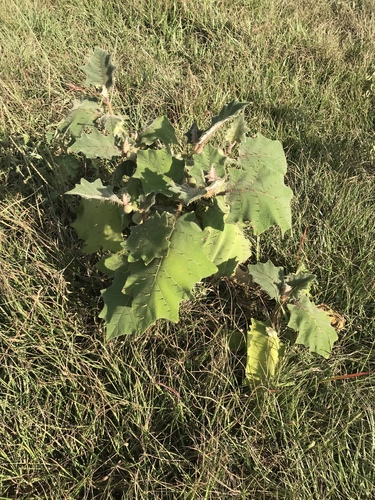
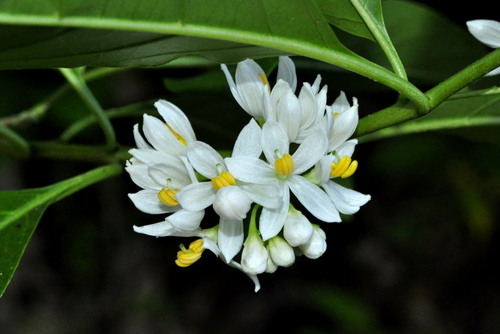
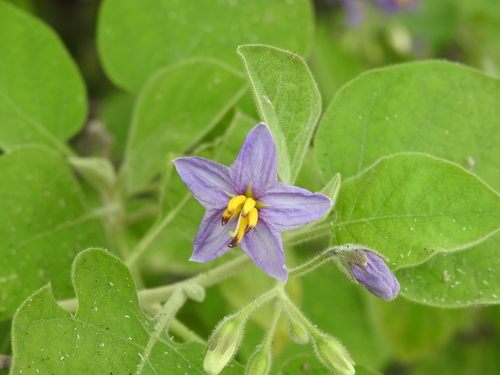
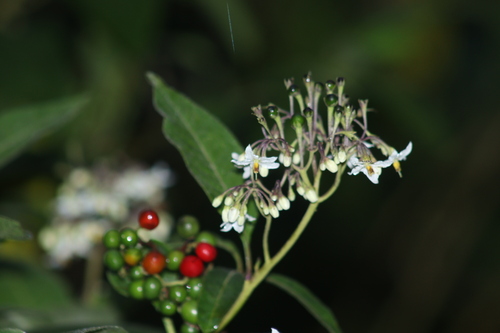
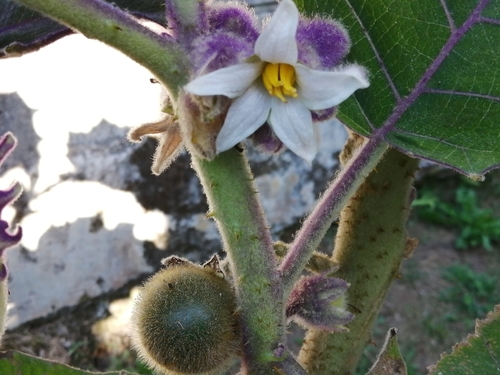
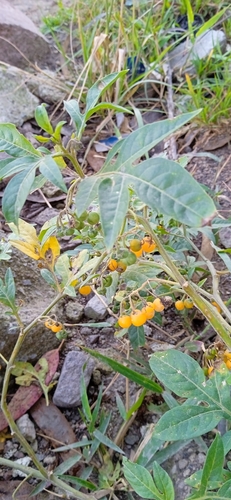
A small thorny shrub. It grows 70 cm high. The spines are 4-5 mm long. The leaves are 11-25 cm long by 8-13 cm wide. The main vein is easy to see and there are spines on the leaves at the end. The leaf stalk is 5-9 cm long. The flowers are in the axils of leaves. The fruit are round. The fruit are 3-4 cm across. They are juicy and aromatic. There are many seeds.
Edible Uses
The round fruit can be eaten raw but are best cooked; the fuzz must be rubbed off and possibly peeled. The fruit can also be made into drinks.
Traditional Uses
The fruit are eaten. They can be eaten raw but are best cooked. The fuzz needs to be rubbed off and possibly peeled. The fruit can be used for drinks.
Medicinal Uses
The plant is used to treat stings. The fruit prevents the vomiting that is caused by scorpion stings, also effective for other types of bites.
Known Hazards
Although providing many well-known foods for people, including the potato, tomato, pepper and aubergine, most species in this genus also contain toxic alkaloids. Whilst these alkaloids can make the plant useful in treaing a range of medical conditions, they can also cause problems such as nausea, vomiting, salivation, drowsiness, abdominal pain, diarrhoea, weakness and respiratory depression. Unless there are specific entries with information on edible uses, it would be unwise to ingest any part of this plant.
Distribution
It is a tropical plant. It requires a frost free site. It needs light well-drained soil. In Bolivia it grows up to 300 m altitude. It grows in areas with a rainfall of 2000 mm per year. It does well in humid places. It needs fertile soil.
Where It Grows
Andes, Bolivia, Central America, Colombia, Costa Rica, Ecuador, Mexico, Panama, Peru, South America*, Venezuela,
Propagation
Seed - sow in trays in a nursery. Prick out the seedlings into individual pots when they are large enough to handle and grow them on fast. Plant them out when 10cm or more tall. Cuttings of half-ripe wood. Very easy, the cuttings root within a couple of weeks.
Other Uses
The pulp of the fruit is rubbed into the hair in order to give it a good appearance and prevent hair loss.
Production
Trees produce fruit after 2 years.
Notes
There are about 1400 Solanum species.
Synonyms
Also Known As
Daboka, Huevi de gato, Lulita, Meneira daboka, Naranjilla grande, Naranjuelo, Rande tton'tto, Toronja, Tumo, Ubasi
References (15)
- 1996, California Rare Fruit Growers, Inc. Pepino dulce Fruit fact
- A. L. P. P. de Candolle, Prodr. 13(1):250. 1852
- Facciola, S., 1998, Cornucopia 2: a Source Book of Edible Plants. Kampong Publications, p 237
- Gori, B., et al, 2022, Understanding the diversity and biogeography of Colombian edible plants. Scientific Reports 12:7835
- Gouldstone, S., 1983, Growing your own Food-bearing Plants in Australia. Macmillan p 104 (As Solanum hirsuitissimum)
Show all 15 references Hide references
- Herklots,
- Heywood, V.H., Brummitt, R.K., Culham, A., and Seberg, O., 2007, Flowering Plant Families of the World. Royal Botanical Gardens, Kew. p 306 (As Solanum hirsutissimum)
- Kermath, B. M., et al, 2014, Food Plants in the Americas: A survey of the domesticated, cultivated and wild plants used for Human food in North, Central and South America and the Caribbean. On line draft. p 822
- Lopez-Diago, D. & Garcia, N., 2021, Wild edible fruits of Colombia. Biota ColomBiana 22 (2) p 52
- Morton, Julia F., 1987, Fruits of Warm Climates. Creative Resources Systems, Inc. . p. 428
- Roa, J. A. G. & Boada, D. S. G., 2018, Fundación para el Fortalecimiento de la Fruticultura y Plantas Alimenticias no Convencionales en Colombia.
- Samuels, J., 2015, Biodiversity of Food Species of the Solanaceae Family: A Preliminary Taxonomic Inventory of Subfamily Solanoideae. Resources 2015, 4. 277-322
- Segura, S., et al, 2018, The edible fruit species in Mexico. Genet Resour Crop Evol (2018) 65:1767–1793
- Torre, de la, L., et al, 2008, Enciclopedia de las Plantas Útiles del Ecuador. Herbario QCA. Pontificia Universidad Católica del Ecuador. p 594
- Vasquez, Roberto Ch. & Coimbra, German S., 1996, Frutas Silvestres Comestibles de Santa Cruz. p 231