Solanum laciniatum
Aiton
Kangaroo apple, Large flowered Kangaroo apple
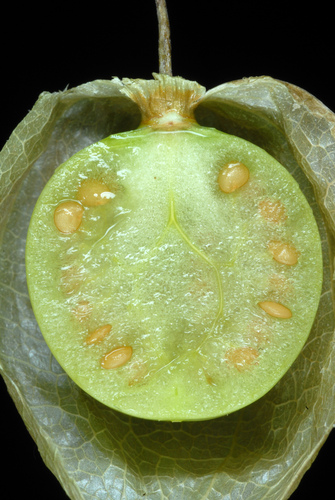
iNaturalist· cc-by
(c) Murray NZ, some rights reserved (CC BY), uploaded by Murray NZ
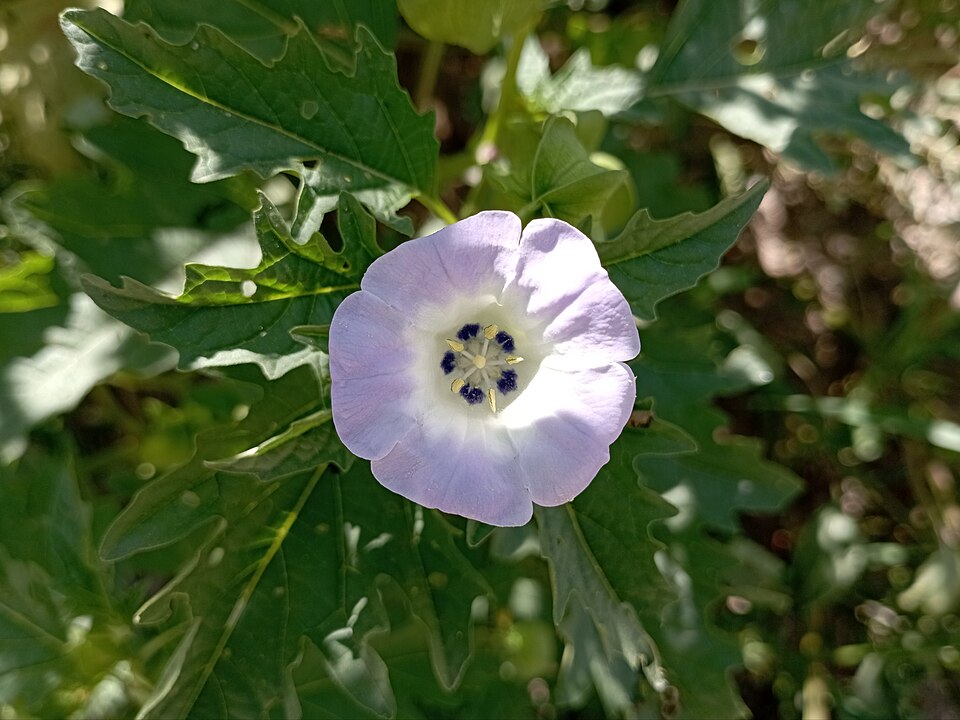
iNaturalist· cc-by-nc
(c) Shona Treanor, some rights reserved (CC BY-NC)
Summary
Source: WikipediaSolanum laciniatum (also known as poroporo or bullibulli) a soft-wooded shrub native to the east coast of Australia, notably Victoria and Tasmania. It also occurs in Western Australia and New Zealand, where some authorities consider it to be introduced. It is similar to Solanum aviculare, with which it shares the common name kangaroo apple. The common name refers to the likeness of the leaf shape to a kangaroo paw print. This plant is currently being cultivated to produce corticosteroid drugs.
Description
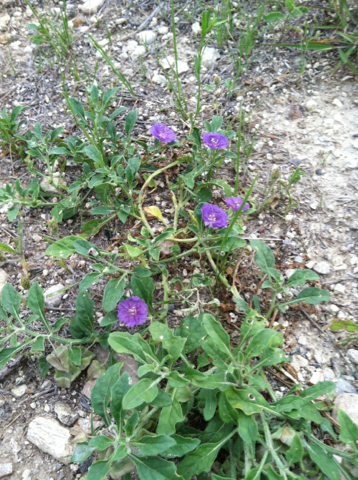
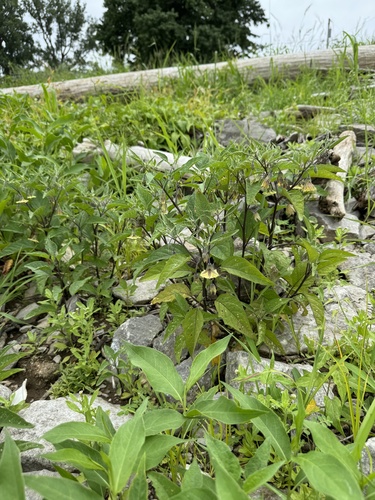
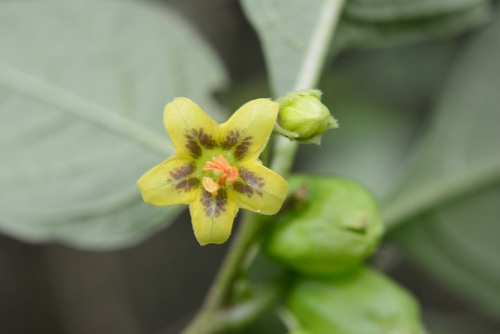
An erect shrub. It is soft wooded. It can be 3 m tall. It can spread 2-3 m wide. It has bluish-purple leaves. It is short lived. It becomes spreading and straggly with age. The leaves are lobed and 30 cm long. They are deeply divided and dark green. The flowers are deep purple-blue with wavy edges. The flowers are larger than Solanum aviculare. The flowers are 5 cm across. The fruit are round and green. They are 2-3 cm across. They change to yellow-orange on maturity.
Edible Uses
The fruit can be eaten raw or cooked, used as either a sweet fruit or a vegetable, but it must be thoroughly ripe — unripe fruit is poisonous. It is best harvested after it has fallen naturally from the plant, at which point it will have lost its unpleasant acidity. In practice the fruit tastes considerably worse than it looks: it is sickly sweet and often bitter, with quality varying from plant to plant and even year to year on the same plant. The fruit reaches up to 2cm in length and contains a large number of flat seeds.
Traditional Uses
The ripe fruit can be eaten. They must be very ripe and soft. They can be put into sand to ripen. The fruit can be used in chutney.
This uses section is brief — help expand it
Medicinal Uses
The plant is a source of steroids widely used in the pharmaceutical industry, with the unripe berries being the richest source.
Known Hazards
All green parts of the plant, and the unripe fruits, are poisonous.
Distribution
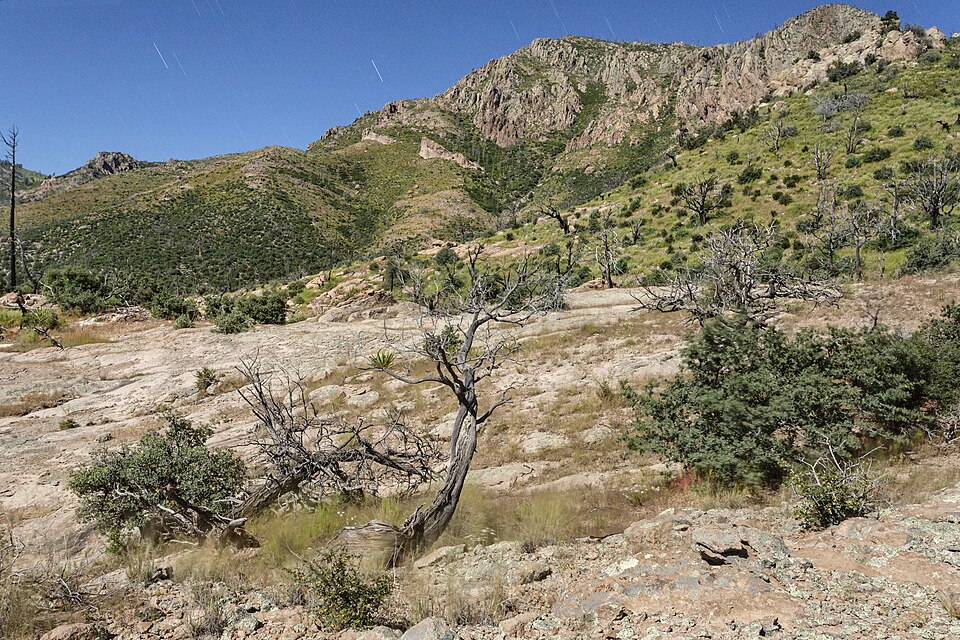
It is a warm temperate to subtropical plant. It suits sandy areas. It often grows after fire. It grows in damp and shaded places. It suits hardiness zones 9-11. Tasmania Herbarium. In Sichuan and Yunnan. Arboretum Tasmania.
Where It Grows
Asia, Australia*, China, New Zealand, Tasmania*,
Cultivation
Succeeds in most fertile soils in a sunny position. Tolerates temperatures down to at least -7°c in Australian gardens but is not very hardy in Britain. It sometimes succeeds as a shrub outdoors in the mildest areas of the country but is more usually cut to the ground by winter cold. It can, however, be grown at the foot of a warm sunny wall and be treated as a herbaceous perennial. As long as the roots are given a good mulch in autumn they should survive quite cold winters. Alternatively, it is possible to grow the plant as an annual. If the seed is sown in early spring in a warm greenhouse and planted out after the last frosts it can fruit in its first year though yields will be lower than from plants grown as perennials. There is much confusion between this species and S. aviculare. Some botanists unite the two under S. aviculare whilst others say that S. laciniatum is a tetraploid form of that species. S. laciniatum is treated as a distinct species here.
Propagation
Sow seed in spring in a warm greenhouse; germination takes 2–3 weeks at 20°c. Prick seedlings into individual pots once large enough to handle. For annual cultivation, plant out after the last expected frosts with some protection such as a cloche until established. For perennial cultivation, particularly at the limits of cold-hardiness, keep plants in the greenhouse through their first winter in fairly large pots (12cm or larger) to accommodate their vigorous root growth. Top-growth may die back over winter, but roots should survive if greenhouse temperatures stay above about -5°c. Plant out in early summer the following year; plants will be somewhat hardier in their second winter. Cuttings of half-ripe wood taken in July or August root very easily in a frame within a couple of weeks. Pot into fairly large pots and overwinter in the greenhouse before planting out in early summer.
Other Uses
In climates warmer than Britain, this plant is frequently grown as a hedge.
Notes
There are about 1400 Solanum species.
Synonyms
Also Known As
Large poroporo, Mayakitch, Meakitch, Mookitch
References (35)
- Bodkin, F., 1991, Encyclopedia Botanica. Cornstalk publishing, p 934
- Boyce, J., 2009, Van Diemen's land. Black Inc. p 116 (Possibly as Solanum macinatal)
- Brickell, C. (Ed.), 1999, The Royal Horticultural Society A-Z Encyclopedia of Garden Plants. Convent Garden Books. p 965
- Cameron, M., (Ed.) 1981, A Guide to Flowers & Plants of Tasmania. Reed p 88
- Cherikoff V. & Isaacs, J., The Bush Food Handbook. How to gather, grow, process and cook Australian Wild Foods. Ti Tree Press, Australia p 117, 120, 196
Show all 35 references Hide references
- Clarke, P. A., 2013, The Aboriginal Ethnobotany of the Adelaide Region, South Australia. Transactions of the Royal Society of South Australia. (2013), 137(1): 97-126
- Cribb, A.B. & J.W., 1976, Wild Food in Australia, Fontana. p 59
- Cronin, L., 1989, The Concise Australian Flora. Reed. p 27
- Crowe, A., 1997, A Field Guide to the Native Edible Plants of New Zealand. Penguin. p 47
- Cundall, P., (ed.), 2004, Gardening Australia: flora: the gardener's bible. ABC Books. p 1347
- Curtis, W.M., 1993, The Student's Flora of Tasmania. Part 3 St David's Park Publishing, Tasmania, p 503
- Dashorst, G.R.M., and Jessop, J.P., 1998, Plants of the Adelaide Plains & Hills. Botanic Gardens of Adelaide and State Herbarium. p 128
- De Angelis, D., 2005, Aboriginal Plant Use of the Greater Melbourne Area. La Trobe University Environment Collective
- Gilfedder, L et al, 2003, The Nature of the Midlands. Midlands Bushweb. PO Box 156 Longford, Tasmania. p 76
- Gott, B & Conran, J., 1991, Victorian Koorie Plants. PO Box 666 Hamilton, Victoria 3300, Australia. p 37
- Grieg, D., 2002, A photographic guide to Wildflowers of South-eastern Australia. New Holland. p 130
- Harris, S., Buchanan, A., Connolly, A., 2001, One Hundred Islands: The Flora of the Outer Furneaux. Tas Govt. p 230
- Hastings Advance Community College, 2017, Uses for Native Plants of the Mornington Peninsula. 86pp. p 70
- Hibbert, M., 2002, The Aussie Plant Finder 2002, Florilegium. p 292
- Hort. kew. 1:247. 1789
- Hussey, B.M.J., Keighery, G.J., Cousens, R.D., Dodd, J., Lloyd, S.G., 1997, Western Weeds. A guide to the weeds of Western Australia. Plant Protection Society of Western Australia. p 222
- Lazarides, M. & Hince, B., 1993, Handbook of Economic Plants of Australia, CSIRO. p 222
- Lord, E.E., & Willis, J.H., 1999, Shrubs and Trees for Australian gardens. Lothian. p 192
- Low, T., 1991, Wild Food Plants of Australia. Australian Nature FieldGuide, Angus & Robertson. p 133
- Matthews, J., 1987, New Zealand Native Plants for your Garden. Pacific Publishers, p 109
- Paczkowska, G . & Chapman, A.R., 2000, The Western Australian Flora. A Descriptive Calatogue. Western Australian Herbarium. p 538
- Plants for a Future database, The Field, Penpol, Lostwithiel, Cornwall, PL22 0NG, UK. http://www.scs.leeds.ac.uk/pfaf/
- Ratcliffe D & P., 1987, Australian Native Plants for Indoors. Little Hills press. p 131
- Salmon, J.T., 1989, The Native Trees of New Zealand. Heinmann Reid p 339
- Samuels, J., 2015, Biodiversity of Food Species of the Solonaceae Family: A Preliminary Taxonomic Inventory of Subfamily Solanoideae. Resources 2015, 4. 277-322
- Skinner, G. & Brown, C., 1981, Simply Living. A gatherer's guide to New Zealand's fields, forests and shores. Reed. p 50
- Tasmanian Herbarium Vascular Plants list p 56
- Whiting, J. et al, 2004, Tasmania's Natural Flora. Tasmania's Natural Flora Editorial Committee PO Box 194, Ulverstone, Tasmania, Australia 7315 p 321
- Woolmore, E et al, 2002, King Island Flora: A Field Guide. p 74
- Zeven, A. C. & de West, J. M. J., 1982, Dictionary of cultivated plants and their regions of diversity. Wageningen. p 69