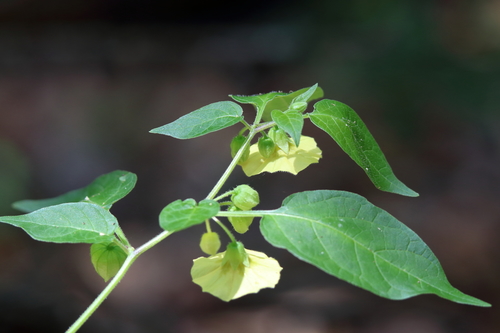
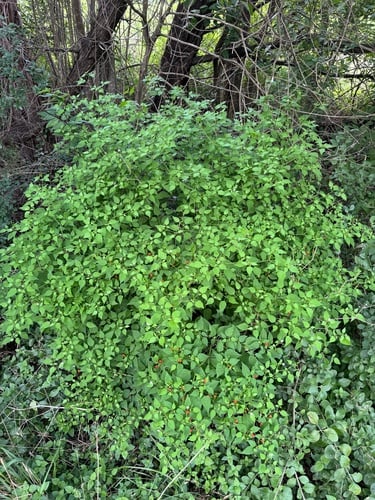
Solanum lasiocarpum
Dunal
Indian nightshade
iNaturalist· cc-by-nc-sa
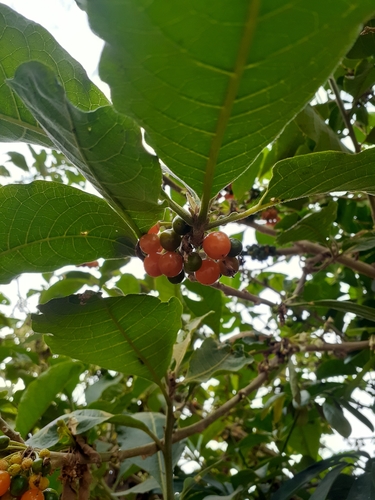
(c) Sutthikhun Phaengphongsai, some rights reserved (CC BY-NC-SA), uploaded by Sutthikhun Phaengphongsai
iNaturalist· cc-by-nc
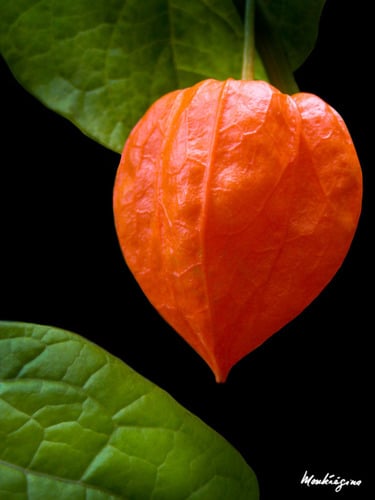
(c) Trevor Padgett, some rights reserved (CC BY-NC)
iNaturalist· cc0
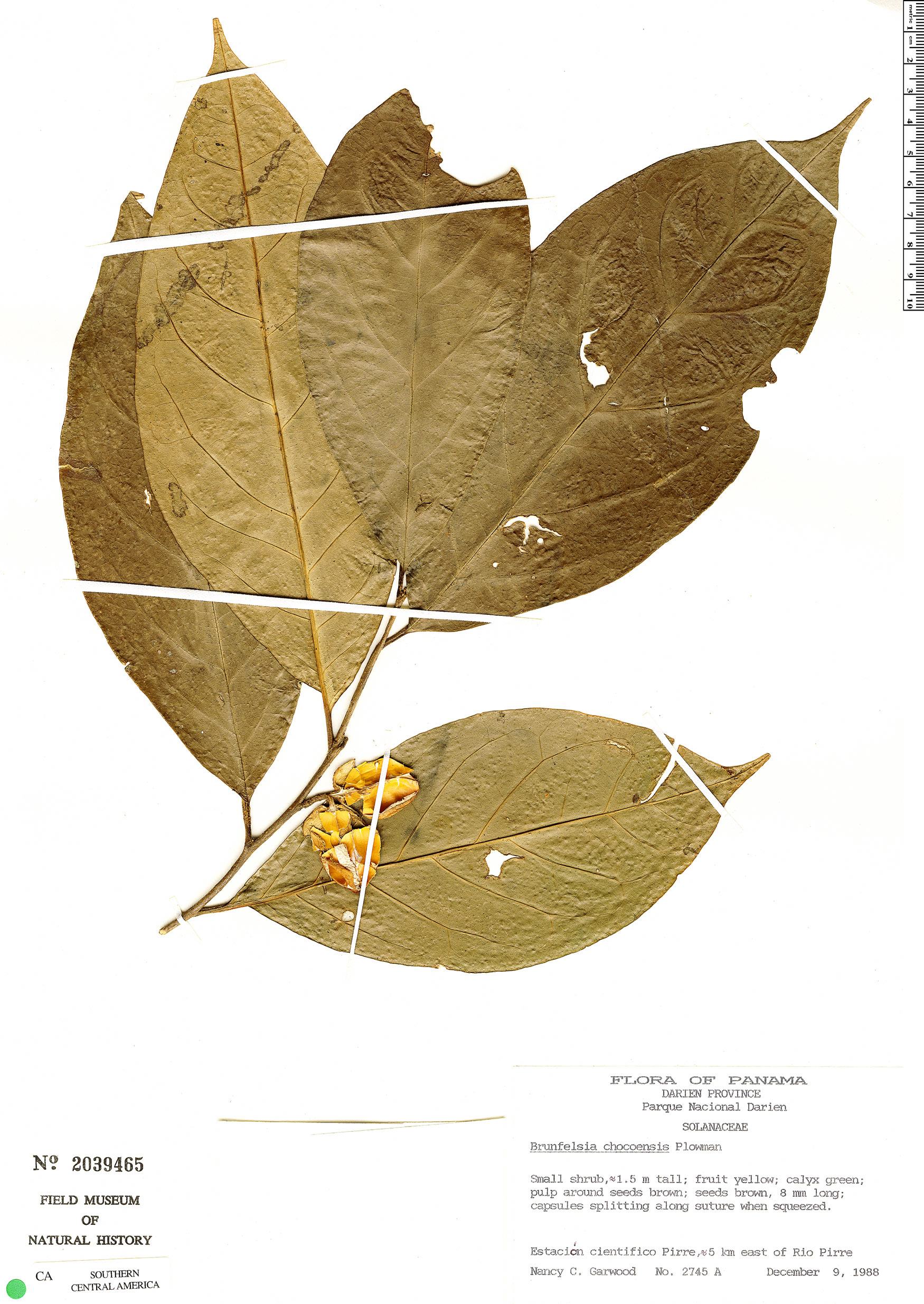
no rights reserved, uploaded by 葉子
Summary
Source: WikipediaSolanum lasiocarpum, synonym Solanum ferox L., otherwise known as Indian nightshade or hairy-fruited eggplant, is a plant that produces edible fruit. Its flowers are white and its fruits are pale yellow. S. lasiocarpum is found wild in parts of temperate and tropical Asia: the Andaman Islands, Sri Lanka, Indochina, south China, Taiwan, much of Malesia, Papuasia and Queensland, Australia. In other countries it is primarily known as a domesticated plant. Domesticated plants bear larger fruits and lack the prickly skin that is found in the wild plants. The color found in the center of fruit is light green, like that of Solanum quitoense. It's cultivated in tropical Asia, used in food additives for flavoring, and given to the sick as a folk medicine. In India, the locals use the fruit as a sour-relish in curries. In Thailand, a special kind of sauce called nam prek is made with the fruit. In Tonga, where the fruit known as the touloku was used similarly to the tomato and as such was displaced when the introduced latter became more popular. Solanum lasiocarpum is of interest to botanists because of its strong resemblance to, and apparent close relation to South American species, the cocona (S. sessiliflorum), the naranjilla (S. quitoense), and the pseudolulo (S. pseudolulo) in particular. When grown outside of their native range, all four of those plants will readily hybridize, producing sterile offspring. This has some potential to enhance the commercial viability of each of those species elsewhere in the world.
Description
A small prickly herb. It grows up to 1 m high. The leaves are rough and thorny. They are also hairy. They are 16-17 cm long by 15-16 cm wide. There are lobes around the edges. The flowers are in groups on the sides. They have 5 white petals. The fruit are round and green. They are 2-4 cm across. They are covered with fine hairs. They have many seeds.
Edible Uses
The young fruit are cooked and eaten with fish or eaten in salads.
Traditional Uses
The young fruit are cooked and eaten with fish. They are also eaten in salads.
This uses section is brief — help expand it
Medicinal Uses
The leaves are used as poultices for swellings. A decoction of the roots is prescribed to give relief when there are violent pains all over the body and discomfort after meals. A decoction is taken in the treatment of syphilis. The roots are used externally in a bath for fever at night, and, in a poultice, for itches, cuts, wounds, and severe bruises. The seeds are used for treating toothache - they are burned and the fumes inhaled. The plant (part not specified) is used in Bangladesh and India to treat coughs, asthma, fever, vomiting, sore throat, gonorrhoea and female sexual disorders.
Known Hazards
Although providing many well-known foods for people, including the potato, tomato, pepper and aubergine, most species in this genus also contain toxic alkaloids. Whilst these alkaloids can make the plant useful in treaing a range of medical conditions, they can also cause problems such as nausea, vomiting, salivation, drowsiness, abdominal pain, diarrhoea, weakness and respiratory depression. Unless there are specific entries with information on edible uses, it would be unwise to ingest any part of this plant.
Distribution
It is a tropical plant. It grows in humid places and dense forests between 200-1,000 m above sea level in southern China. In Yunnan.
Where It Grows
Asia, Australia, Bangladesh, Cambodia, China, India, Indochina, Indonesia, Laos, Malaysia, Myanmar, Papua New Guinea, PNG, Philippines, SE Asia, Sri Lanka, Taiwan, Thailand, Vietnam,
Cultivation
A plant of the moist tropics, where it is found at elevations up to 1,500 metres. It grows best in areas where annual daytime temperatures are within the range 24 - 30°c, but can tolerate 10 - 35°c. It prefers a mean annual rainfall in the range 1,200 - 2,000mm, but tolerates 800 - 4,200mm. Succeeds in full sun and in light shade. Can be grown in a wide range of well-drained, fertile soils. Prefers a pH in the range 5.5 - 7, tolerating 4.5 - 7.5.
Propagation
Seed - sow in trays in a nursery. Prick out the seedlings into individual pots when they are large enough to handle and grow them on fast. Plant them out when 10cm or more tall. Cuttings of half-ripe wood. Very easy, the cuttings root within a couple of weeks.
Other Uses
The seeds yield a yellow coloured oil, containing palmitic acid, stearic acid, oleic acid and linoleic acid. This report does not specify if the oil has any uses, or even if it is in sufficient quantity to be utilized.
Other Information
It is cultivated.
Nutrition
| Part | Moisture | kJ | kcal | Protein | Vit A | Vit C | Iron | Zinc |
|---|---|---|---|---|---|---|---|---|
| Fruit | 89.5 | 150 | 36 | 1.1 | — | 8 | 0.6 | 3.9 |
Synonyms
Also Known As
Balbalosa, Bisula, Kantha sola, Mak oek, Mao qie, Terong dayak
References (10)
- Antonio, M. A., et al, 2011. Survey and Characterization of Indigenous Food Plants in Ilocos Norte, Philippines, SEARCA Agricultural & Development Discussion Papr Series No. 2011-2
- Hoe, V. B. & Siong, K. H., 1999, The nutritional value of indigenous fruit and vegetables in Sarawak. Asia Pacific J. Clin. Nutr. 8(1):24-31
- Luczaj, L., et al, 2021, Wild food plants and fungi sold in the markets of Luang Prabang, Lao PDR. Journal of Ethnobiology and Ethnomedicine (2021) 17:6
- Maghirang, R. G., et al, 2018. Ethnobotanical Studies of Some Plants Commonly Used as Vegetables in Selected Provinces of the Philippines. Journal of Nature Studies. 17(2), 30-43.
- Menisa, A. A., et al, 2012, Survey and characterization of Indigenous Food Plants in Ilocos Norte, Philippines. SEARCA Discussion Paper series No. 2011-2
Show all 10 references Hide references
- Pasha, M. K. & Uddin, S. B., 2019, Minor Edible Fruits of Bangladesh. Bangladesh J. Plant Taxon. 26(2): 299–313
- Phatlamphu, N., et al, 2021, Ethnobotany of edible plants in Muang District, Kalasin Province, Thailand, Biodiversitas Vol. 22, No. 12 pp 5432-5444
- Samuels, J., 2015, Biodiversity of Food Species of the Solanaceae Family: A Preliminary Taxonomic Inventory of Subfamily Solanoideae. Resources 2015, 4. 277-322
- Wiersema, J. H. & Leon, B., 2013, World Economic Plants. A Standard Reference CRC Press. 2nd Ed. p 645
- World Checklist of Useful Plant Species 2020. Royal Botanic Gardens, Kew