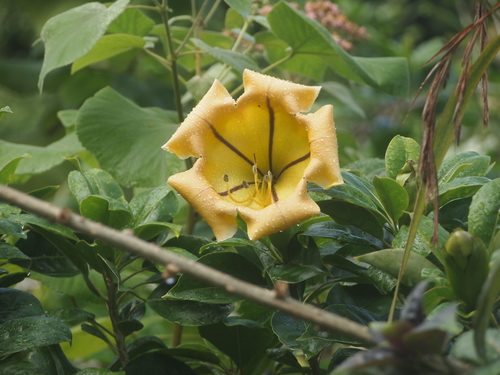
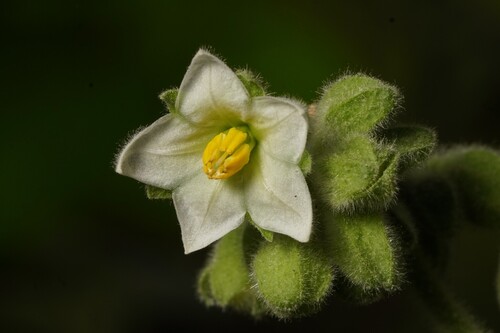
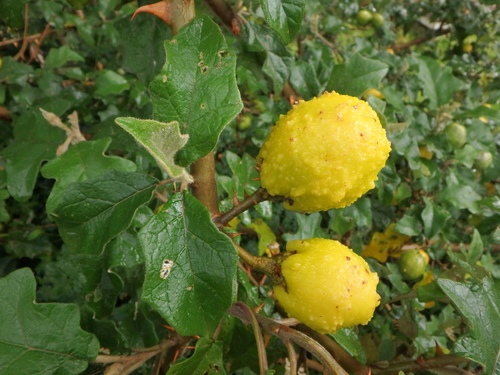
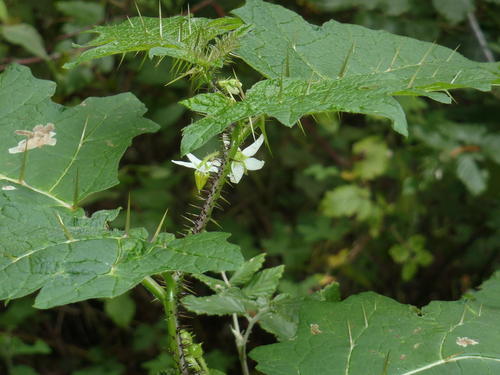
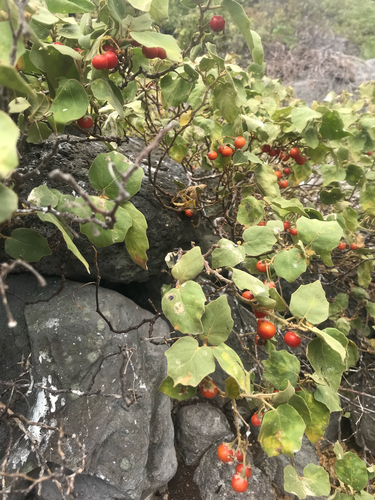
Solanum liximitante
R.E.Schult.
gbif· cc0
President and Fellows of Harvard College
Summary
Perennial herb with hermaphrodite flowers. Grows in light sandy, medium loamy, and heavy clay soils. Adapts to mildly acid, neutral, and mildly alkaline pH. Tolerates semi-shade in light woodland or full sun. Prefers consistently moist soil.
Description
Perennial herb with hermaphrodite flowers. Grows in light sandy, medium loamy, and heavy clay soils. Adapts to mildly acid, neutral, and mildly alkaline pH. Tolerates semi-shade in light woodland or full sun. Prefers consistently moist soil.
Edible Uses
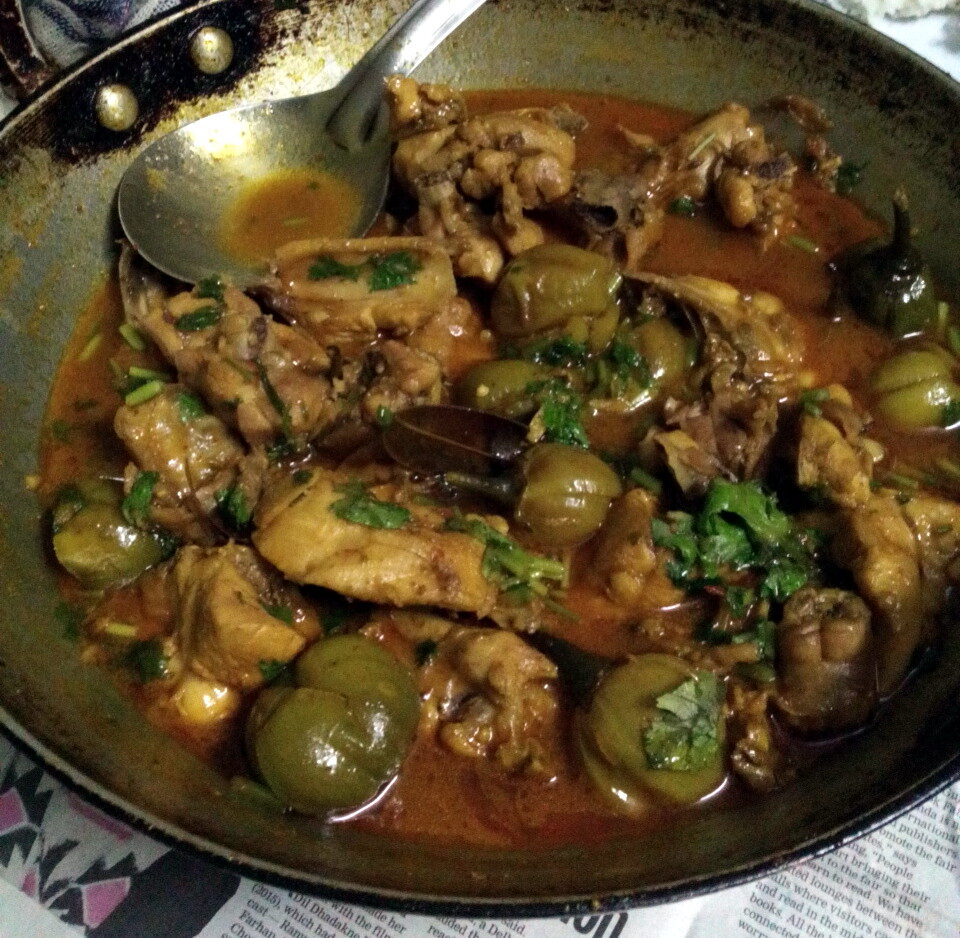
The fruit is edible, though no further details are available.
Medicinal Uses
None known
Known Hazards
Although no specific mention of toxicity has been seen for this species, it belongs to a genus where many if not all the members have poisonous leaves and sometimes also the unripe fruits.
Distribution
A tropical plant.
Where It Grows
Amazon, Andes, Colombia, Ecuador, South America,
Cultivation
We have very little information on this species and do not know if it will be hardy in Britain. The following notes are based on the general needs of the genus. Succeeds in most soils.
Propagation
Sow seed in early spring in a warm greenhouse. Once seedlings are large enough to handle, prick them out into individual pots and plant outside after the last expected frosts.
Other Uses
None known Special Uses
Notes
There are about 1400 Solanum species.
Also Known As
Chiri, Cocanilla, Uvilla
References (3)
- Etkin, N. L. (Ed.), 1994, Eating on the Wild Side, Univ. of Arizona. p 141
- Kermath, B. M., et al, 2014, Food Plants in the Americas: A survey of the domesticated, cultivated and wild plants used for Human food in North, Central and South America and the Caribbean. On line draft. p 820
- Plants for a Future database, The Field, Penpol, Lostwithiel, Cornwall, PL22 0NG, UK. http://www.scs.leeds.ac.uk/pfaf/