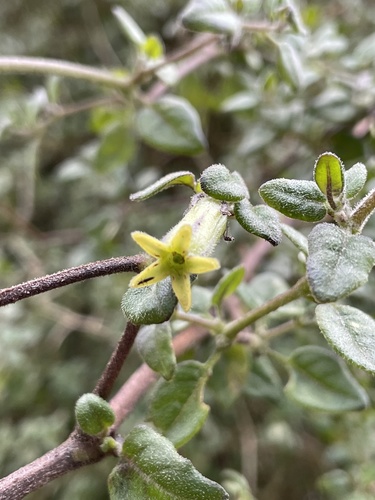
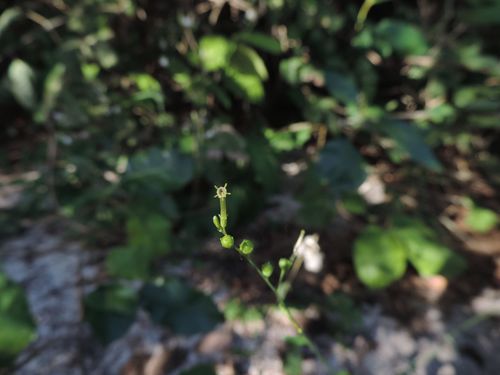
Solanum hyporhodium
A. Braun & C. D. Bouche
Cocona, Peach tomato
gbif· cc-by-nc
Field Museum of Natural History - Botany Department | GDI 2013-2015
iNaturalist· cc-by-nc
(c) José Edilson Espitia Barrera, some rights reserved (CC BY-NC), uploaded by José Edilson Espitia Barrera
iNaturalist· cc-by-nc
(c) Sune Holt, some rights reserved (CC BY-NC), uploaded by Sune Holt
Description
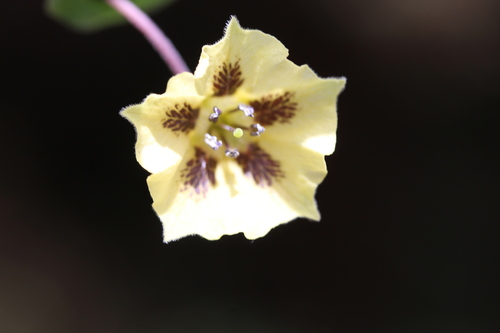
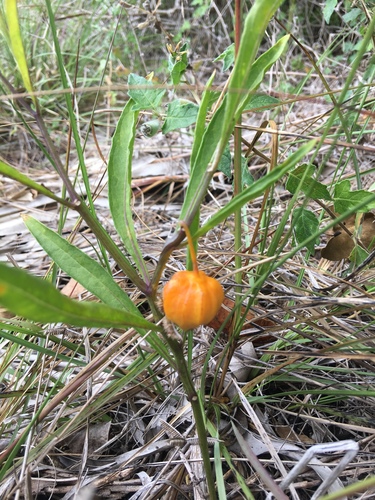
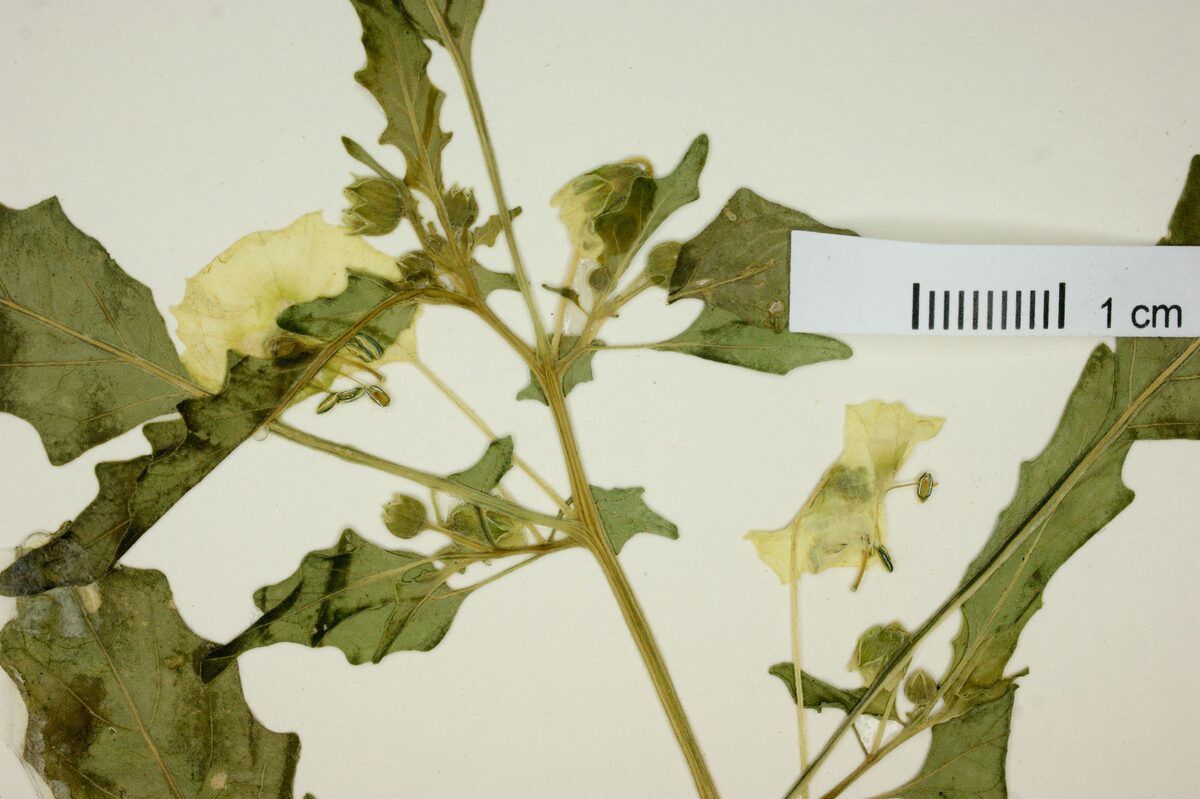
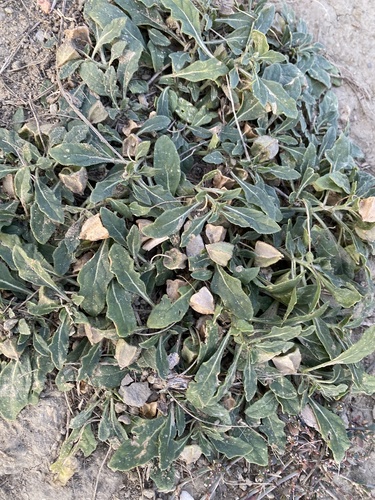
A shrub. It grows 2 m tall. The plant is similar to a naranjilla. The leaves are dark green above and purple underneath. The fruit are like a tamarillo. The fruit are egg shaped. They are 2.5-10 cm across. The colour can be yellow to red.
Edible Uses
The fruit is eaten raw.
Traditional Uses
The fruit are eaten raw.
This uses section is brief — help expand it
Known Hazards
Although providing many well-known foods for people, including the potato, tomato, pepper and aubergine, most species in this genus also contain toxic alkaloids. Whilst these alkaloids can make the plant useful in treaing a range of medical conditions, they can also cause problems such as nausea, vomiting, salivation, drowsiness, abdominal pain, diarrhoea, weakness and respiratory depression. Unless there are specific entries with information on edible uses, it would be unwise to ingest any part of this plant.
Distribution
A tropical plant. It must be in frost free areas. It suits the tropical lowlands. It occurs at about 700 m above sea level.
Where It Grows
Australia, Brazil, South America, Trinidad-Tobago, Venezuela,
Cultivation
A plant of the moist tropics, where it is found at elevations up to 1,500 metres. It grows best in areas where annual daytime temperatures are within the range 18 - 26°c, but can tolerate 10 - 30°c. It prefers a mean annual rainfall in the range 800 - 1,100mm, but tolerates 700 - 1,200mm. Prefers a sunny position. Grows best in a light, moderately fertile soil. Prefers a pH in the range 6.8 - 7.2, tolerating 6.5 - 7.5. Fruits can be harvested about 210 days after planting.
Propagation
Seed - sow in trays in a nursery. Prick out the seedlings into individual pots when they are large enough to handle and grow them on fast. Plant them out when 10cm or more tall. Cuttings of half-ripe wood. Very easy, the cuttings root within a couple of weeks.
Production
Plants produce fruit in 2 years.
Notes
There are about 1400 Solanum species.
Nutrition
| Part | Moisture | kJ | kcal | Protein | Vit A | Vit C | Iron | Zinc |
|---|---|---|---|---|---|---|---|---|
| Fruit | — | — | 0.6 | 30 | — | 0.14 | — | — |
Synonyms
Also Known As
Huevo de araguato, Huevo de gato
References (11)
- Darley, J.J., 1993, Know and Enjoy Tropical Fruit. P & S Publishers. p 119
- Fouqué, A., 1972, Espèces fruitières d'Amérique tropicale. Institut français de recherches fruitierès outre-mer
- Gouldstone, S., 1978, Australian and New Zealand Guide to food bearing plants. Books for Pleasure. p 29
- Gouldstone, S., 1983, Growing your own Food-bearing Plants in Australia. Macmillan p 93
- Ind. sem. hort. bot. berol. app. 10. 1853
Show all 11 references Hide references
- Mabberley, D. J., 1990, The plant-book: a portable dictionary of the higher plants. Cambridge University Press. NY.
- Macmillan, H.F. (Revised Barlow, H.S., et al) 1991, Tropical Planting and Gardening. Sixth edition. Malayan Nature Society. Kuala Lumpur. p 307
- NYBG Herbarium "edible"
- Purseglove, J.W., 1968, Tropical Crops Dicotyledons, Longmans. p 556
- Samuels, J., 2015, Biodiversity of Food Species of the Solanaceae Family: A Preliminary Taxonomic Inventory of Subfamily Solanoideae. Resources 2015, 4. 277-322
- Tankard, G., 1990, Tropical fruit. An Australian Guide to Growing and using exotic fruit. Viking p 107