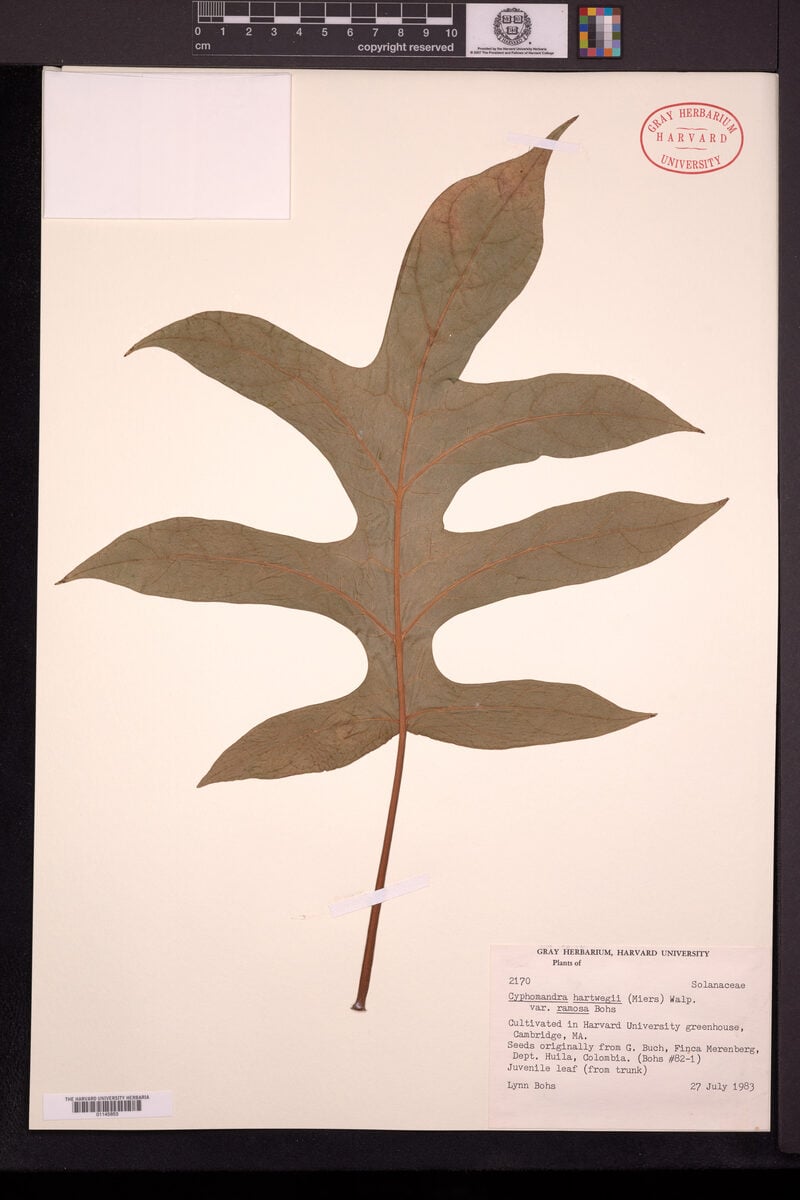
Solanum circinatum
Bohs
Curcinate nightshade
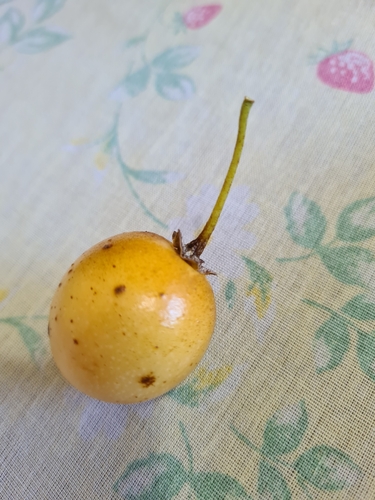
iNaturalist· cc-by-nc
(c) Alisson Fierro-Minda, some rights reserved (CC BY-NC)
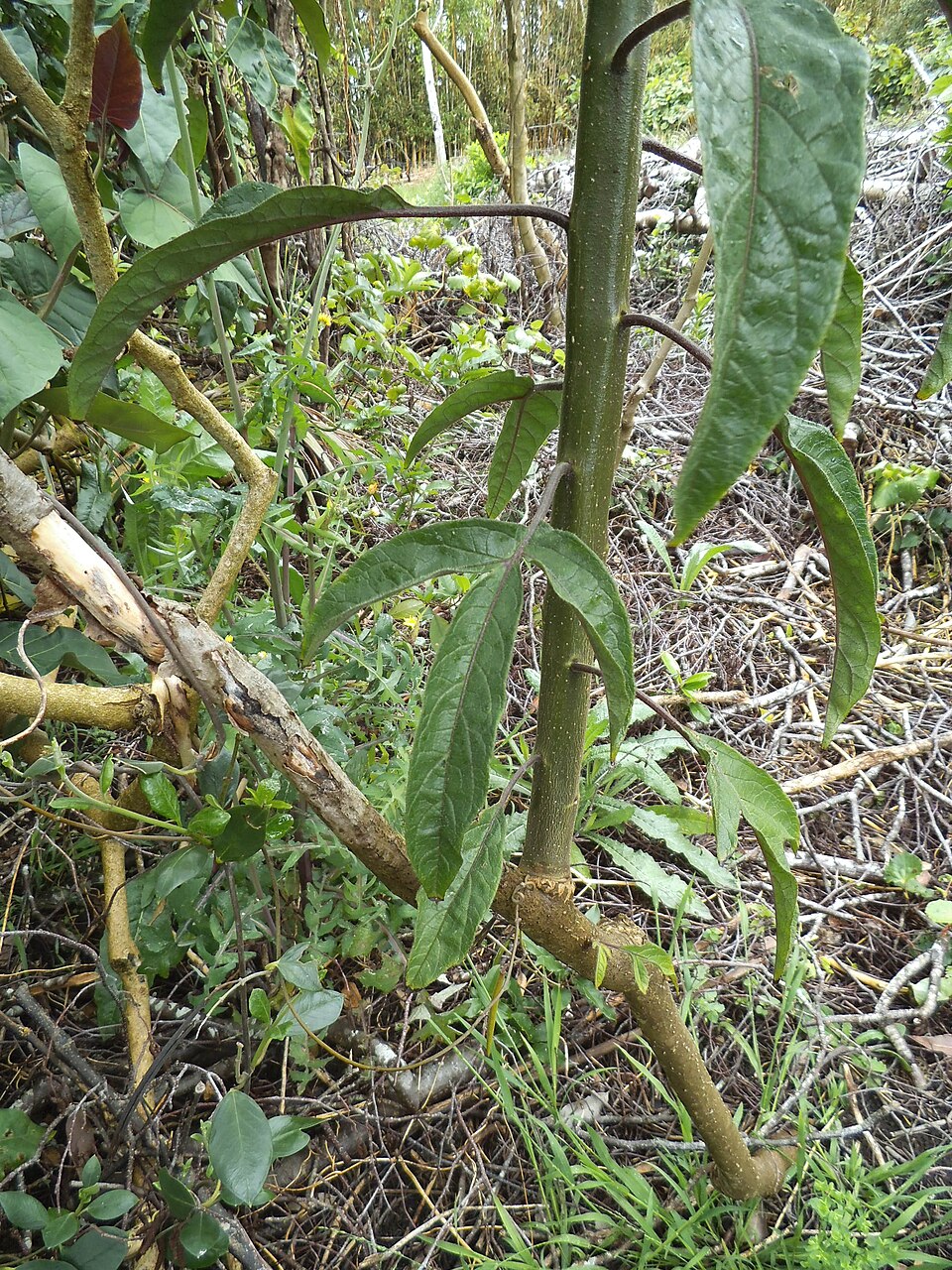
iNaturalist· cc-by-nc
(c) Alisson Fierro-Minda, some rights reserved (CC BY-NC)
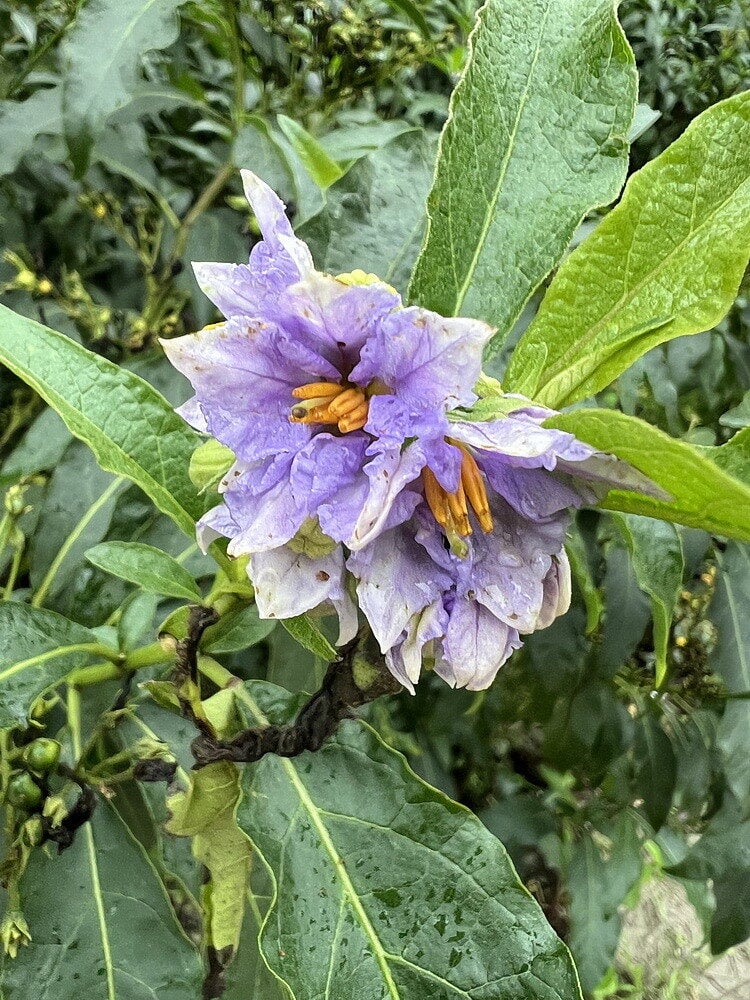
iNaturalist· cc-by-nc
(c) Alisson Fierro-Minda, some rights reserved (CC BY-NC)
Description
A cultivated tropical shrub that produces golden yellow fruit, recorded at altitudes up to 1,800 m above sea level in Colombia.
This description is brief — help expand it
Edible Uses
The fruit has been embraced by Eastern cultures. It is primarily used as decorative foliage for religious and festival floral arrangements in Asia. The fruit is imported for the creation of Chinese New Year trees, due to their golden colored fruit and the belief that the five "fingers" on the fruit represent longevity for the family. In Chinese culture, the plant is known as five-fingered eggplant (五指茄) and in Japan it is known as horned eggplant (ツノナス), fox eggplant (キツネナス), or foxface (フォックスフェイス). The juice of the fruit can be used as a detergent in place of a washing powder, making it similar to the soap nut. The Kofan People of Colombia and Ecuador use the plant as an insect repellent, primarily against cockroaches. The fruit works as a repellent because of the toxicity of steroidal glycoalkaloid. Although the mature fruit is poisonous, it can be cooked and eaten like a vegetable when it is unripe. It provides a good source of calcium, phosphorus, iron and vitamin B. One way that the fruit can be prepared is boiling the whole fruit and drinking the juices once boiled. In the Philippines, not only is the fruit eaten, but the leaves are also prepared as a tea considered to be anodyne, a mild narcotic.
Traditional Uses
The fruit are eaten raw. They are also sweetened and made into preserves, juice or candied into syrup.
This uses section is brief — help expand it
Medicinal Uses
A decoction of the stems and leaves is used in the treatment of fevers. The macerated leaves are useful for treating insect bites, cuts, wounds and inflammations. The genus Cyphomandra contains the coumarin scopoletine.
Known Hazards
The unripe fruit is slightly toxic. Although providing many well-known foods for people, including the potato, tomato, pepper and aubergine, most species in this genus also contain toxic alkaloids. Whilst these alkaloids can make the plant useful in treaing a range of medical conditions, they can also cause problems such as nausea, vomiting, salivation, drowsiness, abdominal pain, diarrhoea, weakness and respiratory depression. Unless there are specific entries with information on edible uses, it would be unwise to ingest any part of this plant.
Distribution
It is a tropical plant. In Colombia it has been recorded at 1,800 m above sea level.
Where It Grows
Amazon, Andes, Belize, Bolivia, Brazil, Central America, Colombia, Costa Rica, Ecuador, El Salvador, Guatemala, Guianas, Guyana, Honduras, Mexico, Nicaragua, North America, Panama, Peru, South America, Suriname, Venezuela,
Cultivation
A plant of higher elevations in the moist tropics. Plants fruit best with cool temperatures in the growing season. Succeeds in a sunny position in any well-drained soil. Prefers a light fertile soil. Dislikes drought. Plants are very prone to wind damage. Plants are probably insensitive to day-length. A very fast growing plant, it starts to fruit within two years from seed and reaches peak production in 3 - 4 years. Trees are, however, short-lived and start to degenerate after about 8 years. Individual trees have a long period of continual flowering, often for periods of 12 months or more. Plants usually ripe their fruit over a period of time, though pruning methods can be used to produce a peak time of fruiting. This species could be a valuable source of gene material for qualities such as nematode resistance, root rot resistance, fragrance, flavour, colour and yield. Plants have a shallow spreading root system and resent surface hoeing, they are best given a good mulch. The leaves have a pungent smell. Plants are subject to attacks by red spider mites.
Propagation
Seed - usually germinates within 4 weeks at 15°c, within 2 weeks at 25°c. When they are large enough to handle, prick the seedlings out into individual pots and grow them on until large enough to plant out. Cuttings of greenwood.
Other Uses
The juice of the berry is used to paint designs on pottery. It is applied after firing and then exposed to smoke and gives a black colour. Many designs combine geometric patterns of black and white (from a slip of light clay) and represent the visual effects produced by Banisteriopsis.
Other Information
It is cultivated.
Synonyms
Also Known As
Asna panga, Contra gallinazo, Dwergtafrabon, Fruta de agua, Gallinaso sacha, Gallinazo panga, Irayo panga, Irayuyo, Irayuyu, Ko pi, Maluside, Monca prieto, Nanakamo, Nanakawe, Naranjilla, Pepinillo, Regalgar, Reventadera, Sandillo, Tigriston, Tonga, Tsutsucuru, Venenillo, Zopilote
References (7)
- Grandtner, M. M., 2008, World Dictionary of Trees. Wood and Forest Science Department. Laval University, Quebec, Qc Canada. (Internet database http://www.wdt.qc.ca)
- Grandtner, M. M. & Chevrette, J., 2013, Dictionary of Trees, Volume 2: South America: Nomenclature, Taxonomy and Ecology. Academic Press p 615
- Kermath, B. M., et al, 2014, Food Plants in the Americas: A survey of the domesticated, cultivated and wild plants used for Human food in North, Central and South America and the Caribbean. On line draft. p 816
- Lopez-Diago, D. & Garcia, N., 2021, Wild edible fruits of Colombia. Biota ColomBiana 22 (2) p 52
- NYBG herbarium "edible"
Show all 7 references Hide references
- Penafield Anchundia, D. D., 2017, Traditional food consumption and its nutritional contribution in Guasaganda, Central Ecuador. PhD Ghent University p 72
- Wiersema, J. H. & Leon, B., 2013, World Economic Plants. A Standard Reference CRC Press. 2nd Ed. p 643