Solanum chippendalei
Symon
Green bush tomato, Anakety
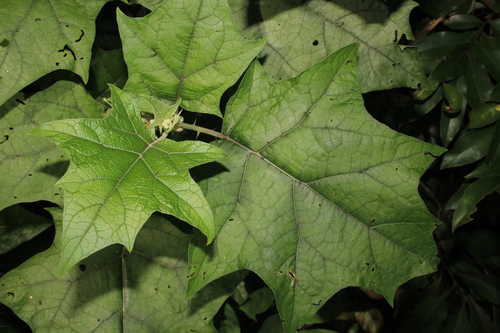
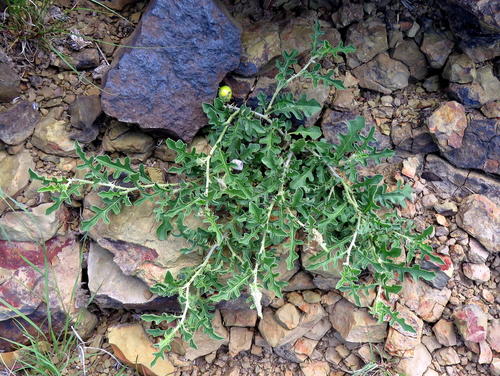
iNaturalist· cc-by-nc
(c) Jason Cantley, some rights reserved (CC BY-NC), uploaded by Jason Cantley
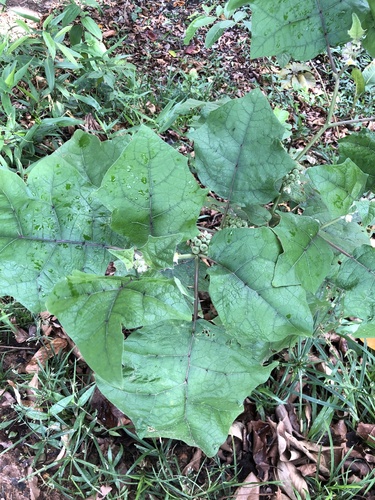
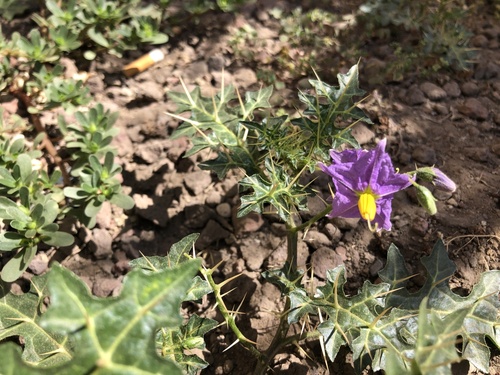
iNaturalist· cc-by-nc
(c) tanyahattingh, some rights reserved (CC BY-NC)
iNaturalist· cc-by-nc
(c) tanyahattingh, some rights reserved (CC BY-NC)
Summary
Source: WikipediaSolanum chippendalei (common names - solanum, bush tomato, ngaru, Chippendale's tomato) is a small fruiting shrub in the family Solanaceae, native to northern Australia. It is named after the botanist who described it, George Chippendale. The fruits, known as "bush tomatoes", are edible and are an important indigenous food, and the Aboriginal people who use them broadcast the seed for later harvesting. The species occurs in Western Australia, the Northern Territory and Queensland.
Description
A shrub. It can be erect or spreading. It grows 0.3-1 m high. The flowers are purple.
This description is brief — help expand it
Edible Uses
The seeds are removed and the flesh is cooked and eaten fresh, or the fruit is dried and used in salads.
Traditional Uses
The seeds are removed then the flesh is cooked and eaten. They are also dried and used in salads.
This uses section is brief — help expand it
Known Hazards
Although providing many well-known foods for people, including the potato, tomato, pepper and aubergine, most species in this genus also contain toxic alkaloids. Whilst these alkaloids can make the plant useful in treaing a range of medical conditions, they can also cause problems such as nausea, vomiting, salivation, drowsiness, abdominal pain, diarrhoea, weakness and respiratory depression. Unless there are specific entries with information on edible uses, it would be unwise to ingest any part of this plant.
Distribution
It grows on red sandy soils. It can grow in arid places.
Where It Grows
Australia*,
Cultivation
A plant of arid areas in the subtropics and tropics of Australia.
Propagation
Seed - sow in trays in a nursery. Prick out the seedlings into individual pots when they are large enough to handle and grow them on fast. Plant them out when 10cm or more tall. Cuttings of half-ripe wood. Very easy, the cuttings root within a couple of weeks. Division of rhizomes.
Notes
There are about 1400 Solanum species.
Nutrition
| Part | Moisture | kJ | kcal | Protein | Vit A | Vit C | Iron | Zinc |
|---|---|---|---|---|---|---|---|---|
| Fruit | 75.1 | 384 | 92 | 1.6 | — | 21 | 1.8 | 0.4 |
Also Known As
Ngaru
References (16)
- Bonney, N., 2012, Edible Wild Native Plants for Southern Australia. p 110
- Cancilla, D., 2018, Ethnobotanical and Ethnozoological Values Desktop Assessment - Eliwana Project. p 44
- Cherikoff V. & Isaacs, J., The Bush Food Handbook. How to gather, grow, process and cook Australian Wild Foods. Ti Tree Press, Australia p 119, 191
- Green, J., (Ed.), 2003, Anmatyerr Plant Stories. AID Press. p 2
- Hardwick, G., 2001, Economically Useful Plants for Northern Australia: Master Species List. Crusader eBooks.
Show all 16 references Hide references
- INFOODS:FAO/INFOODS Databases
- Isaacs, J., 1987, Bush Food, Aboriginal Food and Herbal Medicine. Weldons. p 68
- Latz, P.K., 1996, Bushfires and Bushtucker: Aboriginal plant use in Central Australia. IAD Press Alice Springs p 271
- Latz, P & Wightman, G., 1995, Desert Bush Tucker Identikit. Common Native Food Plants of Central Australia. Parks & Wild Commission Northern territory. p 38
- Lazarides, M. & Hince, B., 1993, Handbook of Economic Plants of Australia, CSIRO. p 221
- Low, T., 1991, Wild Food Plants of Australia. Australian Nature FieldGuide, Angus & Robertson. p 166
- Miers, G., 2004, Cultivation and sustainable wild harvest of Bushfoods by Aboriginal Communities in Central Australia. RIRDC report W03/124 p 20
- Morley, B.D., & Toelken, H.R., (Eds), 1983, Flowering Plants in Australia. Rigby. p 266
- Paczkowska, G . & Chapman, A.R., 2000, The Western Australian Flora. A Descriptive Calatogue. Western Australian Herbarium. p 537
- Samuels, J., 2015, Biodiversity of Food Species of the Solanaceae Family: A Preliminary Taxonomic Inventory of Subfamily Solanoideae. Resources 2015, 4. 277-322
- Smith, K & I., 1999, Grow your own bushfoods. New Holland. Australia. p 65, 67