Solanum ferox
L.
Hairy-fruited eggplant
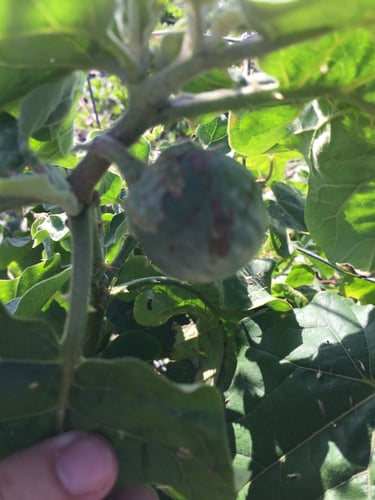
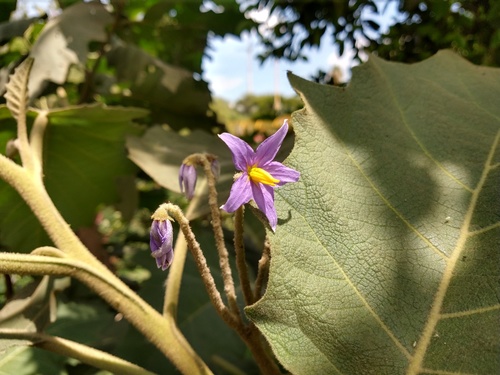
iNaturalist· cc-by-nc
(c) Dewald du Plessis, some rights reserved (CC BY-NC)
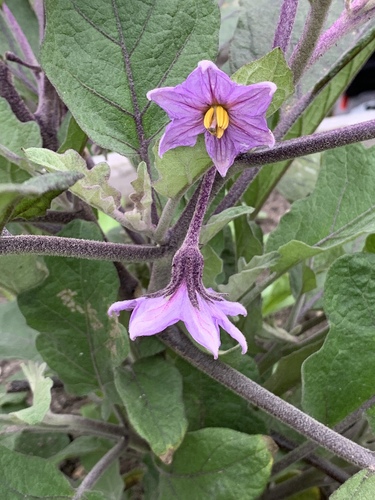
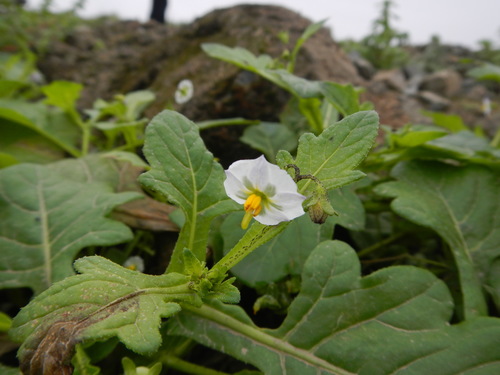
iNaturalist· cc-by-nc
(c) Dewald du Plessis, some rights reserved (CC BY-NC)
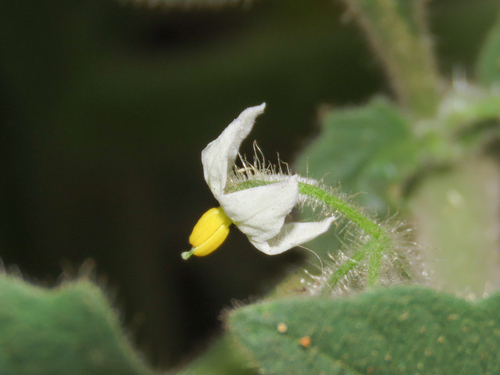
iNaturalist· cc-by-nc
(c) Dewald du Plessis, some rights reserved (CC BY-NC)
Description
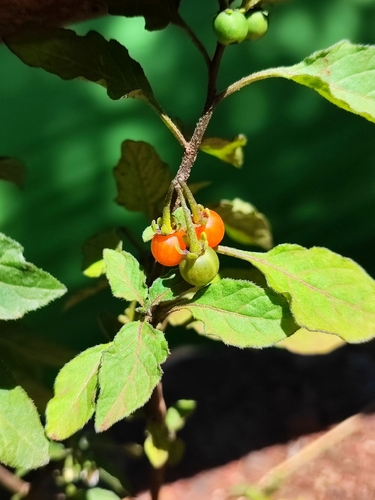
A small prickly shrub. It grows 1-2 m tall. The flowers are white. The fruit are orange and fuzzy. They are 5 cm across.
This description is brief — help expand it
Edible Uses
The fruit is used in sour relish (becoming more acidic as it ripens) and in curries. Seeds are also edible.
Traditional Uses
The fruit are used in sour relish. (The fruit get more acid as they get ripe.) They are used in curries.
This uses section is brief — help expand it
Distribution
A tropical plant.
Where It Grows
Asia, Australia, Brunei, India, Indochina, Indonesia, Malaysia, Myanmar, Northeastern India, Pacific, Papua New Guinea, PNG, Philippines, SE Asia, Thailand,
Other Information
It is a commercially cultivated vegetable.
Notes
There are about 1400 Solanum species. There are 4 different plants named Solanum ferox with 4 different authorities.
Nutrition
| Part | Moisture | kJ | kcal | Protein | Vit A | Vit C | Iron | Zinc |
|---|---|---|---|---|---|---|---|---|
| Fruit | 78.8 | 259 | 62 | 1.8 | — | 0 | 4.5 | 5.7 |
Also Known As
Anachundai, Balbalusangi, Bangko, Garbhada, Haladigulla anesundegida, Hepi sokran, Kotayeng, Khunthai, Ma uk muak, Molakkai, Mulakkayi, Nbabawk, Rambegun, Sin-hkayan, Sin-kadi, Talong gubat, Tarabi, Terong asam, Terong bulu, Theso keho, Titabhekuri, Velutha vazuthana
References (18)
- Ambasta, S.P. (Ed.), 2000, The Useful Plants of India. CSIR India. p 580
- Arora, R. K., 2014, Diversity in Underutilized Plant Species - An Asia-Pacific Perspective. Bioversity International. p 51
- Baishya, S. Kr., et al, 2013, Survey of Wild Edible Fruits of Dhubri District, Assam, India. Plant Archives Vol 13 (1): 155-158
- Barua, U., et al, 2007, Wild edible plants of Majuli island and Darrang districts of Assam. Indian Journal of Traditional Knowledge 6(1) pp 191-194
- Burkill, I.H., 1966, A Dictionary of the Economic Products of the Malay Peninsula. Ministry of Agriculture and Cooperatives, Kuala Lumpur, Malaysia. Vol 2 (I-Z) p 2079
Show all 18 references Hide references
- Ethnobotany of Karbis. Chapter 4 in p 101
- Facciola, S., 1998, Cornucopia 2: a Source Book of Edible Plants. Kampong Publications, p 236
- Herklots,
- Hoe, V. B. & Siong, K. H., 1999, The nutritional value of indigenous fruit and vegetables in Sarawak. Asia Pacific J. Clin. Nutr. 8(1):24-31
- Kays, S. J., and Dias, J. C. S., 1995, Common Names of Commercially Cultivated Vegetables of the World in 15 languages. Economic Botany, Vol. 49, No. 2, pp. 115-152
- Milow, P., et al, 2013, Malaysian species of plants with edible fruits or seeds and their evaluation. International Journal of Fruit Science. 14:1, 1-2
- Peekel, P.G., 1984, (Translation E.E.Henty), Flora of the Bismarck Archipelago for Naturalists, Division of Botany, Lae, PNG. p 494, 497
- Pegu, R., et al, 2013, Ethnobotanical study of Wild Edible Plants in Poba Reserved Forest, Assam, India. Research Journal of Agriculture and Forestry Sciences 1(3):1-10
- Plants of Papua New Guinea LAE herbarium record
- Smith, P.M., 1979, Solanums, in Simmonds, N.W., (ed), Crop Plant Evolution. Longmans. London. p 322
- Teron, R. & Borthakur, S. K., 2016, Edible Medicines: An Exploration of Medicinal Plants in Dietary Practices of Karbi Tribal Population of Assam, Northeast India. In Mondal, N. & Sen, J.(Ed.) Nutrition and Health among tribal populations of India. p 155
- Terra, G.J.A., 1973, Tropical Vegetables. Communication 54e Royal Tropical Institute, Amsterdam, p 76
- Uphof,