Physalis pubescens var. hygrophila
(Mart.) Dunal
gbif· cc-by
Royal Botanic Gardens, Kew
gbif· cc-by
The Trustees of the Natural History Museum, London
Summary
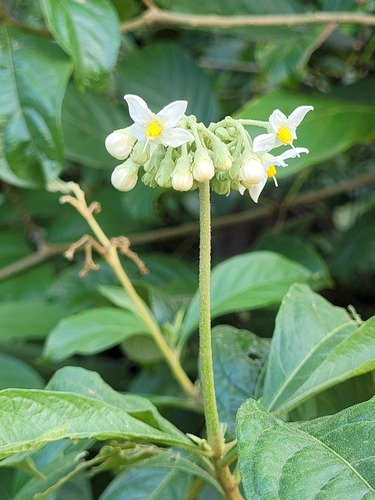
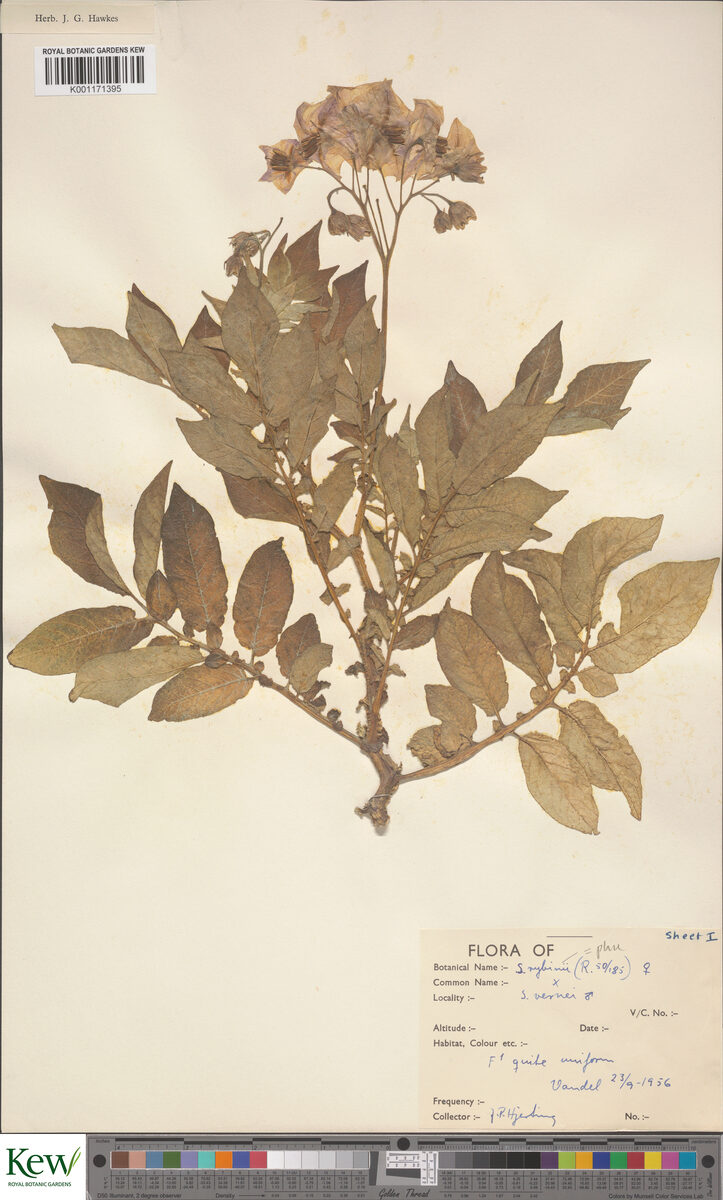
Source: WikipediaPhysalis pubescens is a species of flowering plant in the nightshade family known by many common names, including husk tomato, low ground-cherry and hairy groundcherry in English, and muyaca and capulí in Spanish. It is native from Brazil, but also found in southern half of the United States, Mexico, Central and much of South America. It can be found elsewhere as an introduced species and sometimes a weed. It can grow in many types of habitat, including disturbed areas. This is an annual herb producing a glandular, densely hairy stem up to about 60 cm (24 in) in maximum height from a taproot. The oval or heart-shaped leaves are 3–9 cm (1.2–3.5 in) long and have smooth or toothed edges. The flowers blooming from the leaf axils are bell-shaped and about a centimeter long. They are yellow with five dark spots in the throats, and have five stamens tipped with blue anthers. The five-lobed calyx of sepals at the base of the flower enlarges as the fruit develops, becoming an inflated, ribbed, lanternlike structure 2–4 cm (0.79–1.57 in) long which contains the berry.
Description
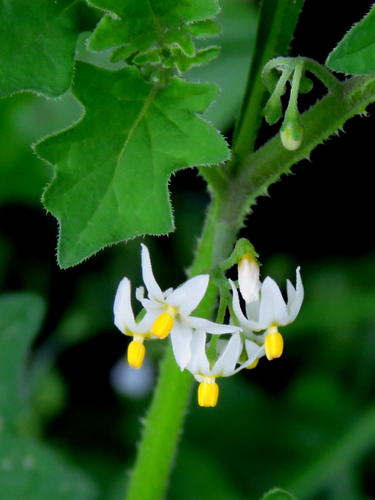
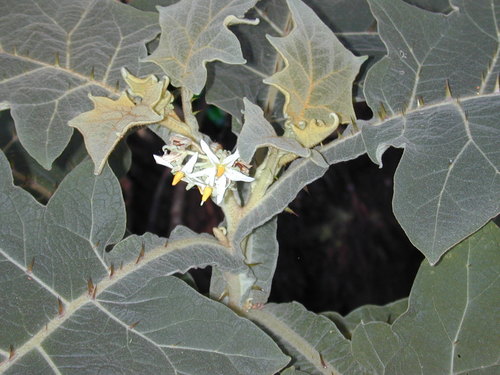
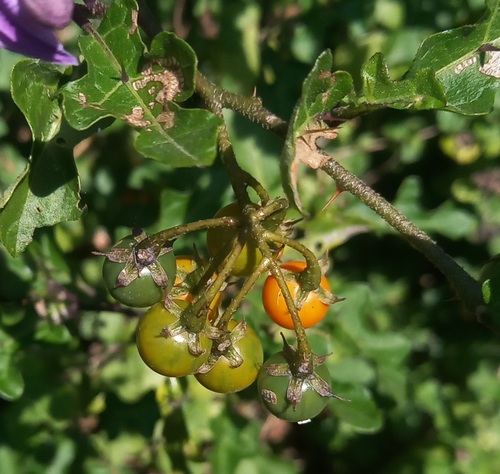
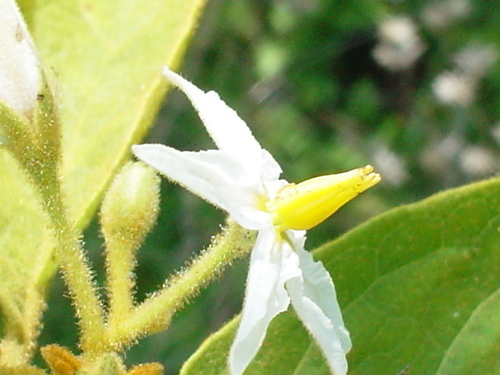
A herb. It grows each year from seed. The flowers are white with purple marks. The ripe fruit are yellow.
This description is brief — help expand it
Edible Uses
The fruit is eaten.
Distribution
It is a tropical plant. In Argentina it grows between 100-1,000 m above sea level.
Where It Grows
Argentina, Brazil, Paraguay, Peru, South America*,
Also Known As
Muyaca
References (1)
- Reis, S. V. and Lipp, F. L., 1982, New Plant Sources for Drugs and Foods from the New York Botanical Garden herbarium. Harvard. p 270 (As Physalis hygrophila)