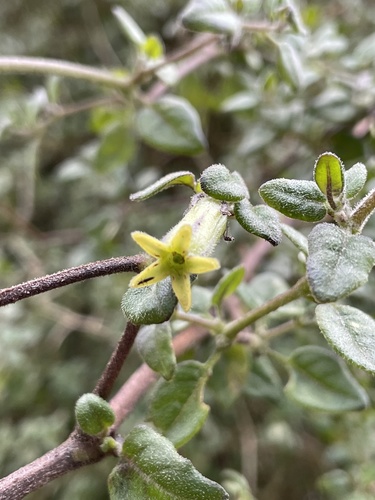
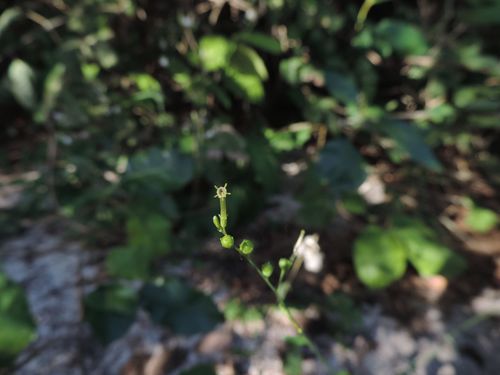
Solanum cardiophyllum
Lindl.
Hearleaf nightshade
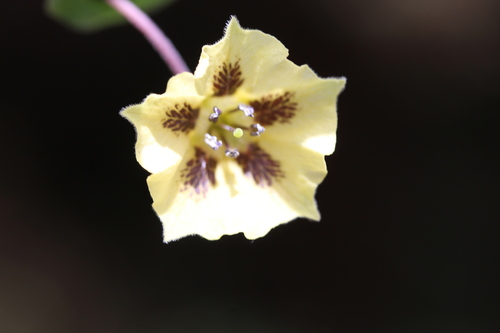
iNaturalist· cc-by-nc
(c) Allen Coombes, some rights reserved (CC BY-NC), uploaded by Allen Coombes
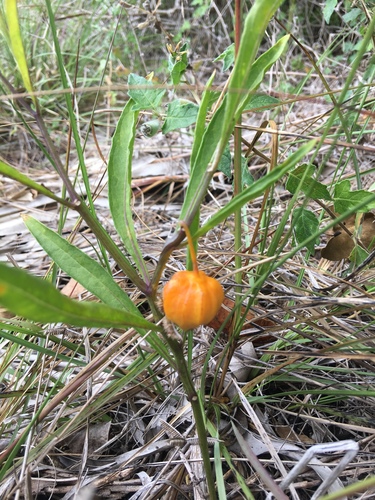
iNaturalist· cc-by-nc
(c) jcdelgado, some rights reserved (CC BY-NC)
Summary
Source: WikipediaSolanum cardiophyllum, known as cimatli, the heartleaf horsenettle or heartleaf nightshade, is a North American species, found primarily in Mexico. It is also present in some parts of the SW United States, but was probably introduced. This is one of the few wild potato species that was commonly used as food. The Aztec and the Chichimeca ate S. cardiophyllum and the practice continues in some parts of Mexico today. There was at least one farm that was growing S. cardiophyllum, S. ehrenbergii, and S. stoloniferum for market in Jalisco as recently as 2010. It is listed as an invasive weed in some parts of the US.
Description
A herbaceous potato relative in the nightshade family found in tropical regions, sold in local markets.
This description is brief — help expand it
Edible Uses
The roots and tubers are edible.
Distribution
It is a tropical plant.
Where It Grows
Mexico*,
Other Information
It is sold in local markets.
Notes
There are about 1400 Solanum species.
Also Known As
Papitas gueras o papas de monte
References (7)
- Cuevas-Arias, C. T., et al., 2008, Solanaceae diversity in the state of Jalisco, Mexico. Revista Mexicana de Biodiversidad 79: 67- 79
- J. Hort. Soc. London 3:70. 1848
- Mapes, C. & Basurto, F., 2016, Biodiversity and Edible Plants of Mexico. Chapter 5 in R. Lira, et al. (eds.), Ethnobotany of Mexico, Ethnobiology, Springer. p 110
- Samuels, J., 2015, Biodiversity of Food Species of the Solanaceae Family: A Preliminary Taxonomic Inventory of Subfamily Solanoideae. Resources 2015, 4. 277-322
- USDA, ARS, National Genetic Resources Program. Germplasm Resources Information Network - (GRIN). [Online Database] National Germplasm Resources Laboratory, Beltsville, Maryland. Available: www.ars-grin.gov/cgi-bin/npgs/html/econ.pl (10 April 2000)
Show all 7 references Hide references
- Wiersema, J. H. & Leon, B., 2013, World Economic Plants. A Standard Reference CRC Press. 2nd Ed. p 643
- World Checklist of Useful Plant Species 2020. Royal Botanic Gardens, Kew