Smithia sensitiva
Aiton
iNaturalist· cc-by-nc
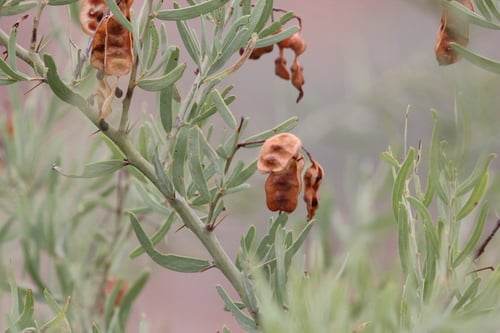
(c) Mayuresh Kulkarni, some rights reserved (CC BY-NC), uploaded by Mayuresh Kulkarni
iNaturalist· cc-by-nc
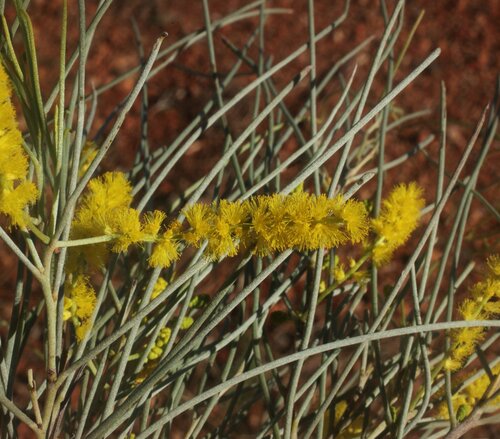
(c) Aniruddha Singhamahapatra, some rights reserved (CC BY-NC)
Description
An annual herb. It often lies along the ground and curves up at the tips. It is much branched. Stems are 0.2-1.5 m long. The small leafy structures (stipules) at the base of the leaves remains on the plant and has a chaffy texture. The leaves have 3-12 pairs of leaflets. They are only slightly sensitive, curling up, when touched. The leaflets are 0.4-1.5 cm long by 2-3 mm wide. The flowers are yellow. They occur as 2-6 together in the axils of the upper leaves.
Edible Uses
The young leaves are eaten as a pot herb.
Traditional Uses
The young leaves are eaten as a pot herb.
This uses section is brief — help expand it
Medicinal Uses
The juice of the root is used in the treatment of fevers. A decoction of the herb is given as a treatment for gravel and difficulty in micturition. Leaves are febrifuge, galactagogue. A lotion made from the leaves is applied to the head to relieve headaches.
Distribution
A tropical plant. It occurs widely in the tropics. In Papua New Guinea plants grow from 4 to 1950 m altitude. They grow naturally along roadsides and near streams and swamps. In Sichuan and Yunnan.
Where It Grows
Africa, Asia, Australia, Bhutan, China, East Timor, Himalayas, India, Indochina, Indonesia, Laos, Malaysia, Myanmar, Nepal, Pacific, Papua New Guinea, PNG, Philippines, SE Asia, Sri Lanka, Taiwan, Thailand, Timor-Leste, Vietnam,
Cultivation
Smithia sensitiva is a widely distributed species found in both the temperate and tropical regions of Asia and Australia. The leaves are extremely sensitive, the leaflets closing up when touched. This species has a symbiotic relationship with certain soil bacteria; these bacteria form nodules on the roots and fix atmospheric nitrogen. Some of this nitrogen is utilized by the growing plant but some can also be used by other plants growing nearby.
Other Uses
The plant is of possible value as a green manure crop.
Production
Plants are common during the monsoon along the edges or rice fields.
Nutrition
| Part | Moisture | kJ | kcal | Protein | Vit A | Vit C | Iron | Zinc |
|---|---|---|---|---|---|---|---|---|
| Leaves | — | — | 7.3 | — | — | — | — | — |
Synonyms
Also Known As
Barka, Kaola, Kaula, Kawala, Kawale, Masuri sing, Miet macco, Nullakashina, Nwa-hta-min, Oda-birni, Odabrini, Pokok tangki bukit
References (15)
- Ambasta, S.P. (Ed.), 2000, The Useful Plants of India. CSIR India. p 578
- Burkill, I.H., 1966, A Dictionary of the Economic Products of the Malay Peninsula. Ministry of Agriculture and Cooperatives, Kuala Lumpur, Malaysia. Vol 2 (I-Z) p 2076
- Cowie, I, 2006, A Survey of Flora and vegetation of the proposed Jaco-Tutuala-Lore National Park. Timor-Lests (East Timor) www.territorystories.nt/gov.au p 48
- Dobriyal, M. J. R. & Dobriyal, R., 2014, Non Wood Forest Produce an Option for Ethnic Food and Nutritional Security in India. Int. J. of Usuf. Mngt. 15(1):17-37
- GAMMIE,
Show all 15 references Hide references
- Gunjatkar, N., & Vartak, V.D., 1982, Enumeration of wild edible legumes from Pune District, Maharashtra State. J.Econ. Tax. Bot. Vol 3 pp 1-9
- Hort. kew. 3:496. 1789
- Martin, F.W. & Ruberte, R.M., 1979, Edible Leaves of the Tropics. Antillian College Press, Mayaguez, Puerto Rico. p 200
- Nilegaonkar, S., et al, 1985, Nutritional Evaluation of some wild food plants from the Pune and Nieghbouring districts, Maharashtra state: Part 1. J. Econ. Tax. Bot. Vol. 6 No. 3 pp 629-635
- Pham-Hoang Ho, 1999, An Illustrated Flora of Vietnam. Nha Xuat Ban Tre. p 974
- Singh, H.B., Arora R.K.,1978, Wild edible Plants of India. Indian Council of Agricultural Research, New Delhi. p 37
- Vartak, V.D. and Kulkarni, D.K., 1987, Monsoon wild leafy vegetables from hilly regions of Pune and neighbouring districts, Maharashtra state. J. Econ. Tax. Bot. Vol. 11 No. 2 pp 331-335
- Verdcourt, B., 1979, Manual of New Guinea Legumes. Botany Bulletin No 11, Division of Botany, Lae, Papua New Guinea. p 370
- WATT,
- Wild edible plants of Himachal Pradesh