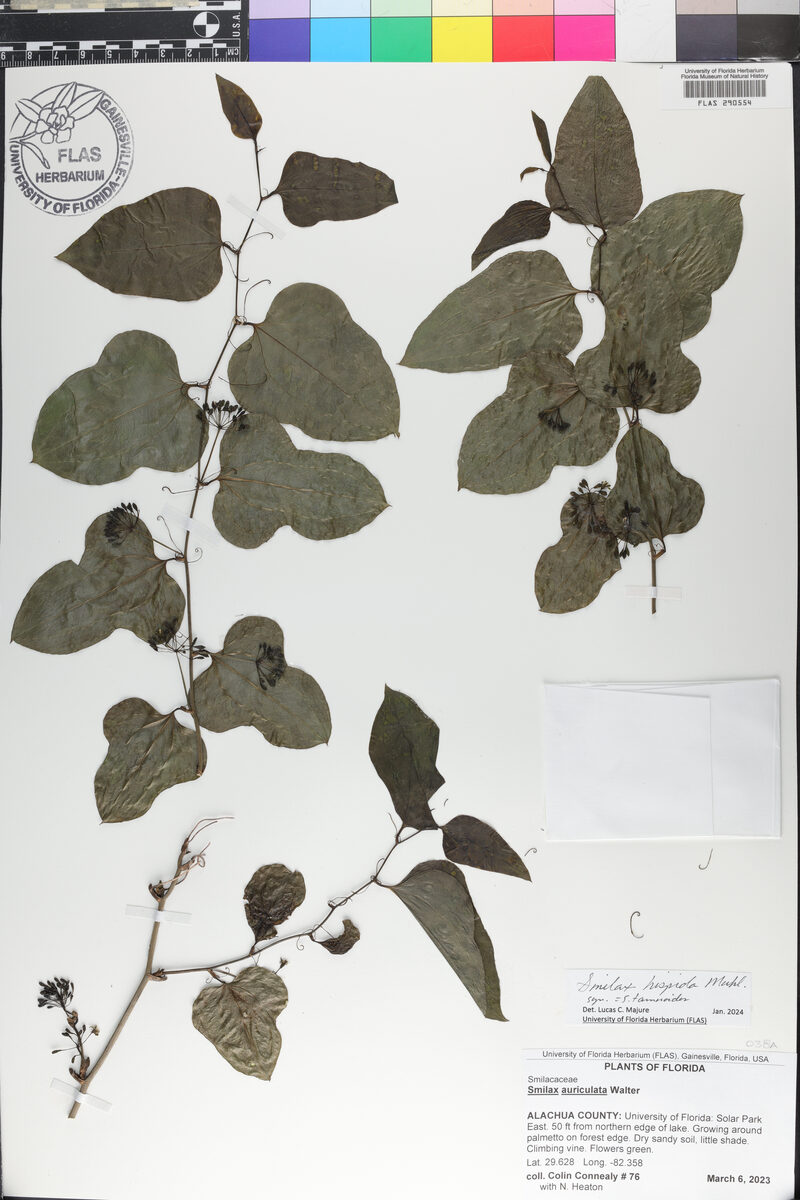
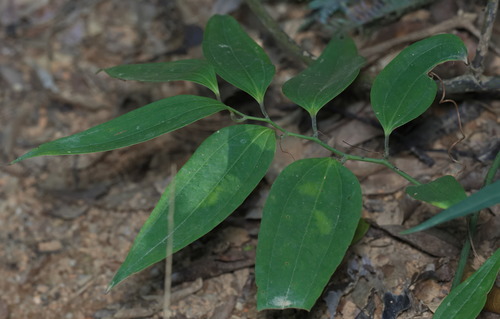
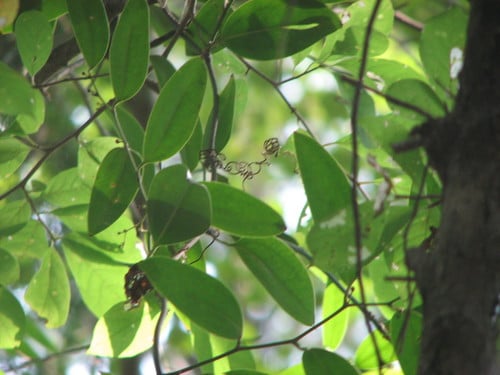
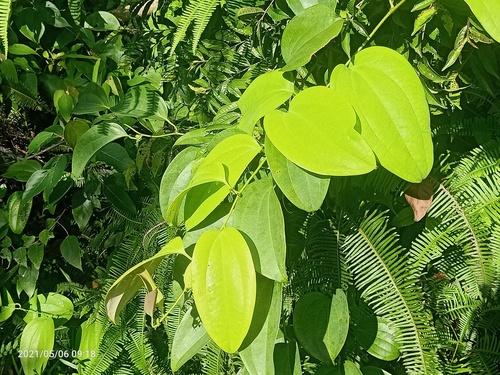
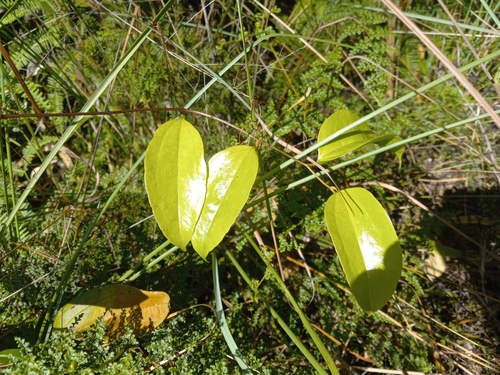
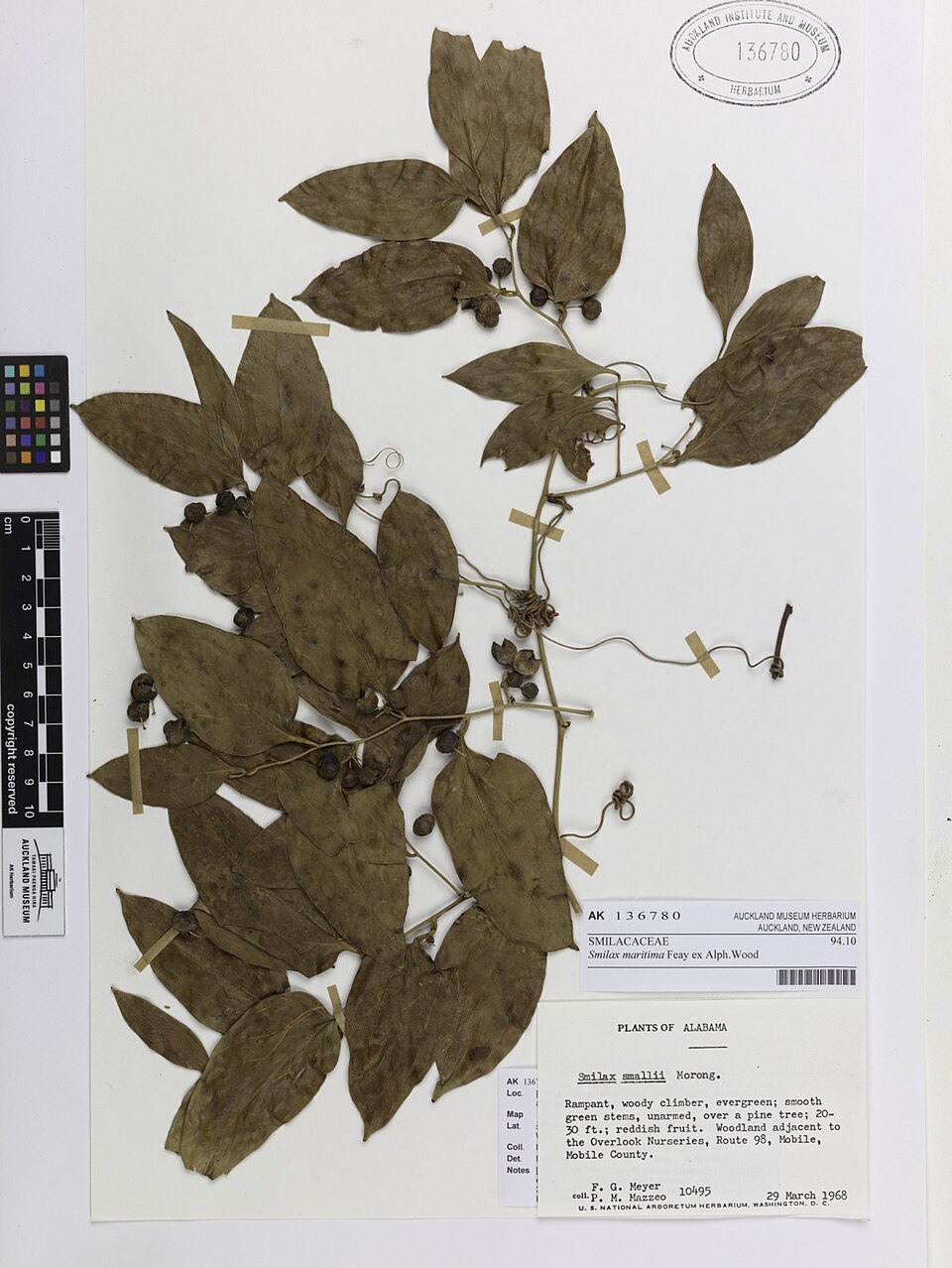
Smilax tamnoides
L.
Bristly greenbrier, Hag briar
iNaturalist· cc-by-nc
(c) James Bailey, some rights reserved (CC BY-NC)
iNaturalist· cc-by-nc
(c) James Bailey, some rights reserved (CC BY-NC)
iNaturalist· cc-by-nc
(c) Chuck Cantley, some rights reserved (CC BY-NC)
Summary
Source: WikipediaSmilax tamnoides, common name bristly greenbrier, is a North American species of plants native to the United States and Canada. It is widespread from Ontario and New York State south to Texas and Florida. The plant has been called Smilax hispida in many publications, but the name Smilax tamnoides is much older and under the botanical rules of priority it is the preferred name.
Description
A deciduous climbing vine flowering May to June. Grows in light sandy, medium loamy, and heavy clay soils across mildly acid to basic pH. Establishes in semi-shaded woodland or open sun with preference for moist soil conditions. Dioecious species requiring both male and female plants for seed production.
Edible Uses
The starchy root is eaten cooked and can also be dried and ground into a powder.
Medicinal Uses
The stem prickles have been rubbed on the skin as a counter-irritant to relieve localised pains, muscle cramps and twitching. The stems are tonic. A tea made from the leaves and stems has been used to treat rheumatism and stomach problems. Wilted leaves are applied as a poultice to boils. A decoction of crushed root is used as a wash on ulcers, particularly leg ulcers. A tea from the roots is used to help expel afterbirth. Reports that the roots contain the hormone testosterone have not been confirmed, though they may contain steroid precursors.
Distribution
It is a temperate plant.
Where It Grows
Canada, North America, USA,
Cultivation
We have very little information on this species and do not know if it will be hardy in Britain, though judging by its native range it should succeed outdoors in many parts of the country. The following notes are based on the general needs of the genus. Succeeds in most soils in sun or semi-shade. Dioecious. Male and female plants must be grown if seed is required.
Propagation
Seed - sow March in a warm greenhouse. This note probably refers to tropical members of the genus; seeds from cooler areas seem to require cold stratification, with some species taking 2 or more years to germinate. Temperate species are best sown in a cold frame as soon as seed is received, or as soon as it is ripe. When seedlings germinate, prick out into individual pots when large enough to handle and grow on in the greenhouse for at least the first year, though growing on in pots for 2 years is preferable. Plant out into permanent positions in early summer. Division in early spring as new growth begins. Larger divisions can go directly into permanent positions; smaller divisions are best potted up and grown on in a lightly shaded cold frame, planting out once well established in summer. Cuttings of half-ripe shoots, July in a frame.
Other Uses
None known.
Notes
There are about 300 Smilax species.
Synonyms
References (6)
- Beckstrom-Sternberg, Stephen M., and James A. Duke. "The Foodplant Database." http://probe.nalusda.gov:8300/cgi-bin/browse/foodplantdb.(ACEDB version 4.0 - data version July 1994)
- Fisk, J. R. & Hoover, E., 2015, Wild Fruits of Minnesota. A Field Guide. University of Minnesota p 30
- Fl. New York 2:302. 1843 (H. Muhlenberg, Cat. pl. Amer. sept. 92. 1813, nom. nud.) (As Smilax hispida)
- Hedrick, U.P., 1919, (Ed.), Sturtevant's edible plants of the world. p 611
- Plants for a Future database, The Field, Penpol, Lostwithiel, Cornwall, PL22 0NG, UK. http://www.scs.leeds.ac.uk/pfaf/ (Also as Smilax hispida)
Show all 6 references Hide references
- Sp. pl. 1:1030. 1753