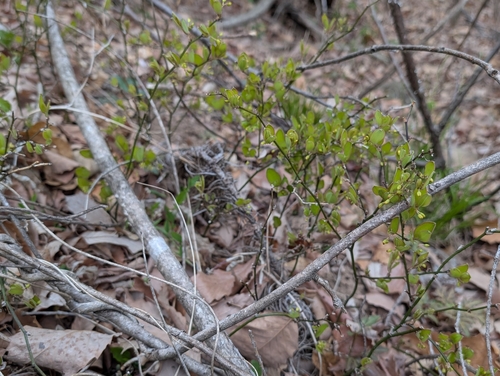
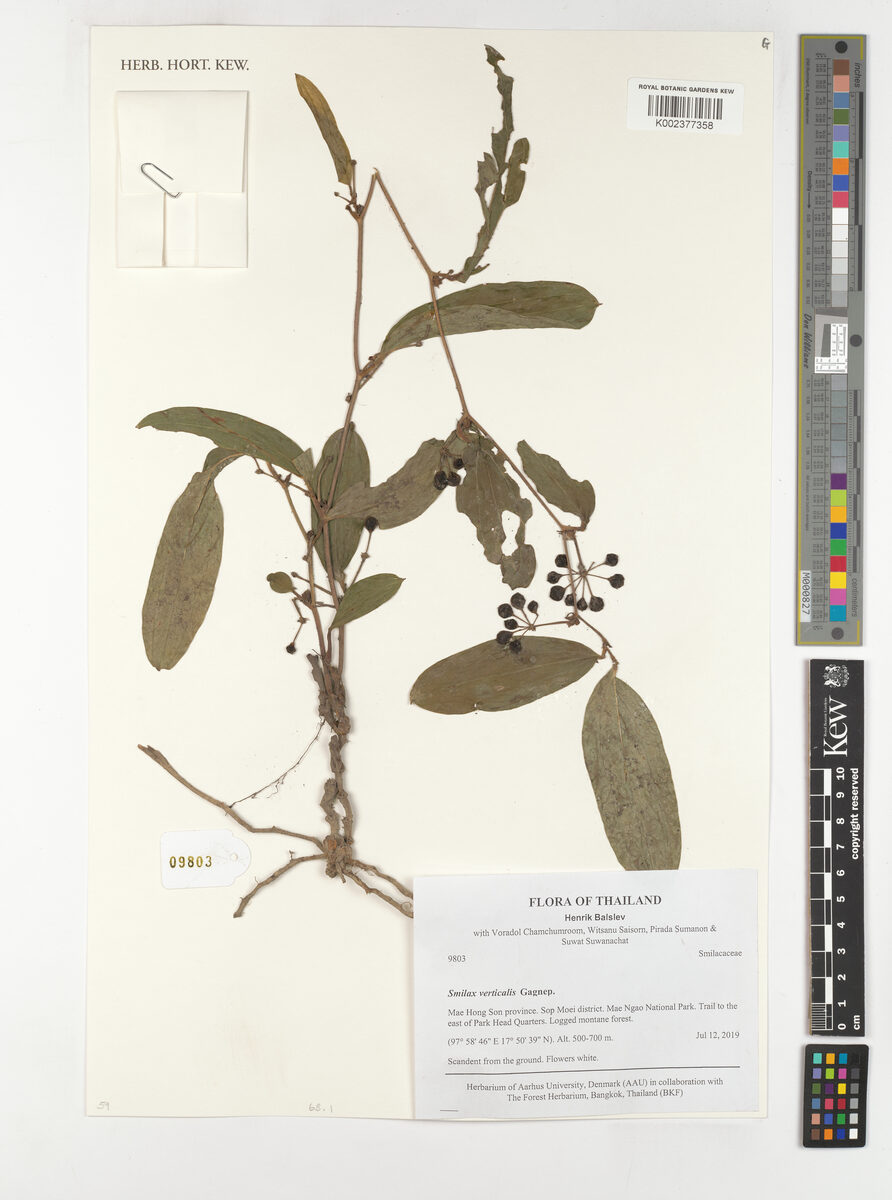
Smilax pseudochina
L.
False China root, China brier
iNaturalist· cc0
no rights reserved, uploaded by John Kees
iNaturalist· cc-by-sa
(c) Antonia Bookbinder, some rights reserved (CC BY-SA), uploaded by Antonia Bookbinder
iNaturalist· cc-by-nc
(c) Robert Levy, some rights reserved (CC BY-NC), uploaded by Robert Levy
Summary
Source: WikipediaSmilax pseudochina is a perennial species of herb in the greenbriar family. It is commonly called bamboo vine or false chinaroot. Its range extends up the Atlantic Coast of the United States, from Long Island in New York State south to Georgia.
Description
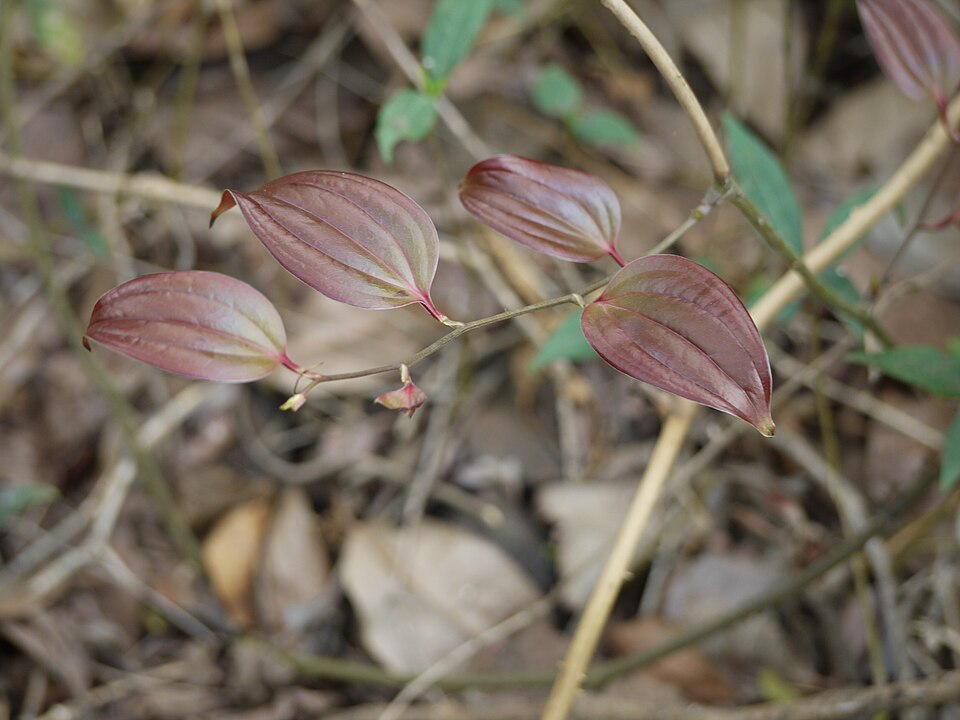
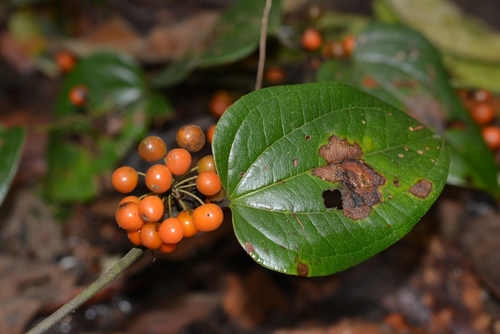
A herb. It climbs 1-2 m. The leaves are evenly distributed and there are tendrils. The leaves are D shaped to oval and 5-12 cm long by 2-5 cm wide. There are 10-35 flowers in groups in the axils of leaves. The fruit are blue to black berries 4-6 mm across.
Edible Uses
The root can be eaten raw or cooked. It is rich in starch and can be dried and ground into a powder or made into jelly or fritters. Raw, it is described as very tender and pleasant. Young shoots can be cooked and used as an asparagus substitute.
Traditional Uses
The root is boiled and eaten. The young shoots are used as an asparagus.
This uses section is brief — help expand it
Medicinal Uses
The root is astringent and mildly tonic, and is specifically indicated for syphilis. Parched and powdered leaves have been applied as a dressing on burns and scalds. Wilted leaves have been used as a poultice on boils.
Known Hazards
False chinaroot is listed as extirpated in Pennsylvania, endangered in New York, and threatened in Maryland.
Distribution
It is a temperate plant. It grows in moist or wet places on the coastal plain.
Where It Grows
Asia, China, North America, USA,
Cultivation
We have very little information on this species and do not know if it will be hardy in Britain, though judging by its native range it should succeed outdoors in many parts of the country. This species is said to be the true 'China root' of Chinese herbal medicine. The following notes are based on the general needs of the genus. Succeeds in most soils in sun or semi-shade. Dioecious. Male and female plants must be grown if seed is required.
Propagation
Sow seed in March in a warm greenhouse, though this guidance likely applies to tropical members of the genus. Seeds from cooler-climate plants appear to need cold stratification, with some species taking two or more years to germinate. For temperate species, sow in a cold frame as soon as seed is received, or ideally as soon as it is ripe. Once seedlings germinate, prick out into individual pots when large enough to handle and grow on under glass for at least the first year — normally two years in pots — before planting into permanent positions in early summer. Divide in early spring as new growth begins; larger divisions can go directly into permanent positions, while smaller ones are best potted up and grown on in a lightly shaded cold frame until established, then planted out in summer. Cuttings of half-ripe shoots can be taken in July and rooted in a frame.
Other Uses
None known.
Notes
There are about 300 Smilax species.
Synonyms
References (7)
- Beckstrom-Sternberg, Stephen M., and James A. Duke. "The Foodplant Database." http://probe.nalusda.gov:8300/cgi-bin/browse/foodplantdb.(ACEDB version 4.0 - data version July 1994)
- Hedrick, U.P., 1919, (Ed.), Sturtevant's edible plants of the world. p 611
- Kermath, B. M., et al, 2014, Food Plants in the Americas: A survey of the domesticated, cultivated and wild plants used for Human food in North, Central and South America and the Caribbean. On line draft. p 811
- Lim, T. K., 2015, Edible Medicinal and Non Medicinal Plants. Volume 9, Modified Stems, Roots, Bulbs. Springer p 77
- Moerman, D. F., 2010, Native American Ethnobotany. Timber Press. p 534
Show all 7 references Hide references
- Plants for a Future database, The Field, Penpol, Lostwithiel, Cornwall, PL22 0NG, UK. http://www.scs.leeds.ac.uk/pfaf/
- Saunders, C.F., 1948, Edible and Useful Wild Plants. Dover. New York. p 29