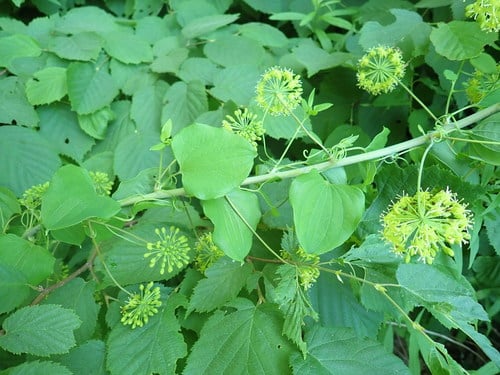
Smilax glauca
Walter
Cat greenbrier
iNaturalist· cc-by-nc
(c) Bruce Holst, some rights reserved (CC BY-NC), uploaded by Bruce Holst
iNaturalist· cc-by-nc
(c) Joe MacIndewar, some rights reserved (CC BY-NC)
iNaturalist· cc-by-nc
(c) Joe MacIndewar, some rights reserved (CC BY-NC)
Summary
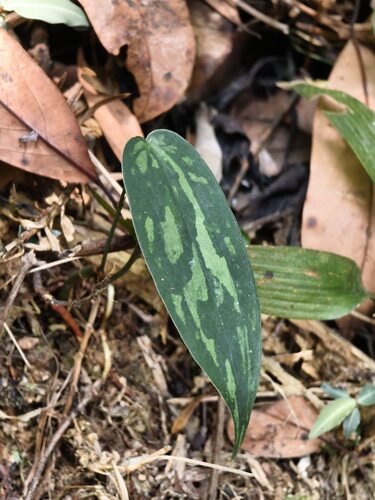
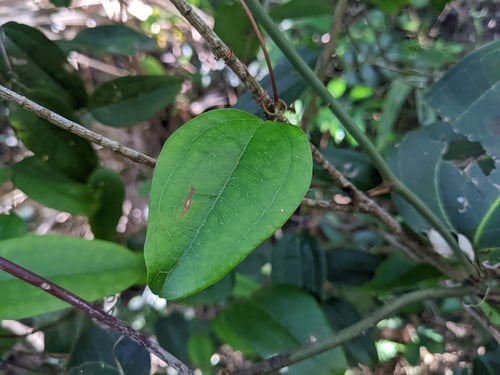
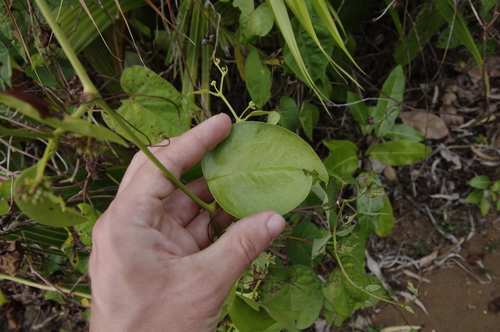
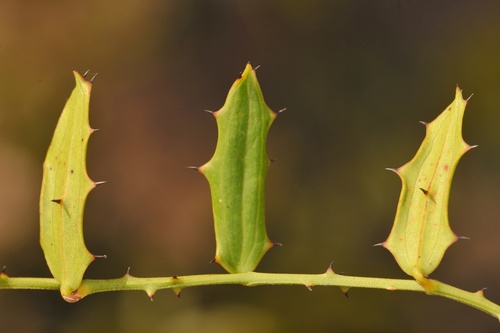
Source: WikipediaSmilax glauca, the cat greenbriar or catbriar, is a woody vine in the family Smilacaceae. It is native to central and eastern portions of the United States as well as Mexico, where it is a common and conspicuous part of the forest vegetation. Smilax glauca has prickly stems and climbs by means of tendrils. Leaves are notably gray-glaucous to whitish beneath. It commonly inhabits wooded areas and fences and is often found growing with other species of Smilax. The plants tend to be evergreen in the more southern United States.
Description
Evergreen climbing vine reaching 5 m tall, hardy to UK zone 4. Maintains foliage year-round with flowers appearing in June. Dioecious and self-sterile, requiring both male and female plants for seed production. Adapts to light sandy through heavy clay soils, mildly acid to alkaline pH, semi-shade to full sun, and both dry and moist conditions.
Edible Uses
The root is cooked and can be boiled and made into a jelly, or dried and ground into a powder for use with cereals when making bread and similar preparations. Young spring shoots can be eaten raw or cooked.
Traditional Uses
The roots are eaten in soups and also dried and ground and made into bread.
This uses section is brief — help expand it
Medicinal Uses
The stem prickles have been rubbed on the skin as a counter-irritant to relieve localised pains, muscle cramps and twitching. A tea made from the leaves and stems has been used to treat rheumatism and stomach problems. Wilted leaves are applied as a poultice to boils. A tea brewed from the roots is used to help with the expelling of afterbirth. Reports that the roots contain the hormone testosterone have not been confirmed, though they may contain steroid precursors.
Distribution
It is a temperate plant.
Where It Grows
North America, USA,
Cultivation
Succeeds in most soils in sun or semi-shade. Hardy to at least -20°c. A vigorous plant, it can be grown through trees or shrubs or over tree stumps. Dioecious. Male and female plants must be grown if seed is required.
Propagation
Sow seed in March in a warm greenhouse — though this guidance likely applies to tropical members of the genus. Seeds from plants of cooler regions appear to need a period of cold stratification, and some species can take two or more years to germinate. For temperate species, sow in a cold frame as soon as seed is received, or ideally as soon as it is ripe. When seedlings germinate, prick out into individual pots and grow on in a greenhouse for at least the first year, though keeping them in pots for two years is preferable. Plant out into permanent positions in early summer. Divide in early spring as new growth begins; larger divisions can go straight into permanent positions, while smaller ones are best potted up and grown on in a lightly shaded cold frame until well established, then planted out in summer. Cuttings of half-ripe shoots can be taken in July in a frame.
Other Uses
None known Special Uses
Notes
There are about 300 Smilax species.
References (5)
- Beckstrom-Sternberg, Stephen M., and James A. Duke. "The Foodplant Database." http://probe.nalusda.gov:8300/cgi-bin/browse/foodplantdb.(ACEDB version 4.0 - data version July 1994)
- Fl. carol. 245. 1788
- Kermath, B. M., et al, 2014, Food Plants in the Americas: A survey of the domesticated, cultivated and wild plants used for Human food in North, Central and South America and the Caribbean. On line draft. p 810
- Moerman, D. F., 2010, Native American Ethnobotany. Timber Press. p 533
- Plants for a Future database, The Field, Penpol, Lostwithiel, Cornwall, PL22 0NG, UK. http://www.scs.leeds.ac.uk/pfaf/