Sinofranchetia chinensis
(Franch.) Hemsl.
Wild wood-gourd
iNaturalist· cc-by-nc
(c) MP Zhou, some rights reserved (CC BY-NC), uploaded by MP Zhou
wikimedia· cc-by-sa
Wikimedia Commons - Denis.prévôt
Summary
Source: WikipediaA deciduous climbing vine reaching 15 m tall with fast growth. Hardy to UK zone 6 and not frost tender. Flowers in May with seeds maturing in October. Dioecious species requiring both male and female plants for seed production. Tolerates light sandy to heavy clay soils, mildly acidic to basic pH, and grows in semi-shade or full sun. Prefers consistently moist soil.
Description
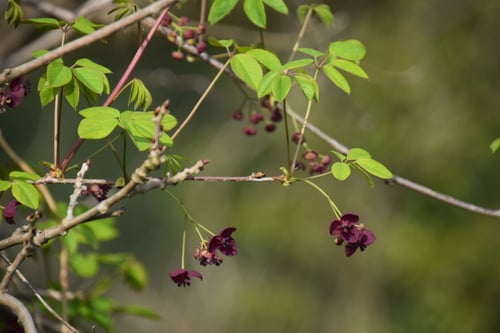
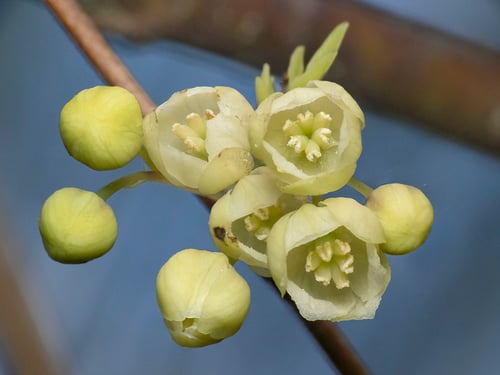
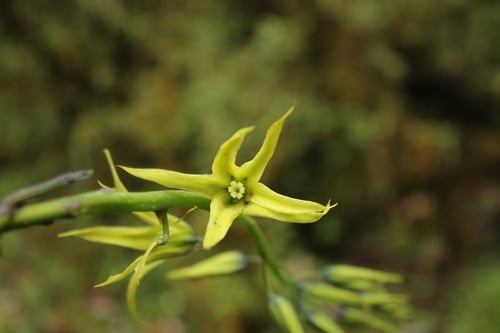
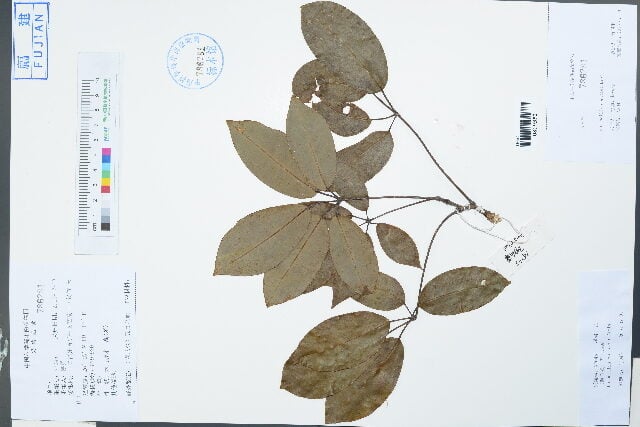
An evergreen creeper or vine. The leaves are compound. They have leaflets arranged like fingers on a hand. There are 3-5 leaflets. The size and shapes vary. They are oblong and 6-10 cm long by 3-5 cm wide. The male and female flowers are separate on the same plant. They are greenish-purple with an unpleasant smell. The fruit is narrowly oval and pale purplish blue. It is 2 cm long by 1.5 cm wide. The seeds are oval and 4-6 mm long.
Edible Uses
The fruit is eaten raw but is insipid. It is roughly grape-sized, measuring about 2 cm in diameter.
Traditional Uses
The ripe fruit are eaten. They are also used for wine and jelly.
This uses section is brief — help expand it
Medicinal Uses
None known
Distribution
It is a subtropical plant. It grows in dense forests along rivers. It is recorded between 1,000-2,000 m above sea level. In Sichuan and Yunnan. It suits hardiness zone 6.
Where It Grows
Asia, Britain, China*, Europe,
Cultivation
Plants can be grown from fresh seeds. Cuttings of half ripe wood can also be used.
Propagation
Seed can be sown as soon as it is ripe or in late winter in a cold frame. Prick seedlings into individual pots once large enough to handle and grow on in the cold frame through their first winter, then plant out in late spring or early summer of the following year. Half-ripe cuttings can be taken in July or August and rooted in a frame. Layering of new shoots can be done in summer.
Other Uses
None known Special Uses
Production
It is fast growing. In China the plants flower May to June and fruit September to October.
Notes
There is only one Sinofranchetia species.
Synonyms
Also Known As
Chuan guo teng
References (5)
- Christenhusz, M. J. M., 2012, An overview of Lardizabalaceae. Curtis Botanical magazine 2012 vol. 29(3): pp 235-276
- Hooker's Icon. Pl. 29: t. 2842. 1907
- Hu, Shiu-ying, 2005, Food Plants of China. The Chinese University Press. p 393 (As de Candolle)
- Plants for a Future database, The Field, Penpol, Lostwithiel, Cornwall, PL22 0NG, UK. http://www.scs.leeds.ac.uk/pfaf/
- www.efloras.org Flora of China Volume 6