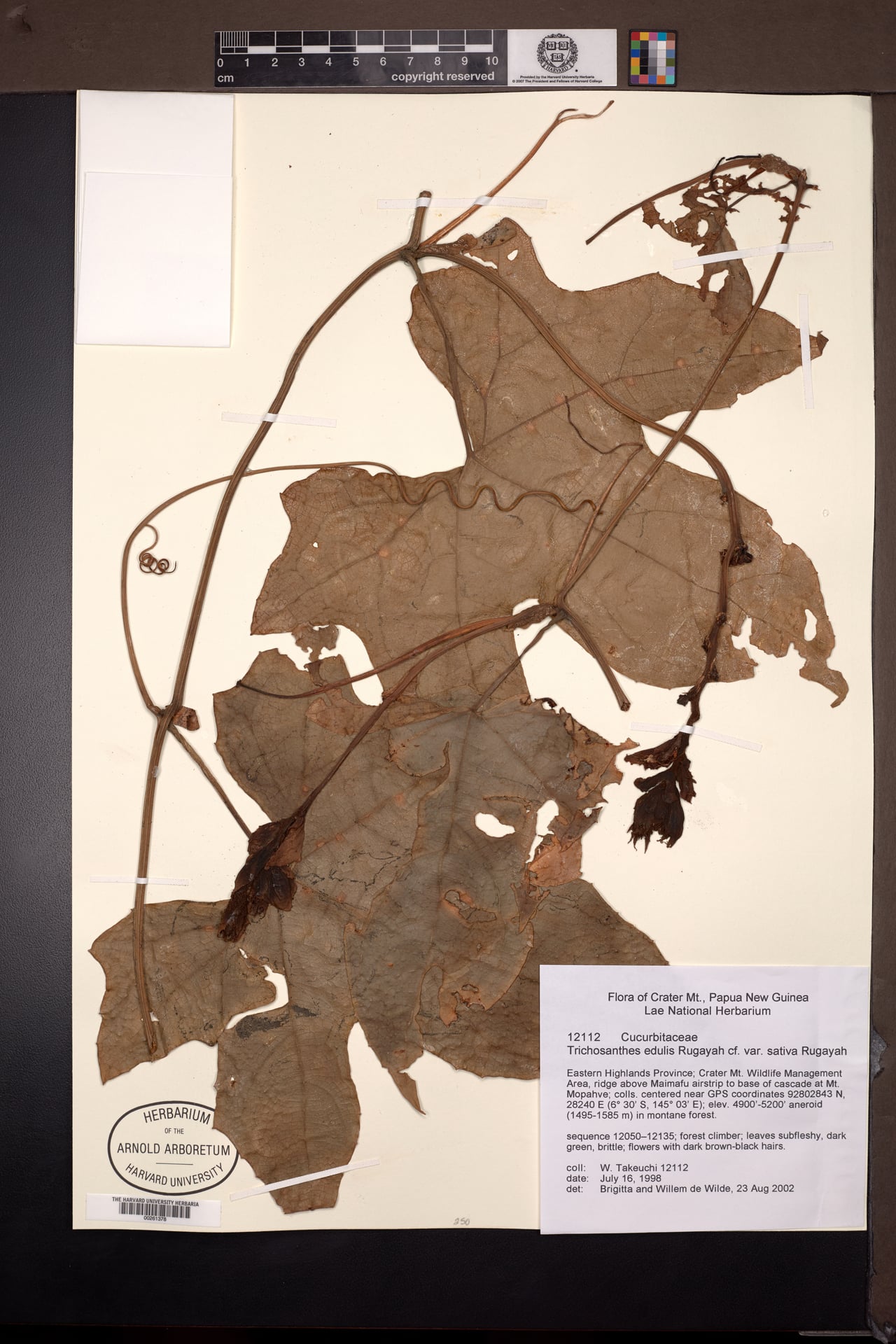
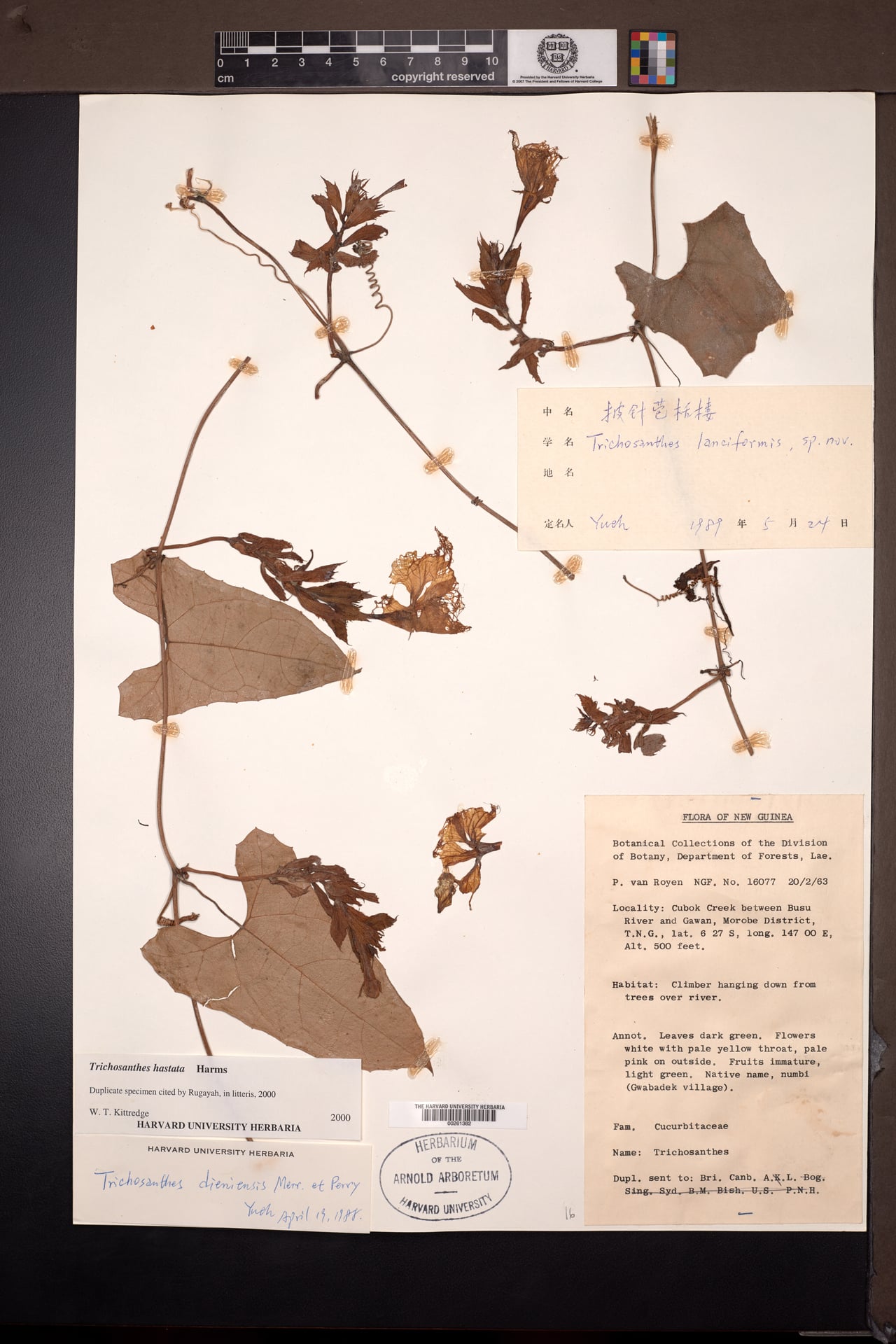
Sicyos angulatus
L.
Bur cucumber, Angle cucumber
iNaturalist· cc-by
(c) Michael J. Papay, some rights reserved (CC BY), uploaded by Michael J. Papay
iNaturalist· cc-by
(c) Michael J. Papay, some rights reserved (CC BY), uploaded by Michael J. Papay
iNaturalist· cc-by-nc-sa
(c) Tom Potterfield, some rights reserved (CC BY-NC-SA)
Summary
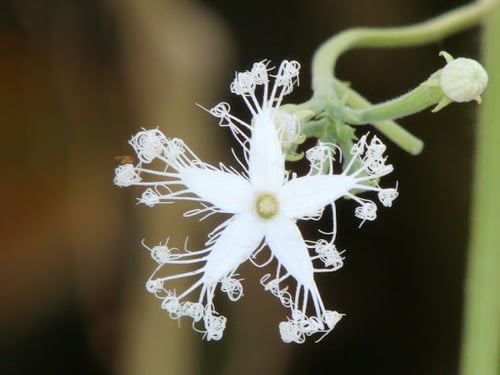
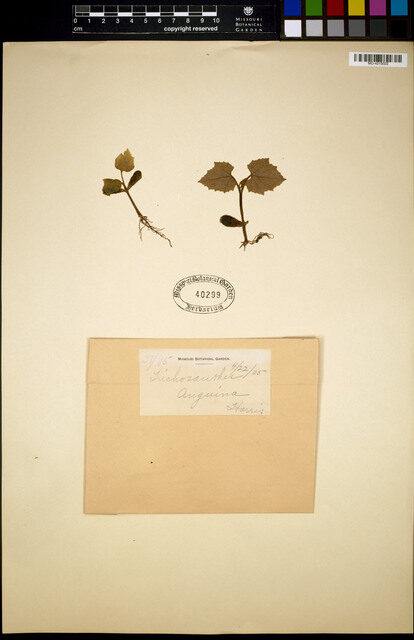
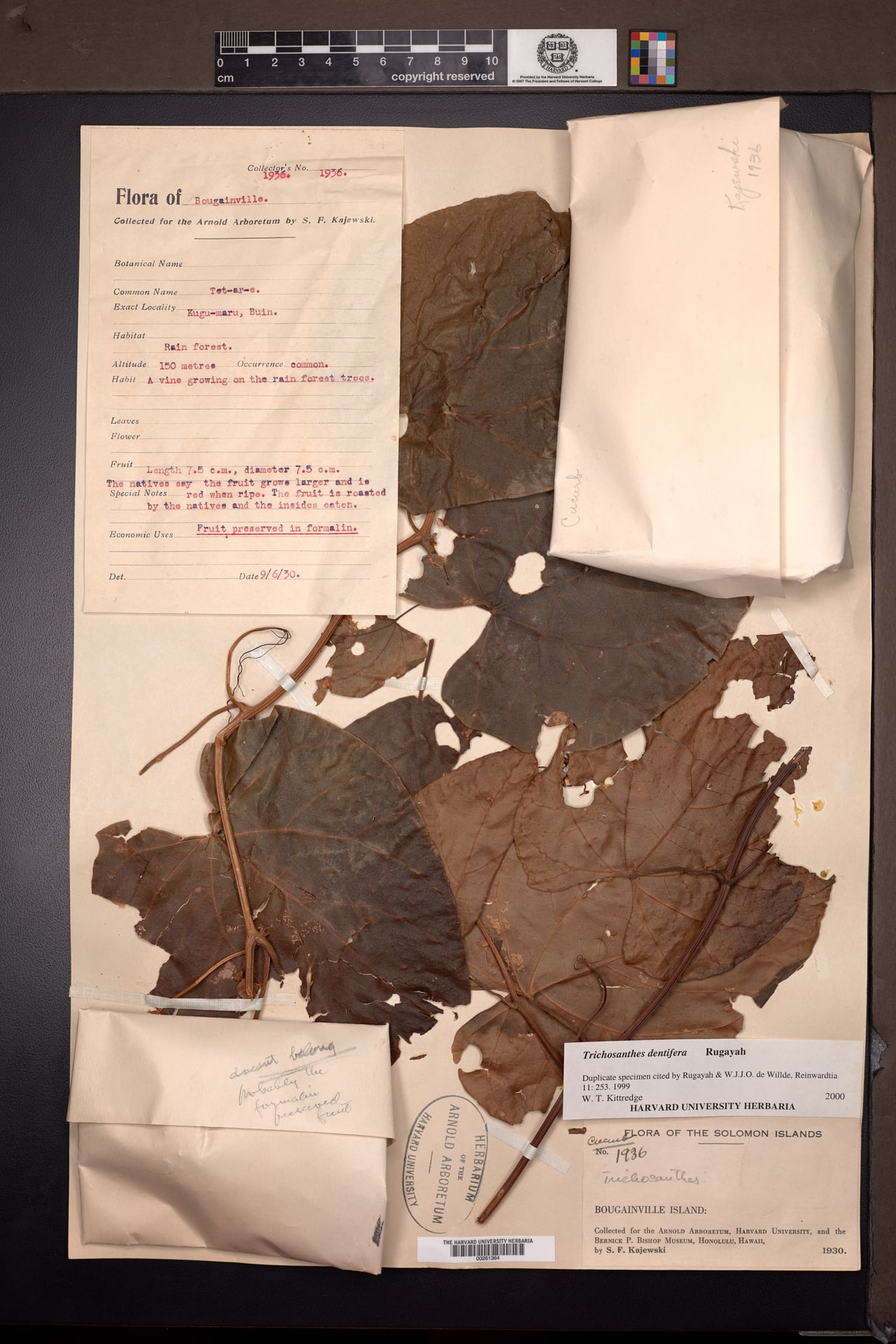
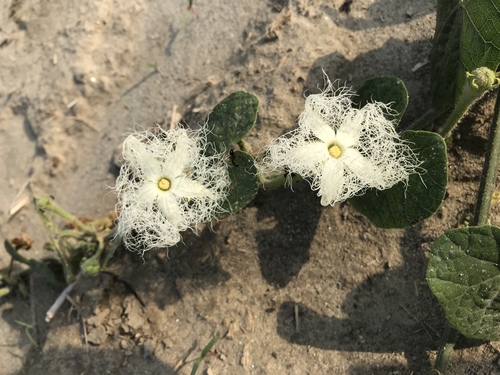
Source: WikipediaSicyos angulatus, the oneseed bur cucumber or star-cucumber is an annual vine in the gourd family, Cucurbitaceae, native to eastern North America. The plant forms mats or climbs using tendrils. The leaves are palmately veined and lobed, the flowers are green to yellowish green, and the fruits form clusters of very small pepos.
Description
A pumpkin family plant. It is a long slender climber. The stems are weak. The leaves are heart shaped or divided like fingers on a hand. They are thin textured and give off a bad smell if touched. The flowers are separately male and female but in the axil of the same leaf on separate spikes. The female flowers are in short dense clusters. The fruit are oval and 1 cm long. They are densely covered with prickles.
Edible Uses
The leaves can be cooked and eaten as greens. The fruit is said to be edible, though there is little or no flesh — it consists essentially of a bristly skin around the seed, so it is likely the seed itself that is edible rather than the fruit as a whole. Fruits are about 1cm long and are borne in small clusters.
Traditional Uses
The leaves are boiled as a green vegetable. The fruit is used as a vegetable.
This uses section is brief — help expand it
Medicinal Uses
A decoction of the vine has been used in the treatment of venereal disease.
Distribution
It is a temperate plant. It grows on stream banks and the edges of forests.
Where It Grows
Asia, Australia, China, Europe, France, Korea, New Zealand, North America, Tasmania, USA,
Cultivation
Easily grown in a sunny position in a moderately fertile soil. The young growth in spring can be damaged by late frosts. A very fast growing plant, capable of producing shoots up to 8 metres long in the first year from seed. The plant can be grown to provide a summer screen. This species occasionally self-sows.
Propagation
Sow seed in mid-spring in a greenhouse; germination should occur within two weeks. Prick out seedlings into individual pots once large enough to handle, using fairly rich compost, and grow them on quickly. Plant out after the last expected frosts, and consider providing cloche protection until plants are actively growing. Seed can also be sown in situ in late spring, though this may not produce mature seeds and fruit in cool summers. Plants have self-sown in Cornwall.
Other Uses
None known.
Notes
There are about 50 Sicyos species.
Synonyms
References (8)
- Curtis, W.M., 1963, The Students Flora of Tasmania Vol 2 p 237
- Hedrick, U.P., 1919, (Ed.), Sturtevant's edible plants of the world. p 606
- Jones, D.L. & Gray, B., 1977, Australian Climbing Plants. Reed. p 18, 143
- Kermath, B. M., et al, 2014, Food Plants in the Americas: A survey of the domesticated, cultivated and wild plants used for Human food in North, Central and South America and the Caribbean. On line draft. p 801
- Morley, B. & Everard, B., 1970, Wild Flowers of the World. Ebury press. Plate 159
Show all 8 references Hide references
- Plants for a Future database, The Field, Penpol, Lostwithiel, Cornwall, PL22 0NG, UK. http://www.scs.leeds.ac.uk/pfaf/
- Sp. pl. 2:1013. 1753
- Yang, Si-Lin and Walters, T. W., 1992, Ethnobotany and the Economic role of the Cucurbitaceae of China. Economic Botany, Vol. 46, No. 4, pp. 349-367