Sicana odorifera
(Vell.) Naudin
Cassabanana
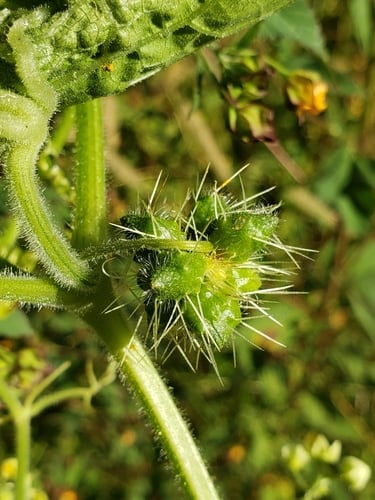
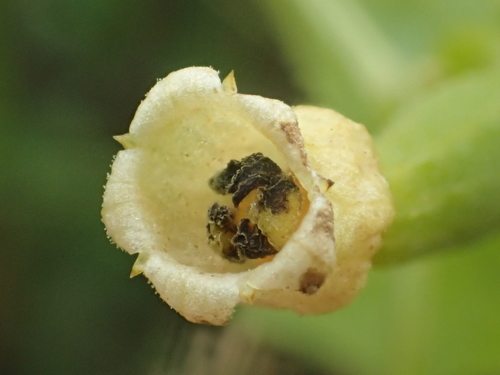
iNaturalist· cc-by-nc
(c) La Mancha en Movimiento, some rights reserved (CC BY-NC), uploaded by La Mancha en Movimiento
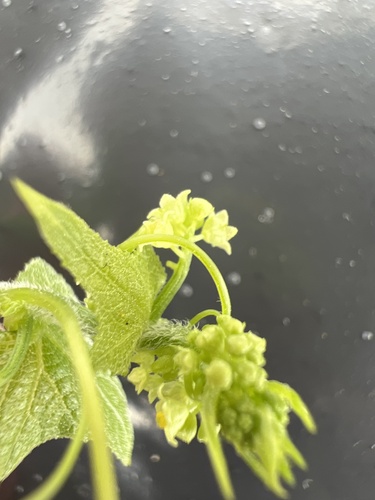
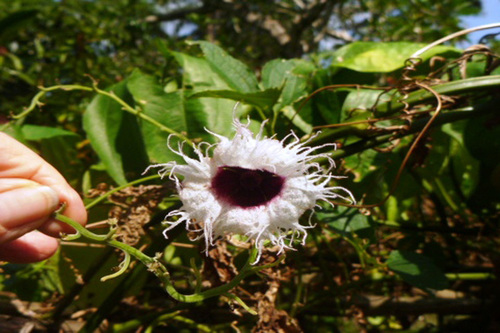
iNaturalist· cc-by-nc
(c) Oscar Enciso, some rights reserved (CC BY-NC)
Summary
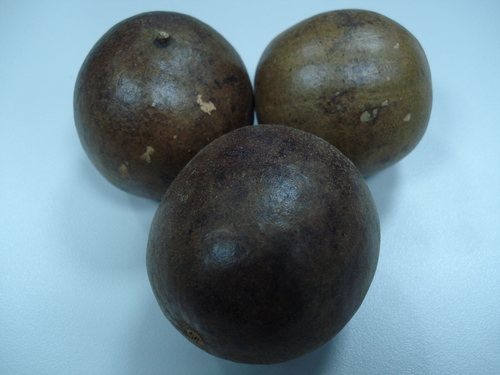
Source: WikipediaSicana odorifera is a large, herbaceous perennial vine native to tropical South America, grown as an ornamental plant and for its sweet edible fruit. English names include cassabanana or casbanan, sikana, puttigel and musk cucumber. The fast-growing, fleshy vine can reach 15 m (49 ft) or more in height, climbing with four-part adhesive tendrils. The large, hairy, palmately lobed leaves grow to 30 cm (12 in) in width. The fruit is large, up to 60 cm (24 in) long, with skin of variable color. The fruit has a delicious, melon-like taste when it is ripe, which needs high temperatures to ripen. The sweet, aromatic, yellow-to-orange flesh of the mature fruit is eaten raw or made into preserves. The immature fruit can be cooked as a vegetable.
Description
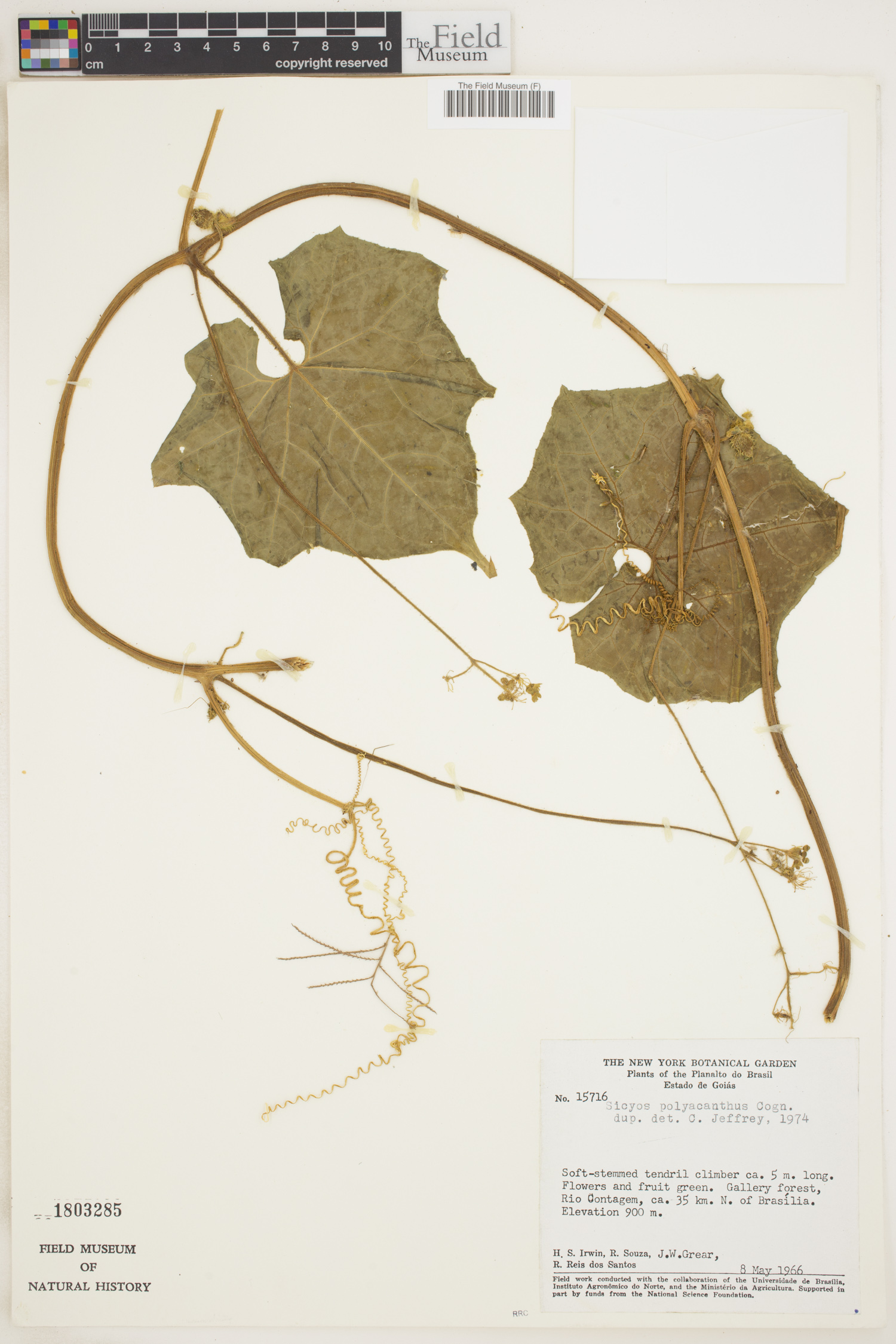
A pumpkin family plant. It is a vine. It keeps growing from year to year. It grows 15 m long. The vine is hairy. The leaves are large and round with lobes. They are 25-30 cm across. The flowers occur singly. They are separately male and female. They occur in the axils of leaves. The fruit is 30-35 cm long and 12-16 cm wide. There are many seeds. There can be 800-850 per fruit.
Edible Uses
The unripe fruit can be cooked as a vegetable, sliced thinly and eaten raw, or processed into jams and preserves. The fruit can also be used to make alcoholic drinks.
Traditional Uses
The fruit are eaten unripe and cooked as a vegetable. They are sliced thinly and eaten raw. They can also be made into jams, preserves and alcoholic drinks. Caution: Alcohol is a cause of cancer.
Medicinal Uses
A slightly fermented drink is made from the pulp with sugar added for throat ailments.
Known Hazards
Alcohol produced from this fruit is a cause of cancer.
Distribution
It is a tropical plant. It grows naturally in southern Brazil.
Where It Grows
Asia, Australia, Bolivia, Brazil*, Central America, Colombia, Costa Rica, Cuba, Dominican Republic, Ecuador, El Salvador, Guatemala, Haiti, India, Malaysia, Mexico, Nicaragua, Panama, Peru, Puerto Rico, SE Asia, South America, Sri Lanka, Venezuela, West Indies,
Cultivation
Plants are grown from seed.
Other Uses
The fragrant fruits are used as an air freshener around the house, for scenting clothes in the linen cupboard, and are also said to ward off insects. A necklace of the seeds is worn for good luck.
Production
Plants can be stored for several months in dry, shady places.
Other Information
It is a commercially cultivated vegetable.
Nutrition
| Part | Moisture | kJ | kcal | Protein | Vit A | Vit C | Iron | Zinc |
|---|---|---|---|---|---|---|---|---|
| Fruit | 85.1 | — | — | 0.1 | — | 13.9 | — | — |
Synonyms
Also Known As
Calabaza de olor, Calabaza melon, Casabanana, Coroa, Corosa, Croa, Curua, Curuba, Curugua, Crua, Giron, Melao-caboclo, Melocoton, Melon criollo, Melon de olor, Musk cucumber, Musk melon, Namuk, Pabi, Secana, Sikana, Uksha
References (31)
- Ann. Sci. Nat. Bot. ser. 4, 18:180, t. 8. 1862
- Arora, R. K., 2014, Diversity in Underutilized Plant Species - An Asia-Pacific Perspective. Bioversity International. p 50
- Burkill, I.H., 1966, A Dictionary of the Economic Products of the Malay Peninsula. Ministry of Agriculture and Cooperatives, Kuala Lumpur, Malaysia. Vol 2 (I-Z) p 2060
- Creed-kanashiro, H., et al, Traditional food system of an Awajun community in Peru. Indigenous Peoples' food systems Chp. 4
- Esquinas-Alcazar, et al, 1983, Genetic Resources of Cucurbitaceae. International Board of Plant Genetic Resources.
Show all 31 references Hide references
- Facciola, S., 1998, Cornucopia 2: a Source Book of Edible Plants. Kampong Publications, p 89
- Flowerdew, B., 2000, Complete Fruit Book. Kyle Cathie Ltd., London. p 245
- Hermandez Bermejo, J.E., and Leon, J. (Eds.), 1994, Neglected Crops. 1492 from a different perspective. FAO Plant Production and Protection Series No 26. FAO, Rome. p18
- Hunter, D., et al, 2019, The potential of neglected and underutilized species for improving diets and nutrition. Planta (2019) 250:709-729
- Kays, S. J., and Dias, J. C. S., 1995, Common Names of Commercially Cultivated Vegetables of the World in 15 languages. Economic Botany, Vol. 49, No. 2, pp. 115-152
- Kermath, B. M., et al, 2014, Food Plants in the Americas: A survey of the domesticated, cultivated and wild plants used for Human food in North, Central and South America and the Caribbean. On line draft. p 800
- Kuhnlein, H. V., et al, 2009, Indigenous Peoples' food systems. FAO Rome p 83
- Lorenzi, H., Bacher, L., Lacerda, M. & Sartori, S., 2006, Brazilian Fruits & Cultivated Exotics. Sao Paulo, Instituto Plantarum de Estuados da Flora Ltda. p 133
- Macmillan, H.F. (Revised Barlow, H.S., et al) 1991, Tropical Planting and Gardening. Sixth edition. Malayan Nature Society. Kuala Lumpur. p 335
- Miguel, E., et al, 1989, A checklist of the cultivated plants of Cuba. Kulturpflanze 37. 1989, 211-357
- Morton, Julia F., 1987, Fruits of Warm Climates. Creative Resources Systems, Inc. . p. 434
- Plants of Haiti Smithsonian Institute http://botany.si.edu/antilles/West Indies
- Purseglove, J.W., 1968, Tropical Crops Dicotyledons, Longmans. p 100
- Roa, J. A. G. & Boada, D. S. G., 2018, Fundación para el Fortalecimiento de la Fruticultura y Plantas Alimenticias no Convencionales en Colombia.
- Segura, S., et al, 2018, The edible fruit species in Mexico. Genet Resour Crop Evol (2018) 65:1767–1793
- Self, M., 199, Phoenix Seeds catalogue. p 4
- Terra, G.J.A., 1973, Tropical Vegetables. Communication 54e Royal Tropical Institute, Amsterdam, p 73
- Tindall, H.D., 1983, Vegetables in the tropics. Macmillan p. 184
- Torre, de la, L., et al, 2008, Enciclopedia de las Plantas Útiles del Ecuador. Herbario QCA. Pontificia Universidad Católica del Ecuador. p 301
- USDA, ARS, National Genetic Resources Program. Germplasm Resources Information Network - (GRIN). [Online Database] National Germplasm Resources Laboratory, Beltsville, Maryland. Available: www.ars-grin.gov/cgi-bin/npgs/html/econ.pl (10 April 2000)
- van Wyk, B., 2005, Food Plants of the World. An illustrated guide. Timber press. p 160
- Vasquez, R. and Gentry, A. H., 1989, Use and Misuse of Forest-harvested Fruits in the Iquitos Area. Conservation Biology 3(4): 350f
- Vasquez, Roberto Ch. & Coimbra, German S., 1996, Frutas Silvestres Comestibles de Santa Cruz. p 94
- Wiersema, J. H. & Leon, B., 2013, World Economic Plants. A Standard Reference CRC Press. 2nd Ed. p 635
- World Checklist of Useful Plant Species 2020. Royal Botanic Gardens, Kew
- www.colecionandofrutas.org (Also as Sicana atropurpurea)