Sherbournia calycina
(G. Don) Hua
Yellow monkey apple
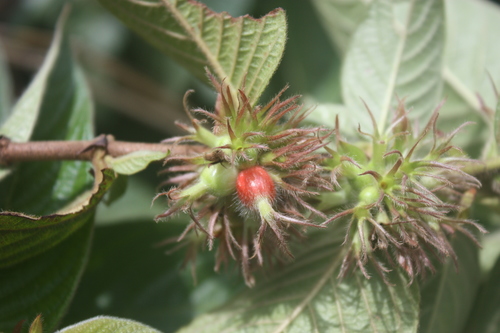
iNaturalist· cc-by-nc
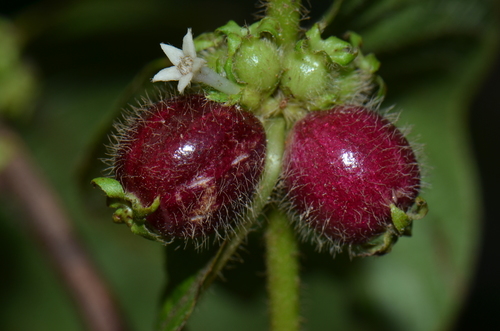
(c) Carel Jongkind, some rights reserved (CC BY-NC), uploaded by Carel Jongkind
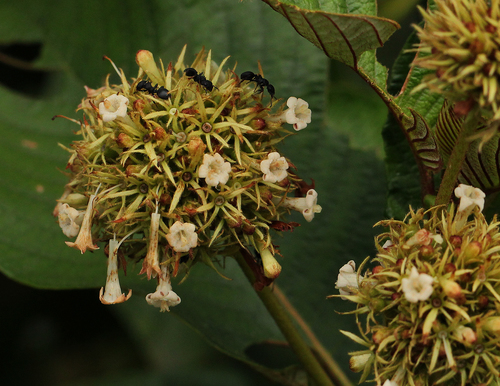
iNaturalist· cc-by-nc
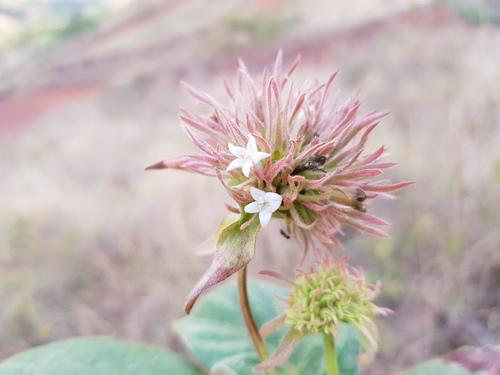
(c) Carel Jongkind, some rights reserved (CC BY-NC), uploaded by Carel Jongkind
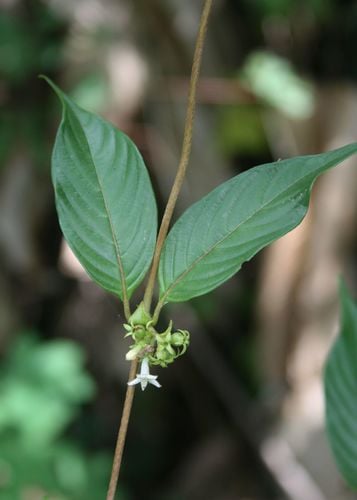
iNaturalist· cc-by-nc
(c) Carel Jongkind, some rights reserved (CC BY-NC)
Description
A shrub or creeper. It is 1 m long. The flowers are cream-white or pink with purple marks. The ripe fruit are red or orange.
This description is brief — help expand it
Edible Uses
The fruit are eaten raw and are reasonably commonly consumed.
Traditional Uses
The fruit are eaten raw.
This uses section is brief — help expand it
Distribution
A tropical plant. It grows in secondary forest and on the edges of forests.
Where It Grows
Africa, Benin, Cameroon, Central Africa, Congo DR, Congo R, Côte d'Ivoire, Ghana, Guinea, Guinée, Ivory Coast, Liberia, Sierra Leone, Togo, West Africa,
Production
In Liberia the nuts are produced from November to April. In Congo fruit are available about September.
Other Information
The fruit are reasonably commonly eaten.
Synonyms
Also Known As
Bokakoro, Ekakwasiko, Gumate, Kawao, Kwia, Ma-banthi, Mulaki, Se-b, Taninkpane, Tojabajar, Tuliabinga
References (16)
- Abbiw, D.K., 1990, Useful Plants of Ghana. West African uses of wild and cultivated plants. Intermediate Technology Publications and the Royal Botanic Gardens, Kew. p 46
- Bull. Soc. Hist. Nat. Autun 14:398. 1901
- Burkill, H. M., 1985, The useful plants of west tropical Africa, Vol. 4. Kew.
- Dalziel, J. M., 1937, The Useful plants of west tropical Africa. Crown Agents for the Colonies London.
- Danforth, R.M., & Boren, P.D., 1997, Congo Native fruits. Twenty-five of the best. Privately published. p 70 (Amaralia spp.)
Show all 16 references Hide references
- Heywood, V.H., Brummitt, R.K., Culham, A., and Seberg, O. 2007, Flowering Plant Families of the World. Royal Botanical Gardens, Kew. p 285
- http://aflora.africa.kyoto-u.ac.jp (As Amaralia scheibrouniae)
- Hwang, L. C., et al, 2020, Traditional Botanical Uses of Non-Timber Forest Products (NTFP) in Seven Counties in Liberia. ACS Symposium Series; American Chemical Society: Washington, DC, 2020.
- Jardin, C., 1970, List of Foods Used In Africa, FAO Nutrition Information Document Series No 2.p 161
- Manvell, A., 2011, Use of Non-Timber Forest Products around Sapo National Park, Liberia (Report B) p 17
- Martin, F.W. & Ruberte, R.M., 1979, Edible Leaves of the Tropics. Antillian College Press, Mayaguez, Puerto Rico. p 216 (As Amaralia calicyna)
- Okigbo, B.N., Vegetables in Tropical Africa, in Opena, R.T. & Kyomo, M.L., 1990, Vegetable Research and development in SADCC countries. Asian Vegetable Research and development Centre. Taiwan. p 45 (As Amaralia calicyna)
- Peters, C. R., O'Brien, E. M., and Drummond, R.B., 1992, Edible Wild plants of Sub-saharan Africa. Kew. p 175
- Terashima, H., & Ichikawa, M., 2003, A comparative ethnobotany of the Mbuti and Efe hunter-gatherers in the Ituri Forest, Democratic Republic of Congo. African Study Monographs, 24 (1, 2): 1-168, March 2003
- Vivien, J., & Faure, J.J., 1996, Fruitiers Sauvages d'Afrique. Especes du Cameroun. CTA p 290
- World Checklist of Useful Plant Species 2020. Royal Botanic Gardens, Kew