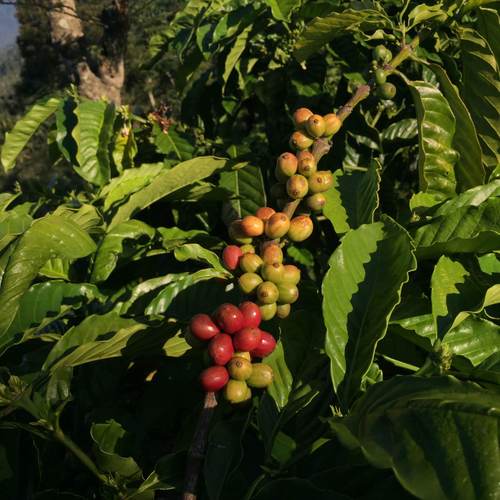
Gardenia latifolia
Aiton
Boxwood Gardenia, Indian boxwood
iNaturalist· cc-by-nc
(c) Subbu Ramanathan, some rights reserved (CC BY-NC), uploaded by Subbu Ramanathan
iNaturalist· cc-by
(c) P Jeganathan, some rights reserved (CC BY), uploaded by P Jeganathan
iNaturalist· cc-by-nc
(c) KANS, some rights reserved (CC BY-NC)
Summary
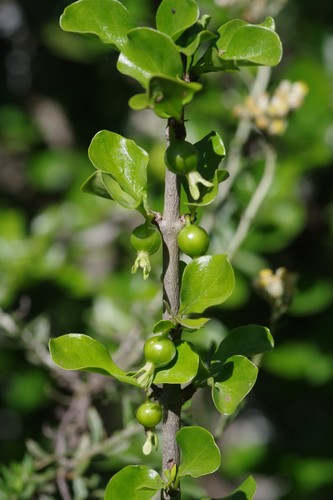
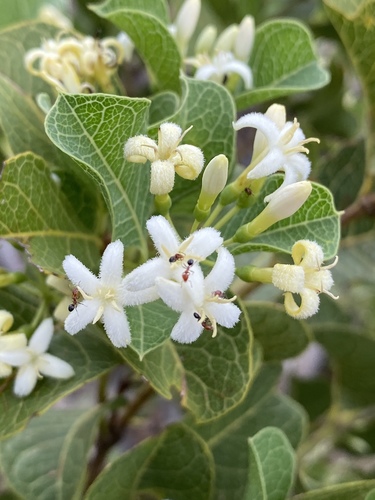
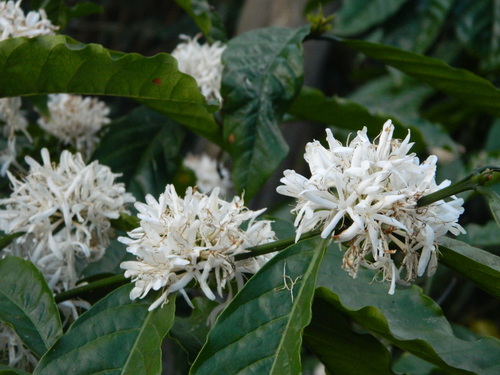
Source: WikipediaGardenia latifolia, also called papra or Hindi:पापडा, Bengali: যোজনগন্ধা, Tamizh: Kattu marikalam or Kumbai is medium-sized to large, long-lived tree of family Rubiaceae. Its English common name is Indian Boxwood or Ceylon Boxwood. It is found in the forests of Madhya Pradesh in India, and has been widely cultivated elsewhere, to the point of naturalization, especially in Nigeria, West Africa where the tree is highly valued for both its fruit and shade. Indian boxwood is a small deciduous tree or large shrub, which often grows on other small plants, which it eventually kills, the way Figs do. Bark is greenish-grey, peeling and leaving smooth, concave, rounded depressions. Oppositely arranged, or whorled leaves have very short stalks, and are oval to obovate, smooth, with a small hairy gland in the axils of the veins on the underside, 6–8 in long, by about 3 in broad. Flowers appear singly at the end of branches. Sepal cup is bell-shaped, segments or teeth very irregular. Flowers have salver-form, meaning starting from a narrow tube and suddenly flaring into a flat arrangement of petals. Flowers are white or pale lemon-yellow, orange when fading. Flower tube is about 2 inches long, with 5-9 obliquely obovate petals, about 1/2 as long as the tube. Stigma is club-shaped, thick, and fleshy, bipartite, segments bifid. Berry is even, nearly spherical, crowned with the whole limbs of the sepal. Flowering: April–July.
Description
A small tree. It loses its leaves during the year. It can start by growing on other trees. The bark is greenish-grey and peels off. The leaves are large. They are arranged oppositely or in rings. The leaves are 15-20 cm long by 8 cm wide. The flowers occur singly at the ends of the branches. The flowers have a narrow tube that widens into a flat arrangement of petals. They are white or pale yellow. The fruit is a round berry,
Edible Uses
The young fruit are eaten, specifically the fleshy pulp.
Traditional Uses
The young fruit are eaten. It is the fleshy pulp that is eaten.
This uses section is brief — help expand it
Distribution
It is a tropical plant. It grows in forests in southern India. It grows in dry forests.
Where It Grows
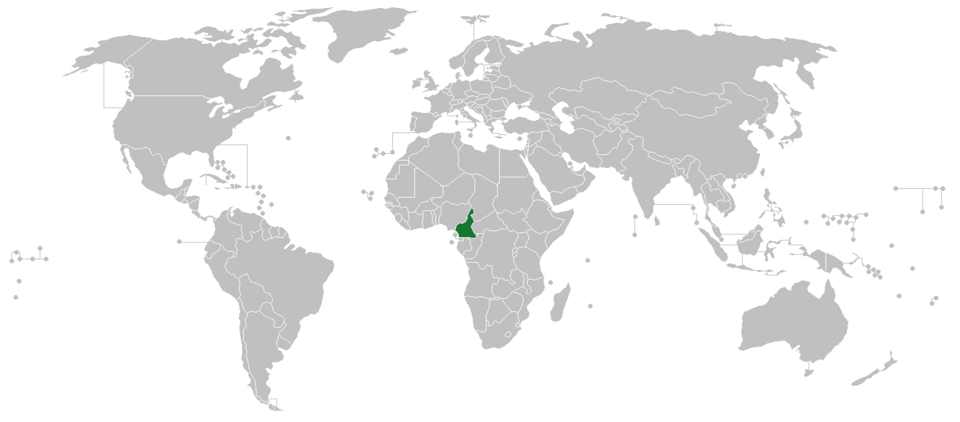
Africa, Asia, Hawaii, India*, Indonesia, Nigeria, Pacific, SE Asia, Sri Lanka, West Africa,
Cultivation
Plants can be grown from seeds or by cuttings or grafting.
Production
In southern India plants flowers April to July.
Other Information
It is a cultivated fruit tree.
Notes
There are about 200 Gardenia species.
Synonyms
Also Known As
Adavi sapota, Adavibikke, Ban pindalu, Damkurdu, Dimaru, Gaiger, Ghogar, Ghogari, Jantia, Kalkambi, Kota ranga, Kumbay, Pandru, Papda, Paphar, Papra, Papur, Perungambil, Pohon gardenia India
References (10)
- Ambasta, S.P. (Ed.), 2000, The Useful Plants of India. CSIR India. p 232
- Basha, S. K. M., Ethnobotanical Trees of Sri Lanka Malleswara Wildlife Sanctuary; Eastern Ghats, Andhra Pradesh.
- Chandrakumar, P., et al, 2015, Ethnobotanical studies of wild edible plants of Gond, Halba and Kawar tribes of Salekasa Taluka, Gondia District, Maharashtra State, India. International Research Journal of Pharmacy 6(8)
- Hort. kew. 1:294. 1789
- Kahlon, L. K. & Singh, R., 2019, Traditional knowledge & Dynamics of edible plants of primitive tribal group ‘Paudi Bhuyan’ with changing demography migration patterns in Northern Odisha. Indian Journal of Traditional Knowledge Vol 18(1), pp 7-15
Show all 10 references Hide references
- Misra S. & Misra M., 2016, Ethnobotanical and Nutritional Evaluation of Some Edible Fruit Plants of Southern Odisha, India. International Journal of Advances in Agricultural Science and Technology, Vol.3 Issue.1, March- 2016, pg. 1-30
- Reddy, K. N. et al, 2007, Traditional knowledge on wild food plants in Andhra Pradesh. Indian Journal of Traditional Knowledge. Vol. 6(1): 223-229
- Singh, H.B., Arora R.K.,1978, Wild edible Plants of India. Indian Council of Agricultural Research, New Delhi. p 61
- Sukarya, D. G., (Ed.) 2013, 3,500 Plant Species of the Botanic Gardens of Indonesia. LIPI p 303
- Yadav, D. K., 2011, Study on Biodiversity and Edible Bioresources of Betla National Park, Palamu, Jharkhand (India). The 2011 Las Vegas International Academic Conference.