Setaria verticillata
(L.) P. Beauv.
Rough bristle grass, Whorled Pigeon Grass
iNaturalist· cc-by-nc
(c) Anniek Yang, some rights reserved (CC BY-NC), uploaded by Anniek Yang
iNaturalist· cc-by-nc
(c) Zachary Ngow, some rights reserved (CC BY-NC), uploaded by Zachary Ngow
iNaturalist· cc-by
(c) Юрий Данилевский (Yuriy Danilevsky), some rights reserved (CC BY), uploaded by Юрий Данилевский (Yuriy Danilevsky)
Summary
Source: WikipediaSetaria verticillata is a species of grass known by the common names hooked bristlegrass, rough bristle-grass and bristly foxtail. It is native to Europe, but it is known on most continents as an introduced species and often a noxious weed. It is a hardy bunchgrass which grows in many types of urban, cultivated, and disturbed habitat. It is a weed of many types of agricultural crops, growing in vineyards and fields. Herbicide-resistant strains have been noted. This is an annual grass with decumbent or erect stems growing up to a meter long. The leaf blades are up to 25 centimeters long and have a long sheath around the stem. The inflorescence is a dense panicle up to 15 centimeters long which tapers at both ends. It contains many small spikelets and bristles. The bristles have tiny backwards-pointing barbs that help them hook onto clothing or animal fur, facilitating their dispersal. Seeds of the grass are used to make beer in South Africa and porridge in Namibia. They have been used as a famine food in India.
Description
An annual grass. It forms tufts. It has many branches. It is 20-100 cm tall. The flower is narrow and like a cylinder shaped. It tapers to a point. The spikelets are in rings and separated especially lower on the flowering stalk. The bristles are barbed in a reflexed direction.
Edible Uses
The grains are used as food, typically prepared as porridge or used to make alcoholic drinks.
Traditional Uses
The grains are used as food. They are used in porridge. They are also used for making an alcoholic drink. Caution: Alcohol is a cause of cancer.
This uses section is brief — help expand it
Known Hazards
Alcohol produced from this grain is a cause of cancer.
Distribution
It grows in tropical and warm temperate places. It grows on roadsides between 300-1000 m altitude in Taiwan. It is used in western Rajasthan in India. It grows in hot arid places. It grows in areas with a rainfall between 300-1,000 mm. It grows from 60-2,100 m above sea level in tropical countries. In Argentina it grows from sea level to 2,600 m above sea level. It can tolerate shade. It can grow in arid places. In Yunnan.
Where It Grows
Afghanistan, Africa, Albania, Algeria, Angola, Argentina, Armenia, Asia, Australia, Austria, Azerbaijan, Azores, Bahrain, Balkans, Bangladesh, Belarus, Belgium, Botswana, Brazil, Britain, Bulgaria, Burkina Faso, Burundi, Cameroon, Canada, Canary Islands, Cape Verde, Caucasus, Central Africa, Central African Republic, CAR, Central America, Central Asia, Chile, China, Comoros, Congo, Cuba, Cyprus, Czech Republic, East Africa, East Timor, Ecuador, Egypt, Estonia, Eswatini, Ethiopia, Europe, Finland, France, Gambia, Georgia, Germany, Ghana, Greece, Guatemala, Hawaii, Himalayas, Hungary, India, Indochina, Indonesia, Iran, Iraq, Italy, Japan, Kazakhstan, Kenya, Korea, Kyrgyzstan, Latvia, Lesotho, Libya, Lithuania, Luxembourg, Malawi, Malaysia, Mali, Marquesas, Mauritania, Mauritius, Mediterranean, Mexico, Middle East, Mozambique, Myanmar, Namibia, Nepal, Netherlands, Netherlands Antilles, New Caledonia, New Zealand, Niger, Nigeria, North Africa, North America, Oman, Pacific, Pakistan, Paraguay, Peru, Poland, Portugal, Qatar, Romania, Rwanda, Sahara, Saudi Arabia, Scandinavia, SE Asia, Senegal, Slovakia, Slovenia, Socotra, Somalia, South Africa, Southern Africa, South America, Spain, Sri Lanka, St Helena, Sudan, Swaziland, Switzerland, Taiwan, Tajikistan, Tanzania, Tasmania, Thailand, Timor-Leste, Tunisia, Turkey, Türkiye, Turkmenistan, Uganda, Ukraine, United Arab Emirates, UAE, Uruguay, USA, Uzbekistan, Venezuela, West Africa, West Indies, Yemen, Yugoslavia, Zambia, Zimbabwe,
Notes
There are about 130 Setaria species. They are mainly in the tropics and subtropics. The flowering heads are put over grain to protect it from rats due to the barbed bristles. It is a C4 pathway plant.
Synonyms
Also Known As
Bar chitta, Bar, Barchitta, Bir kauni, Bur, Chick-lenta, Chir chira, Chirchita, Damati, Damatila, Dorayra, Eomba, Kulta, Maraboob, Mara-kudhag, Myet-naya, Nayar-myet, Ndzimati, Vretenčasti muhvič
References (25)
- Abbiw, D.K., 1990, Useful Plants of Ghana. West African uses of wild and cultivated plants. Intermediate Technology Publications and the Royal Botanic Gardens, Kew. p 26
- Ambasta, S.P. (Ed.), 2000, The Useful Plants of India. CSIR India. p 571
- Burkill, H. M., 1985, The useful plants of west tropical Africa, Vol. 2. Kew.
- Curtis, W.M., & Morris, D.I., 1994, The Student's Flora of Tasmania. Part 4B St David's Park Publishing, Tasmania, p 341
- Dashorst, G.R.M., and Jessop, J.P., 1998, Plants of the Adelaide Plains & Hills. Botanic Gardens of Adelaide and State Herbarium. p 184
Show all 25 references Hide references
- Ess. Agrostogr. 51, 178. 1812
- Flora of Australia Volume 49, Oceanic Islands 1, Australian Government Publishing Service, Canberra. (1994) p 487
- Fowler, D. G., 2007, Zambian Plants: Their Vernacular Names and Uses. Kew. p 72
- http://palaeoworks.anu.edu.au/Nuno_PhD/04.pdf re Timor
- http://www.botanic-gardens-ljubljana.com/en/plants
- Hussey, B.M.J., Keighery, G.J., Cousens, R.D., Dodd, J., Lloyd, S.G., 1997, Western Weeds. A guide to the weeds of Western Australia. Plant Protection Society of Western Australia. p 69
- Kenneally, K.E., Edinger, D. C., and Willing T., 1996, Broome and Beyond, Plants and People of the Dampier Peninsula, Kimberley, Western Australia. Department of Conservation and Land Management. p 224
- Jardin, C., 1970, List of Foods Used In Africa, FAO Nutrition Information Document Series No 2.p 7
- Lamp, C & Collet F., 1989, Field Guide to Weeds in Australia. Inkata Press. p 265
- Lamp, C.A., Forbes, S.J. and Cade, J.W., 1990, Grasses of Temperate Australia. Inkata Press. p 259
- Lazarides, M. & Hince, B., 1993, Handbook of Economic Plants of Australia, CSIRO. p 218
- Paczkowska, G. & Chapman, A.R., 2000, The Western Australian Flora. A Descriptive Catalogue. Western Australian Herbarium. p 116
- Royal Botanic Gardens, Kew (1999). Survey of Economic Plants for Arid and Semi-Arid Lands (SEPASAL) database. Published on the Internet; http://www.rbgkew.org.uk/ceb/sepasal/internet [Accessed 4th June 2011]
- Ruiters-Welcome, A. K., 2019, Food plants of southern Africa. Ph.D. thesis. Univ. of Johannesburg p 89
- SAXENA,
- Tasmanian Herbarium Vascular Plants list p 89
- Vernon, R., 1983, Field Guide to Important Arable Weeds of Zambia. Dept of Agriculture, Chilanga, Zambia. p 128
- Welcome, A. K. & Van Wyk, B.-E., 2019, An inventory and analysis of the food plants of southern Africa. South African Journal of Botany 122 (2019) 136–179
- Wheeler, J.R.(ed.), 1992, Flora of the Kimberley Region. CALM, Western Australian Herbarium, p 1218
- World Checklist of Useful Plant Species 2020. Royal Botanic Gardens, Kew
More from Poaceae
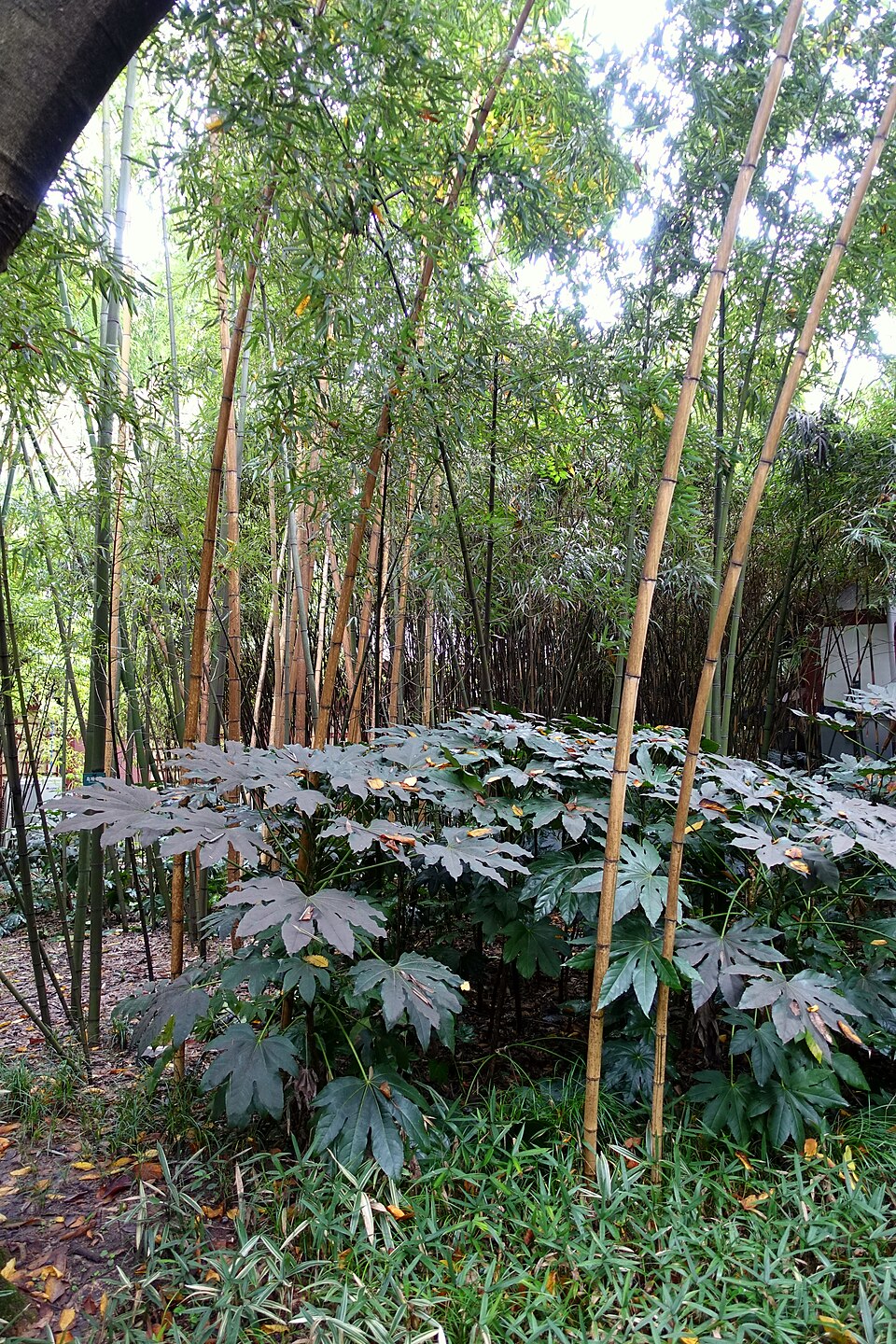
Phyllostachys arcana
Arcana bamboo
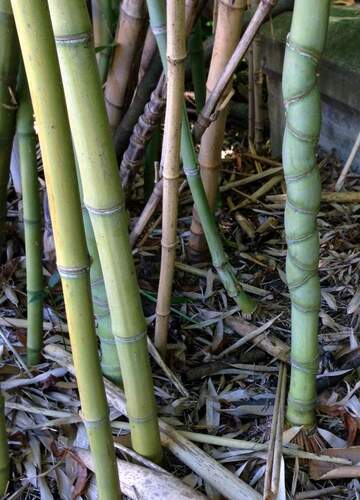
Phyllostachys aurea
Fishpole Bamboo, Golden bamboo
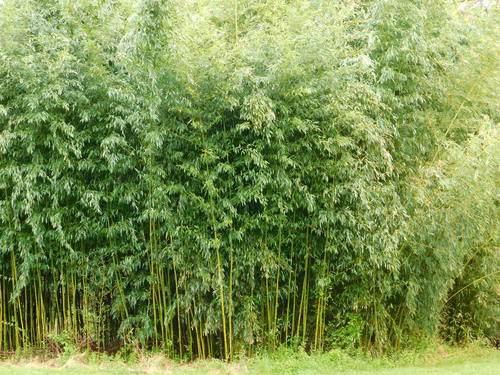
Phyllostachys aureosulcata
Yellow-grove bamboo
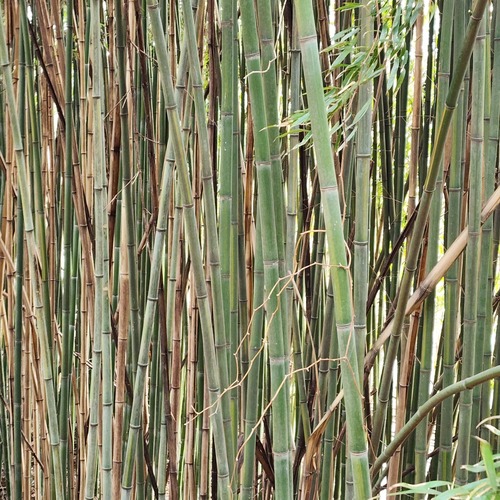
Phyllostachys bambusoides
Giant timber bamboo, Japanese timber bamboo
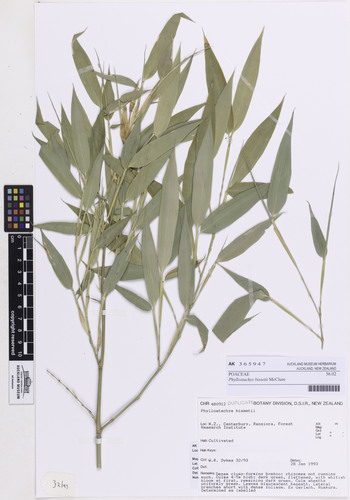
Phyllostachys bissetii
Bisset's bamboo, David Bisset bamboo
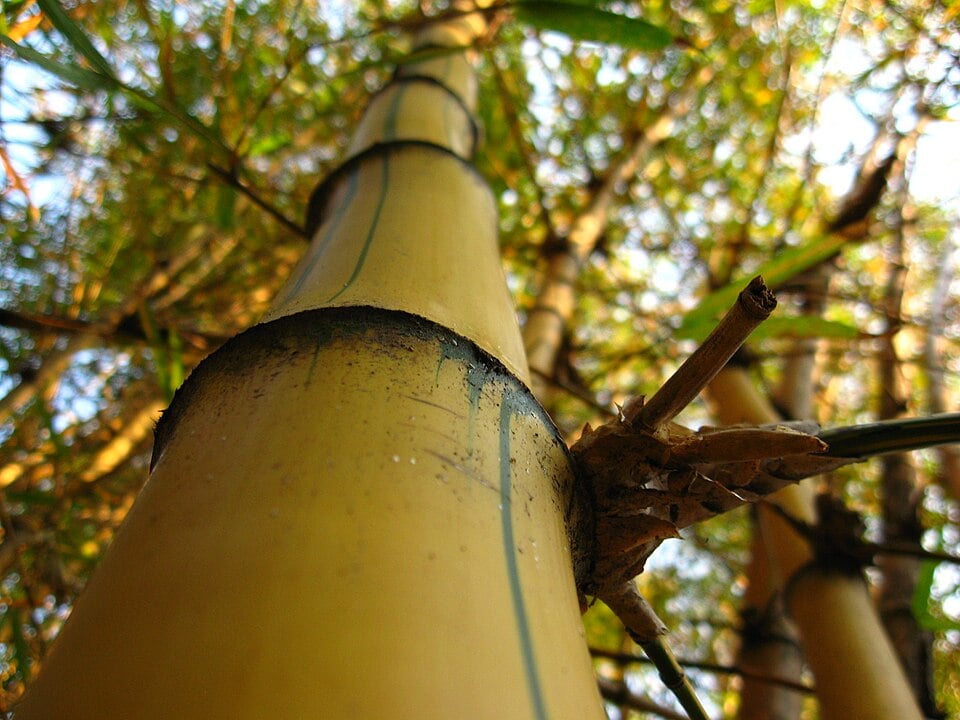
Phyllostachys castillonis
Castillon bamboo