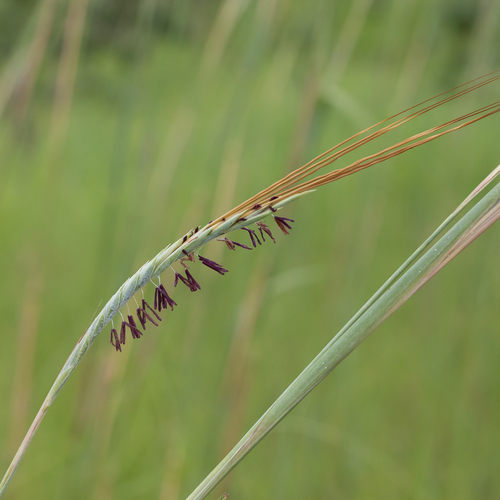
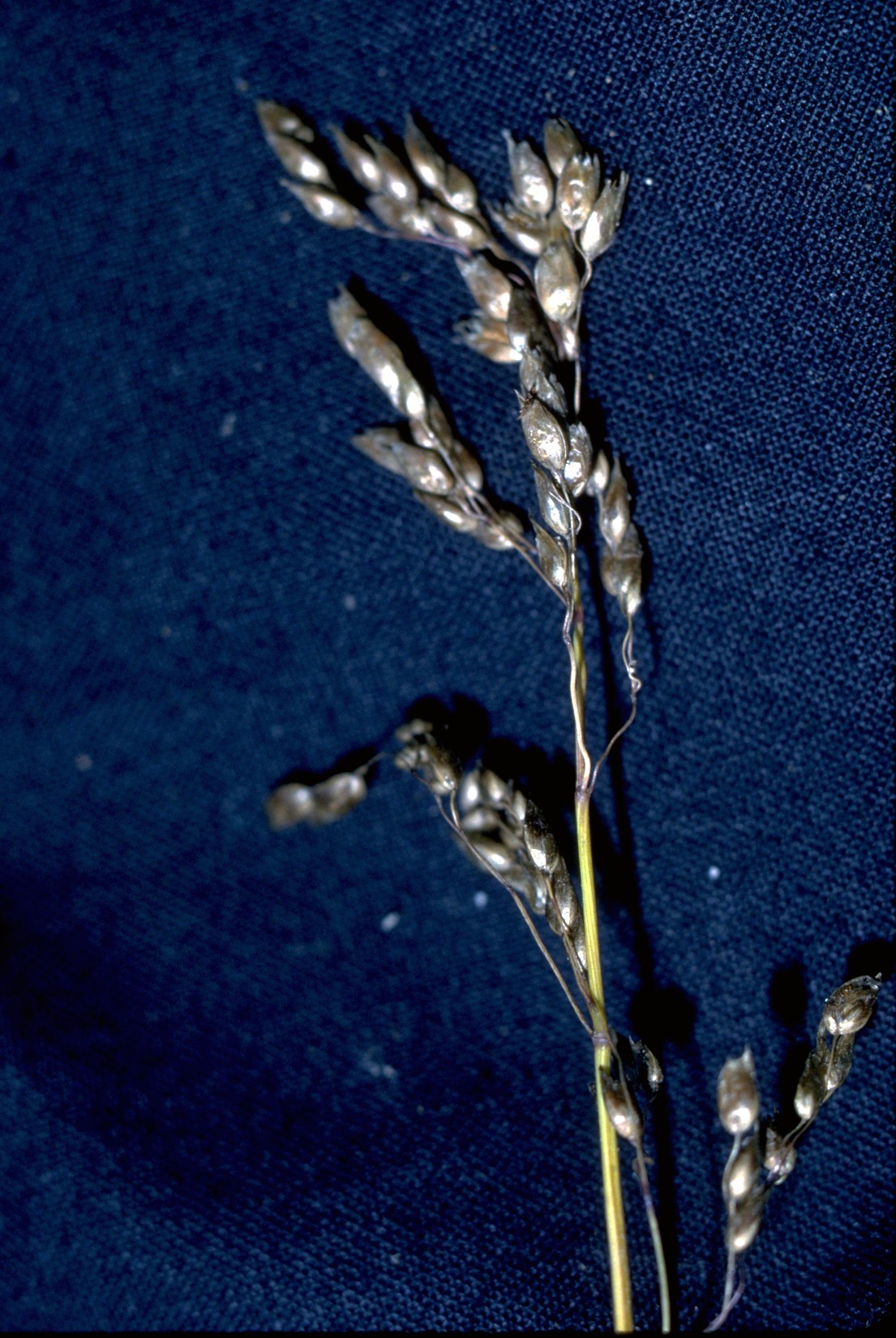
Setaria pumila subsp. pallidefusca
(Schumach.) B. K. Simon
Bristly foxtail grass, Cattail grass
iNaturalist· cc-by
(c) Tom Norton, some rights reserved (CC BY)
iNaturalist· cc-by-nc
(c) Elio Giacone, some rights reserved (CC BY-NC), uploaded by Elio Giacone
Summary
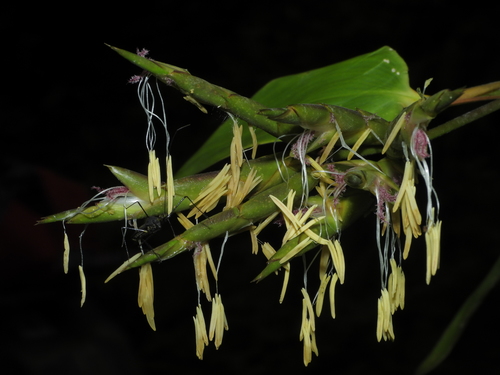
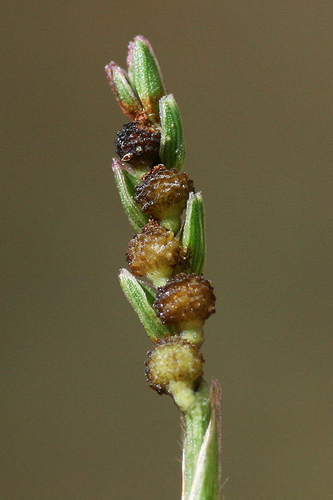
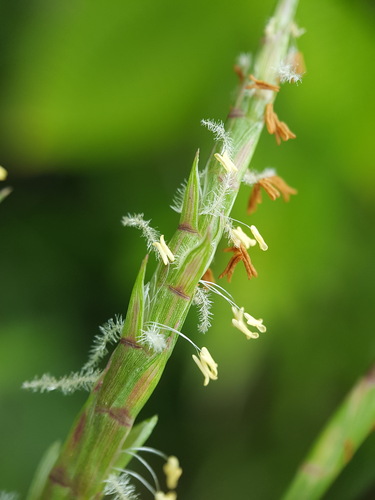
Source: WikipediaSetaria pumila is a species of grass known by many common names, including yellow foxtail, yellow bristle-grass, pigeon grass, and cattail grass. It is native to Europe, but it is known throughout the world as a common weed. It grows in lawns, sidewalks, roadsides, cultivated fields, and many other places. This annual grass grows 20 centimetres (8 inches) to well over 1 metre (1 yard) in height, its mostly hairless stems ranging from green to purple-tinged in color. The leaf blades are hairless on the upper surfaces, twisting, and up to 30 centimetres (12 inches) long. The inflorescence is a stiff, cylindrical bundle of spikelets 2 to 15 centimetres (3⁄4 to 6 inches) long with short, blunt bristles. The panicle may appear yellow or yellow-tinged. In New Zealand S. pumila can cover 20–40% of otherwise productive dairy farming pasture causing a loss in milk production.
Description
An annual grass. It forms tufts. It grows 60-100 cm high. The leaf blades are flat and 1.5 cm across. The flower panicle is erect. It is dense and like a cylinder or spike. It is 1-10 cm long and 2 cm wide. Probably now a synonym of Setaria pumila.
Edible Uses
The grains are used as a cereal, made into a drink, and used to add flavour to maize meal.
Traditional Uses
The grains are used as a cereal and also used for a drink. It adds flavour to maize meal.
This uses section is brief — help expand it
Distribution
A tropical plant.
Where It Grows
Africa, Asia, Australia, Burkina Faso, Cameroon, Central Africa, Central America, China, Congo, East Africa, Eswatini, Ethiopia, Europe, Fiji, Germany, Ghana, Himalayas, India, Japan, Korea, Mozambique, Nepal, Norfolk Island, Pacific, Philippines, SE Asia, South Africa, Southern Africa, Swaziland, Taiwan, Tonga, USA, West Africa, Zimbabwe,
Notes
There are about 130 Setaria species. They are mainly in the tropics and subtropics.
Synonyms
Also Known As
Jhusile banso, Kavatta grass, Taya
References (14)
- Abbiw, D.K., 1990, Useful Plants of Ghana. West African uses of wild and cultivated plants. Intermediate Technology Publications and the Royal Botanic Gardens, Kew. p 26
- Ambasta, S.P. (Ed.), 2000, The Useful Plants of India. CSIR India. p 571 (As Setaria pallidefusca)
- Austrobaileya 2:22. 1984 "pallide-fusca"
- Bull. Misc. Inform. Kew 1930:259. 1930 "pallidifusca"
- Dangol, D. R., 2002, Economic uses of forest plant resources in western Chitwan, Nepal. Banko Janakari, 12(2): 56-64 (As Setaria pallide-fusca)
Show all 14 references Hide references
- Jardin, C., 1970, List of Foods Used In Africa, FAO Nutrition Information Document Series No 2.p 7
- Lazarides, M. & Hince, B., 1993, Handbook of Economic Plants of Australia, CSIRO. p 217
- Roger, D. D., et al, 2012, Nutritional properties of “Bush Meals” from North Cameroon’s Biodiversity. Advances in Applied Science Research, 2012, 3 (3):1482-1493
- Singh, H.B., Arora R.K.,1978, Wild edible Plants of India. Indian Council of Agricultural Research, New Delhi. p 85
- Swaziland's Flora Database http://www.sntc.org.sz/flora
- Thothathri, K., & Pal, G.D., 1987, Further Contribution to the Ethnobotany of Subansiri District, Aranchal Pradesh. J. Econ. Tax. Bot. Vol. 10 No. 1 pp 149-157 (As Setaria pallidefusca)
- van Oudtshoorn, F and van Wyck, E., 2004, Guide to Grasses of Southern Africa. Briza. p 92 (As Setaria pallidefusca)
- van Wyk, B., 2005, Food Plants of the World. An illustrated guide. Timber press. p 345 (As Setaria pallidefusca)
- Yuncker, T.G., 1959, Plants of Tonga, Bernice P. Bishop Museum, Hawaii, Bulletin 220. p 62