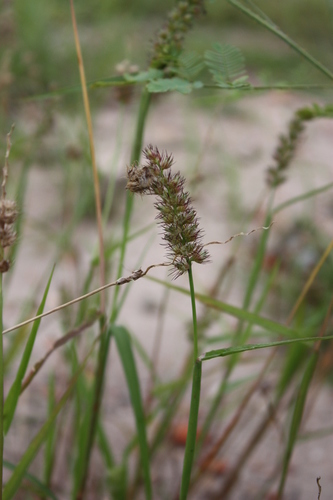
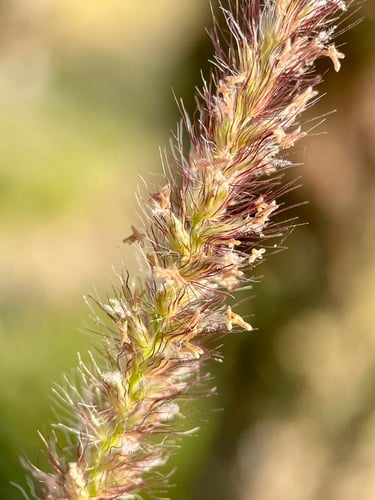
Saccharum officinarum
L.
Sugarcane
iNaturalist· cc-by-nc
(c) beingplace, some rights reserved (CC BY-NC), uploaded by beingplace
iNaturalist· cc-by-nc
(c) Rosabel Miro, some rights reserved (CC BY-NC), uploaded by Rosabel Miro
iNaturalist· cc-by-nc
(c) Rosabel Miro, some rights reserved (CC BY-NC), uploaded by Rosabel Miro
Summary
Source: WikipediaSaccharum officinarum is a large, strong-growing species of grass in the sugarcane genus. Its stout stalks are rich in sucrose, a disaccharide sugar which accumulates in the stalk internodes. It originated in New Guinea, and is now cultivated in tropical and subtropical countries worldwide for the production of sugar, ethanol and other products. It is one of the most productive and most intensively cultivated kinds of sugarcane.
Description
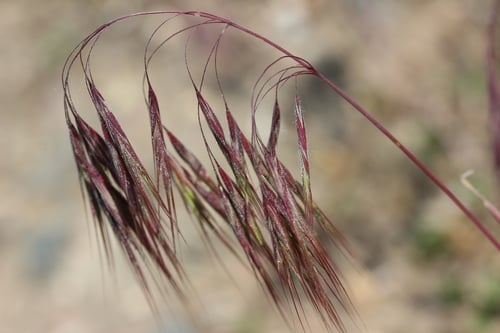
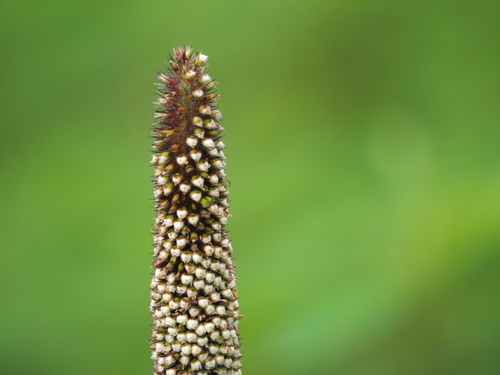
A tall thick stemmed clumpy grass. It has many nodes. It grows 1-6 m tall. It spreads 100 cm wide. A large number of different cultivated varieties occur. The leaves are long and narrow. They taper to the tip. They are rigid and droop at the tip. The cane varies in thickness, length of nodes, colour etc. The stalks have distinct nodes and the bottom of the leaf is wrapped in a sheath around the stalk. The flower is brownish. It is surrounded by dense silky white hairs.
Edible Uses
The stems contain a very sweet sap extracted by crushing. It can be drunk as a refreshing sweet beverage, or more commonly concentrated into syrups or dried to produce sugar, molasses, and similar products. The core of fresh stems is also chewed directly as a sweet refreshment.
Traditional Uses
The stems are chewed. The flowers can be cooked and eaten before the flower opens. The stems are the source of cane sugar. This is used as a sweetener in many foods and drinks.
Medicinal Uses
Leaf ash is used to treat sore eyes. Stem juice is used for sore throats and, on its own, to treat snakebite and wounds from poison arrows. Mixed with an infusion of wallaba (Eperua sp.), it is used against curare poisoning. A decoction of the young leaves is used to treat urinary conditions.
Known Hazards
Leaves and sheaths of some varieties are covered with a large number of siliceous hairs. These hairs penetrate the skin of cane cutters and are most unpleasant; hence cane cutters prefer varieties with few hairs or burnt cane. (Plant has spines or sharp edges; use extreme caution when handling )
Distribution
It is a tropical plant. It occurs throughout the country of Papua New Guinea up to 2,750 m above sea level. It needs a temperature over 21°C for sprouting. It is frost sensitive. In Nepal it grows up to about 1400 m altitude. It suits hardiness zones 9-12. In Sichuan and Yunnan.
Where It Grows
Africa, Angola, Antigua and Barbuda, Asia, Australia, Bangladesh*, Barbados, Belize, Benin, Bhutan, Bolivia, Bougainville, Brazil, Burkina Faso, Cambodia, Cameroon, Cape Verde, Caribbean, Caroline Islands, Central Africa, Central African Republic, CAR, Central America, China, Chuuk, Colombia, Congo DR, Congo R, Cook Islands, Costa Rica, Côte d'Ivoire, Cuba, Dominican Republic, East Africa, East Timor, Easter Island, Ecuador, El Salvador, Eswatini, Ethiopia, Europe, Fiji, French Guiana, FSM, Ghana, Grenada, Guam, Guatemala, Guianas, Guinea, Guinée, Guyana, Haiti, Hawaii, Himalayas, Hispaniola, Honduras, India, Indochina, Indonesia, Ivory Coast, Jamaica, Japan, Kenya, Kiribati, Korea, Kosrae, Laos, Libya, Madagascar, Malawi, Malaysia, Maldives, Mariana Islands, Marquesas, Marshall Islands, Martinique, Mauritius, Mediterranean, Mexico, Micronesia, Mozambique, Myanmar, Nauru, Nepal, New Caledonia, Nicaragua, Niger, Nigeria, Niue, North Africa, North America, Northeastern India, Pacific, Pakistan, Papua New Guinea*, PNG, Paraguay, Peru, Philippines, Pohnpei, Reunion, Rotuma, Samoa, Sao Tome and Principe, SE Asia, Senegal, Sierra Leone, Singapore, Solomon Islands, Somalia, South Africa, Southern Africa, South America, South Sudan, Spain, Sri Lanka, St. Kitts and Nevis, St Lucia, Suriname, Swaziland, Taiwan, Thailand, Tibet, Timor-Leste, Togo, Tokelau, Tonga, Tuvalu, Uganda, USA, Vanuatu, Vietnam, Wallis & Futuna, West Africa, West Indies, Yap, Zambia, Zimbabwe,
Cultivation
The plant grows best in areas where the mean annual rainfall is in the range 1,500 - 2,000mm, tolerating 1,000 - 5,000mm. It prefers a mean annual temperature within the range 24° - 37°c, though can tolerate 15 - 41°c. There are large differences between different cultivars in their tolerance to cold and susceptibility to frost. Generally, long-term exposure to temperatures below 10c can be lethal, whilst even short periods at 0°c causes the leaves to become chlorotic, at about -3°c young plants turn brown and the terminal buds and leaves of mature cane die, when the temperature reaches -11.5c the whole plant dies. Grows best in a sunny position. A very greedy plant, soon exhausting the soil of nutrients. The plant is considered to be moderately tolerant to saline soil conditions and relatively tolerant of acid soils. Grows best in a position sheltered from strong winds. Prefers a pH in the range 5 - 8, but can tolerate 4.5 - 9. Well-grown plants can become invasive. When irrigated, yields of 100 - 150 tons of cane can be obtained from mature plants. Young plants can yield 60 - 90 tons. There are many named varieties. The roots develop from the growth ring on the original planting piece and also from the new shoots that develop. The majority of the roots are thin and superficial with four fifths of the roots commonly found in the top 25 - 50cm of the soil. Thicker roots will penetrate to depths of 4 metres or more. Flowering Time: Late Winter/Early Spring. Bloom Color: White/Near White.
Propagation
Propagate by cuttings of 2–3 joints taken from the upper part of a vigorous, healthy stem. Place them in the ground with only 2–5cm projecting above the surface. Within about two weeks, the eyes at each node will produce shoots and roots will grow from the nodes themselves. As shoots develop, the parent stem decays and the young plants establish their own root systems.
Other Uses
A wax extracted from the stems resembles carnauba wax and is used in furniture, shoe, and leather polishes, electrical insulating materials, and waxed paper. The stem sap can be converted into alcohol for use as fuel in internal combustion engines. Stems are also a source of fibre for papermaking. Bagasse — the residue left after sugar extraction — is used as fuel and in the manufacture of fibreboard, paper pulp, plastic, furfural, and cellulose. As an agroforestry crop, sugar cane exhausts soil quickly; in some regions it is intercropped with indigo or other legumes between rows when first planted, and these are turned into the soil while still green and succulent with beneficial results. Nitrogen fixation during decomposition of sugar cane is an important nutrient contribution in traditional dryland agricultural systems in Hawai'i.
Production
Plants mostly take 14-18 months until they are ready for harvest.
Other Information
Chewing canes are a very important snack and social food in all areas of Papua New Guinea. Over 1 billion tons are produced each year worldwide. It is cultivated.
Notes
It is used as a sweetener.
Nutrition
| Part | Moisture | kJ | kcal | Protein | Vit A | Vit C | Iron | Zinc |
|---|---|---|---|---|---|---|---|---|
| Juice | 78.8 | 343 | 82 | 0.3 | — | 2 | 0.7 | — |
| Leaves | 77.5 | 314 | 75 | 1.8 | — | — | — | — |
| Stem | 82.5 | 259 | 62 | 0.6 | — | — | 1.4 | — |
Synonyms
Also Known As
Ampow, Angarigai, Angou, Api wira, Arekie, Ase, Bai ile, Bo, Bos, Bur-shing, Bus, Cana de acucar, Cana sacarina, Canna da zuccehero, Canne a sucre, Cheruku, Dovu, Ebikajjo, El, Fo'u, Ganiesi, Ganna, Guru, Hetaru, Ho, Hon, Hong gan zhe, Ibia malen, Ikshu, Karimbu, Karumbu, Kelju, Khanda, Kolchu, Kono, Kyan, Magi, Maphu, Menhet, Mihali, Misale, Mlungo muwa, Moko, Mukuku, Munse, Mushwati, Mzimbe, Nea gati, Njuwa, Oy, Paat, Patta patti kabbu, Paunda, Po, Poovan, Pundia, Rake, Rosan, Sapuk, Sarkara, Satou kibi, Sau, Sehu, Seo, Seu, Suti, Sutsapa'cco, Tain, Tebu, Te kaisoka, Te taiokeken, Ti, Tiwu, To, Toi, Tolo, Tsi, Tu, Tubo, Tuh, Tupu, Udhdhandi, Uk-gas, Ukhu, Wali, Weli, Wol, Woow, Ze, Zi, Zuckerrohr
References (89)
- Ali, A. M. S., 2005, Homegardens in Smallholder Farming Systems: Examples from Bangladesh. Human Ecology, Vol. 33, No. 2 pp. 245-270
- Ambasta, S.P. (Ed.), 2000, The Useful Plants of India. CSIR India. p 537
- Anderson, E. F., 1993, Plants and people of the Golden Triangle. Dioscorides Press. p 220
- Balkrishna, A., et al, 2022, Indigenous Uses of Plants among Forest-dependent Communities of Seijosa, Arunachal Pradesh. International Journal of Economic Plants 2022, 9(1):064-080
- Barfod, A. S. & Kvist, L. P., 1996, Comparative Ethnobotanical Studies of the Amerindian Groups in Coastal Ecuador. Biologiske Skrifter 46. Copenhagen. p 76
Show all 89 references Hide references
- Bernholt, H. et al, 2009, Plant species richness and diversity in urban and peri-urban gardens of Niamey, Niger. Agroforestry Systems 77:159-179
- Bianchini, F., Corbetta, F., and Pistoia, M., 1975, Fruits of the Earth. Cassell. p 222
- Bodner, C. C. and Gereau, R. E., 1988, A Contribution to Bontoc Ethnobotany. Economic Botany, 43(2): 307-369
- Borrell, O.W., 1989, An Annotated Checklist of the Flora of Kairiru Island, New Guinea. Marcellin College, Victoria Australia. p 25
- Bourret, D., 1981, Bonnes-Plantes de Nouvelle-Caledonie et des Loyaute. ORSTOM. p 26
- Bremness, L., 1994, Herbs. Collins Eyewitness Handbooks. Harper Collins. p 213
- Burkill, I.H., 1966, A Dictionary of the Economic Products of the Malay Peninsula. Ministry of Agriculture and Cooperatives, Kuala Lumpur, Malaysia. Vol 2 (I-Z) p 1959
- Caballero-Serrano, V., et al, 2019, Traditional ecological knowledge and medicinal plant diversity in Ecuadorian Amazon home gardens. Global Ecology and Conservation 17 (2019) e00524 p 13
- Call, C. A., et al, 2004, Participatory Rural Appraisal in the Upland Ecosystem of Mt Malindang, Misamis Occidental, Philippines. Biodiversity Research Programme for Development in Mindanao. p 53
- Cabalion, P. and Morat, P., 1983, Introduction le vegetation, la flore et aux noms vernaculaires de l'ile de Pentcoste (Vanuatu), In: Journal d'agriculture traditionnelle et de botanique appliquee JATBA Vol. 30, 3-4
- Coe, F. G. and Anderson, G. J., 1999, Ethnobotany of the Sumu (Ulwa) of Southeastern Nicaragua and Comparisons with Miskitu Plant Lore. Economic Botany Vol. 53. No. 4. pp. 363-386
- Cundall, P., (ed.), 2004, Gardening Australia: flora: the gardener's bible. ABC Books. p 1292
- D'Ambrosio, U., & Puri, R. K., 2016, Foodways in transition: food plants, diet and local perceptions of change in a Costa Rican Ngäbe community. Journal of Ethnobiology and Ethnomedicine (2016) 12:3 p 27
- Das, T. & Das, A. K., 2005, Inventorying plant biodiversity in homegardens: A case study in Barak Valley, Assam, North East India. CURRENT SCIENCE, VOL. 89, NO. 1, 10 JULY 2005
- French, B.R., 1986, Food Plants of Papua New Guinea, A Compendium. Asia Pacific Science Foundation p 202
- Cobley, L.S. (rev. Steele, W.M.) 2nd Ed., 1976, An Introduction to the Botany of Tropical Crops. Longmans. p 64
- Duchelle, A. E., 2007, Observations on Natural Resource use and Conservation by the Shuar In Ecuador's Cordillera del Condor. Ethnobotany Research & Applications 5:005-023
- Facciola, S., 1998, Cornucopia 2: a Source Book of Edible Plants. Kampong Publications, p 178
- Flora of Pakistan. www.eFloras.org
- Fowler, D. G., 2007, Zambian Plants: Their Vernacular Names and Uses. Kew. p 72
- French, B.R., 2010, Food Plants of Solomon Islands. A Compendium. Food Plants International Inc. p 269
- Furusawa, T., et al, 2014, Interaction between forest biodiversity and people's used of forest resources in Roviana, Solomon Islands: implications for biocultural conservation under socioeconomic changes. Journal of Ethnobiology and Ethnomedicine, 10:10
- Goode, P., 1989, Edible Plants of Uganda. FAO p 27
- Hedrick, U.P., 1919, (Ed.), Sturtevant's edible plants of the world. p 586
- Heywood, V.H., Brummitt, R.K., Culham, A., and Seberg, O., 2007, Flowering Plant Families of the World. Royal Botanical Gardens, Kew. p 394
- Hibbert, M., 2002, The Aussie Plant Finder 2002, Florilegium. p 282
- Hide, R., et al, 1979, A checklist of some plants in the territory of the Sinasina Nimai (Simbai Province, Papua New Guinea), with notes on their uses. Department Anthropology, University of Aukland
- http://www.botanic-gardens-ljubljana.com/en/plants
- Hu, Shiu-ying, 2005, Food Plants of China. The Chinese University Press. p 296
- Jacquat, C., 1990, Plants from the Markets of Thailand. D.K. Book House p 121
- Jardin, C., 1970, List of Foods Used In Africa, FAO Nutrition Information Document Series No 2.p 22
- Kiple, K.F. & Ornelas, K.C., (eds), 2000, The Cambridge World History of Food. CUP p 1859
- Kohila, A. & Kensa, V. M., 2019, Survey of Wild Edible Plants of Dhanakarkulam Panchayath, Tirunelveli District, Tamil Nadu, India. Kong. Res. J. 6(2): 20-27, 2019
- Kuo, W. H. J., (Ed.) Taiwan's Ethnobotanical Database (1900-2000), http://tk.agron.ntu.edu.tw/ethnobot/DB1.htm
- Latham, P., 2004, Useful Plants of Bas-Congo province. Salvation Army & DFID p 242
- Lazarides, M. & Hince, B., 1993, Handbook of Economic Plants of Australia, CSIRO. p 209
- Liefting, A., et al, Samoan plant names. http://en.wikipedia.org
- Mahklouf, M. H., 2019, Ethnobotanical Study of Edible Wild Plants in Libya. European Journal of Ecology. 5(2): 30-40
- Martin, F.W. & Ruberte, R.M., 1979, Edible Leaves of the Tropics. Antillian College Press, Mayaguez, Puerto Rico. p 194
- Medhi, P. & Borthakur, S. K., 2012, Phytoresources from North Cachur Hills of Assam -3: Edible plants sold at Hflong market. Indian Journal of Natural Products and Resources. 3(1) pp 84-109
- Miguel, E., et al, 1989, A checklist of the cultivated plants of Cuba. Kulturpflanze 37. 1989, 211-357
- Miya, M. S. & Gautum, D., 2021, Checklist of floral species at the Institute of Forestry, Pokhara Campus, Pokhara, Nepal. Journal of Institute of Forestry, Nepal 18 (2021) 133-177
- Moerman, D. F., 2010, Native American Ethnobotany. Timber Press. p 499
- Molla, A., Ethiopian Plant Names. http://www.ethiopic.com/aplants.htm
- Pascual-Mendoza, S. et al, 2021, Traditional knowledge of edible plants in an indigenous community in the Sierra Norte of Oaxaca, Mexico. Plant Biosystems - An International Journal Dealing with all Aspects of Plant Biology
- Parham, B. E. V., 1972, Plants of Samoa. New Zealand Department of Scientific and Industrial Research. Information Series. No. 85 p 130
- Penafield Anchundia, D. D., 2017, Traditional food consumption and its nutritional contribution in Guasaganda, Central Ecuador. PhD Ghent University p 72
- Phon, P., 2000, Plants used in Cambodia. © Pauline Dy Phon, Phnom Penh, Cambodia. p 545
- Plants of Haiti Smithsonian Institute http://botany.si.edu/antilles/West Indies
- Purseglove, J.W., 1972, Tropical Crops. Monocotyledons. Longmans p 215
- Rajapaksha, U., 1998, Traditional Food Plants in Sri Lanka. HARTI, Sri Lanka. p 400
- Rashid, H. E., 1977, Geography of Bangladesh. Westview. p 290
- Recher, P, 2001, Fruit Spirit Botanical Gardens Plant Index. www.nrg.com.au/~recher/ seedlist.html p 3
- Rosero-Toro, et al, 2018, Cultural significance of the flora of a tropical dry forest in the Doche vereda (Villavieja, Huila, Colombia). Journal of Ethnobiology and Ethnomedicine (2018) 14:22 p 12
- Ruiters-Welcome, A. K., 2019, Food plants of southern Africa. Ph.D. thesis. Univ. of Johannesburg p 89
- Salako, V. K. et al, 2013, Home gardens: an assessment of their biodiversity and potential contribution to conservation of threatened species and crop wild relatives in Benin. Genet Resour Crop Evol
- Sillitoe, P. 1995, An Ethnobotanical Account of the Plant Resources of the Wola Region, Southern Highlands Province, Papua New Guinea. J. Ethnobiol. 15(2): 201-235
- Simmonds, N.W., 1979, Sugarcane, in Simmonds N.W.,(ed), Crop Plant Evolution. Longmans. London. p 104
- Solomon, C., 2001, Encyclopedia of Asian Food. New Holland. p 364
- Sp. pl. 1:54. 1753
- Staples, G.W. and Herbst, D.R., 2005, A tropical Garden Flora. Bishop Museum Press, Honolulu, Hawaii. p 748
- Sujanapal, P., & Sankaran, K. V., 2016, Common Plants of Maldives. FAO & Kerala FRI, p 230
- Sukenti, K., et al, 2016, Ethnobotanical study on local cuisine of the Sasak tribe in Lombok Island, Indonesia. Journal of Ethnic Foods. 3 (2016) 189-200 p 198
- Thaman, R. R., 1987, Plants of Kiribati: A listing and analysis of vernacular names. Atoll Research Bulletin No. 296
- Thaman, R. R, 2016, The flora of Tuvalu. Atoll Research Bulletin No. 611. Smithsonian Institute p 55
- Torre, de la, L., et al, 2008, Enciclopedia de las Plantas Útiles del Ecuador. Herbario QCA. Pontificia Universidad Católica del Ecuador. p 520
- Tugume, P. & Nyakoojo, C., 2020, Traditional use of wild edible plants in the communities adjacent to Mabira Central Forest Reserve, Uganda. Ethnobotany Research & Applications 20:15 (2020)
- Van Sam, H. et al, 2008, Uses and Conservation of Plant Species in a National Park. A case study of Ben En, Vietnam. Economic Botany 62:574-593
- van Wyk, B., 2005, Food Plants of the World. An illustrated guide. Timber press. p 333
- Vickery, M.L. and Vickery, B., 1979, Plant Products of Tropical Africa, Macmillan. p 51
- Walter, A. & Lebot, V., 2007, Gardens of Oceania. ACIAR Monograph No. 122. p 285
- Welcome, A. K. & Van Wyk, B.-E., 2019, An inventory and analysis of the food plants of southern Africa. South African Journal of Botany 122 (2019) 136–179
- Whistler, W. A., 1988, Ethnobotany of Tokelau: The Plants, Their Tokelau Names, and Their Uses. Economic Botany 42(2): 155-176
- Wiersema, J. H. & Leon, B., 2013, World Economic Plants. A Standard Reference CRC Press. 2nd Ed. p 603
- Williams, C.N., Chew, W.Y., and Rajaratnam, J.A., 1989, Tree and Field Crops of the Wetter Regions of the Tropics. Longman, p 234
- Williamson, J., 2005, Useful Plants of Malawi. 3rd. Edition. Mdadzi Book Trust. p 218
- Wiriadinata, H., 1995, Ethnobotany of Economic Plants in the Baliem Valley, Jayawijaya, Irian Jaya, Indonesian Institute of Science, Bogor, Indonesia
- World Checklist of Useful Plant Species 2020. Royal Botanic Gardens, Kew
- Yeshi, K. et al, 2017, Taxonomical Identification of Himalayan Edible Medicinal Plants in Bhutan and the Phenolic Contents and Antioxidant Activity of Selected Plants. TBAP 7 (2) 2017 pp 89 - 106
- Yuncker, T. G., 1943, The Flora of Niue Island. Bernice P. Bishop Museum Bulletin 178 p 24
- Yuncker, T.G., 1959, Plants of Tonga, Bernice P. Bishop Museum, Hawaii, Bulletin 220. p 65
- Zaldivar, M. E., et al, 2002, Species Diversity of Edible Plants Grown in Homegardens of Chibehan Amerindians from Costa Rica. Human Ecology, Vol. 30, No. 3, pp. 301-316
- Zeven, A. C. & de West, J. M. J., 1982, Dictionary of cultivated plants and their regions of diversity. Wageningen. p 38, 54, 75
- Zizka, G., 1991, Flowering Plants of Easter Island. Palmarum Hortus Francofurtensis