Acacia pycnantha
Benth.
Golden wattle, Australian Golden Wattle
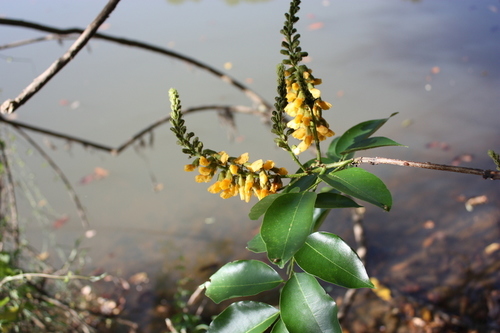
iNaturalist· cc-by-nc
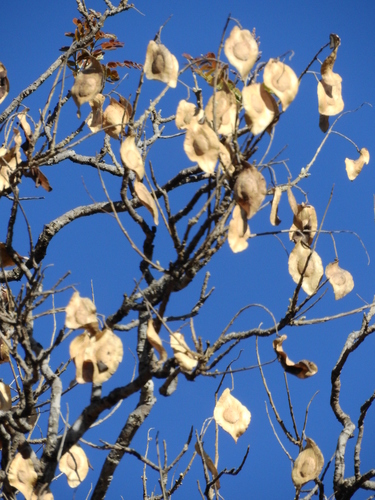
(c) Rob Shepherd, some rights reserved (CC BY-NC), uploaded by Rob Shepherd
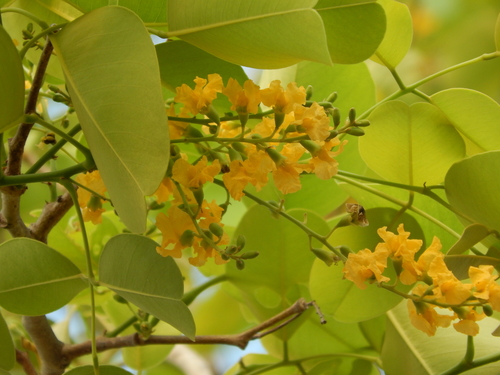
iNaturalist· cc-by-nc
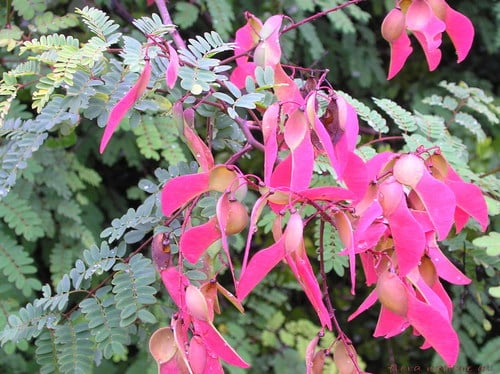
(c) Lorraine Phelan, some rights reserved (CC BY-NC), uploaded by Lorraine Phelan
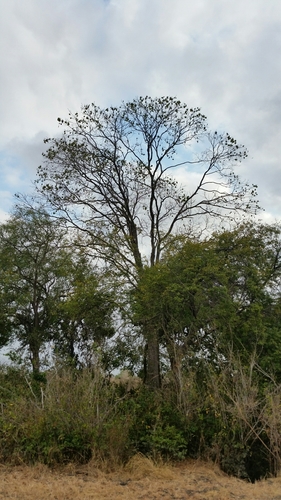
iNaturalist· cc-by-nc-sa
(c) Arthur Chapman, some rights reserved (CC BY-NC-SA), uploaded by Arthur Chapman
Summary
Source: WikipediaAcacia pycnantha, most commonly known as the golden wattle, is a tree of the family Fabaceae. It grows to a height of 8 metres (26 feet) and has phyllodes (flattened leaf stalks) instead of true leaves. The profuse fragrant, golden flowers appear in late winter and spring, followed by long seed pods. Explorer Thomas Mitchell collected the type specimen, from which George Bentham wrote the species description in 1842. The species is native to southeastern Australia as an understorey plant in eucalyptus forest. Plants are cross-pollinated by several species of honeyeater and thornbill, which visit nectaries on the phyllodes and brush against flowers, transferring pollen between them. A. pycnantha has become a weed in areas of Australia, as well as in Africa and Eurasia. Its bark produces more tannin than any other wattle species, resulting in its commercial cultivation for production of this compound. It has been widely grown as an ornamental garden plant and for cut flower production. A. pycnantha was made the official floral emblem of Australia in 1988, and has been featured on the country's postal stamps.
Description
A shrub or small tree. It grows 5 m tall. There are prickles along the stem. The leaves are twice divided and there are 8-18 pairs of pinnae. There are up to 50 pairs of pinnules on each pinnae. The flowers are yellow. They are in large clusters at the ends of branches. The pods are flattened.
Edible Uses
Flowers are cooked and, being rich in pollen, are frequently used in fritters. The plant also yields an oily gum reported to be edible. Some acacia species produce a dark gum that tends to be astringent and distasteful, but others yield a light gum that is sweet and pleasant. This gum can be sucked like candy, soaked in water to form a jelly, or warmed until it becomes soft and chewable.
Traditional Uses
The seeds are eaten. The gum is eaten. The nectar from the flowers is used for a drink.
This uses section is brief — help expand it
Medicinal Uses
None known.
Distribution
It is a warm temperate plant. It occurs naturally in eastern Australia. It prefers shallow sandy soils. It is drought resistant but frost tender when young. It will grow in part shade or full sun. They do not suit high altitudes or very wet conditions. Naturally it grew in areas with a rainfall of 35-70 mm but now grows in areas with rainfall up to 2,280 mm. It suits hot dry areas. It can grow in arid places. It grows between 1,450-2,000 m above sea level. It suits hardiness zones 9-11. Tasmania Herbarium.
Where It Grows
Africa, Asia, Australia*, East Africa, East Timor, Europe, France, India, Indonesia, Israel, Italy, Kenya, Libya, Mediterranean, Middle East, New Zealand, North Africa, Portugal, SE Asia, South Africa, Southern Africa, Spain, Tanzania, Tasmania, Timor-Leste, USA,
Cultivation
Prefers a rather poor sandy loam and a very sunny position. Succeeds in any good garden soil that is not excessively limey and in dry soils. Most members of this genus become chlorotic on limey soils. Prefers a pH in the range 5.8 to 6.5. This species is not very hardy outdoors in Britain. Plants require hot, sunny summers if they are to ripen their wood fully and flower freely. In Britain they tend to do best when grown in coastal gardens in a sunny, sheltered position that is protected from the wind. A fast growing but short-lived tree in cultivation. It is sometimes cultivated for the tannin obtained from its bark. This tree is the floral emblem of Australia. This species has a symbiotic relationship with certain soil bacteria, these bacteria form nodules on the roots and fix atmospheric nitrogen. Some of this nitrogen is utilized by the growing plant but some can also be used by other plants growing nearby.
Propagation
Seed is best sown as soon as it is ripe in a sunny position in a warm greenhouse. Stored seed should be scarified, pre-soaked for 12 hours in warm water, then sown in a warm greenhouse in March; germination takes 3–4 weeks at 25°C. Once seedlings are large enough to handle, prick them out into individual pots and grow on in a sunny greenhouse through their first winter. Plant out in late spring or early summer after the last expected frosts, with some cold protection recommended for the first winter outdoors. Cuttings of half-ripe wood with a heel can be taken in July or August, potted individually in a frame, overwintered in a greenhouse, and planted out in late spring or early summer. Success rate is fair.
Other Uses
A yellow dye is obtained from the flowers and a green dye from the seed pods. The plant's extensive root system helps prevent soil erosion and is often planted on sandy banks for this purpose. The bark is rich in tannin — on a 10% moisture basis it contains 40.8% tannin. The plant also produces gum. This species is a nitrogen fixer.
Production
Trees grow quickly. They are short lived lasting 10-15 years. The pods open, dropping the seed to the ground.
Other Information
It is cultivated.
Notes
There are about 1,350 Acacia species. Over 1,000 occur in Australia. Also as Mimosaceae.
Synonyms
Also Known As
Karrank, Tunline
References (34)
- Ambasta S.P. (Ed.), 2000, The Useful Plants of India. CSIR India. p 7
- Blamey, M and Grey-Wilson, C., 2005, Wild flowers of the Mediterranean. A & C Black London. p 80
- Bodkin, F., 1991, Encyclopedia Botanica. Cornstalk publishing, p 31
- Bonney, N., 1997, Economic Native Trees and Shrubs for South Australia. Greening Australia (SA) inc. Campbelltown SA 5074 p 16
- Bonney, N., 2012, Edible Wild Native Plants for Southern Australia. p 13
Show all 34 references Hide references
- Boomsma, C.D., 1972, Native Tree of South Australia. Woods & Forests Department South Australia, Bulletin No.19. p 42
- Clarke,P. A., 2013, The Aboriginal Ethnobotany of the Adelaide Region, South Australia. Transactions of the Royal Society of South Australia. (2013), 137(1): 97-126
- Cronin, L., 1989, The Concise Australian Flora. Reed. p 127
- Cundall, P., (ed.), 2004, Gardening Australia: flora: the gardener's bible. ABC Books. p 78
- Dashorst, G.R.M., and Jessop, J.P., 1998, Plants of the Adelaide Plains & Hills. Botanic Gardens of Adelaide and State Herbarium. p 78
- De Angelis, D., 2005, Aboriginal Plant Use of the Greater Melbourne Area. La Trobe University Environment Collective
- Elliot, W.R., & Jones, D.L., 1982, Encyclopedia of Australian Plants suitable for cultivation. Vol 2. Lothian. p 103
- Etherington, K., & Imwold, D., (Eds), 2001, Botanica's Trees & Shrubs. The illustrated A-Z of over 8500 trees and shrubs. Random House, Australia. p 56
- Gott, B & Conran, J., 1991, Victorian Koorie Plants. PO Box 666 Hamilton, Victoria 3300, Australia. p 45
- Greig, D., 1996, Flowering Natives for Home Gardens. Angus & Robertson. p 39
- Hall, N. et al, 1972, The Use of Trees and Shrubs in the Dry Country of Australia, AGPS, Canberra. p 350
- Hemphill, I, 2002, Spice Notes. Macmillan. p 413
- Holliday, I., 1989, A Field Guide to Australian Trees. Hamlyn. p 28
- Hussey, B.M.J., Keighery, G.J., Cousens, R.D., Dodd, J., Lloyd, S.G., 1997, Western Weeds. A guide to the weeds of Western Australia. Plant Protection Society of Western Australia. p 180
- ILDIS Legumes of the World http:www;ildis.org/Legume/Web
- Lazarides, M. & Hince, B., 1993, Handbook of Economic Plants of Australia, CSIRO. p 6
- London J. Bot. 1:351. 1842
- Lord, E.E., & Willis, J.H., 1999, Shrubs and Trees for Australian gardens. Lothian. p 41
- Maslin, B. R., et al, 1998, Edible Wattle Seeds of Southern Australia. CSIRO p 38
- Paczkowska, G . & Chapman, A.R., 2000, The Western Australian Flora. A Descriptive Catalogue. Western Australian Herbarium. p 320
- Robins, J., 1996, Wild Lime. Cooking from the Bush food garden. Allen & Unwin p 166
- Royal Botanic Gardens, Kew (1999). Survey of Economic Plants for Arid and Semi-Arid Lands (SEPASAL) database. Published on the Internet; http://www.rbgkew.org.uk/ceb/sepasal/internet [Accessed 27th April 2011]
- Smith, K & I., 1999, Grow your own bushfoods. New Holland. Australia. p 98
- Tasmanian Herbarium Vascular Plants list p 39
- Williams A. & Sides, T., 2008, Wiradjuri Plant Use in the Murrumbidgee Catchment. Murrumbidgee Catchment Management Authority. Wagga Wagga, p 9
- World Checklist of Useful Plant Species 2020. Royal Botanic Gardens, Kew
- Young, J., (Ed.), 2001, Botanica's Pocket Trees and Shrubs. Random House. p 50
- Zeven, A. C. & de West, J. M. J., 1982, Dictionary of cultivated plants and their regions of diversity. Wageningen. p 65
- Zola, N., & Gott, B., 1992, Koorie Plants Koorie People. Koorie Heritage Trust. p 51