Schotia brachypetala
Sonder
African Walnut, Tree fuchsia
iNaturalist· cc-by-nc
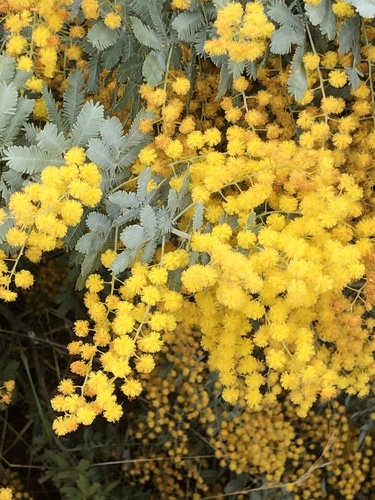
(c) Ryan Tippett, some rights reserved (CC BY-NC), uploaded by Ryan Tippett
iNaturalist· cc-by-nc
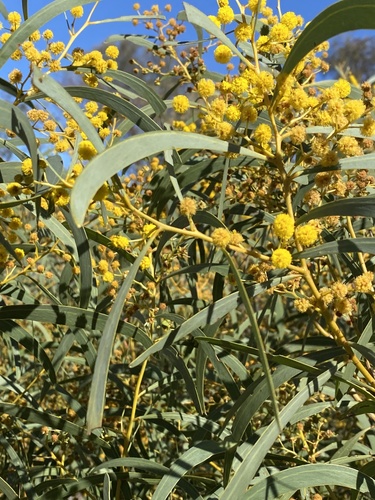
(c) magdastlucia, some rights reserved (CC BY-NC), uploaded by magdastlucia
iNaturalist· cc-by-sa
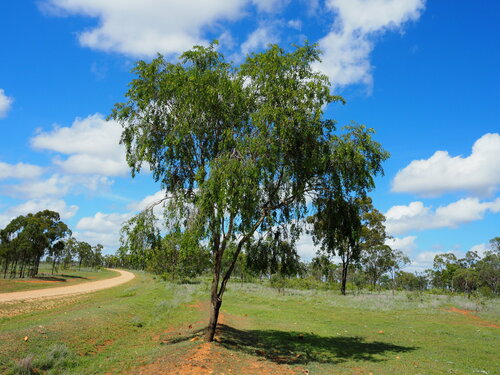
(c) Tony Rebelo, some rights reserved (CC BY-SA), uploaded by Tony Rebelo
Summary
Source: WikipediaSchotia brachypetala, the weeping boer-bean, is a leguminous flowering tree in the family Fabaceae (bean family/pod-bearing family/legumes) and the subfamily Detarioideae. The woodland tree is native to Africa south of the Zambezi River, where it occurs at middle altitudes. It is well-suited as shade or ornamental tree in warmer regions, and is consequently widely cultivated in gardens and parks. It is named for the copious nectar that drips from its flowers, which attracts various species of birds and insects. It is known by various other names, including tree fuchsia, African greenheart and African walnut.
Description
A wide spreading tree. It grows up to 15 m tall. The trunk can be 60 cm across. The bark in young trees is smooth and brown but becomes rough in mature trees. The leaves are smooth or hairy. They leaves are 17 cm long by 8 cm wide. They have a leafy structure (stipule) at the base. The leaves are composed of 4-7 pairs of oblong leaflets. The leaflets have lopsided bases. The upper leaflets are the largest. The flowers are crimson and cup shaped. The flowers face upwards and are filled with nectar. This nectar is edible. It is the sepals and stamen, not the petals that make up the attractive flower. The flowers are produced on the old wood. The pods are brown and 12 cm long by 5 cm wide. They contain 6 light brown seeds. These have a lime green layer (aril) over one end. The seeds are edible after roasting.
Edible Uses
Roasted seeds are eaten. Traditionally, the pods are picked green and then roasted. The seeds would have effectively been steamed inside the pods before being removed and eaten. They are low in fat and protein, but have a high carbohydrate content. The roasted seed has been used as a coffee substitute. The flowers, which produce abundantly nectar, are sometimes chewed.
Traditional Uses
The seeds are roasted and eaten. The flowers are chewed.
This uses section is brief — help expand it
Medicinal Uses
The flowers are chewed as a traditional use.
Known Hazards
It has been reported that wood dust may cause allergic reactions to the eyes.
Distribution
A tropical plant. It is native to E and S Africa. It grows in dry savannah. It also grows along streams in semi-desert areas. It can grow in arid places. It usually grows in termite mounds. In Zimbabwe it grows between 620-1,470 m above sea level. Melbourne Botanical gardens. Hobart Botanical Gardens. National Arboretum Canberra. It suits hardiness zones 9-12.
Where It Grows
Africa, Asia, Australia, Botswana, East Africa, Eswatini, Hawaii, India, Kenya, Malawi, Mauritius, Mozambique, Pacific, Pakistan, South Africa, Southern Africa, Swaziland, Tasmania, Uganda, USA, Zimbabwe,
Cultivation
It can be grown from seed. The seeds germinate well. Seedlings also transplant easily.
Propagation
Seed - sow in a seedtray in a somewhat shaded position. Presoaking overnight in warm water is not essential, but may speed up the germination process. The seed usually germinates well. Truncheon cuttings - take while the tree is not in active growth, and place in well-drained sandy soil in a cool shady spot and keep damp but not wet.
Other Uses
The bark has been used for tanning and also gives a reddish brown dye. The heartwood is dark brown to nearly blackish, often with a greenish tinge; it is distinctly demarcated from the pinkish sapwood, which changes to yellowish brown upon exposure. The texture is fine and dense. The wood is heavy and hard, only moderately durable, but quite resistant to termites. A good quality wood, it is used for furniture, flooring, wagon beams and carving.
Production
It is very slow growing on heavy soils. It grows fast in sandy soils.
Notes
Also as Caesalpinaceae.
Synonyms
Also Known As
Hottentot bean, Huilboerboom, Molope, Mulubi, Mununzwa, Mulunzwu, Mutanswa, Mutondochuru, Mutondoshuru, Mutondosvi, Nyamari, Sihlati, Sihlazi, Thunzikhulu, Uvovovo, Vovovo, Weeping boer-bean, Weeping Boerboon, Weeping schotia
References (35)
- Ambasta S.P. (Ed.), 2000, The Useful Plants of India. CSIR India. p 558
- Barwick, M., 2004, Tropical and Subtropical Trees. A Worldwide Encyclopedic Guide. Thames and Hudson p 370
- Brickell, C. (Ed.), 1999, The Royal Horticultural Society A-Z Encyclopedia of Garden Plants. Convent Garden Books. p 945
- Cundall, P., (ed.), 2004, Gardening Australia: flora: the gardener's bible. ABC Books. p 1325
- Drummond, R. B., 1981, Common Trees of the Central Watershed Woodlands of Zimbabwe, National Herbarium Salisbury. p 68
Show all 35 references Hide references
- Flora of Pakistan. www.eFlora.org
- Fox, F. W. & Young, M. E. N., 1982, Food from the Veld. Delta Books. p 215
- Hearne, D.A., & Rance, S.J., 1975, Trees for Darwin and Northern Australia. AGPS, Canberra p 104
- Hibbert, M., 2002, The Aussie Plant Finder 2002, Florilegium. p 288
- ILDIS Legumes of the World http:www:ildis.org/Legume/Web
- Jardin, C., 1970, List of Foods Used In Africa, FAO Nutrition Information Document Series No 2.p 29
- Joffe, P., 2007, Creative Gardening with Indigenous Plants. A South African Guide. Briza. p 96
- Linnaea 23:39. 1850
- Llamas, K.A., 2003, Tropical Flowering Plants. Timber Press. p 207
- Long, C., 2005, Swaziland's Flora - siSwati names and Uses http://www.sntc.org.sz/flora/
- Lord, E.E., & Willis, J.H., 1999, Shrubs and Trees for Australian gardens. Lothian. p 72
- Magwede, K., van Wyk, B.-E., & van Wyk, A. E., 2019, An inventory of Vhavenḓa useful plants. South African Journal of Botany 122 (2019) 57–89
- Morley, B. & Everard, B., 1970, Wild Flowers of the World. Ebury press. Plate 72
- Palgrave, K.C., 1996, Trees of Southern Africa. Struik Publishers. p 275
- Palmer, E and Pitman, N., 1972, Trees of Southern Africa. Vol. 2. A.A. Balkema, Cape Town p 855
- Peters, C. R., O'Brien, E. M., and Drummond, R.B., 1992, Edible Wild plants of Sub-saharan Africa. Kew. p 124
- Recher, P, 2001, Fruit Spirit Botanical Gardens Plant Index. www.nrg.com.au/~recher/ seedlist.html p 7
- Royal Botanic Gardens, Kew (1999). Survey of Economic Plants for Arid and Semi-Arid Lands (SEPASAL) database. Published on the Internet; http://www.rbgkew.org.uk/ceb/sepasal/internet [Accessed 26th April 2011]
- Ruiters-Welcome, A. K., 2019, Food plants of southern Africa. Ph.D. thesis. Univ. of Johannesburg p 60
- Schmidt, E., Lotter, M., & McCleland, W., 2007, Trees and shrubs of Mpumalanga and Kruger National Park. Jacana Media p 188
- Staples, G.W. and Herbst, D.R., 2005, A tropical Garden Flora. Bishop Museum Press, Honolulu, Hawaii. p 334
- Swaziland's Flora Database http://www.sntc.org.sz/flora
- van Wyk, B, van Wyk, P, and van Wyk B., 2000, Photographic guide to Trees of Southern Africa. Briza. p 281
- van Wyk, B-E., 2011, The potential of South African plants in the development of new food and beverage products. South African Journal of Botany 77 (2011) 857–868
- van Wyk, Ben-Erik, 2019, The diversity and multiple uses of southern African legumes. Australian Systematic Botany, 2019, 32, 519–546
- Venter, F & J., 2009, Making the most of Indigenous Trees. Briza. p 272
- Welcome, A. K. & Van Wyk, B.-E., 2019, An inventory and analysis of the food plants of southern Africa. South African Journal of Botany 122 (2019) 136–179
- World Checklist of Useful Plant Species 2020. Royal Botanic Gardens, Kew
- www.desert-tropicals.com
- www.zimbabweflora.co.zw 2011