Sesbania grandiflora
(L.) Persoon
Sesbania, Corkwood tree
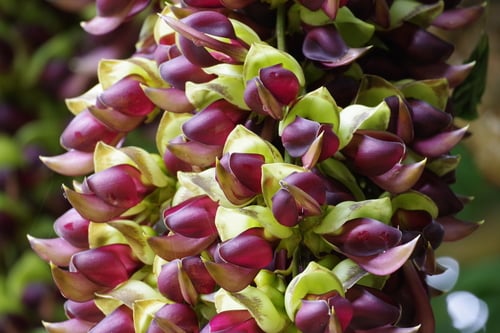
iNaturalist· cc-by-nc-sa
(c) Alejandra Flores, some rights reserved (CC BY-NC-SA), uploaded by Alejandra Flores
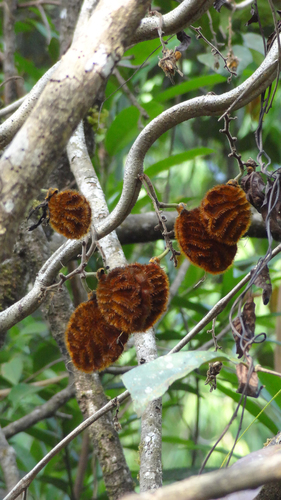
iNaturalist· cc-by-nc
(c) Ирина, some rights reserved (CC BY-NC), uploaded by Ирина
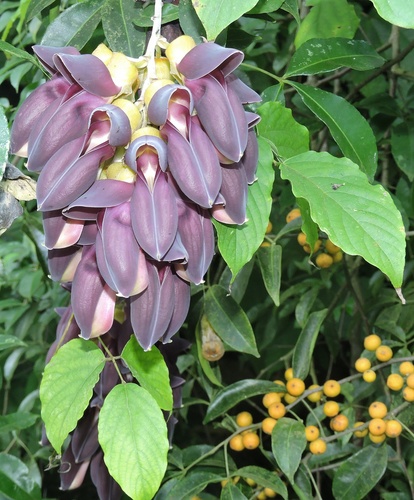
iNaturalist· cc-by-nc
(c) Ирина, some rights reserved (CC BY-NC), uploaded by Ирина
Summary
Source: WikipediaSesbania grandiflora, common names vegetable hummingbird, katurai, agati, agastya, agasya, kathurumurunga and West Indian pea, is a leguminous tree of family Fabaceae native to Malesia, including Malaysia, New Guinea, and the Philippines. It is widely distributed globally in equatorial regions. The flowers are eaten in Southeast and South Asia.
Description
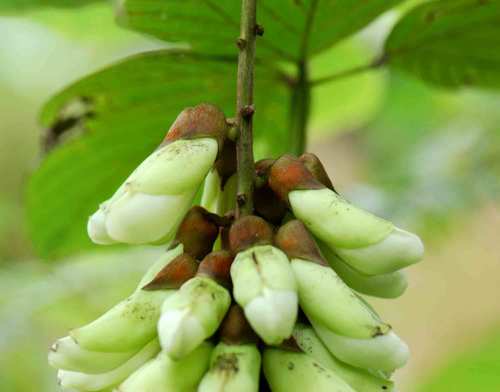
A shrub or small tree up to 5-10 m tall. The trunk has rough bark and the branches often droop. The trunk is thick. The branches are hairy when young. The leaves are made up of 41 to 61 leaflets. These are narrow and oblong. They are 2.5-4 cm long by 0.5-1.4 cm wide. They have a sharp point at the tip. The flowers are large and white to red. The flower petals can be 5-10 cm long. They are produced as 2-4 flowers on flowering branches 2-5 cm long. It has long narrow pods with up to 30-50 small brownish seeds. The seeds with their stalk can be 2.5-4.5 cm long in pods 20-25 cm long by 7-9 mm wide.
Edible Uses
The flowers can be eaten raw or cooked — added to salads, boiled as a potherb, fried or used in curries. They are considered a delicacy in India, are rich in sugar and iron, and have a mushroom-like flavour. The centre of the flower is usually removed as it is very bitter, and white flowers are generally preferred to red ones. The long, narrow seedpods can be boiled and eaten like string beans, and very young pods can be added to salads. Pods can reach up to 50 cm long and 8 mm wide. The protein-rich seeds are fermented into tempeh. Young leaves and shoots can be eaten raw or cooked — added to salads, used as a potherb or included in stews. A clear gum obtained from the bark is used in foods.
Traditional Uses
CAUTION: The seeds are toxic. They are fermented and used. The leaves and flowers are used as a vegetable. The young pods are also eaten. The young leaves are stripped from the stalks and lightly boiled or steamed or served as a vegetable in curries. The white flowers that are eaten contain a considerable amount of sugar and iron and are said to taste like mushrooms. Flowers of the red-flowered variety are bitter and hence, it is only used as an ornamental. The flowers are boiled, fried or used in curries, soups and stews. The bark is broiled for soup.
Medicinal Uses
The leaves are aperient and diuretic. Crushed leaves are applied as a poultice to sprains, bruises, swellings, rheumatism and itching. A tea made from the leaves is believed to have antibiotic, anthelmintic, antitumor and contraceptive properties. The bitter bark is considered astringent, febrifuge, tonic and antipyretic, and is used as a remedy for gastric troubles, colic with diarrhoea and dysentery. A bark decoction is taken orally to treat fever, diarrhoea, dysentery and diabetes. The flowers are emollient and laxative. Flower juice placed in the eyes is said to relieve dimness of vision, and a flower decoction is taken to reduce sinus congestion. The root is a well-known treatment for malaria; root juices are used in poultices, and a root paste is applied externally for rheumatism.
Known Hazards
Feed from the seed can be deadly to chickens.
Distribution
A tropical plant. It grows in tropical and subtropical climates. It grows in places with an average rainfall of 900-1200 mm and a temperature range of 17-25°C minimum and 25-37°C maximum. It is cultivated in coastal towns. It does well in both dry and moist areas. It probably grows up to about 1500 m altitude in tropical places. It does best in rich moist soils. It needs a sunny location. It is damaged by frost. It can grow in arid places. It suits hardiness zones 10-12. In Yunnan.
Where It Grows
Africa, Andamans, Asia, Australia, Bangladesh, Benin, Bhutan, British Indian Ocean Terr., BIOT, Burkina Faso, Cambodia, Cameroon, Cape Verde, Central Africa, Central America, Chad, China, Colombia, Côte d'Ivoire, Cuba, Djibouti, Dominican Republic, East Africa, East Timor, Eritrea, Ethiopia, Fiji, French Guiana, Gabon, Gambia, Ghana, Guadeloupe, Guianas, Guinea, Guinée, Guinea-Bissau, Guyana, Haiti, Hawaii, Himalayas, India, Indochina, Indonesia*, Ivory Coast, Jamaica, Japan, Kenya, Laos, Liberia, Madagascar, Malawi, Malaysia, Maldives, Mali, Marianas, Marquesas, Martinique, Mauritania, Mauritius, Mexico, Middle East, Myanmar, Nepal, Nigeria, North America, Northeastern India, Pacific, Pakistan, Panama, Papua New Guinea, PNG, Philippines, Puerto Rico, Reunion, SE Asia, Seychelles, Senegal, Sierra Leone, Singapore, Somalia, South Africa, Southern Africa, South America, Sri Lanka, Suriname, Taiwan, Tanzania, Thailand, Timor-Leste, Togo, Tuvalu, Uganda, USA, Venezuela, Vietnam, West Africa, West Indies, Yemen,
Cultivation
Trees are grown from seed. The seed often need seed treatment to break the hard seed coat. Seeds germinate best with temperatures above 19°C. It can be grown from cuttings. It fixes nitrogen.
Propagation
The hard seedcoat benefits from scarification before sowing. Pour a small amount of nearly boiling water over the seeds (taking care not to cook them), then soak in warm water for 12–24 hours. If seeds have not swollen, carefully nick the seedcoat without damaging the embryo and soak for a further 12 hours before sowing. Plants can be established by direct seeding, and in most cases germinate well without scarification. Half-ripe wood cuttings can also be taken.
Other Uses
Sesbania species are excellent for green manure, soil improvement and erosion control, and can serve as a shade tree and livestock fodder. The plant is fast-growing with an extensive root system that fixes atmospheric nitrogen, making it ideal for rehabilitating eroded land. Falling fruits, leaflets and flowers make excellent green manure or mulch. The plant has been used to shade nurseries and plantation crops such as coffee, tea and cocoa, and as a windbreak for citrus, banana and coffee. It can be used as a living fence, shelterbelt or live support for crops such as vanilla and pepper. Its open canopy allows sufficient sunlight for interplanted crops. The bark produces a clear exudate gum used in adhesives as a substitute for gum arabic. The bark also yields tannins. The white wood is soft and relatively light, though density increases with age; timber from trees aged 5–8 years can be used in house construction or as craft wood. The trunk has been used for poles, though these may not last due to rot and insect attack. The light wood is used to float fishing nets. The wood is a major source of pulp for papermaking; its short fibres can be blended with long-fibred bamboo pulp for improved strength. The wood is used as fuel and for making charcoal, though it smokes excessively when burning. At 500 kg/m², it burns rapidly with relatively little heat, but the tree's fast growth and availability within a year of planting make it a locally popular fuelwood. Wood should be well dried as it deteriorates in storage, becoming corky, dusty and unfit for burning. Its calorific value is 17.91 MJ/kg, with a high ash content of 6% and a low carbon percentage of 11.7%.
Production
It is a quick growing tree. Trees flower in their second year. It is short lived. A tree can provide 6-9 kg of leaves per year. The leaves can be harvested 120-150 days after sowing. Repeat harvests can be made each 30 days.
Other Information
The leaves are sold in markets. It is important in Sri Lanka.
Notes
The leaves are rich in proVitamin A. . They are also rich in iodine. It has 9.5 mg per 100 g dry weight and 5.5 mg fresh weight of alpha-tocopherol (Vitamin E).
Nutrition
| Part | Moisture | kJ | kcal | Protein | Vit A | Vit C | Iron | Zinc |
|---|---|---|---|---|---|---|---|---|
| Leaves | 82.3 | 323 | 77 | 8.7 | 66 | 60 | 4 | — |
| Flowers | 89 | 92 | 22 | 1.8 | 0 | 59 | 0.6 | — |
| Pods | — | — | — | — | — | — | — | — |
| Seeds | 10.4 | — | — | 68.2 | — | — | — | — |
Synonyms
Also Known As
Acham, Agache, Agase, Agasta, Agasti phul, Agasthi, Agasti, Agathi, Agathi keerai, Agati, Agatoio, Agthio, Agust, Agusta, Agusti, Ai-turi, Akatthi, Anari, Angkea dey, Angkie dei, Athi, Avasinana, Avesi, Ayathio, Bagphal, Bak, Bakapushpam, Bakful, Bakphul, Basna, Bogbibar, Bokful, Bok ful shak, Bokphul, Brede malabar, Buko, Carebaab, Carekwaw, Chuchurangmei, Corkwood tree, Daun Turi, Dok khae baan, Feerumuranga, Geti, Hatga, Hatiya, Jerejere, Kacang turi, Kambang tuli, Kathuru murunga, Katuray, Katurumurunga kolle, Ke, Khae baan, Khae-khao, Kathuru-murunga, Madga, Muni, Ogosti, Paukpan-byu, Peragathi, Peragatti, Phak khae khao, Scarlet Wisteria tree, Sesban, Shevari, Shiro-gochou, So dua, Swamp pea, Ta-hua, Tien-tsing, Toroj, Turi, Vegetable hummingbird, West Indian Pea Tree
References (109)
- Abbiw, D.K., 1990, Useful Plants of Ghana. West African uses of wild and cultivated plants. Intermediate Technology Publications and the Royal Botanic Gardens, Kew. p 42
- Altschul, S.V.R., 1973, Drugs and Foods from Little-known Plants. Notes in Harvard University Herbaria. Harvard Univ. Press. Massachusetts. no. 1755
- Ambasta, S.P. (Ed.), 2000, The Useful Plants of India. CSIR India. p 568
- Anderson, E. F., 1993, Plants and people of the Golden Triangle. Dioscorides Press. p 221
- Ara, R. I. T., 2015, Leafy Vegetables in Bangladesh. Photon eBooks. p 71
Show all 109 references Hide references
- Arinathan, V., et al, 2007, Wild edibles used by Palliyars of the western Ghats, Tamil Nadu. Indian Journal of Traditional Knowledge. 6(1) pp 163-168
- Arora, R. K., 2014, Diversity in Underutilized Plant Species - An Asia-Pacific Perspective. Bioversity International. p 109
- Ashton, M. S., et al 1997, A Field Guide to the Common Trees and Shrubs of Sri Lanka. WHT Publications Ltd. pdf p 245
- Azam, F. M. S., et al, 2014, Are Famine Food Plants Also Ethnomedicinal Plants? An Ethnomedicinal Appraisal of Famine Food Plants of Two Districts of Bangladesh. Evidence-Based Complementary and Alternative Medicine Volume 2014, Article ID 741712, 28 pages
- Bailey, F. M., 1913, Comprehensive Catalogue of Queensland Plants. Queensland Government. p 138
- Bandyopadhyay, S. et al, 2009, Wild edible plants of Koch Bihar district, West Bengal. Natural Products Radiance 8(1) 64-72
- Banerjee, A., et al, 2013, Ethnobotanical Documentation of Some Wild Edible Plants in Bankura District, West Bengal, India. The Journal of Ethnobiology and Traditional Medicine. Photon 120 (2013) 585-590
- BARC, 2016, State of Biodiversity for Food and Agriculture in Bangladesh. Bangladesh Agricultural Research Council.
- Baro, D., Baruah, S. and Borthukar, S. K. 2015, Documentation on wild vegetables of Baksa district, BTAD (Assam). Scholars Research Library. Archives of Applied Science Research, 2015, 7 (9):19-27
- Barrau, J., 1976, Subsistence Agriculture in Melanesia. Bernice P. Bishop Museu, Bulletin 219 Honolulu 1920,
- Brown, Wild Food Plants of the Philippines. Bureau of Forestry Bulletin No. 21 Manila. p 72
- Burkill, H. M., 1985, The useful plants of west tropical Africa, Vol. 1. Kew.
- Burkill, I.H., 1966, A Dictionary of the Economic Products of the Malay Peninsula. Ministry of Agriculture and Cooperatives, Kuala Lumpur, Malaysia. Vol 2 (I-Z) p 2033
- Chandrashekara, U. M., 2009, Tree species yielding edible fruit in the coffee-based homegardens of Kerala, India: their diversity, uses and management. Food Sec. 1:361-370
- Chatterjee, A. S., 1997, Fruit Trees in Cambodian Home Gardens. Trainers' training manual. Home garden series No.3 p 46
- Chin, H. F., 1999, Malaysian Vegetables in Colour. Tropical Press. p 30
- Ching, L. S. & Mohamed, S., 2001, Alpha-Tocopherol Content in 62 Edible Tropical Plants. J. Agric. Food Chem. 2001, 49, 3101−3105
- Chowdery, T., et al, 2014, Wild edible plants of Uttar Dinajpur District, West Bengal. Life Science Leaflets. 47:pp 20-36 http://lifesciencesleaflets.ning.com
- Chowdhury, M. & Mukherjee, R., 2012, Wild Edible Plants Consumed by Local Communities of Maldah of West Bengal, India. Indian J.Sci.Res.3(2) : 163-170
- Davis, S.D., Heywood, V.H., & Hamilton, A.C. (eds), 1994, Centres of plant Diversity. WWF. Vol 1 or 2. p 140
- Devarkar, V. D., et al, 2011, Dietary and Medicinal Significance of Wild Vegetables from Osmanabad Region, Maharashtra (India). Life sciences Leaflets 11:317-332.
- Dey, A. & Mukhererjee, A., 2015, Living and Survival Amidst Hunger: Wild Edible Botanicals as a Prime Forest Productivity in the Rural Purulia District, West Bengal, India from Colonial to Present. Research Journal of Forestry 9(3): 71-86
- Duarte, M. C., et al, 2022, Diversity of Useful Plants in Cabo Verde Islands: A Biogeographic and Conservation Perspective. Plants 2022, 11, 1313 p 13
- Dutta, U., 2012, Wild Vegetables collected by the local communities from the Churang reserve of BTD, Assam. International Journal of Science and Advanced Technology. Vol. 2(4) p 123
- Facciola, S., 1998, Cornucopia 2: a Source Book of Edible Plants. Kampong Publications, p 111
- Flora of Pakistan. www.eFloras.org
- Foo, J.T.S.(ed), 1996, A Guide to Common Vegetables. Singapore Science Foundation. p 98
- Food Composition Tables for use in East Asia FAO http://www.fao.org/infoods/directory No. 730
- French, B.R., 1986, Food Plants of Papua New Guinea, A Compendium. Asia Pacific Science Foundation p 385
- Friday, J. B., 2005, Forestry and Agroforestry Trees of East Timor. http://www.ctahr.hawaii.edu/forestry/data/Timor/Timor trees.html
- GAMMIE,
- Grivetti, L. E., 1980, Agricultural development: present and potential role of edible wild plants. Part 2: Sub-Saharan Africa, Report to the Department of State Agency for International Development. p 26
- Grubben, G. J. H. and Denton, O. A. (eds), 2004, Plant Resources of Tropical Africa 2. Vegetables. PROTA, Wageningen, Netherlands. p 565
- GUPTA & KANODIA,
- Hedrick, U.P., 1919, (Ed.), Sturtevant's edible plants of the world. p 604
- Hu, Shiu-ying, 2005, Food Plants of China. The Chinese University Press. p 483
- ILDIS Legumes of the World http:www:ildis.org/Legume/Web
- IRVINE,
- Jacquat, C., 1990, Plants from the Markets of Thailand. D.K. Book House p 50
- Japanese International Research Centre for Agricultural Science www.jircas.affrc.go.jp/project/value_addition/Vegetables
- Jardin, C., 1970, List of Foods Used In Africa, FAO Nutrition Information Document Series No 2.p 100
- Kar, A., & Borthakur, S. K., 2008, Wild vegetables of Karbi - Anglong district, Assam, Natural Product Radiance, Vol. 7(5), pp 448-460
- Khumgratok, S., Edible Plants in Cultural Forests of Northeastern Thailand. Mahasarakham University Thailand.
- Kiple, K.F. & Ornelas, K.C., (eds), 2000, The Cambridge World History of Food. CUP p 1851
- Kiran, K. C., et al, 2019, Diversity and Seasonal Availability of Potential Wild Edible Plants from Vidarbha Region of Maharashtra State, India. Int.J.Curr.Microbiol.App.Sci (2019) 8(2): 1434-1446
- Kohila, A. & Kensa, V. M., 2019, Survey of Wild Edible Plants of Dhanakarkulam Panchayath, Tirunelveli District, Tamil Nadu, India. Kong. Res. J. 6(2): 20-27, 2019
- Lembogi Biologi Nasional, 1980, Sayur-sayuran. Balai Pustaka, Jakarta. p 14
- Liu, Yi-tao, & Long, Chun-Lin, 2002, Studies on Edible Flowers Consumed by Ethnic Groups in Yunnan. Acta Botanica Yunnanica. 24(1):41-56
- Llamas, K.A., 2003, Tropical Flowering Plants. Timber Press. p 222
- Lord, E.E., & Willis, J.H., 1999, Shrubs and Trees for Australian gardens. Lothian. p 72
- Luczaj, L., et al, 2021, Wild food plants and fungi sold in the markets of Luang Prabang, Lao PDR. Journal of Ethnobiology and Ethnomedicine (2021) 17:6
- Macmillan, H.F. (Revised Barlow, H.S., et al), 1991, Tropical Planting and Gardening. Sixth edition. Malayan Nature Society. Kuala Lumpur. p 347, 356
- Maghirang, R. G., et al, 2018. Ethnobotanical Studies of Some Plants Commonly Used as Vegetables in Selected Provinces of the Philippines. Journal of Nature Studies. 17(2), 30-43.
- Mahony, D., 1991, Trees of Somalia. A Field Guide for Development Workers. Oxfam Research Paper 3. p 9
- Maisuthisakul, P., 2012, Phenolic Constituents and Antioxidant Properties of some Thai Plants. Chp. 9 in Book Phytochemicals - A Global Perspective of Their Role in Nutrition and Health
- Martin, F.W. & Ruberte, R.M., 1979, Edible Leaves of the Tropics. Antillian College Press, Mayaguez, Puerto Rico. p 85, 200
- McMakin, P.D., 2000, Flowering Plants of Thailand. A Field Guide. White Lotus. p 24
- Massal, E. and Barrau, J., 1973, Food Plants of the South Sea Islands. SPC Technical Paper No 94. Noumea, New Caledonia. p 38
- Medhi, P. & Borthakur, S. K., 2012, Phytoresources from North Cachur Hills of Assam -3: Edible plants sold at Hflong market. Indian Journal or Natural Products and Resources. 3(1) pp 84-109
- Milow, P., et al, 2013, Malaysian species of plants with edible fruits or seeds and their evaluation. International Journal of Fruit Science. 14:1, 1-27
- Nakahara, K. et al, 2002, Antimutagenicity of Some Edible Thai Plants, and a Bioactive Carbazole Alkaloid, Mahanine, Isolated from Micromelum minutum. Journal of Agricultural and Food Chemistry. 50: 4796-4892
- Narzary, H., et al, 2013, Wild Edible Vegetables Consumed by Bodo tribe of Kokrajhar District (Assam), North-East India. Archives of Applied Science Research, 5(5): 182-190
- Ochse, J.J. et al, 1931, Vegetables of the Dutch East Indies. Asher reprint. p 429
- Omawale, 1973, Guyana's edible plants. Guyana University, Georgetown p 79 (As Agati grandiflora)
- Oomen, H.A.P.C., & Grubben, G.J.H., 1978, Tropical Leaf Vegetables in Human Nutrition, Communication 69, Department of Agricultural research, RTI Amsterdam, p 18, 36, 97
- Patiri, B. & Borah, A., 2007, Wild Edible Plants of Assam. Geethaki Publishers. p 40
- Phon, P., 2000, Plants used in Cambodia. © Pauline Dy Phon, Phnom Penh, Cambodia. p 555
- Plants of Haiti Smithsonian Institute http://botany.si.edu/antilles/West Indies
- Prashanth Kumar, G.M. and Shiddamallayya, N., 2015, Ethnobotanical Study of Less Known Wild Edible Plants of Hakki Pikki Tribes of Angadihalli, Hassan District, Karnataka. Journal or Medicinal Plants Studies 3(5):80-85
- RADHA PANT,
- Rajapaksha, U., 1998, Traditional Food Plants in Sri Lanka. HARTI, Sri Lanka. p 252
- Rashid, H. E., 1977, Geography of Bangladesh. Westview. p 276 (As Sesania grandiflora)
- Roa, J. A. G. & Boada, D. S. G., 2018, Fundación para el Fortalecimiento de la Fruticultura y Plantas Alimenticias no Convencionales en Colombia.
- Royal Botanic Gardens, Kew (1999). Survey of Economic Plants for Arid and Semi-Arid Lands (SEPASAL) database. Published on the Internet; http://www.rbgkew.org.uk/ceb/sepasal/internet [Accessed 29th April 2011]
- Sarma, H., et al, 2010, Updated Estimates of Wild Edible and Threatened Plants of Assam: A Meta-analysis. International Journal of Botany 6(4): 414-423
- Selvam, V., 2007, Trees and shrubs of the Maldives. RAP Publication No. 2007/12 p 150
- Self, M., 199, Phoenix Seeds catalogue. p 17
- Sharma, B.B., 2005, Growing fruits and vegetables. Publications Division. Ministry of Information and broadcasting. India. p 201
- SHORTT (As Agati grandiflora)
- Singh, P.K., Singh, N.I., and Singh, L.J., 1988, Ethnobotanical Studies on Wild Edible Plants in the Markets of Manipur - 2. J. Econ. Tax. Bot. Vol. 12 No. 1 pp 113-119
- Slik, F., www.asianplant.net
- Solomon, C., 2001, Encyclopedia of Asian Food. New Holland. p 339
- Srichaiwong, P., et al, 2014, A Study of the Biodiversity of Natural Food Production to Support Community Upstream of Chi Basin, Thailand. Asian Social Science 10 (2):
- Staples, G.W. and Herbst, D.R., 2005, A tropical Garden Flora. Bishop Museum Press, Honolulu, Hawaii. p 327 (Drawing)
- Sujanapal, P., & Sankaran, K. V., 2016, Common Plants of Maldives. FAO & Kerala FRI, p 241
- Sukarya, D. G., (Ed.) 2013, 3,500 Plant Species of the Botanic Gardens of Indonesia. LIPI p 505
- Sukenti, K., et al, 2016, Ethnobotanical study on local cuisine of the Sasak tribe in Lombok Island, Indonesia. Journal of Ethnic Foods. 3 (2016) 189-200 p 198
- Syn. pl. 2(2):316. 1807
- Tanaka, Y & Van Ke, N., 2007, Edible Wild Plants of Vietnam. Orchid Press. p 81
- Terra, G.J.A., 1973, Tropical Vegetables. Communication 54e Royal Tropical Institute, Amsterdam, p 73
- Thaman, R. R, 2016, The flora of Tuvalu. Atoll Research Bulletin No. 611. Smithsonian Institute p 92
- Topp, J. M. W., 1988, An Annotated Check List of the Flora of Diego Garcia, British Ocean Territory. Atoll Research Bulletin No. 313 (Rare)
- UPHOF,
- USDA, ARS, National Genetic Resources Program. Germplasm Resources Information Network - (GRIN). [Online Database] National Germplasm Resources Laboratory, Beltsville, Maryland. Available: www.ars-grin.gov/cgi-bin/npgs/html/econ.pl (10 April 2000)
- Verdcourt, B., 1979, Manual of New Guinea Legumes. Botany Bulletin No 11, Division of Botany, Lae, Papua New Guinea. p 360
- Woodward, P., 2000, Asian Herbs and Vegetables. Hyland House. p 122on 54e Royal Tropical Institute, Amsterdam, p 73
- UPHOF,
- USDA, ARS, National Genetic Resources Program. Germplasm Resources Information Network - (GRIN). [Online Database] National Germplasm Resources Laboratory, Beltsville, Maryland. Available: www.ars-grin.gov/cgi-bin/npgs/html/econ.pl (10 April 2000)
- Verdcourt, B., 1979, Manual of New Guinea Legumes. Botany Bulletin No 11, Division of Botany, Lae, Papua New Guinea. p 360
- Wiersema, J. H. & Leon, B., 2013, World Economic Plants. A Standard Reference CRC Press. 2nd Ed. p 632
- Woodward, P., 2000, Asian Herbs and Vegetables. Hyland House. p 122
- World Checklist of Useful Plant Species 2020. Royal Botanic Gardens, Kew
- www.worldagroforestrycentre.org/treedb/
- Xu, You-Kai, et al, 2004, Wild Vegetable Resources and Market Survey in Xishuangbanna, Southwest China. Economic Botany. 58(4): 647-667.