Searsia tomentosa
(L.) F. A. Barkley
Furry rhus, Bicoloured currant
iNaturalist· cc-by-nc
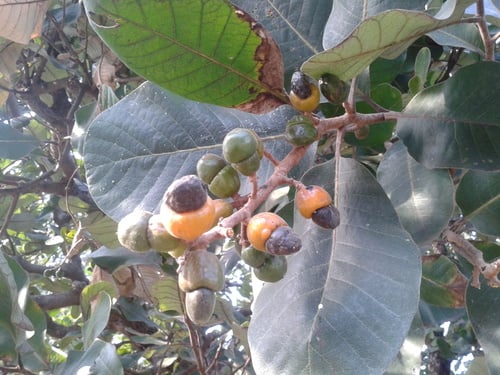
(c) Wendy, some rights reserved (CC BY-NC)
iNaturalist· cc-by
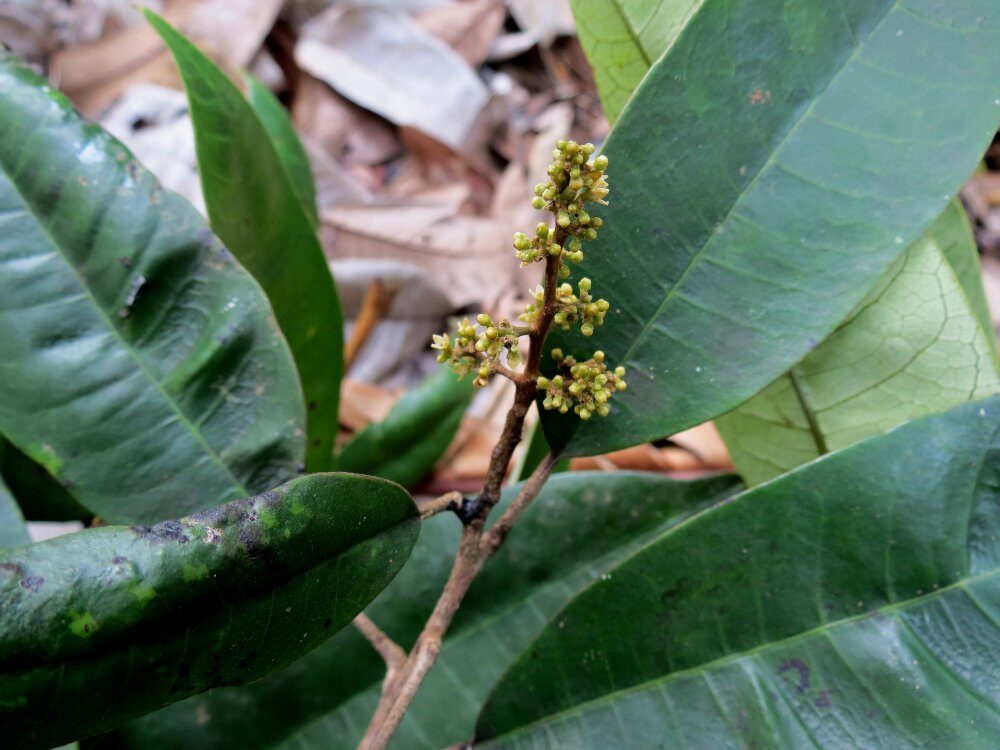
(c) Dave Richardson, some rights reserved (CC BY)
iNaturalist· cc-by
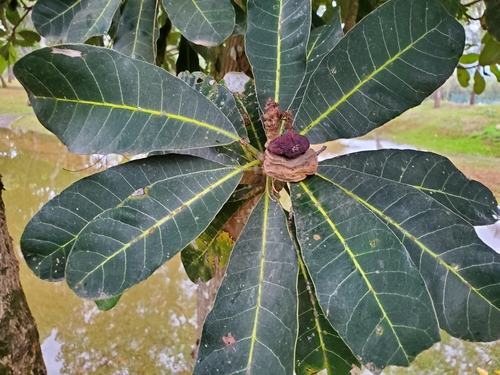
(c) Dave Richardson, some rights reserved (CC BY)
Summary
Source: WikipediaSearsia tomentosa, the real wild currant (English), umhlakoti (Zulu) or korentebos (Afrikaans), is a small, bushy, evergreen tree. It is native to South Africa, Lesotho, and Zimbabwe. It occurs in fynbos and coastal shrub in South Africa, where it is naturally most common in forest margins. The sprays of small greenish flowers emit an unpleasant smell that attracts flies. However it is also an attractive shrub and is grown internationally in botanical gardens for its multi-coloured foliage.
Description
A shrub or small tree. It grows up to 5 m tall. It has many branches. The bark is smooth and grey-brown. The branches have shallow ridges. They have red hairs when young. Older branches are green. The leaves are alternate and have 3 leaflets. The leaflets are 3-9 cm long by 1-4 cm wide. The end leaflet is the largest. They taper to the base. The flowers are in branched groups in the axils of leaves or at the ends of branches. Male and female flowers are on separate plants. The fruit is round and fleshy. It is 4-6 mm long by 3-4 mm wide. It has a grey covering.
Edible Uses
The fruit is eaten raw as a snack, though it is not visually attractive.
Traditional Uses
The fruit is edible but not attractive. It is eaten raw as a snack.
This uses section is brief — help expand it
Distribution
It is a tropical and subtropical plant. It grows on rocky mountain slopes. It can grow up to 2,500 m altitude.
Where It Grows
Africa, East Africa, South Africa, Southern Africa, Zimbabwe,
Cultivation
A dioecious species, both male and female forms need to be grown if fruit and seed are required.
Other Uses
The wood, bark of the roots and branches, and the leaves are sources of tannins. The leaves yield 8% tannin and the twigs 5.7%. The bark is rich in tannic acid. A fibre obtained from the bark is used to make a rough rope. The wood is hard and tough, but it is only used as fuel because the trees are small.
Synonyms
References (4)
- Jansen, P.C.M., 2005. Rhus tomentosa L. [Internet] Record from Protabase. Jansen, P.C.M. & Cardon, D. (Editors). PROTA (Plant Resources of Tropical Africa), Wageningen, Netherlands. < http://database.prota.org/search.htm>. Accessed 22 October 2009. (As Rhus tomentosa)
- Moffett, R. O., 2007, Name changes in the Old World Rhus and recognition of Searsia (Anacardiaceae). Bothalia 37,2: 165-175 (2007)
- Ruiters-Welcome, A. K., 2019, Food plants of southern Africa. Ph.D. thesis. Univ. of Johannesburg p 16
- Welcome, A. K. & Van Wyk, B.-E., 2019, An inventory and analysis of the food plants of southern Africa. South African Journal of Botany 122 (2019) 136–179