Semecarpus anacardium
Linn. f.
Marking nut, Oriental Cashew
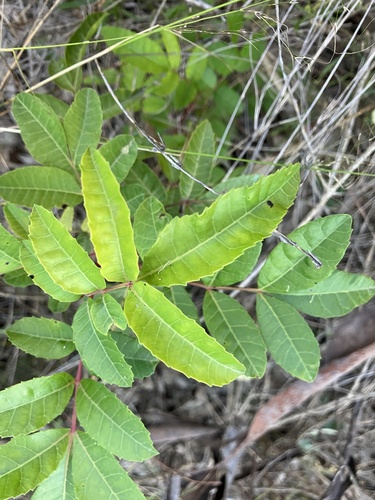
iNaturalist· cc-by-nc
(c) DINESH KUMAR, some rights reserved (CC BY-NC), uploaded by DINESH KUMAR
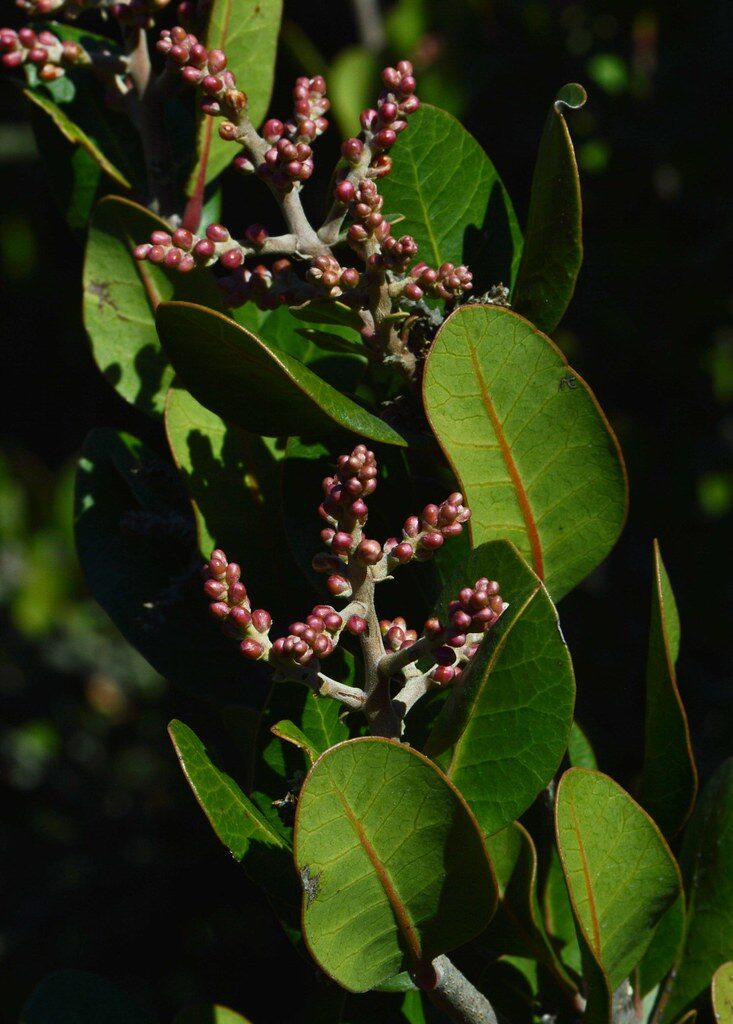
iNaturalist· cc-by
(c) Sayee Girdhari, some rights reserved (CC BY)
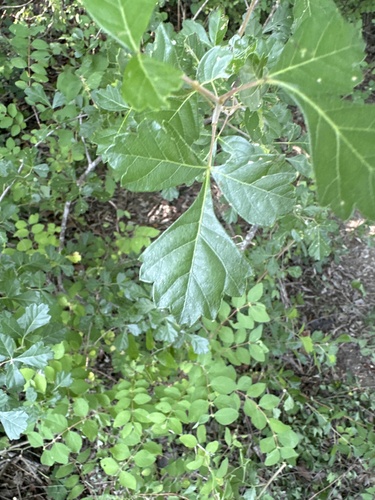
iNaturalist· cc-by-nc
(c) pbsingh, some rights reserved (CC BY-NC)
Summary
Source: WikipediaSemecarpus anacardium, commonly known as the marking nut tree, Malacca bean tree, marany nut, oriental cashew, dhobi nut tree and varnish tree, is a native of India, found in the outer Himalayas to the Coromandel Coast. It is closely related to the cashew.
Description
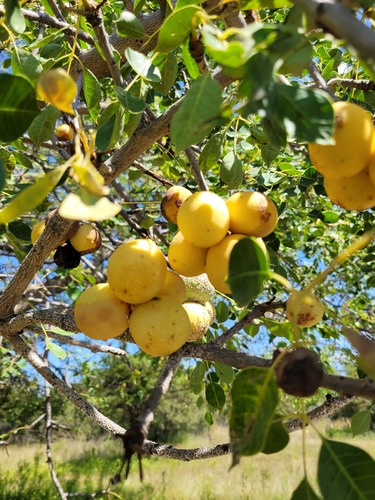
It is a small evergreen tree. It grows to 5-15 m tall and spreads to 2 m across. The bark is dark brown and rough. The stem is erect and branching. The branches are irregular and hollow and covered with brown air pores. The leaves are crowded at the top of branches. The leaves end in a short point. They are papery and wavy. The leaves are oblong and 25-43 cm long by 15 cm wide. They are brown on the upper surface and hairy underneath. The midribs are prominent on both surfaces. The leaf stalk is 3 cm long. The leaf stalk is enlarged and grooved. The flowers are greenish white. They are arranged in a large cluster over 1 m long and at the ends of branches. The fruit are round and orange. They are borne on a fleshy receptacle. The fruit is 3 cm long. The nut is kidney-shaped and 2.5 cm long by 1.8 cm across. It is covered with fine ridges. The inner flesh is edible.
Edible Uses
Care must be taken when using this plant as food — as with the related cashew nut, an oil from the shell has a strong irritant effect on the skin. The seeds are edible roasted and have an almond-like flavour. Young fruits are used pickled, and the roasted fruit rinds are eaten by local people. The pulp of the pedicels is also roasted and eaten.
Traditional Uses
CAUTION: Poisonous. Unripe fruit are poisonous. Fruit should be roasted or dried. The roasted nut is eaten in some places. They should not be used in large amounts. The roasted fruit rind is eaten. The young fruit are eaten as a pickle with salt and vinegar. The receptacles are eaten after roasting. They are also dried. The ripe fruit are eaten. The swollen fruit stalk is eaten after roasting.
Medicinal Uses
Ripe fruits are aphrodisiac, digestive, and stimulant. A paste or juice of the fruit is used to treat bronchitis, dysentery, fever, asthma, and haemorrhoids. The pure black acrid juice from the fruits is applied externally to relieve rheumatic pains, aches, and sprains — a small amount is rubbed over the affected area, and it is considered an effective remedy except in those prone to inflammations and swellings. Combined with garlic and other substances, the juice is used for a wide range of venereal complaints. The bark is mildly astringent. A paste of the seed mixed with honey treats gastric troubles. Seed juice applied externally addresses ringworm and severely chapped feet, and has also been tested as a possible anticancer agent. An oil from the seeds treats skin eruptions. Root juice is considered effective at causing sterility in women. The latex is applied externally for headaches, skin diseases, and scabies.
Known Hazards
The shell surrounding the seed contains a strongly irritant substance. If this is the same as for the related cashew nut, then it will be destroyed by roasting. The plant is poisonous to the touch in the same manner as poison ivy (Toxicodendron spp), bringing the skin up in a severe rash.
Distribution
It is a tropical plant. It does best in light, rich, moist soils. It needs a protected, sunny position. It is damaged by drought and frost. It occurs in the tropical lowlands on the banks of creeks. In Nepal it grows to about 1700 m altitude. It is fairly common in the hotter parts of India in the deciduous forest.
Where It Grows
Africa, Asia, Australia, Bangladesh, Bhutan, China, Cuba, East Africa, Fiji, Himalayas, India, Indochina, Indonesia, Iran, Malaysia, Mauritius, Middle East, Myanmar, Nepal, Northeastern India, Pacific, Papua New Guinea, PNG, SE Asia, Sikkim, Thailand, West Indies,
Cultivation
Plants are adaptable to a variety of tropical and subtropical conditions. An easily grown plant requiring very little attention once established, it succeeds in soils that are too poor to support other crops. Tolerates a pH in the range 4.5 - 6.5. Dioecious - both male and female forms need to be grown if fruits and seed are required.
Propagation
By seed.
Other Uses
The rind surrounding the seed yields a type of indelible ink. The juice of the pedicels, mixed with lime water, serves as a black marking ink for writing on cloth. A black dye is also obtained from the pedicels. The seeds are a source of tannins. Seed oil has multiple industrial applications including use as a floor dressing, as an additive in lacquers, dyes, and insulating materials, in the plastics industry, for regenerating rubber, and to protect wood from white ants. A gum is obtained from the tree. The wood contains an acrid juice that makes it hazardous for those who work with it, and it is used to make charcoal.
Other Information
It is cultivated in tropical Asia.
Synonyms
Also Known As
Balia, Baola, Barla, Beda, Bela, Bhalai, Bhalay, Bhalayo, Bhallataki, Bhela, Bhelatuki, Bhelnwa, Bhelva, Bhelwa, Bhilao, Bhilamo, Bhilamu, Bhilava, Bhilawa, Bhilwa, Bholaguti, Bhollia, Bhularva, Biba, Bibaa, Bibba, Bibbo, Bibha, Billava, Bilva, Bilwa, Che, Chera, Dhobi nut, Dieng-soh-bhala, Erimugi, Goddu geru, Gunjum, Jidi, Kalabhalia, Karigeru, Kawh-tebel, Kohka, Mai-ka-aung, Marany Nut, Marsh Nut, Nalla cheedi, Nalla jeedi, Nuez de marcar, Pohon rengas tinta, Ryak, Shenkotta, Shenkottei, Soso, Thenkotta, Thitsi-bo, Valayo, Varnish Tree
References (61)
- Ambasta, S.P. (Ed.), 2000, The Useful Plants of India. CSIR India. p 566
- Aberoumand, A., 2008, Comparison of protein values from seven wild edible plants of Iran. African Journal of Food Science. Vol 2. pp 73-76
- Acharya K. P. and Acharya, R., 2010, Eating from the Wild: Indigenous knowledge on wild edible plants in Parroha VDC of Rupandehi District, Central Nepal. International Journal of Social Forestry. 3(1):28-48
- BARC, 2016, State of Biodiversity for Food and Agriculture in Bangladesh. Bangladesh Agricultural Research Council.
- Bodkin, F., 1991, Encyclopedia Botanica. Cornstalk publishing, p 924
Show all 61 references Hide references
- Bohra, N., et al, 2017, Ethnobotany of wild edible plants traditionally used by the local people in the Ramnagar regions from Nainital District, Uttarakhand, India. Biolife 5(1): 12-19
- Bole, P.V., & Yaghani, Y., 1985, Field Guide to the Common Trees of India. OUP p 79
- Borrell, O.W., 1989, An Annotated Checklist of the Flora of Kairiru Island, New Guinea. Marcellin College, Victoria Australia. p 49
- Burkill, I.H., 1966, A Dictionary of the Economic Products of the Malay Peninsula. Ministry of Agriculture and Cooperatives, Kuala Lumpur, Malaysia. Vol 2 (I-Z) p 2027
- Chandrakumar, P., et al, 2015, Ethnobotanical studies of wild edible plants of Gond, Halba and Kawar tribes of Salekasa Taluka, Gondia District, Maharashtra State, India. International Research Journal of Pharmacy 6(8)
- Chandrashekara, U. M., 2009, Tree species yielding edible fruit in the coffee-based homegardens of Kerala, India: their diversity, uses and management. Food Sec. 1:361-370
- Datar, M. N. & Upadhye, A. S., 2015, Forest foods of Northern Western Ghats: Mode of Consumption, Nutrition, and Availability. Asian Agri-History Vol. 19, No. 4, 2015 (293–316)
- Ethnobotany of Karbis. Chapter 4 in p 105
- Gautam, R. S., et al, 2020, Wild Edible Fruits of Nepal. Int. J. Appl. Sci. Biotechnol. Vol 8(3): 289-304
- Gautam, R. S., et al, 2022, Ethnobotanical Review of Wild Edible Plants of Nepal. Journal of Natural History Museum Volume 32, 2021-22 p 102
- GUPTA
- Hedrick, U.P., 1919, (Ed.), Sturtevant's edible plants of the world. p 603
- Heywood, V.H., Brummitt, R.K., Culham, A., and Seberg, O. 2007, Flowering Plant Families of the World. Royal Botanical Gardens, Kew. p 31
- Jadhav, R., et al, 2015, Forest Foods of Northern Western Ghats: Mode of Consumption, Nutrition and Availability. Asian Agri-History Vol. 19, No. 4: 293-317
- Janick, J. & Paul, R. E. (Eds.), 2008, The Encyclopedia of Fruit & Nuts. CABI p 20
- Kahlon, L. K. & Singh, R., 2019, Traditional knowledge & Dynamics of edible plants of primitive tribal group ‘Paudi Bhuyan’ with changing demography migration patterns in Northern Odisha. Indian Journal of Traditional Knowledge Vol 18(1), pp 7-15
- Kala, C. P., 2009, Aboriginal uses and management of ethnobotanical species in deciduous forests of Chhattisgarh state in India. Journal of Ethnobiology and Ethnomedicine. 5:32
- Kar, A., et al, 2013, Wild Edible Plant Resources used by the Mizos of Mizoram, India. Kathmandu University Journal of Science, Engineering and Technology. Vol. 9, No. 1, July, 2013, 106-126
- Kiran, K. C., et al, 2019, Diversity and Seasonal Availability of Potential Wild Edible Plants from Vidarbha Region of Maharashtra State, India. Int.J.Curr.Microbiol.App.Sci (2019) 8(2): 1434-1446
- Maheshwari, J.K., & Singh, J.P., 1984, Contribution to the Ethnobotany of Bhoxa Tribe of Bijnor and Pauri Garhwal Districts, U.P. J. Econ. Tax. Bot. Vol.5. No.2 pp 253-
- Majumdar, K and Datta, N., 2009, Traditional wild edible fruits for the forest dwellers of Tripura, India. Pleione 3(2) 167-178
- Manandhar, N.P., 2002, Plants and People of Nepal. Timber Press. Portland, Oregon. p 423
- Manju, S., and Sundriyal, R. C., 2001, Wild Edible Plants of the Sikkim Himalaya: Nutritive Values of Selected Species. Economic Botany 55(3): 377-390
- Menninger, E.A., 1977, Edible Nuts of the World. Horticultural Books. Florida p 55
- Milow, P., et al, 2013, Malaysian species of plants with edible fruits or seeds and their evaluation. International Journal of Fruit Science. 14:1, 1-27
- Misra S. & Misra M., 2016, Ethnobotanical and Nutritional Evaluation of Some Edible Fruit Plants of Southern Odisha, India. International Journal of Advances in Agricultural Science and Technology, Vol.3 Issue.1, March- 2016, pg. 1-30
- Narayanan, M. K., R., et al, 2011, Ethnobotanically important trees and their uses by Kattunaikka tribe in Wayanad Wildlife Sanctuary, Kerala, India. Journal of Medicinal Plants research. 5(4): 704-612
- Pandy, R. K. & Saini, S. K., 2007, Edible plants of tropical forests among tribal communities of Madhya Pradesh. Indian Journal of Traditional Knowledge. 6(1), pp 185-190
- Pasha, M. K. & Uddin, S. B., 2019, Minor Edible Fruits of Bangladesh. Bangladesh J. Plant Taxon. 26(2): 299–313
- Prafulla, S., 2017, Wild Food Diversity of Nawegaon-Nagzira Tiger Reserve in Gondia-Bhandara district of Maharashtra, India. Int. J. of Life Sciences, 2017, Vol. 5 (4): 620-626
- PROSEA No. 2
- Ramakrishna, N. & Singh, DSR, R., 2020, Ethno-Botanical Studies of Edible Plants Used by Tribal Women in Nirmal District. IJSRSET p 308
- Rao, M. L. S., et al, 2014, Indigenous Plant Foods which are commonly consumed by the tribal communities in Dumbriguda Area of Visakhapatnam District, Andhra Pradesh, India. Biolife. Vol 2, Issue 3
- Reddy, B. M., 2012, Wild edible plants of Chandrapur district, Maharashtra, India. Indian Journal of Natural Products and Resources. 3(1) pp 110-117
- Reddy, K. N. et al, 2007, Traditional knowledge on wild food plants in Andhra Pradesh. Indian Journal of Traditional Knowledge. Vol. 6(1): 223-229
- Sahni, K.C., 2000, The Book of Indian Trees. Bombay Natural History Society. Oxford. p 73
- Sarma, H., et al, 2010, Updated Estimates of Wild Edible and Threatened Plants of Assam: A Meta-analysis. International Journal of Botany 6(4): 414-423
- Sawian, J. T., et al, 2007, Wild edible plants of Meghalaya, North-east India. Natural Product Radiance Vol. 6(5): p 421
- Setiya, A. V., et al, 2016, Exploration and documentation of some wild edible plants used by the aboriginals from Gadchiroli District (M.S.) India. International Advanced Research Journal in Science, Engineering and Technology. 3(7)
- Shah, G.L. et al, 1981, An account of the Ethnobotany of Saurashtra in Gujarat State (India). J. Econ. Tax. Bot. Vol 2 pp 173-182
- Singh, H.B., Arora R.K.,1978, Wild edible Plants of India. Indian Council of Agricultural Research, New Delhi. p 85
- Singh, V. B., et al, (Ed.) Horticulture for Sustainable Income and Environmental Protection. Vol. 1 p 220
- Soepadmo, E. and Wong, K. M. and Saw, L. G., 1996, Tree Flora of Sabah and Sarawak. Forestry Malaysia. Volume Two. p 72
- Suppl. pl. 182. 1782 ("1781")
- Sukarya, D. G., (Ed.) 2013, 3,500 Plant Species of the Botanic Gardens of Indonesia. LIPI p 502
- Swaminathan, M.S., and Kochnar, S.L., 2007, An Atlas of Major Flowering Trees in India. Macmillan. p 98
- Teron, R. & Borthakur, S. K., 2016, Edible Medicines: An Exploration of Medicinal Plants in Dietary Practices of Karbi Tribal Population of Assam, Northeast India. In Mondal, N. & Sen, J.(Ed.) Nutrition and Health among tribal populations of India. p 148
- Thapa, L. B., et al, 2014, Wild Edible Plants used by endangered and Indigenous Raji Tribe in Western Nepal. International Journal of Applied Sciences and Biotechnology. Vol 2(3):243-252
- Toppo, P. et al, 2016, Wild edible plants of Dhamtari district of Chhattisgarh, India. Van Sangyan Vol. 3, No. 4
- Upreti, K., et al, 2010, Diversity and Distribution of Wild Edible Fruit Plants of Uttarakhand. Bioversity Potentials of the Himalaya. p 185
- Uprety, Y., et al, 2012, Diversity of use and local knowledge of wild edible plant resources in Nepal. Journal of Ethnobotany and Ethnomedicine 8:16
- Uprety, Y., et al, 2016, Traditional use and management of NTFPs in Kangchenjunga Landscape: implications for conservation and livelihoods. Journal of Ethnobiology and Ethnomedicine (2016) 12:19
- WATT
- Wickens, G.E., 1995, Edible Nuts. FAO Non-wood forest products. FAO, Rome. p 108
- World Checklist of Useful Plant Species 2020. Royal Botanic Gardens, Kew
- Zeven, A. C. & de West, J. M. J., 1982, Dictionary of cultivated plants and their regions of diversity. Wageningen. p 49