Sedum spectabile
Boreau
Ice plant, Long-stamen sedum, Showy sedum
iNaturalist· cc-by-nc
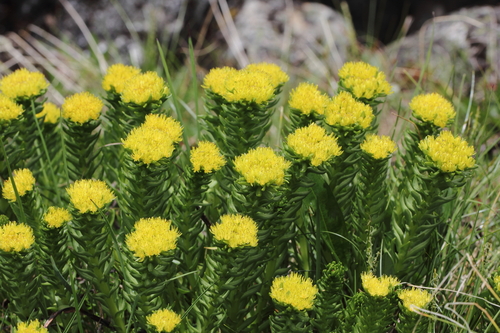
(c) 송현진, some rights reserved (CC BY-NC)
iNaturalist· cc-by-nc
(c) nirmalkhangura, some rights reserved (CC BY-NC)
iNaturalist· cc-by-nc
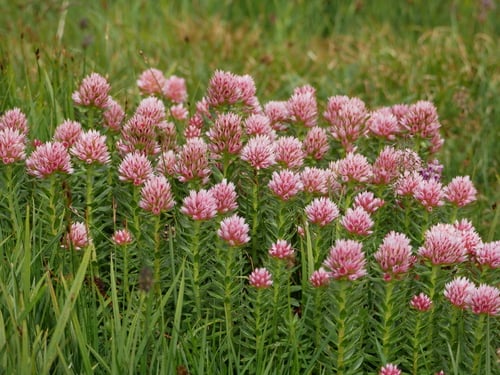
(c) nirmalkhangura, some rights reserved (CC BY-NC)
Summary
Source: WikipediaPerennial reaching 40 cm tall and wide. Hardy to UK zone 6, not frost tender. Flowers September to October with seeds ripening October to November. Hermaphrodite, self-fertile, insect-pollinated. Notable for attracting wildlife. Tolerates light sandy, medium loamy, and heavy clay soils, preferring well-drained conditions and poor soil. Suitable for mildly acidic to basic pH. Requires full sun. Adapts to dry or moist soil with good drought tolerance.
Description
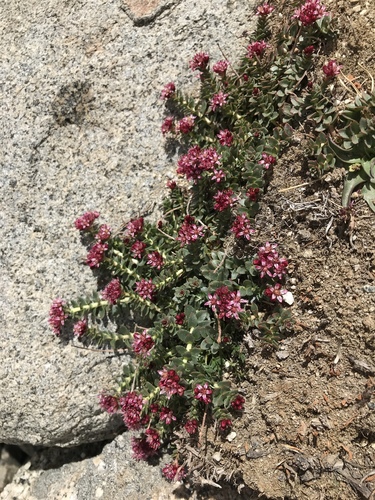
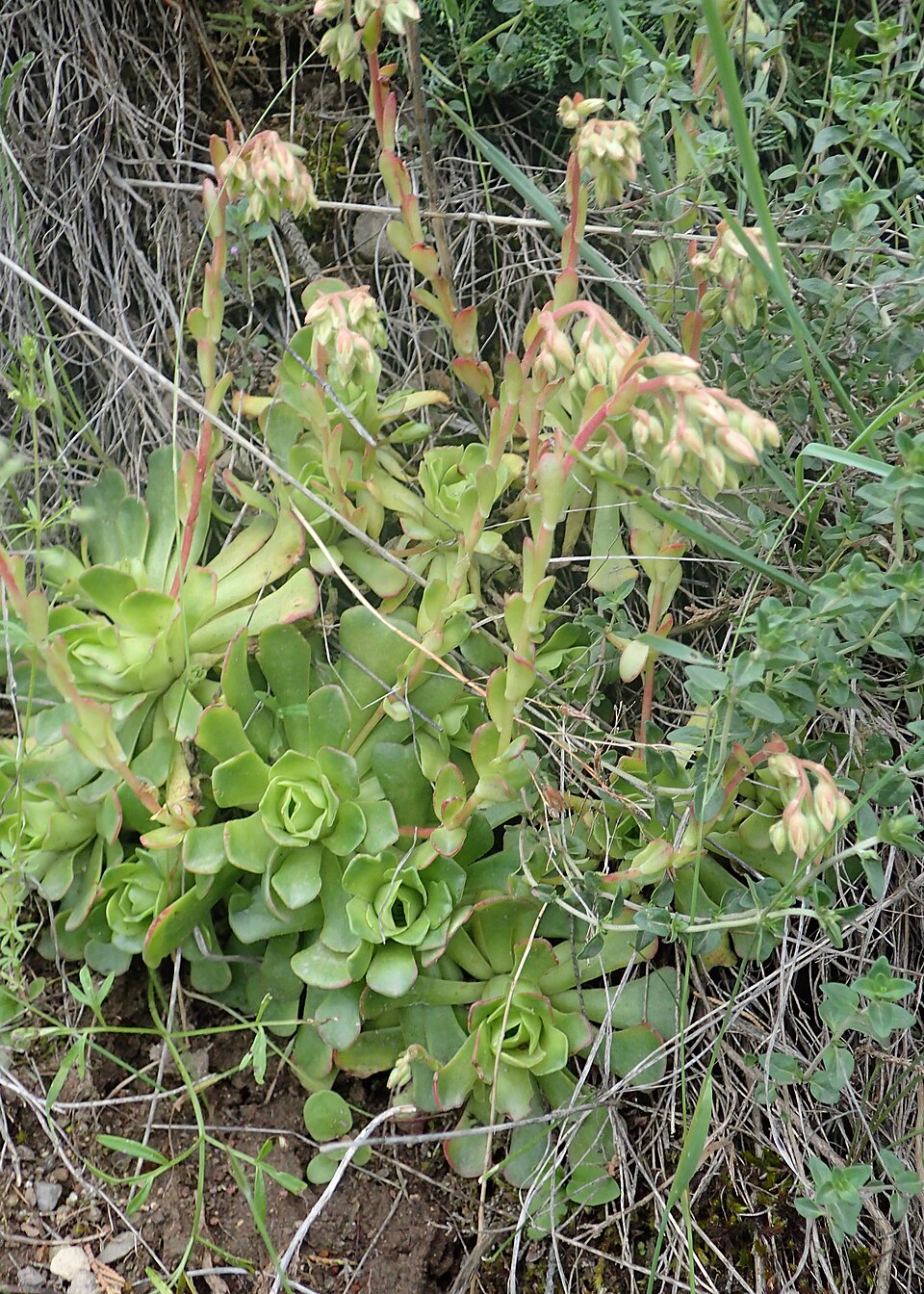
A perennial herb. It grows 30-45 cm high and 45-60 cm wide. The grey-green leaves form clumps. The flowers are in flat heads 15 cm across. These have tightly packed starry flowers. They are pink.
Edible Uses
The leaves can be eaten raw or cooked. They are very mucilaginous with a fairly bland flavour.
Traditional Uses
The young leaves are used in salads.
This uses section is brief — help expand it
Medicinal Uses
The plant is antiphlogistic, depurative, and sialagogue.
Distribution
It is a temperate plant. It is frost hardy. It is often grown among rocks. It suits hardiness zones 6-10. Melbourne Botanical gardens.
Where It Grows
Asia, Australia, Balkans, Bosnia, Canada, China, Japan, Korea, Manchuria, North America, Tasmania,
Cultivation
A very easily grown and tolerant plant, it succeeds in most soils but prefers a fertile well-drained soil in a sunny position. Tolerates poor soils. Established plants are drought tolerant, they can also tolerate considerable neglect, surviving even in the dense growth of weeds. Plants are hardy to about -20°c. This species has pink flowers. All members of this genus are said to have edible leaves, though those species that have yellow flowers can cause stomach upsets if they are eaten in quantity. The flowers have a honey-like smell similar to Buddleias. A very ornamental plant, there are some named varieties. The flowers are very attractive to bees and lepidoptera. Plants in this genus seem to be immune to the predations of rabbits. In garden design, as well as the above-ground architecture of a plant, root structure considerations help in choosing plants that work together for their optimal soil requirements including nutrients and water. Thick or swollen - fibrous or tap root.
Propagation
Surface sow seed in spring in well-drained soil in a sunny greenhouse position, keeping the soil consistently moist. Prick seedlings into individual pots when large enough to handle. Plant out during summer if sufficient growth has been made, otherwise overwinter in a cold frame or greenhouse and plant out the following early summer. Division is straightforward at almost any point during the growing season, though spring or early summer is preferred. Larger divisions can go directly into permanent positions; smaller ones are best potted up and grown on in a lightly shaded cold frame until well established, then planted out in summer. Cuttings can be taken at almost any time during the growing season and root very easily — even a single leaf will produce roots and form a new plant.
Other Uses
Plants can be grown as a ground cover when spaced about 30cm apart each way.
Notes
There are about 400 Sedum species.
Synonyms
Also Known As
Changyao babao
References (8)
- Crawford, M., 2012, How to grow Perennial Vegetables. Green Books. p 123
- Cundall, P., (ed.), 2004, Gardening Australia: flora: the gardener's bible. ABC Books. p 1331
- Hibbert, M., 2002, The Aussie Plant Finder 2002, Florilegium. p 289
- Joyce, D., 1998, The Garden Plant Selector. Ryland, Peters and Small. p 269
- Mem. Soc. Acad. Maine Loire 20:116. 1866
Show all 8 references Hide references
- Plants for a Future database, The Field, Penpol, Lostwithiel, Cornwall, PL22 0NG, UK. http://www.scs.leeds.ac.uk/pfaf/
- Redzic, S., 2010, Use of Wild and Semi-Wild Edible Plants in Nutrition and Survival of People in 1430 Days of Siege of Sarajevo during the War in Bosnia and Herzegovina (1992–1995). Coll. Antropol 34 (2010) 2:551-570
- Valder, P., 1999, The Garden Plants of China. Florilegium. p 383