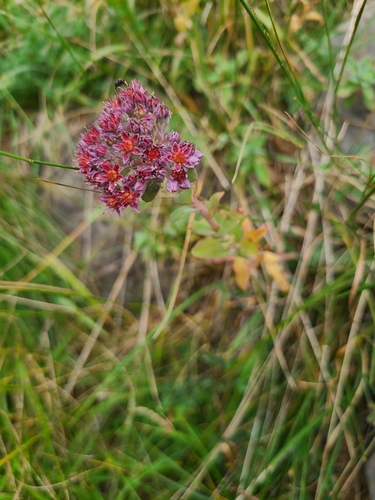
Sedum stoloniferum
S. G. Gmel.
Stolon Stonecrop
iNaturalist· cc-by-nc
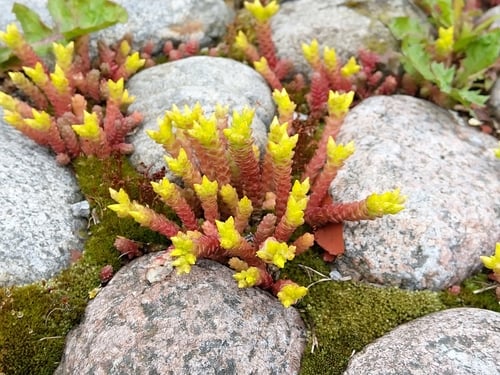
(c) Alexander Rumpel, some rights reserved (CC BY-NC)
iNaturalist· cc-by-nc
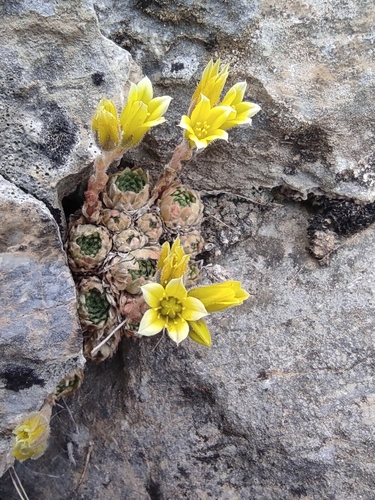
(c) Alexander Rumpel, some rights reserved (CC BY-NC)
iNaturalist· cc-by-nc
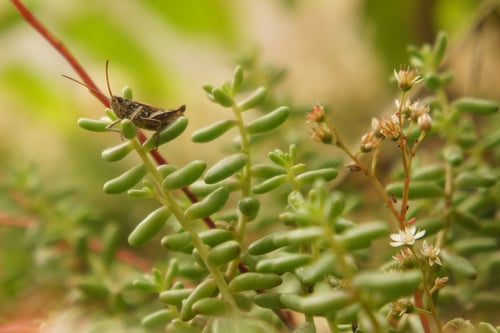
(c) Sergey Mayorov, some rights reserved (CC BY-NC)
Summary
Evergreen perennial growing 20cm tall and spreading to 50cm, expanding at a medium rate. Hardy to UK zone 7. Flowers June to July with seeds ripening July to August. Requires full sun and will not grow in shade. Accepts light sandy, medium loamy, and heavy clay soils with good drainage, thriving in mildly acid to mildly alkaline conditions. Tolerates both dry and moist soil and is drought-resistant. Self-fertile and insect-pollinated.
Description
Evergreen perennial growing 20cm tall and spreading to 50cm, expanding at a medium rate. Hardy to UK zone 7. Flowers June to July with seeds ripening July to August. Requires full sun and will not grow in shade. Accepts light sandy, medium loamy, and heavy clay soils with good drainage, thriving in mildly acid to mildly alkaline conditions. Tolerates both dry and moist soil and is drought-resistant. Self-fertile and insect-pollinated.
Edible Uses
The leaves can be eaten raw or cooked.
Medicinal Uses
None known.
Distribution
It is a temperate plant.
Where It Grows
Caucasus, Georgia, Iran, Middle East,
Cultivation
Succeeds in most soils but prefers a fertile well-drained soil in a sunny position. Established plants are very drought tolerant, they grow well in dry soils and can be grown on a wall or in crevices in a rock garden. Hardy to at least -15°c. This plant often disappears from its planted position and then turns up in a new location, are birds responsible for this? Closely related to S. spurium. This species has pink flowers. All members of this genus are said to have edible leaves, though those species that have yellow flowers can cause stomach upsets if they are eaten in quantity. Plants in this genus seem to be immune to the predations of rabbits.
Propagation
Surface sow seed in spring in well-drained soil in a sunny greenhouse position, keeping the soil consistently moist. Prick seedlings into individual pots when large enough to handle. Plant out during summer if sufficient growth has been made, otherwise overwinter in a cold frame or greenhouse and plant out the following early summer. Division is straightforward at almost any point during the growing season, though spring or early summer is preferred. Larger divisions can go directly into permanent positions; smaller ones are best potted up and grown on in a lightly shaded cold frame until well established, then planted out in summer.
Other Uses
None known.
Notes
There are about 400 Sedum species.
Synonyms
Also Known As
Msukana
References (2)
- Bussman, R. W., et al, 2021, Unity in diversity—food plants and fungi of Sakartvelo (Republic of Georgia), Caucasus. Journal of Ethnobiology and Ethnomedicine (2021) 17:72 p 8
- Plants for a Future database, The Field, Penpol, Lostwithiel, Cornwall, PL22 0NG, UK. http://www.scs.leeds.ac.uk/pfaf/