Sedum telephium
L.
Live-forever, Orphine
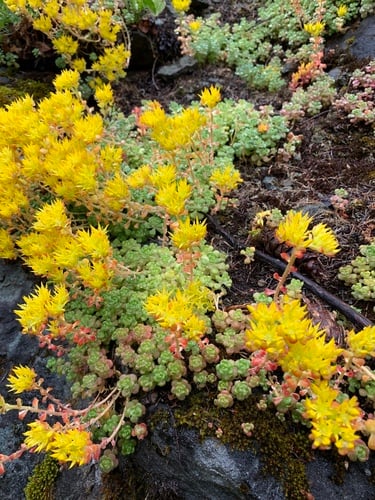
iNaturalist· cc-by-nc
(c) Алексей Лапин, some rights reserved (CC BY-NC)
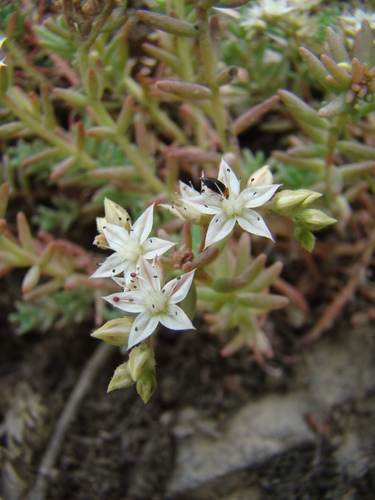
iNaturalist· cc-by-nc
(c) Алексей Лапин, some rights reserved (CC BY-NC)
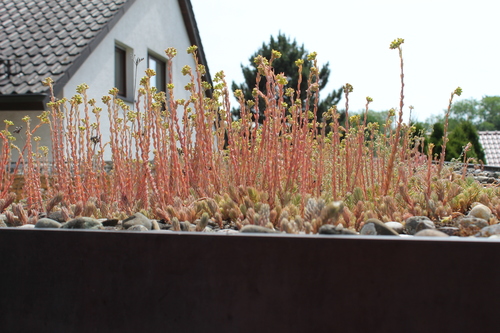
iNaturalist· cc-by-nc
(c) Алексей Лапин, some rights reserved (CC BY-NC)
Summary
Perennial reaching 50cm tall and 30cm wide. Hardy to UK zone 4 and frost-hardy. Flowers July to August with seed maturation August to September. Grows in full shade, semi-shade, or full sun, making it adaptable to various light conditions. Accommodates light sandy, medium loamy, and heavy clay soils with well-drained texture and mildly acid to mildly alkaline pH. Tolerates drought and variable moisture levels. Pollinated by bees and flies; self-fertile and known for attracting wildlife.
Description
Perennial reaching 50cm tall and 30cm wide. Hardy to UK zone 4 and frost-hardy. Flowers July to August with seed maturation August to September. Grows in full shade, semi-shade, or full sun, making it adaptable to various light conditions. Accommodates light sandy, medium loamy, and heavy clay soils with well-drained texture and mildly acid to mildly alkaline pH. Tolerates drought and variable moisture levels. Pollinated by bees and flies; self-fertile and known for attracting wildlife.
Edible Uses
Leaves can be eaten raw or cooked and have occasionally been used in salads. The root is edible cooked and works well in soups, stews, and similar dishes.
Traditional Uses
The young leaves are eaten in salads served with oil and vinegar. The leaves are also boiled and eaten as a vegetable. It is used as a vegetable in the preparation of soups. The tubers can be cooked and eaten. They can be stewed or fried. They can also be pickled.
Medicinal Uses
The whole plant is astringent and cytostatic. It is a popular remedy for diarrhoea, stimulates the kidneys, and has a reputation in the treatment of cancer. A poultice of crushed leaves has been used to treat boils and carbuncles.
Where It Grows
Leaves, Tubers,
Cultivation
Succeeds in most soils but prefers a fertile well-drained soil that is not too dry. Tolerates poor soils. Succeeds in most soils and is tolerant of quite deep shade. Established plants are drought tolerant, they grow well in dry soils and can be grown in crevices on walls. Hardy to about -20°c. This species has pink to red flowers. All members of this genus are said to have edible leaves, though those species that have yellow flowers can cause stomach upsets if they are eaten in quantity. Polymorphic, intergrading with S. caucasicum where their ranges meet. Plants in this genus seem to be immune to the predations of rabbits. An evergreen.
Propagation
Seed - surface sow in spring in well-drained soil in a sunny position in a greenhouse, keeping the soil moist. Prick out seedlings into individual pots when large enough to handle. Plant out during summer if sufficient growth has been made, otherwise overwinter in a cold frame or greenhouse and plant out in early summer the following year. Division is very easy and can be done at almost any time during the growing season, though spring or early summer is best. Larger divisions can go directly into permanent positions; smaller ones are best potted up and grown on in a lightly shaded cold frame until well established. Cuttings can be taken at almost any time during the growing season, though early in the season is preferable.
Other Uses
No other uses are known. Attracts wildlife; suitable for food forest plantings.
Other Information
Crassulaceae
Notes
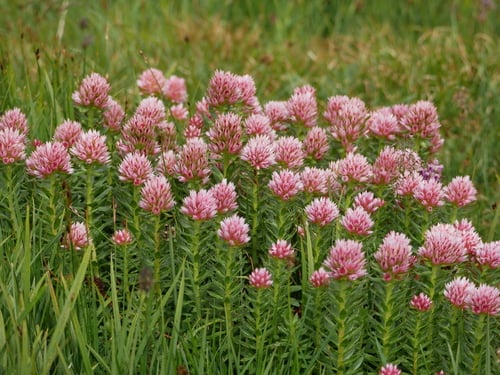
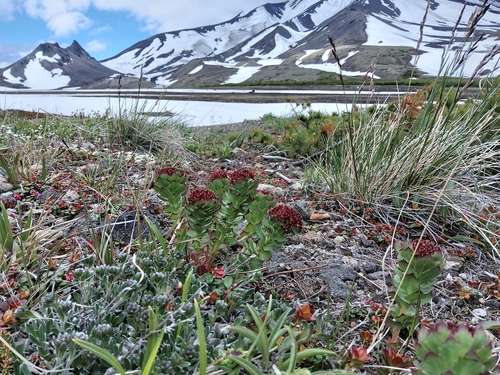
A herb. It keeps growing from year to year. It grows 50-60 cm high. It has fleshy tubers which produce succulent stems. The stems are not branched. The leaves are fleshy simple and alternate. They grow in rings of three. They are 3-5 cm long. There can be slight teeth along the edge. They are green or light bluish-green. The flowers are in clusters. The petals are reddish-purple. Each flower is about 5-13 mm across. The fruit are small capsules. These split open on one side only.
Synonyms
Also Known As
Camisgulagi, Mandakulağı, Orpine
References (14)
- Cakir, E. A., 2017, Traditional knowledge of wild edible plants of Iğdır Province (East Anatolia, Turkey). Acta Soc Bot Pol. 2017;86(4):3568
- Crawford, M., 2012, How to grow Perennial Vegetables. Green Books. p 123
- Cundall, P., (ed.), 2004, Gardening Australia: flora: the gardener's bible. ABC Books. p 1331
- Ertug, F, Yenen Bitkiler. Resimli Türkiye Florası -I- Flora of Turkey - Ethnobotany supplement (As Hylotelephium telephium)
- Esperanca, M. J., 1988. Surviving in the wild. A glance at the wild plants and their uses. Vol. 2. p 59 (As Sedum purpureum)
Show all 14 references Hide references
- Hedrick, U.P., 1919, (Ed.), Sturtevant's edible plants of the world. p 603
- Hibbert, M., 2002, The Aussie Plant Finder 2002, Florilegium. p 289 (As Sedum purpureum)
- Irving, M., 2009, The Forager Handbook, A Guide to the Edible Plants of Britain. Ebury Press p 294
- Jackes, D. A., Edible Forest Gardens (As Hylotelephium telephium)
- Kermath, B. M., et al, 2014, Food Plants in the Americas: A survey of the domesticated, cultivated and wild plants used for Human food in North, Central and South America and the Caribbean. On line draft. p 794
- Luczaj, L. et al, 2012, Wild food plant use in 21st century Europe: the disappearance of old traditions and the search for new cuisines involving wild edibles. Acta Soc Bot Pol 81(4):359–370 (As Hylotelephium telephium)
- Plants for a Future database, The Field, Penpol, Lostwithiel, Cornwall, PL22 0NG, UK. http://www.scs.leeds.ac.uk/pfaf/
- Redzic, S., 2010, Use of Wild and Semi-Wild Edible Plants in Nutrition and Survival of People in 1430 Days of Siege of Sarajevo during the War in Bosnia and Herzegovina (1992–1995). Coll. Antropol 34 (2010) 2:551-570
- Sp. pl. 1:430. 1753