Arctostaphylos parryana
Lemmon
Parry manzanita
iNaturalist· cc-by-nc-sa
(c) 2003 Brent Miller, some rights reserved (CC BY-NC-SA)
iNaturalist· cc-by-nc-sa
(c) 2003 Brent Miller, some rights reserved (CC BY-NC-SA)
iNaturalist· cc-by-sa
(c) Stan Shebs, some rights reserved (CC BY-SA)
Summary
Source: WikipediaArctostaphylos parryana, with the common name Parry manzanita, is a species of manzanita.
Description
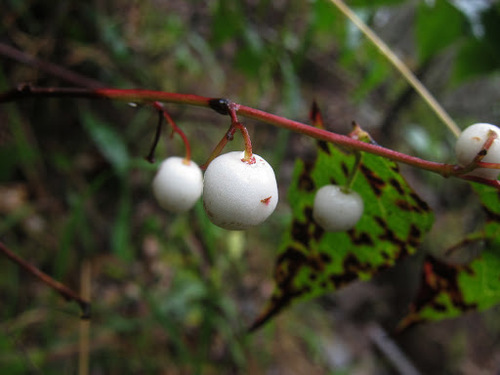
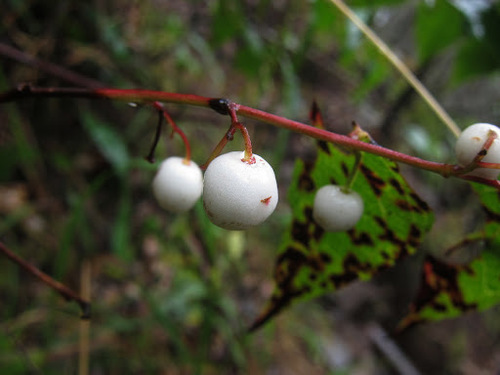
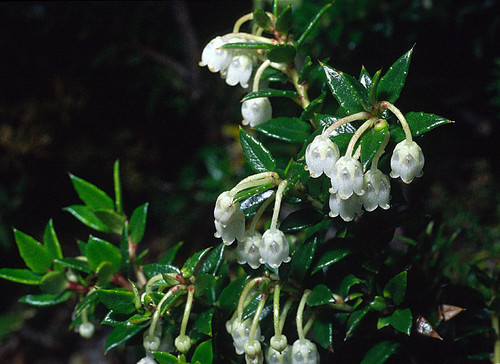
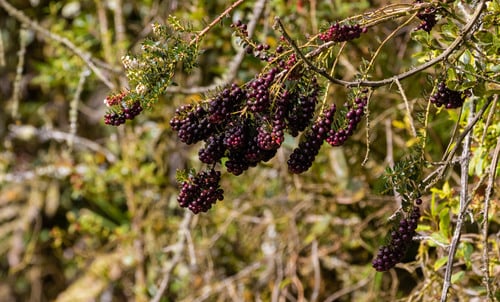
A shrub. The stems have red bark. It grows 2 m tall. The leaves are oval and pointed and bright green. The flowers are white with a pink tint. They occur in dense bunches. The fruit is round and fleshy and has 2 or more seeds.
Edible Uses
Edible Parts: Fruit Edible Uses: The ground berry pulp is used as a food.
Medicinal Uses
None known
Distribution
It is a warm temperate plant. It grows in California.
Where It Grows
North America, USA,
Cultivation
We have very little information on this species and do not know if it will be hardy in Britain, though judging by its native range it could succeed outdoors at least in the milder parts of this country. The following notes are based on the general needs of the genus. Requires a deep moist well-drained light or medium lime-free loam in sun or semi-shade but plants produce less fruit when grown in the shade. Prefers a position in full sun. Plants resent root disturbance and should be placed in their final positions as soon as possible.
Propagation
Seed - best sown in a greenhouse as soon as it is ripe. Pre-soak dried seed in boiling water for 10 - 20 seconds or burn some straw on top of them and then stratify at 2 - 5°c for 2 months. The seed usually germinates in 2 - 3 months at 15°c. When large enough to handle, prick the seedlings out into individual pots and grow them on in a cold frame or greenhouse for at least their first winter. Plant out in late spring or early summer. Cuttings of side shoots of the current season's growth, 5 - 8cm with a heel, August to December in a frame. Takes one year. Division in early spring. Take care because the plant resents root disturbance. Pot the divisions up and keep them in a lightly shaded position in a cold frame or greenhouse until they are growing away actively. Layering in spring.
Other Uses
Dye A yellowish-brown dye is obtained from the leaves, it does not require a mordant. Special Uses
Notes
There are about 50 Arctostaphylos species.
Synonyms
References (2)
- Beckstrom-Sternberg, Stephen M., and James A. Duke. "The Foodplant Database." http://probe.nalusda.gov:8300/cgi-bin/browse/foodplantdb.(ACEDB version 4.0 - data version July 1994)
- Plants for a Future database, The Field, Penpol, Lostwithiel, Cornwall, PL22 0NG, UK. http://www.scs.leeds.ac.uk/pfaf/