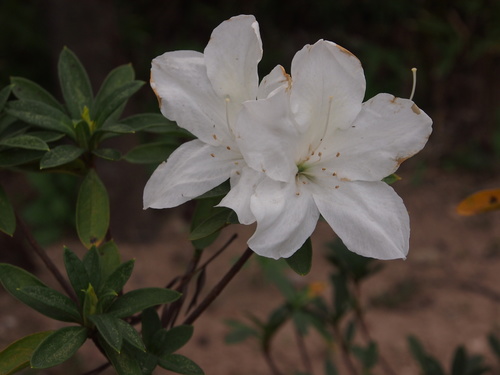
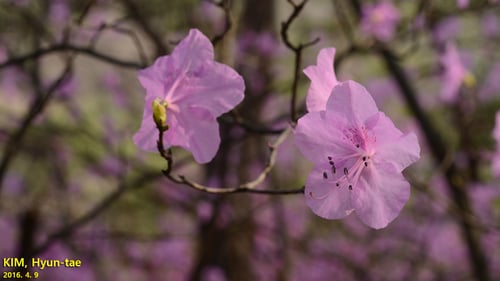
Chimaphila umbellata ssp. acuta
W. P. C. Barton (Rydb.)
Pipsissewa
gbif· cc-by-nc
University of New Mexico Herbarium (UNM-Vascular Plants)
gbif· cc-by-nc
Kurt Steinbach
gbif· cc-by-nc
Kurt Steinbach
Description
Chimaphila umbellata ssp. acuta is an evergreen Shrub growing to 0.3 m (1ft) by 0.3 m (1ft in) at a slow rate. See above for USDA hardiness. It is hardy to UK zone 4. The flowers are pollinated by Bees, Insects. It is noted for attracting wildlife. Suitable for: light (sandy), medium (loamy) and heavy (clay) soils and prefers well-drained soil. Suitable pH: mildly acid and neutral soils and can grow in very acid soils. It can grow in semi-shade (light woodland). It prefers moist soil.
Edible Uses
Essentially inedible as food. Leaves may be used in very small amounts and rhizomes can be simmered for a bitter tea or flavoring, but regular or large consumption is not advised. Treat as a medicinal/flavor plant, harvest sparingly, and prioritize sustainability. Edible Uses & Rating: As a food plant, pipsissewa ranks very low. The leaves can be chewed or used in tiny amounts as a bitter flavoring, and the rhizomes, stems, and leaves can be simmered to make a strongly flavored beverage or to contribute a “secret bitter note” in traditional root beer-style preparations. It is not a practical source of calories, bulk greens, or palatable staple food. Its “usefulness” is almost entirely as a flavorant or medicinal-style infusion rather than as nourishment. Taste, Processing & Kitchen Notes: Pipsissewa’s defining culinary trait is bitterness. Rhizome tea tends to brew to a pinkish-brown color and tastes earthy and bitter, with a medicinal, resinous edge that can be intriguing in tiny doses but quickly becomes overpowering. Leaves are bitter, leathery, and astringent, and many people detect a faint wintergreen-like suggestion, though it is not the sweet wintergreen flavor associated with Gaultheria candies. Washing the rhizomes thoroughly can reduce the earthy character, and sweetening the infusion can make it more drinkable, but it remains a bitter beverage. In “root beer” style flavoring, pipsissewa is best treated as a background ingredient. It adds complexity and a distinctive note, but it does not replace the classic flavor drivers like sassafras (where legal and appropriate), sarsaparilla, birch, or cherry bark. As a standalone tea, it is generally for those who enjoy bitter tonics rather than casual herbal drinks. Seasonality (Phenology): In montane habitats, pipsissewa remains evergreen through winter under snow cover or cold conditions. Flowering typically occurs in summer, most often from June to September depending on elevation and seasonal timing. Capsules may persist beyond the flowering season. Leaves can be collected most of the year when accessible, but the plant is small and slow-growing, so any harvesting should be minimal. Safety & Cautions (Food Use): Pipsissewa should not be treated as a casual edible green. Leaves and rhizomes are bitter and bioactive, and their traditional role is much closer to medicinal use than food. Very small amounts as flavoring are the most conservative approach. Individuals who are pregnant, breastfeeding, have kidney issues, or are sensitive to bitter medicinal herbs should avoid internal use. Because leaf extract has been used commercially as a flavor additive and is often considered safe at low levels, that does not imply that wild-harvested teas or repeated large servings are appropriate. Also, because it grows in forest soils, harvest only from clean areas away from contamination, and avoid overharvesting small colonies. Harvest & Processing Workflow: If used at all, harvest should be minimal and selective. For leaf use, take only a few leaves from a robust patch, rinse thoroughly, and use sparingly to add bitterness or a faint wintergreen-like note to blends rather than as a standalone vegetable. For rhizome tea, only a very small quantity is needed; wash rhizomes thoroughly to reduce earthiness, then simmer briefly to extract flavor. Sweeten only after brewing if desired. From a sustainability standpoint, rhizome harvesting is far more damaging than leaf sampling and is generally not recommended unless the plant is abundant, harvesting is legal, and ecological impact is carefully minimized. Cultivar/Selection Notes: There are no common cultivars in food or garden contexts for this species. Subspecies distinctions are sometimes recognized botanically, but they can be inconsistent in the wild and are not typically meaningful for culinary use. Look-Alikes & Confusion Risks: Pipsissewa is usually easy to recognize because it is one of the few small evergreen understory plants with leaves distributed along the stem and with nodding flower clusters rather than a basal rosette and a single flower. It can be confused with related Pyrola, Orthilia, or Moneses species at a glance, but those genera typically have leaves more strongly basal and flowers arranged differently (often racemes in Pyrola/Orthilia or solitary in Moneses). Spotted prince’s pine (Chimaphila maculata) has conspicuous white mottling along leaf veins and is not the same species. Overall, the combination of evergreen whorled leaves and nodding clusters of five-petaled flowers is distinctive. Traditional / Indigenous Use Summary: Pipsissewa has a long history in North American herbal traditions and appears in formulations as a bitter tonic or medicinal tea. It is also historically noted as one of several possible botanicals contributing flavor to traditional “root beer” style preparations. As a food plant, it is minor to negligible; its main traditional value is medicinal and flavoring rather than caloric nourishment.
Medicinal Uses
Pipsissewa has a long history in North American herbal traditions and appears in formulations as a bitter tonic or medicinal tea. It is also historically noted as one of several possible botanicals contributing flavor to traditional “root beer” style preparations. As a food plant, it is minor to negligible; its main traditional value is medicinal and flavoring rather than caloric nourishment.
Known Hazards
Pipsissewa should not be treated as a casual edible green. Leaves and rhizomes are bitter and bioactive, and their traditional role is much closer to medicinal use than food. Very small amounts as flavoring are the most conservative approach. Individuals who are pregnant, breastfeeding, have kidney issues, or are sensitive to bitter medicinal herbs should avoid internal use. Because leaf extract has been used commercially as a flavor additive and is often considered safe at low levels, that does not imply that wild-harvested teas or repeated large servings are appropriate. Also, because it grows in forest soils, harvest only from clean areas away from contamination, and avoid overharvesting small colonies.
Distribution
This species occurs across temperate and boreal regions of the northern hemisphere. In the American Southwest it is primarily a montane plant, found in higher-elevation woodlands and forests of northern Arizona and New Mexico and northward through the Rockies and into Canada.
Where It Grows
For Chimaphila umbellata (L.) W.P.C.Barton: US, USA, Alaska, Alberta, Altay, Arizona, Austria, Baltic States, Belarus, British Columbia, Buryatiya, California, Central European Russia, Colorado, Connecticut, Czechia-Slovakia, Delaware, Denmark, District of Columbia, Dominican Republic, East European Russia, Finland, France, Germany, Guatemala, Haiti, Hungary, Idaho, Illinois, Indiana, Inner Mongolia, Iowa, Irkutsk, Japan, Kazakhstan, Khabarovsk, Krasnoyarsk, Krym, Kuril Is., Maine, Manchuria, Manitoba, Maryland, Massachusetts, Mexico Central, Mexico Gulf, Mexico Northeast, Mexico Northwest, Mexico Southeast, Mexico Southwest, Michigan, Minnesota, Montana, Nevada, New Brunswick, New Hampshire, New Jersey, New Mexico, New York, Newfoundland, North Carolina, North European Russia, Northwest European Russia, Northwest Territories, Norway, Nova Scotia, NW. Balkan Pen., Ohio, Ontario, Oregon, Pennsylvania, Poland, Primorye, Prince Edward I., Québec, Rhode I., Romania, Sakhalin, Saskatchewan, South Dakota, South European Russia, Sweden, Switzerland, Ukraine, Utah, Virginia, Washington, West Siberia, West Virginia, Wisconsin, Wyoming, Yakutiya, Yukon
Cultivation
A subshrub that grows primarily in the temperate biome. Pipsissewa is best understood as a bitter woodland flavorant and medicinal plant rather than an edible. It is ecologically tied to cool forest soils and spreads slowly by rhizomes, producing attractive nodding flower clusters in summer. For foragers, its value lies in tiny quantities as a distinctive bitter note in teas or traditional root beer-style blends, not as a salad green or staple. Growing Conditions: Pipsissewa is a plant of cool, forested microclimates. It favors acidic to slightly acidic, well-drained forest soils with abundant leaf litter or needle duff, steady soil moisture without waterlogging, and partial shade to dappled light. It is strongly associated with intact woodland soil communities and is often linked to mycorrhizal fungal networks typical of conifer and mixed forests. Hot, exposed, disturbed, or alkaline sites are generally unsuitable. Habitat & Range: This species occurs across temperate and boreal regions of the northern hemisphere. In the American Southwest it is primarily a montane plant, found in higher-elevation woodlands and forests of northern Arizona and New Mexico and northward through the Rockies and into Canada. It is typically encountered in pine, spruce, fir, and aspen-associated communities rather than low desert environments. Size & Landscape Performance: Pipsissewa is a small groundlayer evergreen, usually 7–30 cm tall, spreading slowly by rhizomes to form patches. It is not a fast groundcover and does not tolerate heavy disturbance. In landscapes it is best considered a specialty woodland plant rather than a robust edible understory species. Where conditions are right it can persist for years, but it is not forgiving of heat, drought, or soil disruption. Cultivation (Horticulture): Cultivation is possible but challenging because the plant is adapted to specific forest-soil conditions and likely depends on compatible mycorrhizal partners. It generally performs poorly in ordinary garden soils, especially alkaline soils or soils without appropriate forest organic matter. Woodland garden cultivation, if attempted, is best done in cool climates with acidic mulch, consistent moisture, and minimal root disturbance. Because of its slow growth and ecological specificity, it is usually better appreciated in situ than cultivated for use. Pests & Problems: In suitable habitats, pipsissewa is not especially pest-prone, but it can suffer from decline if soils dry excessively, if heat exposure increases, or if forest litter and shade are removed. Disturbance of the rhizomes and surrounding soil often results in poor recovery. In gardens, failure is more often environmental than pest-driven. Cultivar/Selection Notes: There are no common cultivars in food or garden contexts for this species. Subspecies distinctions are sometimes recognized botanically, but they can be inconsistent in the wild and are not typically meaningful for culinary use. Pollination: Pipsissewa is pollinated by insects, typically small bees and other generalist forest pollinators that visit its nodding, nectar-bearing flowers in summer. Self-compatibility may occur in some populations, but insect visitation is generally the main pathway for reliable seed set. Identification & Habit: Chimaphila umbellata is a low, evergreen, rhizome-spreading plant with short, upright stems bearing leathery, glossy leaves that are distributed along the stem rather than clustered strictly at the base. Leaves are typically arranged in whorls (often near the lower part of the stem), sometimes appearing opposite or alternate depending on the stem section. The blades are oblanceolate, thick, and serrated, with a firm, “wintergreen-like” toughness but without the strong candy scent of true wintergreen. The plant produces nodding clusters of flowers (umbellate cymes) on stalks that may be slightly sticky-haired. Flowers have five sepals and five petals, usually white to pinkish, and ten stamens with dark-colored anthers. After flowering it forms upright, persistent capsules. The subspecies acuta is typically described as having more distinctly acute (pointed) leaf tips, though in the wild the differences among subspecies can be subtle and are not always consistently expressed across populations. USDA Hardiness Zones: Approx. Zones 3–7 (sometimes to Zone 8 in cool, forested sites).
Propagation
Propagation is by seed or rhizome spread, with seed establishment often slow and rhizome division risky. In most contexts it is not a plant to propagate routinely; conservation-minded appreciation of existing colonies is usually the best path.
Other Uses
Pipsissewa is a small groundlayer evergreen, usually 7–30 cm tall, spreading slowly by rhizomes to form patches. It is not a fast groundcover and does not tolerate heavy disturbance. In landscapes it is best considered a specialty woodland plant rather than a robust edible understory species. Where conditions are right it can persist for years, but it is not forgiving of heat, drought, or soil disruption. Ecology & Wildlife: Pipsissewa contributes to forest understory diversity and likely participates in the mycorrhizal ecology typical of conifer and mixed forests. The flowers are insect-pollinated and can be visited by small bees and other generalist forest pollinators. Its evergreen leaves provide minor cover at the ground layer, but it is not generally a major wildlife food plant due to its leathery texture and bitter compounds.
Synonyms
Also Known As
Pipsissewa, Prince’s Pine