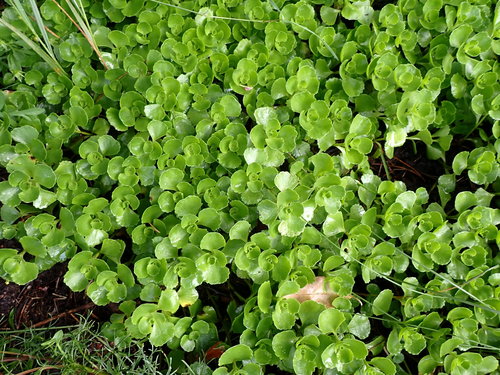
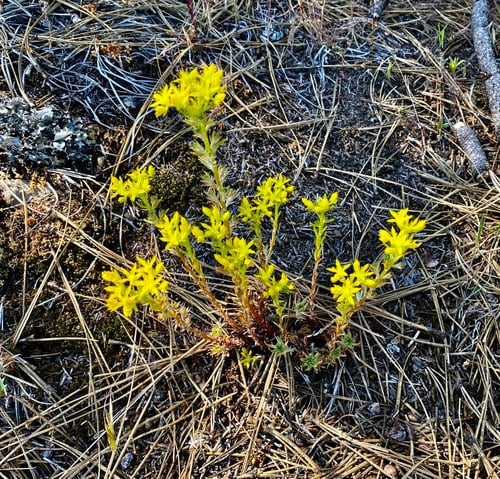
Sedum sarmentosum
Bunge
Stringy Stonecrop
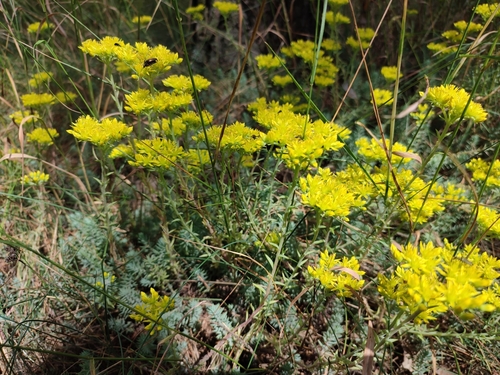
iNaturalist· cc-by
(c) Rusty, some rights reserved (CC BY), uploaded by Rusty
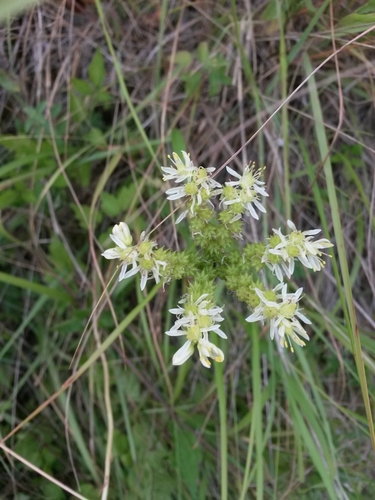
iNaturalist· cc-by
(c) Drepanostoma, some rights reserved (CC BY), uploaded by Drepanostoma
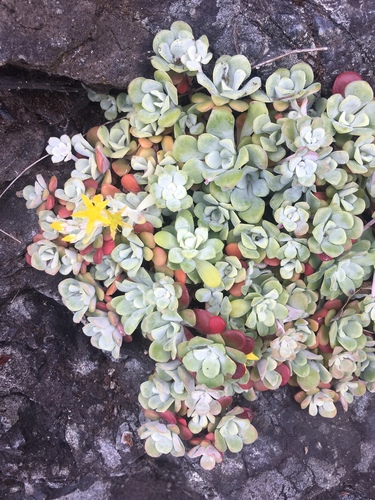
iNaturalist· cc-by
(c) aarongunnar, some rights reserved (CC BY), uploaded by aarongunnar
Summary
Source: WikipediaSedum sarmentosum, known as stringy stonecrop, gold moss stonecrop, and graveyard moss, is a perennial flowering plant in the family Crassulaceae native to East Asia (China and Korea) and Southeast Asia (Thailand). It has been introduced in at least eastern North America, and Europe.
Description
A herb. It keeps growing from year to year. The stems are creeping. They form roots at the nodes. They are 10-25 cm long.
This description is brief — help expand it
Edible Uses
Young leaves and stems can be eaten raw or cooked and are used as a vegetable.
Traditional Uses
The young leaves and shoots are eaten. The leaves are flowers are used in a cooked side dish seasoned with sesame oil and soy sauce.
This uses section is brief — help expand it
Medicinal Uses
Used medicinally, though no further information is given.
Known Hazards
Although not poisonous, if large quantities of this plant are eaten it can cause a stomach upset.
Distribution
It is a temperate plant. In grows in shady places on rocky slopes in central China below 1,600m above sea level. In Sichuan.
Where It Grows
Asia, China, Indochina, Japan, Korea, SE Asia, Thailand, Vietnam,
Cultivation
Succeeds in most soils but prefers a fertile well-drained soil in a sunny position. Established plants are drought tolerant. All members of this genus are said to have edible leaves, though those species, such as this one, that have yellow flowers can cause stomach upsets if they are eaten in quantity. Plants in this genus seem to be immune to the predations of rabbits.
Propagation
Surface sow seed in spring in well-drained soil in a sunny greenhouse position, keeping the soil consistently moist. Prick seedlings into individual pots when large enough to handle. Plant out during summer if sufficient growth has been made, otherwise overwinter in a cold frame or greenhouse and plant out the following early summer. Division is straightforward at almost any point during the growing season, though spring or early summer is preferred. Larger divisions can go directly into permanent positions; smaller ones are best potted up and grown on in a lightly shaded cold frame until well established, then planted out in summer.
Other Uses
None known.
Other Information
It is a commercially cultivated vegetable.
Notes
There are about 400 Sedum species.
Synonyms
Also Known As
Chui oen cao, Dolnamal, Tollamul, Tsuru-mannen-gusa, Tuongthao truon
References (9)
- Facciola, S., 1998, Cornucopia 2: a Source Book of Edible Plants. Kampong Publications, p 84
- Flora of China. www.eFloras.org Volume 8
- Kang, Y., et al, 2012, Wild food plants and wild edible fungi in two valleys on the Qinling Mountains (Shaanxi, central China) Journal of Ethnobiology and Ethnomedicine; 9:26
- Kays, S. J., and Dias, J. C. S., 1995, Common Names of Commercially Cultivated Vegetables of the World in 15 languages. Economic Botany, Vol. 49, No. 2, pp. 115-152
- Mem. Acad. Imp. Sci. St.-Petersbourg Divers Savans 2:104. 1835
Show all 9 references Hide references
- Pemberton, R. W. & Lee, N. S., 1996, Wild Food Plants in South Korea: Market Presence, New Crops, and Exports to the United States. Economic Botany, Vol. 50, No. 1, pp. 57-70
- Plants for a Future database, The Field, Penpol, Lostwithiel, Cornwall, PL22 0NG, UK. http://www.scs.leeds.ac.uk/pfaf/
- Song, M., et al, 2013, Traditional knowledge of wild edible plants in Jeju Island, Korea. Indian Journal of Traditional Knowledge. 12(2) pp 177-194
- Tanaka,