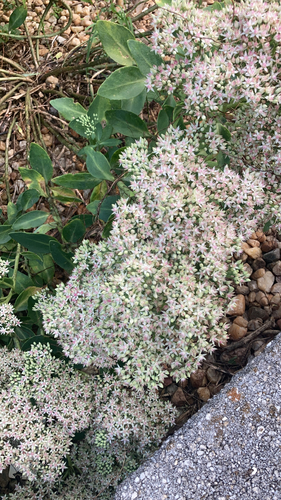
Sempervivum tectorum
L.
Houseleek, Hen and Chickens
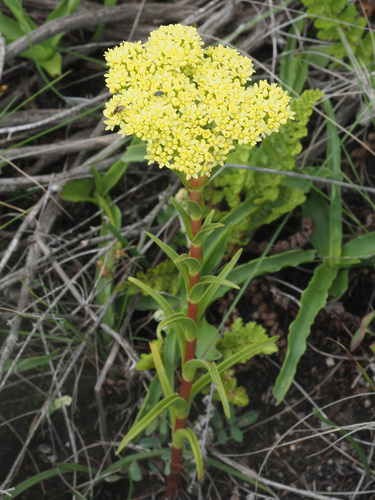
iNaturalist· cc-by-nc
(c) snowlizard, some rights reserved (CC BY-NC)
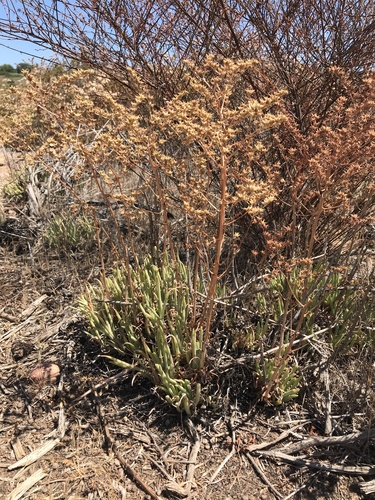
iNaturalist· cc-by-nc
(c) Alenka Mihoric, some rights reserved (CC BY-NC), uploaded by Alenka Mihoric
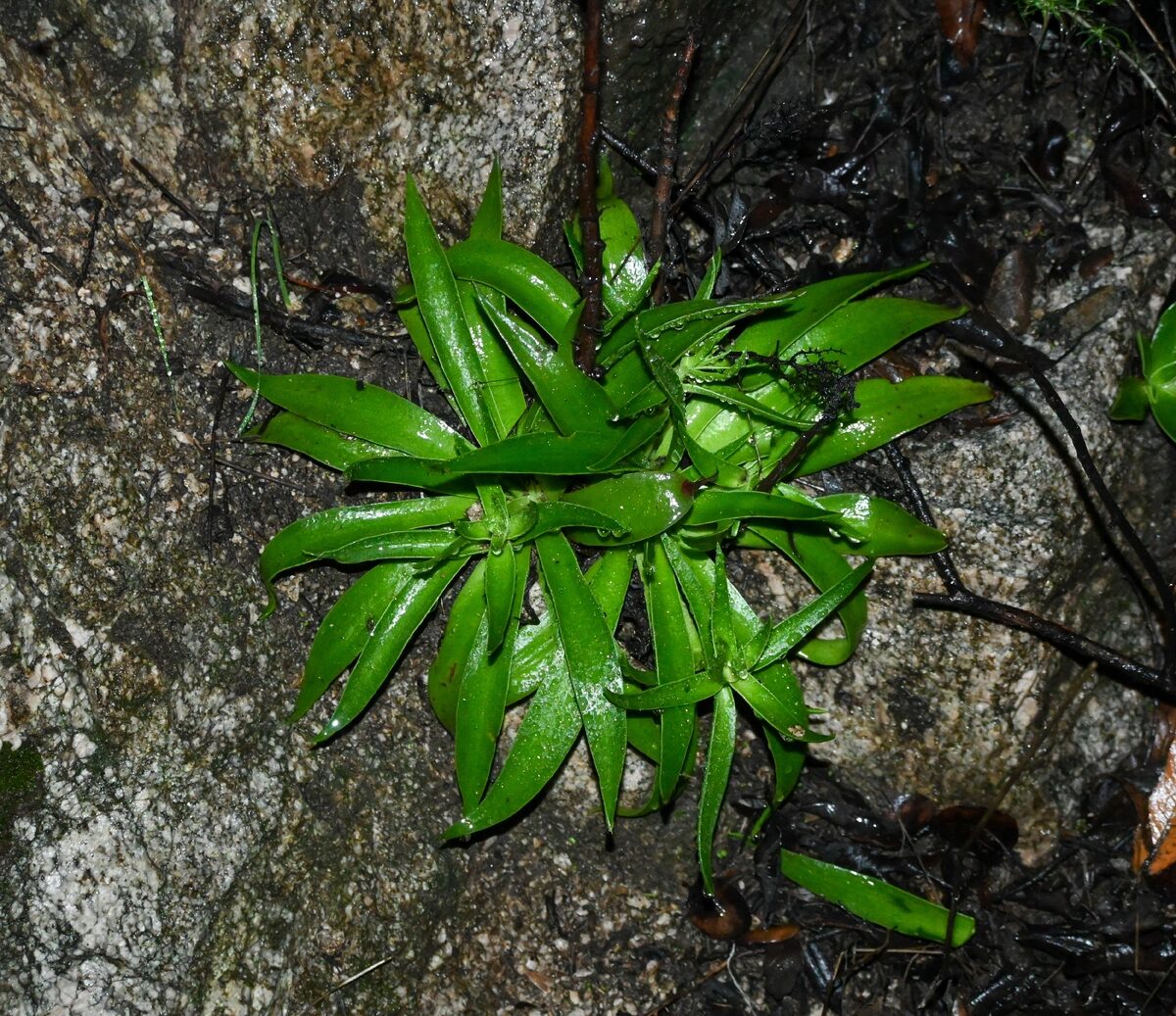
iNaturalist· cc-by-nc
(c) Ángel Fernández Cancio, some rights reserved (CC BY-NC), uploaded by Ángel Fernández Cancio
Summary
Source: WikipediaSempervivum tectorum, the common houseleek, is a species of flowering plant in the family Crassulaceae, native to the mountains of southern Europe, cultivated in the whole of Europe for its appearance and a Roman-era tradition claiming that it protects buildings against lightning strikes.
Description
A perennial herb. The leaves form in rosettes. It grows 8-15 cm high and spreads 30-50 cm wide. The leaves are blue-green. There are bristles at the tip. They turn red-purple. The flowers are purplish-pink.
Edible Uses
Young leaves and shoots can be eaten raw in salads. The juice pressed from the leaves makes a refreshing drink.
Traditional Uses
The leaves are eaten raw in salads. They are also used for making juices.
This uses section is brief — help expand it
Medicinal Uses
Houseleek leaves and their juice are valued for cooling and astringent effects and are applied externally to soothe a wide range of skin conditions — simultaneously tightening and softening the skin. The fresh leaves are astringent, diuretic, odontalgic, refrigerant, and vulnerary. Used as a poultice in much the same way as Aloe vera, they treat skin diseases, burns, scalds, bites, stings, warts, and corns. The plant is also used internally for shingles, skin complaints, and haemorrhoids, though care is needed as excess use is emetic and purgative. Leaves are harvested as needed and used fresh.
Distribution
It is a temperate plant. It is frost hardy. It can tolerate temperatures down to -12°C. It can tolerate temperatures to 38°C if shaded. It suits hardiness zones 5-9.
Where It Grows
Asia, Austria, Australia, Balkans, Belgium, Bosnia, Britain, Central America, Czech Republic, Europe, France, Germany, India, Ireland, Italy, Luxembourg, Mediterranean, Mexico, Myanmar, North America, San Marino, Scandinavia, SE Asia, Slovenia, Spain, Tasmania, Turkey, Türkiye, USSR, Yugoslavia,
Cultivation
Prefers a well-drained gritty soil in full sun. Succeeds in any sandy soil, doing well in very little soil in rock crevices, walls, paths etc so long as there is sufficient humus. Established plants are very drought tolerant and dislike winter wet. One of the many common names for this plant is rather interesting, but was too long to put in the common name entry earlier in this record. It is 'Welcome home husband, however drunk you be'. The plant is sometimes planted in thatched roofs since it is supposed to give protection against lightning, thunderbolts and fire to any house that it grows on. It is also said to preserve the thatch. There is some justification to this belief because the leaves contain a great deal of water and do not burn easily - if there are many of the plants growing on the roof then they will tend to put out the fire before it can take hold properly. Individual rosettes die after flowering, but usually produce a number of offsets that continue to grow. A polymorphic species, it is divided into a number of sub-species by some botanists.
Propagation
Seed - surface sow in early spring in a cold frame. Germination usually takes place in 2–6 weeks at 10°C. Prick out seedlings into individual pots when large enough to handle and grow on in the greenhouse through their first winter. Plant out in summer if sufficient growth has been made, or continue growing in pots for another year before planting out. Divide offsets in spring or early summer — larger divisions can go directly into permanent positions, while smaller ones do best potted up and grown on in a lightly shaded cold frame until well established. Division can also be done in September, but those divisions should be overwintered in a greenhouse. Stem cuttings are also an option.
Other Uses
None known.
Notes
There are about 40 Sempervivum species.
Also Known As
Navadni netresk, St Patrick's cabbage
References (13)
- Ambasta, S.P. (Ed.), 2000, The Useful Plants of India. CSIR India. p 566
- Anderson, M., 2002, The World Encyclopedia of Cacti and Succulents. Hermes House, New York. p 201
- Bremness, L., 1994, Herbs. Collins Eyewitness Handbooks. Harper Collins. p 217
- Cundall, P., (ed.), 2004, Gardening Australia: flora: the gardener's bible. ABC Books. p 1333
- Hibbert, M., 2002, The Aussie Plant Finder 2002, Florilegium. p 290
Show all 13 references Hide references
- http://www.botanic-gardens-ljubljana.com/en/plants
- Joyce, D., 1998, The Garden Plant Selector. Ryland, Peters and Small. p 270
- Morley, B. & Everard, B., 1970, Wild Flowers of the World. Ebury press. Plate 16
- Plants for a Future database, The Field, Penpol, Lostwithiel, Cornwall, PL22 0NG, UK. http://www.scs.leeds.ac.uk/pfaf/
- Redzic, S., 2010, Use of Wild and Semi-Wild Edible Plants in Nutrition and Survival of People in 1430 Days of Siege of Sarajevo during the War in Bosnia and Herzegovina (1992–1995). Coll. Antropol 34 (2010) 2:551-570
- Ryan, S., 2008, Dicksonia. Rare Plants Manual. Hyland House. p 115
- Simkova, K. et al, 2014, Ethnobotanical review of wild edible plants used in the Czech Republic. Journal of Applied Botany and Food Quality 88, 49-67
- Sp. pl. 1:464. 1753