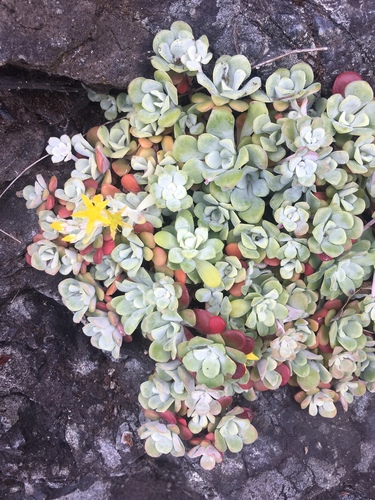
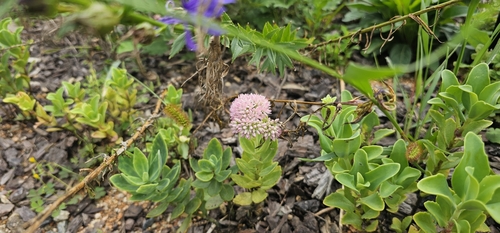
Phedimus kamtschaticus
(Fisch. & C.A.Mey.) 't Hart
Stonecrop, Kamtschaticum stonecrop
iNaturalist· cc-by-nc
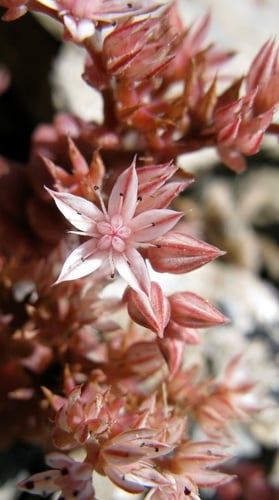
(c) hpr61, some rights reserved (CC BY-NC), uploaded by hpr61
iNaturalist· cc-by-nc
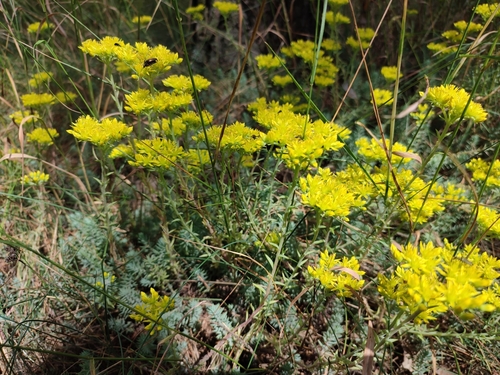
(c) Boris Bolshakov, some rights reserved (CC BY-NC), uploaded by Boris Bolshakov
iNaturalist· cc-by-nc
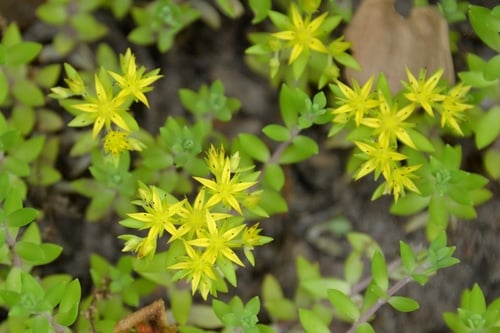
(c) Boris Bolshakov, some rights reserved (CC BY-NC), uploaded by Boris Bolshakov
Summary
Source: WikipediaPhedimus kamtschaticus, the orange stonecrop, is a species of flowering plant in the family Crassulaceae. It is a low-growing herbaceous perennial native to eastern Russia, northeastern China, Korea, and Japan. The species is commonly grown as an ornamental plant, and has escaped cultivation in Europe and the US.
Description
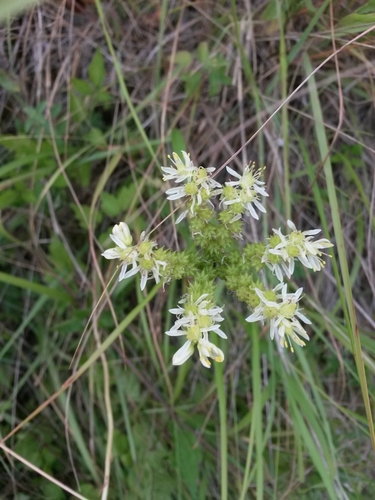
A small succulent plant. It grows 10-30 cm high and spreads 40-60 cm wide. It spreads by underground stems or rhizomes. The stems are low and spreading. The leaves are fleshy and lance shaped. They are deep green and have coarse teeth. They are 5 cm long. The flowers are golden yellow and in heads.
Edible Uses
The shoots and leaves are eaten.
Traditional Uses
The shoots and leaves are eaten.
This uses section is brief — help expand it
Medicinal Uses
Phedimus kamtschaticus is easily grown in well-draining soil with moderate to low moisture and full sunlight. It adapts well to sandy or rocky ground and can withstand heat and nutrient-poor conditions. Proper drainage is essential for healthy growth, but the species tolerates much more moisture in the soil than other stonecrops; it is also less drought tolerant. It is commonly used in containers and rock gardens, but may also be grown as a small area groundcover and in green roof plantings. Under its synonym Sedum kamtschaticum, it has gained the Royal Horticultural Society's Award of Garden Merit. In addition, the putative variety Sedum kamtschaticum var. ellacombeanum and the 'Variegatum' cultivar have also gained the award. 'Weihenstephaner Gold' (named after Hochschule Weihenstephan-Triesdorf) is particularly popular among commercial growers. All the cultivars have yellow blooms, but the flowers of 'Weihenstaphaner Gold' gain pink tones as they age. Phedimus kamtschaticus is edible. Young leaves and stems may be cooked. In Chinese herbal medicine, P. kamtschaticus is applied freshly crushed to wounds, burns, snakebites, or other injuries to ease pain, reduce swelling, and improve blood flow.
Distribution
It is a temperate plant. It suits hardiness zones 7-10.
Where It Grows
Asia, Australia, China, Japan, Korea, Siberia, Slovenia,
Notes
There are about 400 Sedum species.
Synonyms
Also Known As
Kamčatska homulica
References (8)
- Bodkin, F., 1991, Encyclopedia Botanica. Cornstalk publishing, p 921 (As Sedum kamtschaticum)
- Brickell, C. (Ed.), 1999, The Royal Horticultural Society A-Z Encyclopedia of Garden Plants. Convent Garden Books. p 949 (As Sedum kamtschaticum)
- Cundall, P., (ed.), 2004, Gardening Australia: flora: the gardener's bible. ABC Books. p 1329 (As Sedum kamtschaticum)
- F. E. L. Fischer et al., Index sem. hort. petrop. 7:54. 1841 (As Sedum kamtschaticum)
- Hibbert, M., 2002, The Aussie Plant Finder 2002, Florilegium. p 289 (As Sedum kamtschaticum)
Show all 8 references Hide references
- http://www.botanic-gardens-ljubljana.com/en/plants (As Sedum kamtschaticum)
- Plants for a Future database, The Field, Penpol, Lostwithiel, Cornwall, PL22 0NG, UK. http://www.scs.leeds.ac.uk/pfaf/ (As Sedum kamtschaticum)
- READ, (As Sedum kamtschaticum)