Sedum forsterianum
Sm.
Welsh Stonecrop, Rock wallpepper
iNaturalist· cc-by-nc
(c) mtfoliveira, some rights reserved (CC BY-NC)
iNaturalist· cc-by-nc
(c) mtfoliveira, some rights reserved (CC BY-NC)
iNaturalist· cc-by
(c) zebedeugalinha, some rights reserved (CC BY)
Summary
Source: WikipediaSedum forsterianum is a compact evergreen perennial reaching 20cm tall. Remains in leaf year-round, flowering June to July with seeds maturing July to August. Hardy to UK zone 7 and pollinated by bees and flies. Adapts to light sandy, medium loamy, and heavy clay soils with preference for well-drained conditions and mildly acidic to mildly alkaline pH. Requires full sun, cannot tolerate shade, and tolerates both drought and moist soil conditions.
Description
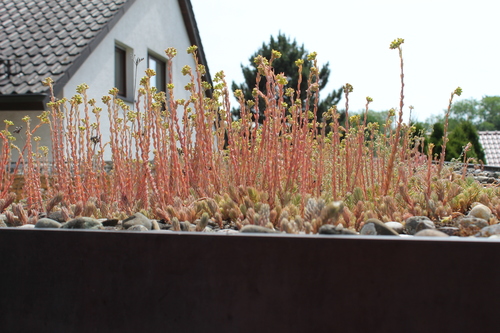
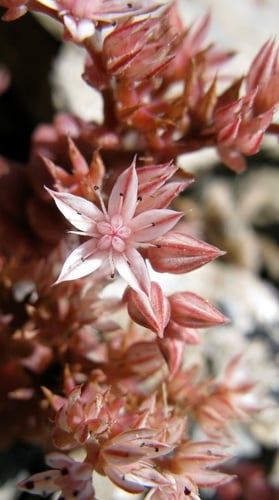
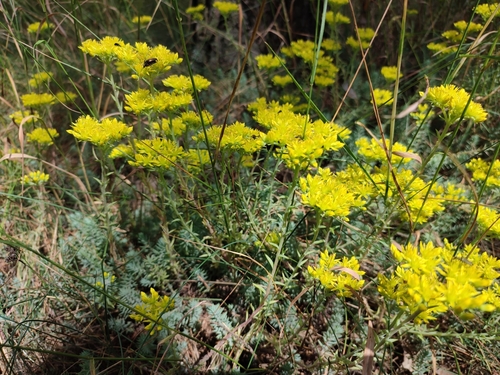
A succulent perennial plant. It forms mats. The flat leaves form rings on non flowering stems. The flowers are yellow.
This description is brief — help expand it
Edible Uses
The leaves can be eaten raw or cooked.
Medicinal Uses
None known.
Known Hazards
Although not poisonous, if large quantities of this plant are eaten it can cause a stomach upset.
Distribution
It is a temperate plant. It suits hardiness zones 7-10.
Where It Grows
Australia, Britain, Europe*, Falklands, Luxembourg, Tasmania,
Cultivation
Succeeds in most soils but prefers a fertile well-drained soil in a sunny position. Established plants are drought tolerant. Can be grown on a wall. Requires a sunny position. Hardy to about -15°c. This species is closely related to S. reflexum. All members of this genus are said to have edible leaves, though those species, such as this one, that have yellow flowers can cause stomach upsets if they are eaten in quantity. Plants in this genus seem to be immune to the predations of rabbits.
Propagation
Surface sow seed in spring in well-drained soil in a sunny greenhouse position, keeping the soil moist. Prick out seedlings into individual pots when large enough. Plant out during summer if growth is sufficient; otherwise overwinter in a cold frame or greenhouse and plant out in early summer the following year. Division can be done at almost any time in the growing season, though spring or early summer is preferred. Large divisions can go directly into permanent positions; smaller ones do best potted up and grown on in a lightly shaded cold frame until well established.
Other Uses
None known.
Notes
There are about 400 Sedum species.
References (4)
- Engl. bot. 26: t. 1802. 1808
- Plants for a Future database, The Field, Penpol, Lostwithiel, Cornwall, PL22 0NG, UK. http://www.scs.leeds.ac.uk/pfaf/
- Tasmanian Herbarium Vascular Plants list p 23
- Upson, R., & Lewis R., 2014, Updated Vascular Plant Checklist and Atlas for the Falkland Islands. Falklands Conservation and Kew.