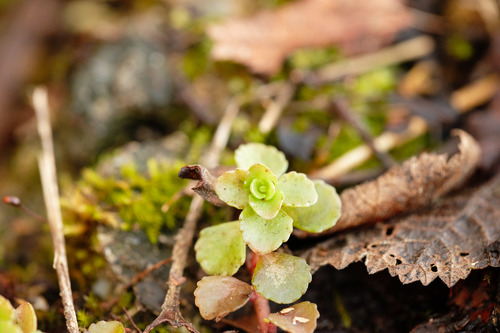
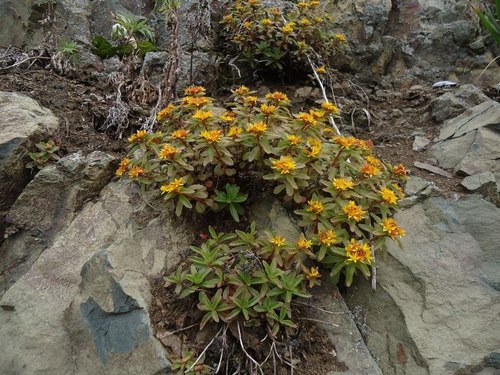
Sedum lineare
Thunb.
Japanese stonecrop, Linear stonecrop
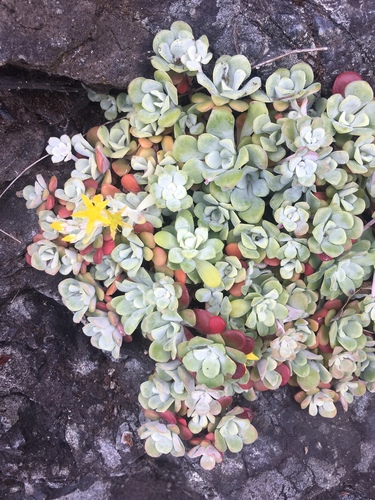
iNaturalist· cc-by-sa
(c) Ram-Man, some rights reserved (CC BY-SA)
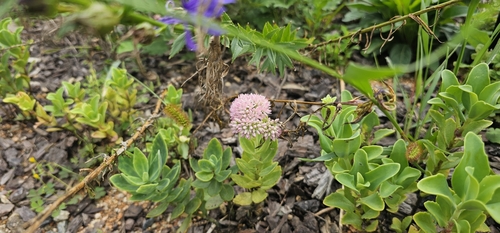
iNaturalist· cc-by-nc
(c) MP Zhou, some rights reserved (CC BY-NC), uploaded by MP Zhou
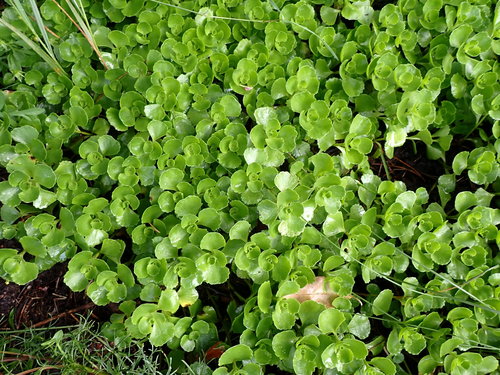
iNaturalist· cc-by-nc
(c) jiuheng92, some rights reserved (CC BY-NC)
Summary
Source: WikipediaSedum lineare also known as carpet sedum, needle stonecrop or sea urchin, is a sedum originating in East Asia. It has been proposed as an ideal plant for the "greening" of flat-roofed buildings in Shanghai, China, due to factors such as its ability to tolerate cold and drought, little need for soil and its roots' lack of penetrating ability,
Description
A small succulent herb. It keeps growing from year to year. It has sterile stems. The flowering stems are erect and 10-20 cm long. There are 3 or 4 leaves that are 2-3 cm long by 2 mm wide.
Edible Uses
The leaves can be eaten raw or cooked, though some caution is advised.
Traditional Uses
The leaves are eaten with oil and salt.
This uses section is brief — help expand it
Medicinal Uses
The fresh plant is crushed and applied externally to burns and scalds.
Known Hazards
Although not poisonous, if large quantities of this plant are eaten it can cause a stomach upset. Another report says that the plant is slightly poisonous.
Distribution
It is a subtropical plant. It grows at 1,500 m above sea level in Vietnam. In XTBG Yunnan. In Sichuan.
Where It Grows
Asia, China, Indochina, Japan, North America, SE Asia, Vietnam,
Cultivation
Succeeds in most soils but prefers a fertile well-drained soil in a sunny position. Established plants are drought tolerant. Succeeds on a wall. All members of this genus are said to have edible leaves, though those species, such as this one, that have yellow flowers can cause stomach upsets if they are eaten in quantity. Plants in this genus seem to be immune to the predations of rabbits.
Propagation
Surface sow seed in spring in well-drained soil in a sunny greenhouse position, keeping the soil moist. Prick out seedlings into individual pots when large enough. Plant out during summer if growth is sufficient; otherwise overwinter in a cold frame or greenhouse and plant out in early summer the following year. Division can be done at almost any time in the growing season, though spring or early summer is preferred. Large divisions can go directly into permanent positions; smaller ones do best potted up and grown on in a lightly shaded cold frame until well established.
Other Uses
None known.
Notes
There are about 400 Sedum species.
Synonyms
References (6)
- Bodkin, F., 1991, Encyclopedia Botanica. Cornstalk publishing, p 921 lineare
- Flora of China @ efloras.org Volume 8
- Fl. jap. 187. 1784
- Kang, Y., et al, 2012, Wild food plants and wild edible fungi in two valleys on the Qinling Mountains (Shaanxi, central China) Journal of Ethnobiology and Ethnomedicine; 9:26
- Plants for a Future database, The Field, Penpol, Lostwithiel, Cornwall, PL22 0NG, UK. http://www.scs.leeds.ac.uk/pfaf/
Show all 6 references Hide references
- READ,