Scorzonera hispanica
L.
Scorzonera, Beach salsify, Black Salsify
iNaturalist· cc-by-nc
(c) Sergey Mayorov, some rights reserved (CC BY-NC)
iNaturalist· cc-by-nc
(c) Sergey Mayorov, some rights reserved (CC BY-NC)
iNaturalist· cc-by-nc
(c) Alexander Baransky, some rights reserved (CC BY-NC)
Summary
Scorzonera hispanica is a perennial growing to 1 m (3 ft 3 in) tall. Hardy to UK zone 6, it flowers from June to September with seeds ripening July through September. The species is hermaphroditic and insect-pollinated. It thrives in light sandy, medium loamy, and heavy clay soils with good drainage, tolerating mildly acidic to basic pH levels. It grows in semi-shade or full sun and prefers moist soil.
Description
An annual plant. It can keep growing from year to year from the fattened taproot. The root is shaped like a carrot and has black skin and white flesh. The leaves are oblong and hairy. They grow in a ring. The flowers are yellow. They are on long thin flower stalk. There are several named cultivated varieties.
Edible Uses
The root is cooked and has a sweet, agreeable flavour. It is typically harvested at the end of its first year of growth but can be left for a second year without becoming tough. The root is rich in inulin, a starch that is not easily digested and largely passes through the digestive system; it can cause flatulence in some people. The roasted root is also used as a coffee substitute. Young leaves are eaten raw, usually as tender spring shoots. Flower buds can be added raw to salads, and the petals have their own distinctive flavour and are likewise good in salads.
Traditional Uses
It can be eaten raw in salads or boiled as a vegetable. The roots are peeled and soaked before cooking to remove the bitter taste. The leaves are used in salads. The flower petals can be sprinkled on a salad. The roasted roots are used as a coffee substitute.
Medicinal Uses
None known.
Distribution
It is a temperate plant. It does not suit the tropics. It is grown in some tropical highland regions. It suits hardiness zones 4-9. In Hobart Botanical gardens.
Where It Grows
Africa, Albania, Asia, Australia, Austria, Balkans, Belgium, Bulgaria, Caribbean, Caucasus, Central Africa, Congo, Czech Republic, East Africa, Ecuador, Europe*, France, Germany, Greece, Hungary, India, Italy, Kenya, Libya, Lithuania, Macedonia, Madagascar, Mauritius, Mediterranean, Moldova, North Africa, North America, Portugal, Romania, Russia, Sicily, Serbia, Siberia, Slovenia, Spain, Tanzania, Tasmania, Turkey, Türkiye, USA, Yugoslavia,
Cultivation
Plants are grown from seed. Plants are thinned to 10 cm apart. The roots are very brittle. It is best grown in light sandy soils to encourage long smooth roots.
Propagation
Sow seed in spring directly in situ, watering in well if conditions are dry to avoid delayed germination. Seed can also be sown in situ in August. Divide in autumn or as growth begins in spring. Larger divisions can go straight into permanent positions. Smaller divisions are best potted up and grown on in a lightly shaded cold frame, then planted out once well established in summer.
Other Uses
The growing plant is said to repel carrot root fly from nearby carrots.
Other Information
It is a commercially cultivated vegetable.
Notes
It is useful for diabetic diets.
Nutrition
| Part | Moisture | kJ | kcal | Protein | Vit A | Vit C | Iron | Zinc |
|---|---|---|---|---|---|---|---|---|
| Root boiled | 82.1 | 69 | 17 | 1.3 | — | 3 | 2.9 | — |
| Root raw | 78.6 | 66 | 16 | 1.4 | — | 4 | 3.3 | 0.2 |
Also Known As
Alcarcionera, Coconut root, Common viper's-grass, Escorcioneira, Fekete gyoker, Kiku gobou, Mock oyster, Ou zhou ya cong, Salsifi negro, Scorsonere
References (38)
- Ambasta S.P. (Ed.), 2000, The Useful Plants of India. CSIR India. p 562
- Bianchini, F., Corbetta, F., and Pistoia, M., 1975, Fruits of the Earth. Cassell. p 48
- Blamey, M and Grey-Wilson, C., 2005, Wild flowers of the Mediterranean. A & C Black London. p 463
- Blanco-Salas, J., et al, 2019, Wild Plants Potentially Used in Human Food in the Protected Area “Sierra Grande de Hornachos” of Extremadura (Spain). Sustainability 2019, 11, 456
- Bosch, C.H., 2004. Scorzonera hispanica L. [Internet] Record from Protabase. Grubben, G.J.H. & Denton, O.A. (Editors). PROTA (Plant Resources of Tropical Africa), Wageningen, Netherlands. < http://database.prota.org/search.htm>. Accessed 22 October 200922 October 2009
Show all 38 references Hide references
- Cerne, M., 1992, Wild Plants from Slovenia used as Vegetables. Acta Horticulturae 318
- Ciocarlan, N. & Ghendov, V., 2015, Ethnobotanical and Ecological Studies of Wild Edible Plants from Bugeac Steppe, Republic of Moldova. Journal of EcoAgriTourism. Cailta terra Vol. 11(2):
- Denes, A., et al, 2012, Wild plants used for food by Hungarian ethnic groups living in the Carpathian Basin. Acta Societatis Botanicorum Poloniae 81 (4): 381-396
- Facciola, S., 1998, Cornucopia 2: a Source Book of Edible Plants. Kampong Publications, p 42
- Grubben, G. J. H. and Denton, O. A. (eds), 2004, Plant Resources of Tropical Africa 2. Vegetables. PROTA, Wageningen, Netherlands. p 454
- Hammer, K. & Spahillari, M., 1999, Crops of European origin. in Report of a networking group on minor crops. IPGRI p 46
- Hedrick, U.P., 1919, (Ed.), Sturtevant's edible plants of the world. p 600
- Hermandez Bermejo, J.E., and Leon, J. (Eds.), 1994, Neglected Crops. 1492 from a different perspective. FAO Plant Production and Protection Series No 26. FAO, Rome. p 322
- Hibbert, M., 2002, The Aussie Plant Finder 2002, Florilegium. p 289
- Jackes, D. A., 2007, Edible Forest Gardens
- Jardin, C., 1970, List of Foods Used In Africa, FAO Nutrition Information Document Series No 2.p 99
- Kays, S. J., and Dias, J. C. S., 1995, Common Names of Commercially Cultivated Vegetables of the World in 15 languages. Economic Botany, Vol. 49, No. 2, pp. 115-152
- Kiple, K.F. & Ornelas, K.C., (eds), 2000, The Cambridge World History of Food. CUP p 1849
- Licata, M., et al, 2016, A survey of wild plant species for food use in Sicily (Italy) – results of a 3-year study in four Regional Parks. Journal of Ethnobiology and Ethnomedicine 12:12
- Lim, T. K., 2015, Edible Medicinal and Non Medicinal Plants. Volume 9, Modified Stems, Roots, Bulbs. Springer p 76
- Macmillan, H.F. (Revised Barlow, H.S., et al), 1991, Tropical Planting and Gardening. Sixth edition. Malayan Nature Society. Kuala Lumpur. p 369
- Mahklouf, M. H., 2019, Ethnobotanical Study of Edible Wild Plants in Libya. European Journal of Ecology. 5(2): 30-40
- Plants for a Future database, The Field, Penpol, Lostwithiel, Cornwall, PL22 0NG, UK. http://www.scs.leeds.ac.uk/pfaf/
- PROSEA handbook Volume 9 Plants yielding non-seed carbohydrates. p 189
- Schneider, E., 2001, Vegetables from Amaranth to Zucchini: The essential reference. HarperCollins. p 543
- Simkova, K. et al, 2014, Ethnobotanical review of wild edible plants used in the Czech Republic. Journal of Applied Botany and Food Quality 88, 49-67
- Smith, K., 1998. Growing Uncommon Fruits and Vegetables. New Holland. p 128
- Sp. pl. 2:791. 1753
- Tardio, J., et al, Ethnobotanical review of wild edible plants in Spain. Botanical J. Linnean Soc. 152 (2006), 27-71
- Terra, G.J.A., 1973, Tropical Vegetables. Communication 54e Royal Tropical Institute, Amsterdam, p 71
- Torre, de la L., et al, 2008, Enciclopedia de las Plantas Útiles del Ecuador. Herbario QCA. Pontificia Universidad Católica del Ecuador. p 227
- Tronickova, E. & Krejcova, Z., 1987, Ortaggi, Instituto Geografico de Agostini, Cecoslovacchia. p 54
- Ulian, T., et al, 2020, Unlocking plant resources to support food security and promote sustainable agriculture. Plants, People, Planet. 2020;2:421–445.
- USDA, ARS, National Genetic Resources Program. Germplasm Resources Information Network - (GRIN). [Online Database] National Germplasm Resources Laboratory, Beltsville, Maryland. Available: www.ars-grin.gov/cgi-bin/npgs/html/econ.pl (10 April 2000)
- van Wyk, B., 2005, Food Plants of the World. An illustrated guide. Timber press. p 341
- Wiersema, J. H. & Leon, B., 2013, World Economic Plants. A Standard Reference CRC Press. 2nd Ed. p 622
- World Checklist of Useful Plant Species 2020. Royal Botanic Gardens, Kew
- Zeven, A. C. & de West, J. M. J., 1982, Dictionary of cultivated plants and their regions of diversity. Wageningen. p 105
More from Asteraceae
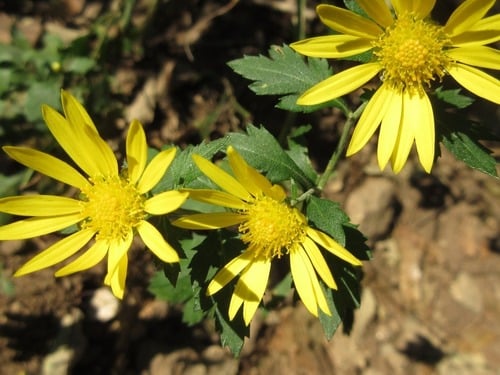
Chrysanthemum indicum
Wild Chrysanthemum, Mother chrysanthemum
Chrysanthemum morifolium
Chrysanthemum, Spider mum
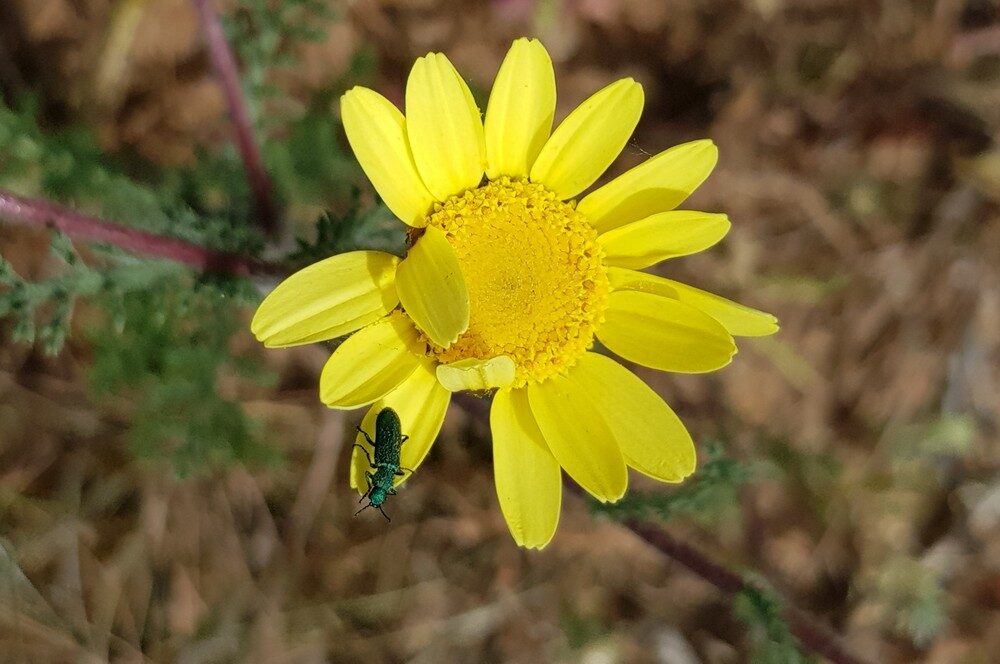
Chrysanthemum segetum
Corn Marigold
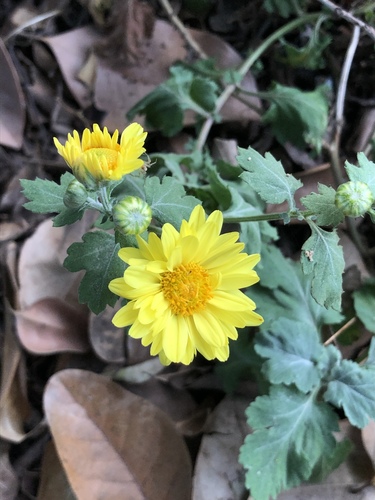
Chrysanthemum x morifolium
Edible chrysanthemum, Mulberry-leaved chrysanthemum
Chrysolaena odorata
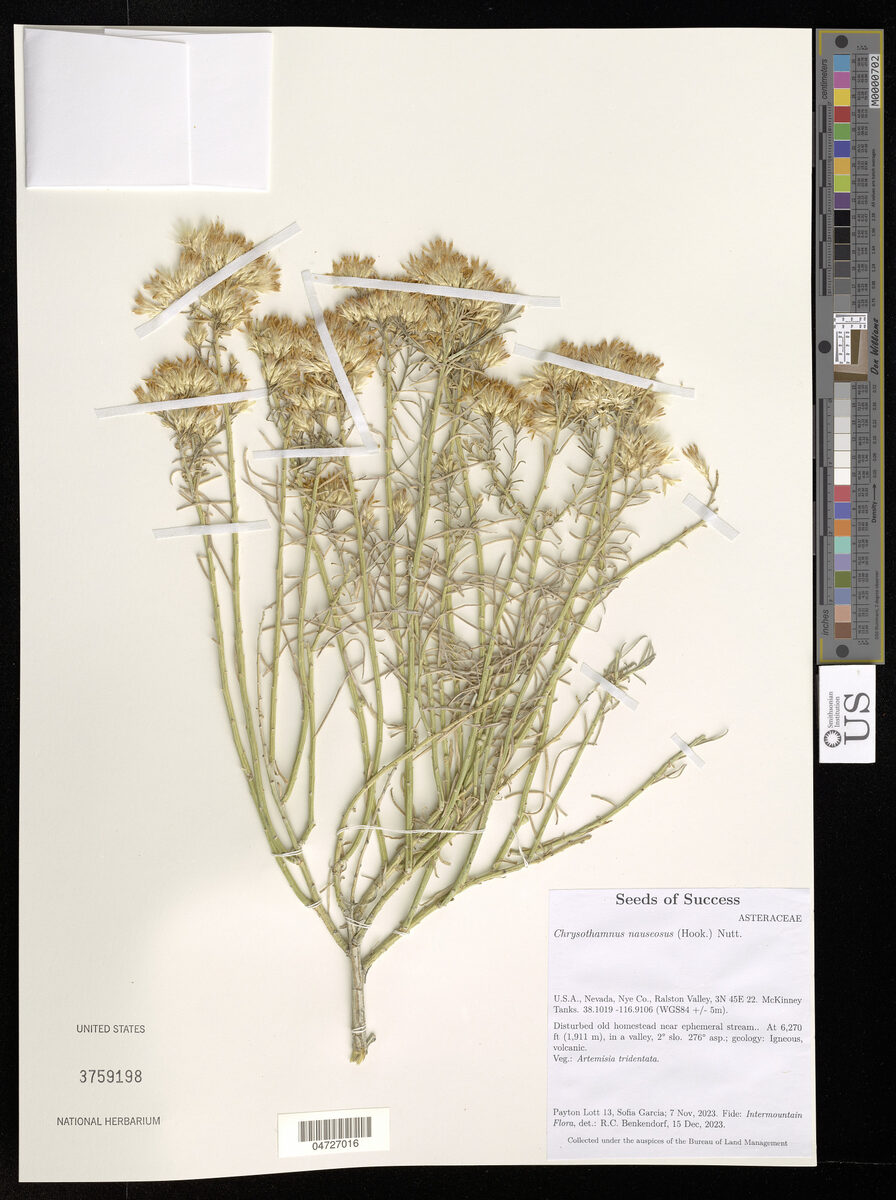
Chrysothamnus nauseosus - (Pall. ex Pursh.)Britton.
Rubber Rabbitbrush