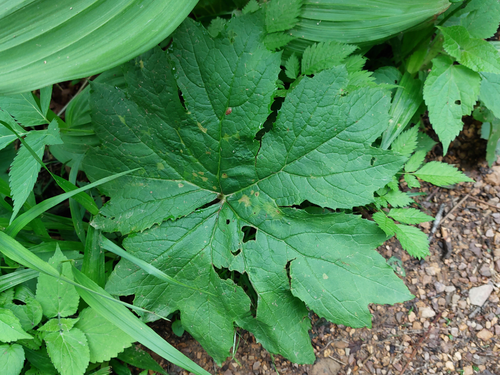
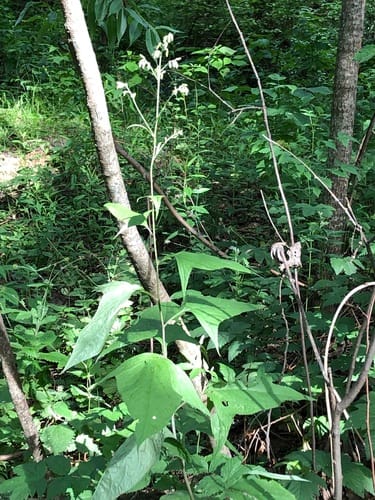
Scolymus grandiflorus
Desf.
Large-flowered Golden thistle
iNaturalist· cc-by-nc
(c) Massimiliano Finzi, some rights reserved (CC BY-NC), uploaded by Massimiliano Finzi
iNaturalist· cc-by-nc
(c) Roberto Brembilla, some rights reserved (CC BY-NC), uploaded by Roberto Brembilla
iNaturalist· cc-by-nc
(c) Giacomo Gola, some rights reserved (CC BY-NC), uploaded by Giacomo Gola
Summary
Source: WikipediaScolymus grandiflorus is a spiny annual or biennial plant in the family Asteraceae, native to the Mediterranean region. With up to 75 cm high stems, it is the smallest of the species of Scolymus. Its stems are lined with uninterrupted spiny wings. It also has the largest flowerheads in the genus, of approximately 5 cm wide. It has yellow, sometimes yolk-yellow ligulate florets. Its vernacular name in Maltese is xewk isfar kbir, meaning "large yellow fin", cardogna maggiore in Italian, scoddi on Sicily, and scolyme à grandes fleurs in French.
Description
A herb with spiny leaves, stems and flower bases. It keeps growing from year to year. The stems have wings and are spiny. It grows 30-100 cm high. It has a deep taproot. The roots resemble parsnips. They are long and taper and are 8 cm thick. The leaves are rigid, spiny and with deep teeth. The leaves have pale coloured veins. The flowers are bright yellow. They occur singly at the ends of branches or in the axils of upper leaves. The flower bracts are very hairy. They are oval and end abruptly in a spine.
Edible Uses
The stalks are eaten raw or boiled.
Traditional Uses
The stalks are eaten raw or boiled. The leaves are boiled and seasoned with oil and lemon. They are also added to scrambled eggs and omelettes.
This uses section is brief — help expand it
Medicinal Uses
None known.
Distribution
It is a Mediterranean plant. It can grow in arid places.
Where It Grows
Africa, Egypt, Europe, France, Italy, Malta, Mediterranean, North Africa, Sicily, Tunisia, Turkey, Türkiye,
Cultivation
Grows well in an ordinary garden soil in sun or semi-shade.
Propagation
Seed: sow in spring in a greenhouse. Prick out seedlings into individual pots once large enough to handle and plant out in summer. Seed can likely also be sown in situ. Division in spring: larger divisions can go directly into permanent positions; smaller ones are best potted up and grown on in a lightly shaded cold frame, then planted out once well established in summer.
Other Uses
None known.
Synonyms
Also Known As
Scoddi, Zarniz
References (12)
- Ben Ismail, H., 2013, Edible Wild Vegetables Used in North West of Tunisia. PARIPEX - Indian Journal of Reearch 2(9) :219-221
- Biscotti, N. et al, 2018, The traditional food use of wild vegetables in Apulia (Italy) in the light of Italian ethnobotanical literature. Italian Botanist 5:1-24
- Blamey, M and Grey-Wilson, C., 2005, Wild flowers of the Mediterranean. A & C Black London. p 459
- Geraci, A., et al, 2018, The wild taxa utilized as vegetables in Sicily (Italy): a traditional component of the Mediterranean diet. Journal of Ethnobiology and Ethnomedicine (2018) 14:14
- Jardin, C., 1970, List of Foods Used In Africa, FAO Nutrition Information Document Series No 2.p 99
Show all 12 references Hide references
- Lentini, F. and Venza, F., 2007, Wild food plants of popular use in Sicily. J Ethnobiol Ethnomedicine. 3: 15
- Licata, M., et al, 2016, A survey of wild plant species for food use in Sicily (Italy) – results of a 3-year study in four Regional Parks. Journal of Ethnobiology and Ethnomedicine 12:12
- Martin, F.W. & Ruberte, R.M., 1979, Edible Leaves of the Tropics. Antillian College Press, Mayaguez, Puerto Rico. p 185
- Pasta, S., et al, 2020, An Updated Checklist of the Sicilian Native Edible Plants: Preserving the Traditional Ecological Knowledge of Century-Old Agro-Pastoral Landscapes. Frontiers in Plant Science. Volume 11|Article 388
- Rivera, D. et al, 2006, Gathered Mediterranean Food Plants - Ethnobotanical Investigations and Historical Development, in Heinrich M, Müller WE, Galli C (eds): Local Mediterranean Food Plants and Nutraceuticals. Forum Nutr. Basel, Karger, 2006, vol 59, pp 18–74
- Royal Botanic Gardens, Kew (1999). Survey of Economic Plants for Arid and Semi-Arid Lands (SEPASAL) database. Published on the Internet; http://www.rbgkew.org.uk/ceb/sepasal/internet [Accessed 14th April 2011]
- World Checklist of Useful Plant Species 2020. Royal Botanic Gardens, Kew