Schrebera swietenioides
Roxb.
Weaver's-beam tree
iNaturalist· cc-by
(c) Siddarth Machado, some rights reserved (CC BY), uploaded by Siddarth Machado
iNaturalist· cc-by
(c) Siddarth Machado, some rights reserved (CC BY), uploaded by Siddarth Machado
iNaturalist· cc-by
(c) Siddarth Machado, some rights reserved (CC BY), uploaded by Siddarth Machado
Summary
Source: WikipediaSchrebera swietenioides is a flowering plant in the family Oleaceae found in India, Bangladesh, Myanmar, Thailand, Cambodia and Laos. It prefers dry forests. It is commonly known as weaver's beam tree. Other names are mala plasu, muskkakavrksam, maggamaram', manimaram, mushkakavriksham, malamplasu and malamblasu. Flowering season is from February to April.
Description
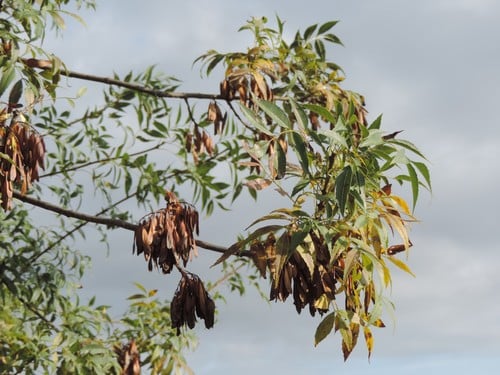
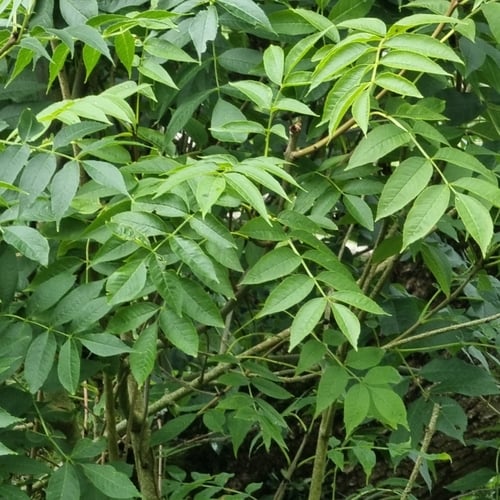
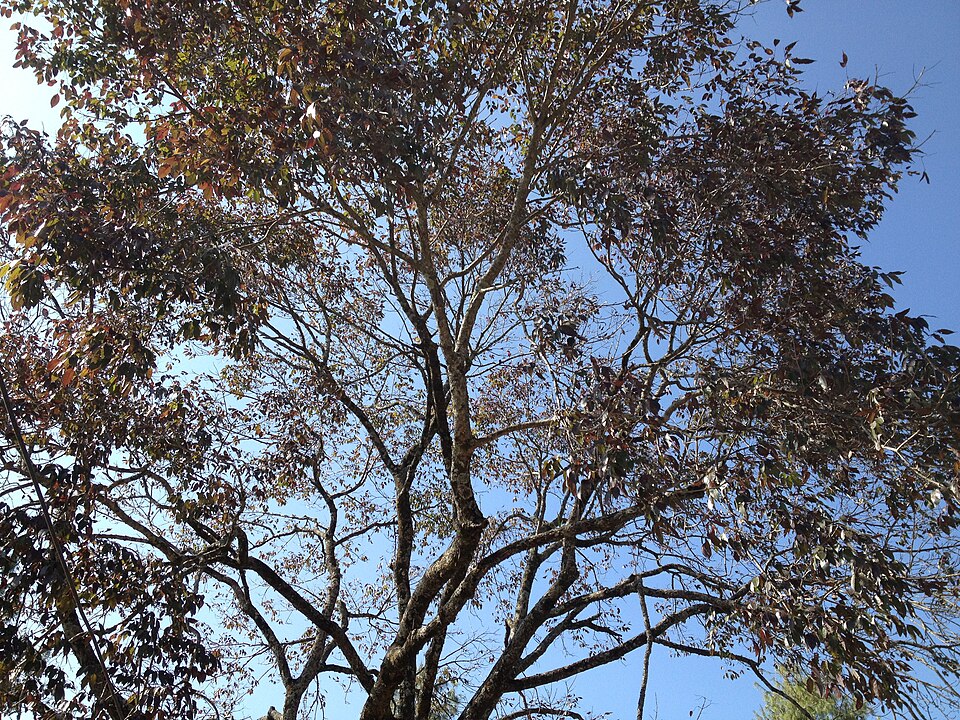
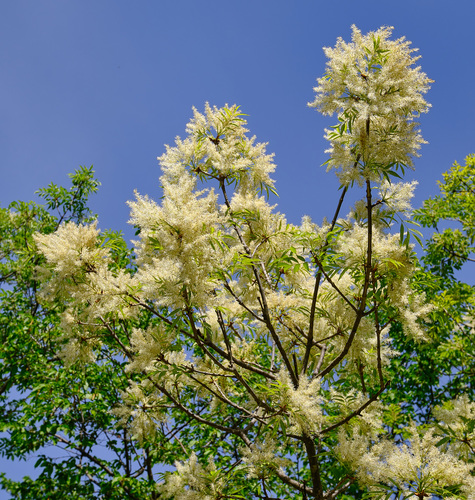
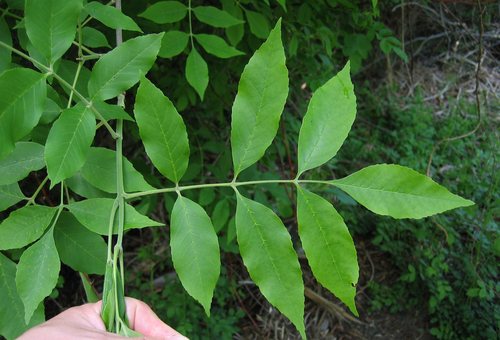
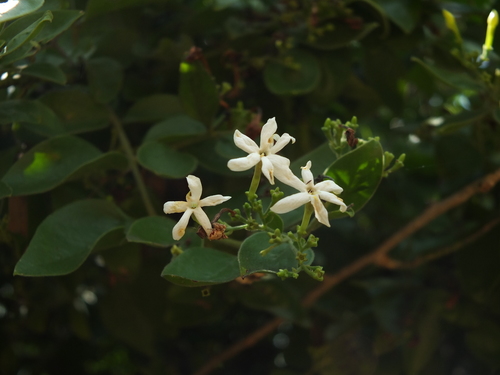
A moderate sized tree. It grows 20 m tall. It loses its leaves during the year. The bark is thick and grey. The leaves have leaflets along the stalk. There are 3-4 pairs of opposite leaflets and one at the end. The leaflets are oval and unequal on the sides. The flowers are yellowish-white with brown marks. They grow in compound clusters. They have a scent at night. The fruit is a pear shaped capsule. It is woody with 2 cells and 4 seeds in each cell. The seeds hang and have wings.
Edible Uses
The leaves are boiled and eaten mixed with salt and chili peppers. The ripe fruit are eaten raw.
Traditional Uses
The leaves are boiled, and eaten mixed with salt and chili peppers. The ripe fruit are eaten.
This uses section is brief — help expand it
Medicinal Uses
The leaves and fruit are used in medicine.
Known Hazards
Caution noted for edible portion.
Distribution
A tropical plant. It grows in deciduous forests.
Where It Grows
Asia, Cambodia, India, Indochina, Laos, Myanmar, Northeastern India, SE Asia, Thailand,
Cultivation
The flowers become very fragrant overnight, when they are pollinated by moths.
Propagation
Seed - sow with the wings pointing upwards in a containers in a lightly shaded position. Stored seed usually germinates within 4 weeks. Prick out the seedlings into individual pots when they are large enough to handle and plant out when large enough.
Other Uses
The heartwood is of a brownish grey colour; it is not clearly demarcated from the sapwood. It is very close-grained, heavy, hard and durable. It is reckoned less subject to crack or warp than any other wood. It is used by weavers in many parts of their looms, particularly for the beam: it is also used in turnery and serves also for a great variety of other uses. I am inclined to think it would answer well for scales to mathematical instruments. It is not so handsome as box, but is not subject to warp..
Other Information
Famine food
Notes
There are 6 Schrebera species. The leaves are fruit are used in medicine.
Synonyms
Also Known As
Banpalas, Bula, Bullakaya, Chabsing, Eksira, Gante, Gay ka lundi, Ghant, Ghanta parul, Ghanto, Goki, Jantia, Jhaw, Kalgante, Magalinga, Magganti, Makiri, Markho, Mogalingamara, Mogalingum, Moka, Mokadi, Mokha, Mokhdi, Mokho, Mokkam, Mukkalppa, Nakti, Naktinunjhad, Nemibure, Popti, Sandabsing, Tondamukkidi
References (10)
- Ambasta S.P. (Ed.), 2000, The Useful Plants of India. CSIR India. p 558
- GAMMIE,
- Green, P. S., 2003, Synopsis of the Oleaceae from the Indian Sub-Continent. Kew Bulletin, Vol. 58, No. 2 (2003), pp. 257-295
- Jadhav, R., et al, 2015, Forest Foods of Northern Western Ghats: Mode of Consumption, Nutrition and Availability. Asian Agri-History Vol. 19, No. 4: 293-317
- Kuvar, S. D. & Shinde, R. D., 2019, Wild Edible Plants used by Kokni Tribe of Nasik District, Maharashtra. Journal of Global Biosciences. Volume 8, Number 2, 2019, pp. 5936-5945
Show all 10 references Hide references
- Pl. Coromandel 2:1, t. 101. 1799
- Reddy, K. N. et al, 2007, Traditional knowledge on wild food plants in Andhra Pradesh. Indian Journal of Traditional Knowledge. Vol. 6(1): 223-229
- Sharma, B.D., & Lakshminarasimhan, P., 1986, Ethnobotanical Studies on the Tribals of Nasik District (Maharashtra). J. Econ. Tax. Bot. Vol. 8 No. 2 pp 439-446
- Schatz, G.E., 2001, Generic Tree Flora of Madagascar. Royal Botanical Gardens, Kew and Missouri Botanical Garden. p 298 (Genus)
- Singh, H.B., Arora R.K.,1978, Wild edible Plants of India. Indian Council of Agricultural Research, New Delhi. p 40