Chionanthus retusus
Lindl. & Paxton
Chinese fringe tree, Tassels
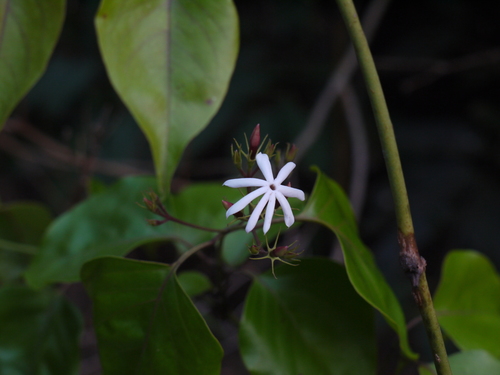
iNaturalist· cc-by-nc
(c) Penny Wang, some rights reserved (CC BY-NC), uploaded by Penny Wang
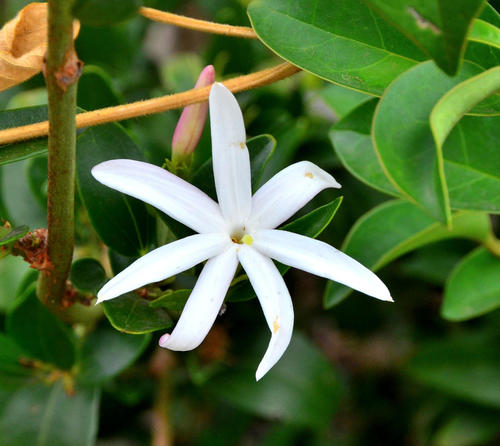
iNaturalist· cc0
no rights reserved, uploaded by 葉子
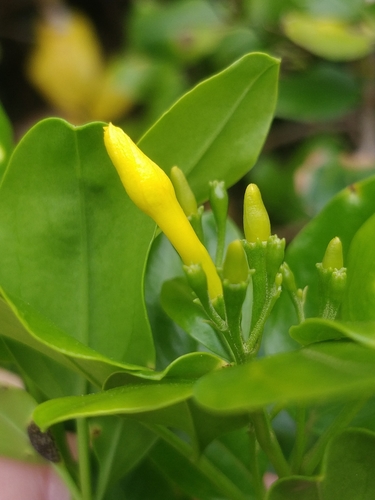
iNaturalist· cc0
no rights reserved, uploaded by 葉子
Summary
Source: WikipediaChionanthus retusus, the Chinese fringetree, is a flowering plant in the family Oleaceae. It is native to eastern Asia: eastern and central China, Japan, Korea and Taiwan. It is a deciduous shrub or small to medium-sized tree growing to 20 metres (70 ft) in height, with thick, fissured bark. The leaves are 3–12 centimetres (1–5 in) long and 2–6.5 cm (0.8–2.6 in) broad, simple ovate to oblong-elliptic, with a hairy, 0.5–2 cm (0.2–0.8 in) long petiole. The flowers are white, produced in panicles 3–12 cm (1–5 in) long. The fruit is a blue-black drupe 1–1.5 cm (0.4–0.6 in) long and 0.6–1 cm (0.2–0.4 in) in diameter. It is cultivated in Europe and North America as an ornamental tree, valued for its feathery white flowerheads. In Japan's Aichi Prefecture near Inuyama there is a grove of seven mature Chionanthus retusus renowned for their yearly white blooms. They were designated by the authorities as a natural monument since 1923.
Description
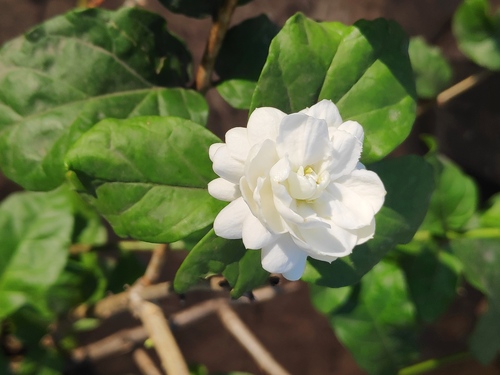
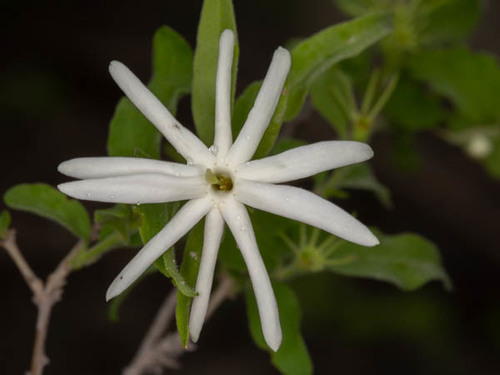
A deciduous tree. It grows 3-10 m high. The tree is broadly spreading. The bark is grey-brown and corky. It is deeply furrowed. The leaves are oval and 10 cm long by 5 cm wide. They have either a blunt point are an indent. There can be fine teeth. They are glossy green above and paler underneath. The male and female flowers are on separate plants. The flowers are creamy white with narrow petals. They are about 2 cm long. They are in upright panicles at the end of the shoots. The fruit is an egg shaped berry. It is 1.5 cm long and deep blue.
Edible Uses
Young leaves are used to make a sweet-smelling tea.
Traditional Uses
The young leaves are used for tea. It is sweet smelling.
This uses section is brief — help expand it
Distribution
It is a temperate plant. It is native to China and Japan. It grows in woods and on cliffs in sunny, moist places. It will grow in alkaline soils. It suits hardiness zones 6-10. Arboretum Tasmania. In Sichuan and Yunnan.
Where It Grows
Asia, Australia, Britain, China, Europe, Japan, Korea, Taiwan, Tasmania,
Cultivation
It can be grafted. It can be grown from fresh seed.
Notes
There are 100-120 Chionanthus species. There are 24 Chionanthus species in tropical America.
Synonyms
Also Known As
Liusu
References (9)
- Bodkin, F., 1991, Encyclopedia Botanica. Cornstalk publishing, p 250
- Coombes, A.J., 2000, Trees. Dorling Kindersley Handbooks. p 227
- Cundall, P., (ed.), 2004, Gardening Australia: flora: the gardener's bible. ABC Books. p 372
- Etherington, K., & Imwold, D., (Eds), 2001, Botanica's Trees & Shrubs. The illustrated A-Z of over 8500 trees and shrubs. Random House, Australia. p 209
- Hibbert, M., 2002, The Aussie Plant Finder 2002, Florilegium. p 66
Show all 9 references Hide references
- Hu, Shiu-ying, 2005, Food Plants of China. The Chinese University Press. p 625
- Paxton's Fl. Gard. 3:83, fig. 273. 1853
- Schatz, G.E., 2001, Generic Tree Flora of Madagascar. Royal Botanical Gardens, Kew and Missouri Botanical Garden. p 296 (Genus)
- Valder, P., 1999, The Garden Plants of China. Florilegium. p 274