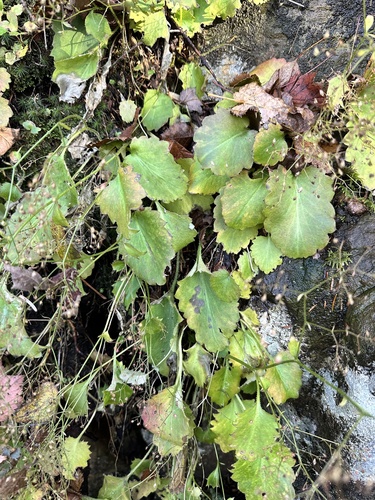
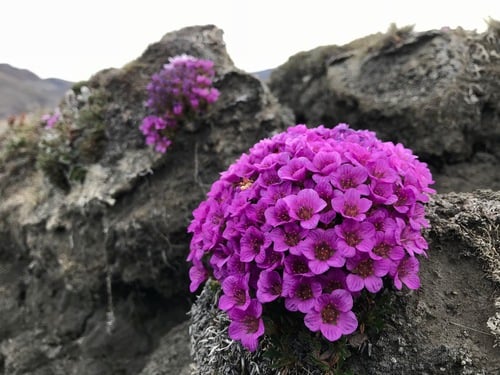
Saxifraga pensylvanica
L.
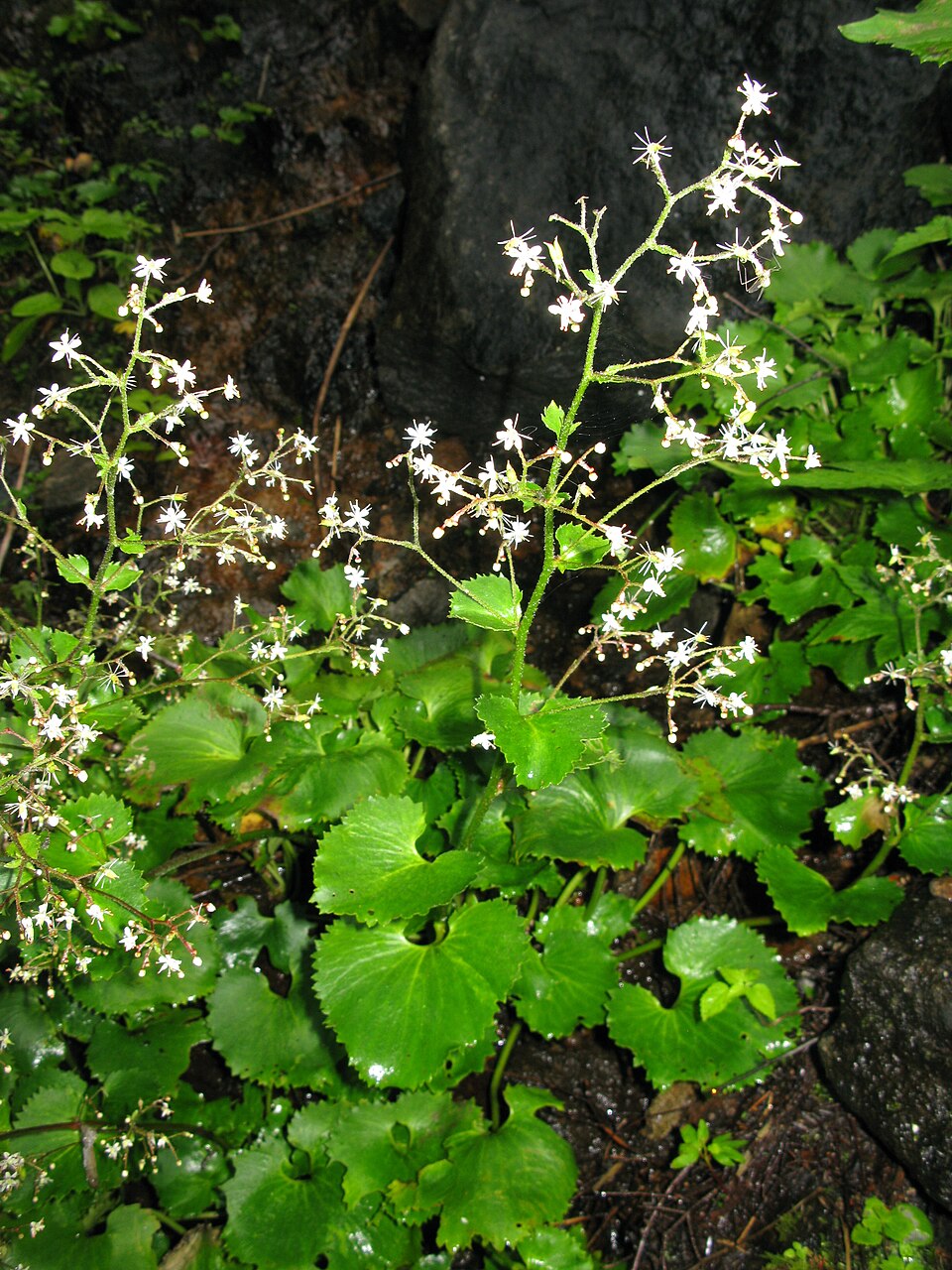
Swamp saxifrage
iNaturalist· cc-by-nc
(c) gglynn, some rights reserved (CC BY-NC)
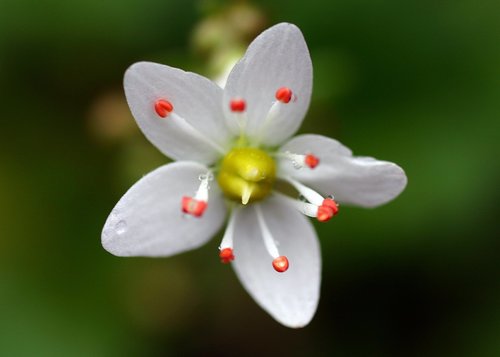
iNaturalist· cc-by
(c) Tom Norton, some rights reserved (CC BY)
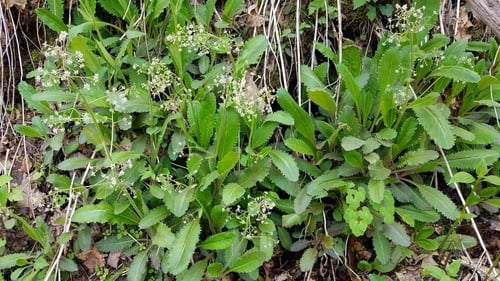
iNaturalist· cc-by
(c) Tom Norton, some rights reserved (CC BY)
Summary
A perennial growing 0.5 m tall and wide with hermaphrodite flowers. Adapts to light sandy, medium loamy, and heavy clay soils across mildly acid to basic pH ranges. Grows in semi-shade or full sun and distinctly prefers moist to wet soil conditions.
Description
A herb. The leaves are clustered in a ring near the ground. They are bluntly sword shaped. It grows 30-100 cm tall. The flower stalks have greenish-yellow flowers.
Edible Uses
Young leaves are edible raw or cooked. Harvested as they unroll, they work well in salads or as a potherb.
Traditional Uses
The young leaves can be added to salads. They can also be lightly cooked for 5-10 minutes.
This uses section is brief — help expand it
Medicinal Uses
A poultice of the root has been used to treat sore, swollen muscles. An infusion of the roots and leaves serves as a blood purifier. An infusion of the roots alone has been used to treat weak kidneys and dropsy.
Distribution
It is a temperate plant. It grows in swamps and wet meadows.
Where It Grows
Canada, North America, USA,
Cultivation
Prefers an open soil. Does well in a shady position in a wild garden. Plants grow best in cool woodland conditions.
Propagation
Sow seed in a cold frame in spring. Surface sow or barely cover the seed, keeping the compost consistently moist. Prick seedlings into individual pots once large enough to handle and grow on in a greenhouse or cold frame through their first winter. Plant out in late spring after the last expected frosts. Divide in spring; larger divisions can go straight into permanent positions. Smaller divisions are best potted up and grown on in a lightly shaded cold frame, then planted out once well established in summer.
Other Uses
None known
Notes
There are about 440 Saxifraga species.
Synonyms
References (3)
- Facciola, S., 1998, Cornucopia 2: a Source Book of Edible Plants. Kampong Publications, p 229
- Kermath, B. M., et al, 2014, Food Plants in the Americas: A survey of the domesticated, cultivated and wild plants used for Human food in North, Central and South America and the Caribbean. On line draft. p 788
- Moerman, D. F., 2010, Native American Ethnobotany. Timber Press. p 521