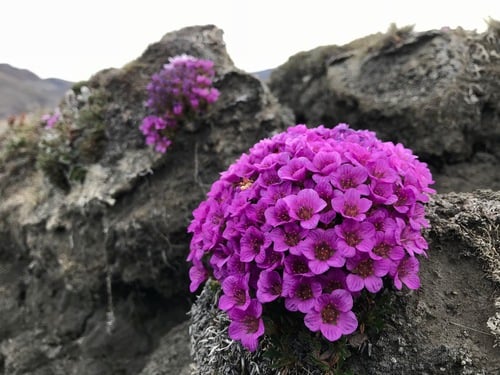
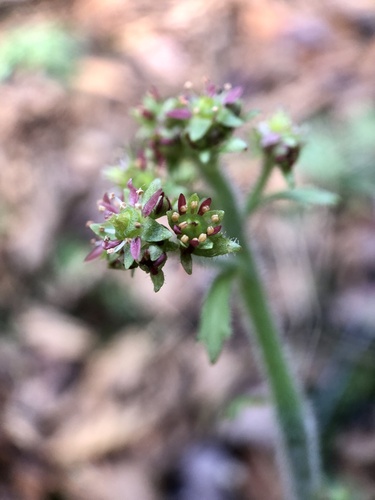
Bergenia crassifolia
(L.) Fritsch
Siberian tea
iNaturalist· cc-by-nc-sa
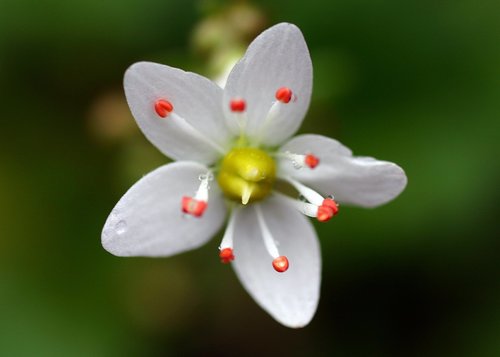
(c) daniel, some rights reserved (CC BY-NC-SA)
iNaturalist· cc-by-nc
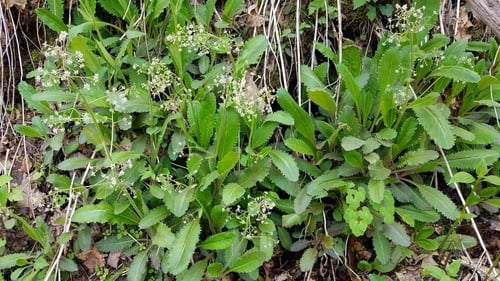
(c) Hagar, some rights reserved (CC BY-NC), uploaded by Hagar
iNaturalist· cc-by-nc
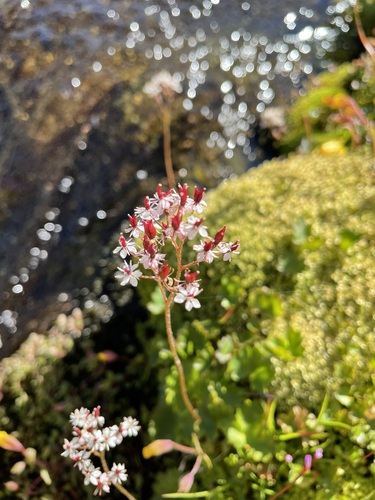
(c) schaager, some rights reserved (CC BY-NC)
Summary
Source: WikipediaBergenia crassifolia is a species of flowering plant of the genus Bergenia in the family Saxifragaceae. Common names for the species include heart-leaved bergenia, heartleaf bergenia, leather bergenia, winter-blooming bergenia, elephant-ears, elephant's ears, Korean elephant-ear, badan, pigsqueak, Siberian tea, and Mongolian tea. The species epithet crassifolia means "thick-leaved", while the epithet in the synonym Bergenia cordifolia means "cordate (heart-shaped) leaf" (although the leaves may also be described as spoon-shaped). The cultivar 'Rosa Zeiten' has gained the Royal Horticultural Society's Award of Garden Merit.
Description
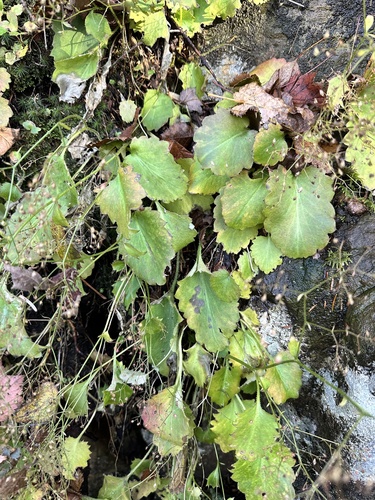
An evergreen plant. It grows 50 cm high and spreads 70 cm wide. The rootstock is thick and woody. The stems are thick. The leaves are oval and deep green. There are teeth around the edge. The flowers are pink or red and have 5 petals. The flowers are in dense groups.
Edible Uses
Edible Parts: Edible Uses: Tea The leaves are used as a tea substitute.
Traditional Uses
The leaves are used for "Tschager" tea.
This uses section is brief — help expand it
Medicinal Uses
Antidiarrhoeal Antirheumatic TB None known
Distribution
It is a temperate plant. It is best in a light to medium soil. It needs to be well-drained. It needs a cool sunny position. It is resistant to drought and frost. It grows between 1,100- 1,800 m above sea level in western China. In Melbourne Botanical Gardens.
Where It Grows
Asia, Australia, China, Europe, France, Korea, Latvia, Mongolia, North Korea, Russia, Siberia*, Slovenia,
Cultivation
Plants are grown by division.
Propagation
Seed - surface sow in a greenhouse. Make sure that the compost does not dry out. Two weeks cold stratification can speed up germination which usually takes 1 - 6 months at 15°c. Fresh seed, sown as soon as it is ripe in late spring is liable to germinate better than stored seed. When they are large enough to handle, prick the seedlings out into individual pots and grow them on in light shade in the greenhouse for at least their first winter. Plant them out into their permanent positions in late spring or early summer, after the last expected frosts. Division in late spring after flowering or in autumn. Very easy, larger divisions can be planted straight into their permanent positions whilst smaller clumps are best potted up and kept in a cold frame until they are growing away well.
Other Uses
Tannin A useful ground cover plant, though rather slow to spread. It forms a clump. Tannin is obtained from the bark. The roots contain 15 - 22% tannin, exceptionally 26%. The leaves and stems contain 17 - 25% tannin. Special Uses Food Forest Ground cover
Synonyms
Also Known As
Badan, Debelolistna bergenija, Pig squeak
References (11)
- Bircher, A. G. & Bircher, W. H., 2000, Encyclopedia of Fruit Trees and Edible Flowering Plants in Egypt and the Subtropics. AUC Press. p 58
- Bodkin, F., 1991, Encyclopedia Botanica. Cornstalk publishing, p 143
- Facciola, S., 1998, Cornucopia 2: a Source Book of Edible Plants. Kampong Publications, p 229
- Flora of China @ efloras.org Volume 8
- Hedrick, U.P., 1919, (Ed.), Sturtevant's edible plants of the world. p 596 (As Saxifraga crassifolia)
Show all 11 references Hide references
- https://en.wikipedia.org/wiki/List of wild edible plants in Mongolian cuisine
- Pruse, B., et al, 2021, Active Wild Food Practices among Culturally Diverse Groups in the 21st Century across Latgale, Latvia. Biology 2021, 10, 551.
- Shikov, A. N. et al, 2017, Traditional and Current Food Use of Wild Plants Listed in the Russian Pharmacopoeia. Frontiers in Pharmacology. Vol. 8 Article 841
- Uphof,
- Verh. K. K. Zool.-Bot. Ges. Wien 39:587. 1889
- Zhang, Y., et al, Yunatov’s Records of Wild Edible Plant Used by the Mongols in Mongolia During 1940- 1951: Ethnobotanical Arrangements and Discussions. Inner Mongolia Normal University. p 10