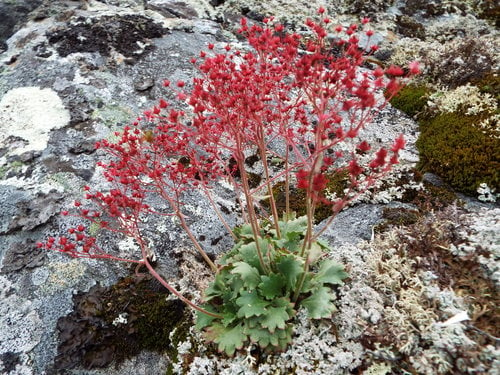
Astilbe rivularis
Buch.-Ham. ex D. Don
Pdhah
iNaturalist· cc-by-nc-sa
(c) Phuentsho, some rights reserved (CC BY-NC-SA), uploaded by Phuentsho
iNaturalist· cc-by
(c) Daniel Cahen, some rights reserved (CC BY)
Description
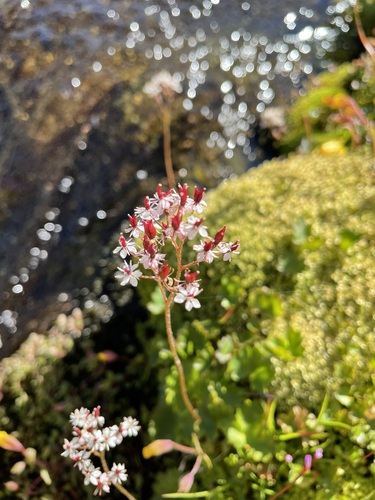
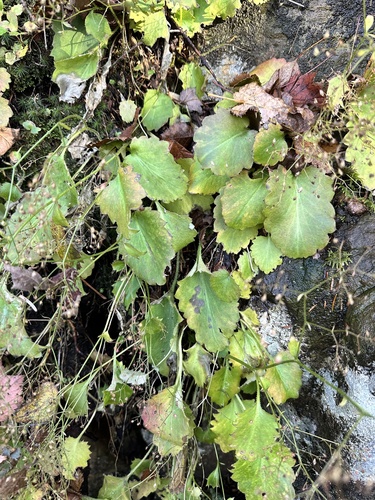
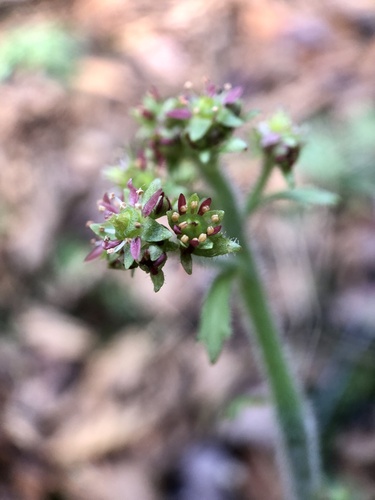
A herb. It grows 1-1.5 m tall. It forms a large clump of leaves. The leaves are deeply divided. The leaves have an uneven number of leaflets with a leaflet at the end. There are 3-5 leaflets and they are 3-8 cm long. The flowering stalks are 2 m long and curve over. The flowers are small and greenish-white. The seed heads are brown.
Edible Uses
The leaves are eaten raw and can be brewed as tea.
Traditional Uses
The leaves are eaten raw.
This uses section is brief — help expand it
Distribution
It is a subtropical plant. In Pakistan it grows between 1,300-2,300 m altitude. In Yunnan.
Where It Grows
Asia, Bhutan, China, Himalayas, India, Indochina, Indonesia, Laos, Myanmar, Nepal, Northeastern India, Pakistan, SE Asia, Sikkim, Slovenia, Thailand, Tibet, Vietnam,
Notes
There are about 12 Astilbe species. They are temperate plants.
Also Known As
Budho okhati, Buro-okhati, Potočna vrtna kresnica
References (6)
- Flora of China @ efloras.org Volume 8
- Mukhia, P.K., et al, 2013, Wild plants as Non Wood Forest Products used by the rural community of Dagana, a southern foothill district of Bhutan, SAARC Journal, 27 pages
- Prodr. fl. nepal. 211. 1825
- Rao, R.R. & Neogi, B., 1980, Observation on the Ethnobotany of the Khasi and Garo tribes in Meghalaya (India). J. Econ. Tax. Bot. Vol. 1 pp 157-162
- Singh, V. B., et al, (Ed.) Horticulture for Sustainable Income and Environmental Protection. Vol. 1 p 214
Show all 6 references Hide references
- Slocum, P.D. & Robinson, P., 1999, Water Gardening. Water Lilies and Lotuses. Timber Press. p 110