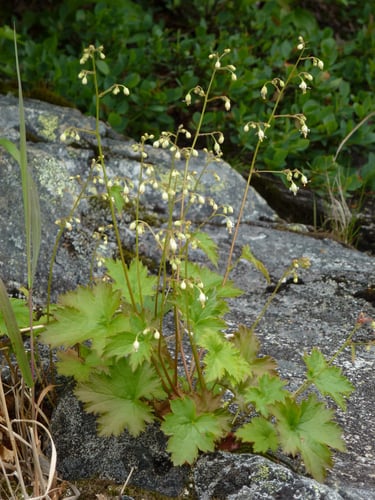
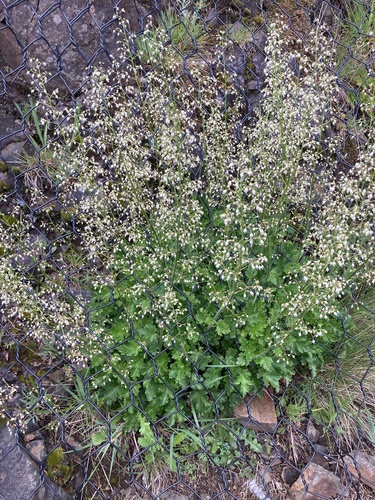
Astilbe thunbergii
(Siebold. & Zucc.) Miq.
iNaturalist· cc-by-nc
(c) Keita Watanabe, some rights reserved (CC BY-NC), uploaded by Keita Watanabe
iNaturalist· cc-by-nc
(c) Keita Watanabe, some rights reserved (CC BY-NC)
Summary
Source: WikipediaAstilbe thunbergii is a species of flowering plant in the genus Astilbe, native to Japan. Its hybrid cultivar 'Straussenfeder' has gained the Royal Horticultural Society's Award of Garden Merit.
Description
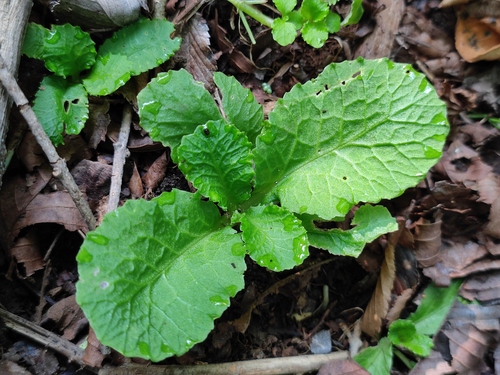
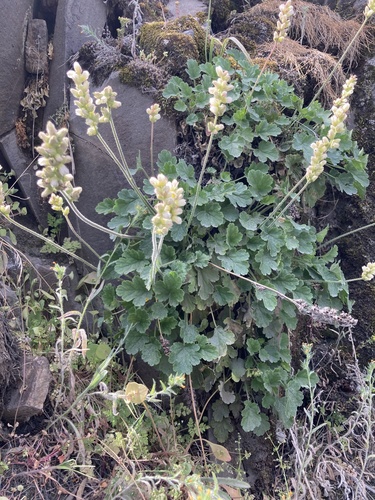
A small herb. It grows 50-60 cm high. It spreads 30-50 cm wide. The leaves have leaflets along the stalk. These have sharp teeth around the edge. The leaflets are broad and greyish-green or bronze. The flowers are small but in dense masses. They are white when they open but turn pink.
Edible Uses
Edible Parts: Leaves Edible Uses: Tea Young leaves - cooked. The leaves are a tea substitute.
Medicinal Uses
None known
Distribution
It suits hardiness zones 7-9.
Where It Grows
Asia, Australia, Japan,
Propagation
Seed - we have no details for this species but suggest sowing the seed in a greenhouse in early spring. Only just cover the seed. When large enough to handle, prick the seedlings out into individual pots and grow them on in a cold frame until they are at least 20cm tall. Plant them out in the summer, or late in the following autumn. Division in spring. This is best done every 3 - 4 years in order to maintain the vigour of the plant. Larger divisions can be planted straight into their permanent positions whist smaller clumps are best potted up and kept in a cold frame until they are growing away well.
Other Uses
Landscape Uses: Border, Container, Massing, Woodland garden. Special Features: Attractive foliage. Dynamic accumulator. Special Uses Dynamic accumulator
Notes
There are about 12 Astilbe species. They are temperate plants.
References (3)
- Ann. Mus. Bot. Lugduno-Batavum 3:96. 1867
- Cundall, P., (ed.), 2004, Gardening Australia: flora: the gardener's bible. ABC Books. p 202
- Plants for a Future database, The Field, Penpol, Lostwithiel, Cornwall, PL22 0NG, UK. http://www.scs.leeds.ac.uk/pfaf/