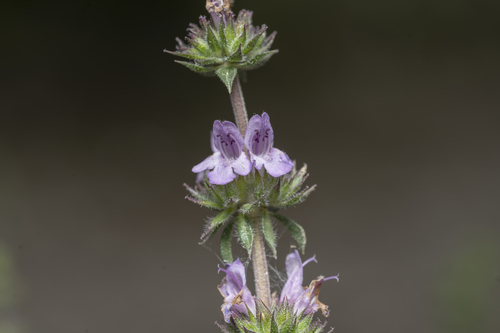
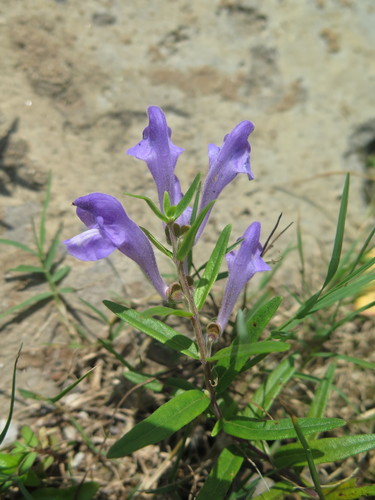
Satureja hortensis
Linn.
Summer Savoury
iNaturalist· cc-by-nc
(c) Thomas Bütikofer, some rights reserved (CC BY-NC), uploaded by Thomas Bütikofer
iNaturalist· cc-by
(c) Виктор, some rights reserved (CC BY)
iNaturalist· cc-by-nc
(c) lukasdiehl, some rights reserved (CC BY-NC)
Summary
Source: WikipediaSatureja hortensis is an annual herb reaching 0.3 m (1 ft) tall with a spread of 0.4 m (1 ft 4 in). Hardy to UK zone 6, it flowers from July to August with seeds ripening from August to September. The hermaphroditic, self-fertile plant attracts wildlife and is insect-pollinated. It thrives in light sandy and medium loamy well-drained soils with mildly acidic to very alkaline pH. The plant requires full sun, tolerates both dry and moist conditions, and can withstand drought.
Description
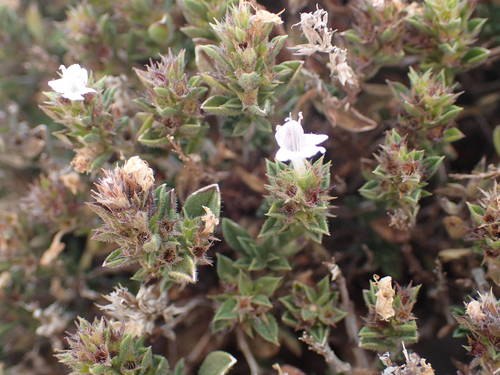
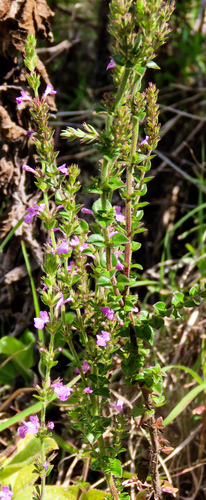
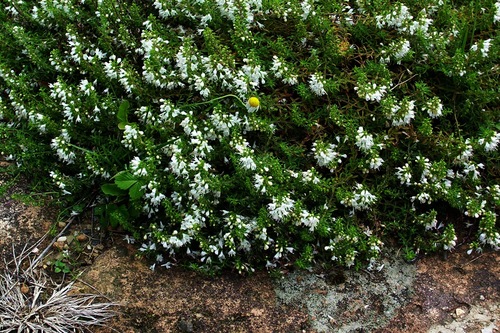
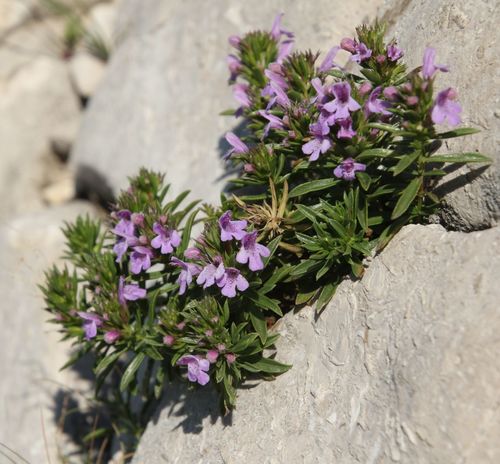
An annual herb which grows from seed each year. It grows to 30 cm high and spreads to 25 cm wide. It has small narrow greyish green leaves. They are about 1.3 cm long. These turn slightly purple during summer and autumn. The leaves are attached directly to a pinkish stem. The flowers are small and white. They are in spikes in rings.
Edible Uses
Leaves are used raw or cooked. They have an aromatic, slightly peppery flavour and are used mainly to flavour cooked foods — particularly harder-to-digest foods such as beans, where they both complement the flavour and reduce flatulence. They also serve as a garnish for salads and can be used fresh or dried. The leaves are best harvested just before the plant comes into flower. The flowering shoots contain about 0.5% essential oil, which is used as a food flavouring. A herb tea with a tangy, marjoram-like flavour is made from the leaves.
Traditional Uses
The leaves are used as flavouring. They have a hot spicy flavour. They are used fresh or dried. They are used with tomatoes, beans, fish and salads. They are also used in cakes, puddings and sausages. Because it reduces flatulence it is eaten with beans and cucumbers. They can be used in cooking to reduce the smell of cabbage and turnips. The leaves can be harvested before flowering and used for tea.
Medicinal Uses
Summer savory is most commonly used as a culinary herb, but it also has notable medicinal benefits, particularly for the digestive system. Its action is milder than that of the closely related winter savory (S. montana). The whole herb, especially the flowering shoots, is antiseptic, aromatic, carminative, digestive, expectorant, and stomachic. Internally it is regarded as a sovereign remedy for colic and flatulence, and is also used to treat nausea, diarrhoea, bronchial congestion, sore throat, and menstrual disorders. It should not be prescribed for pregnant women. Rubbing a sprig onto bee or wasp stings brings instant relief. The plant is harvested in summer when in flower and may be used fresh or dried. The essential oil is used as an ingredient in scalp lotions for cases of incipient baldness, and an ointment made from the plant is applied externally to relieve arthritic joints.
Distribution
It suits Mediterranean regions. They do best in warm climates but are not suited to the tropics. They do best when grown in full sunlight. They are best in well drained alkaline soils. It does well in a fertile soil. In Hobart Botanical gardens. It suits hardiness zones 5-9.
Where It Grows
Afghanistan, Albania, Asia, Australia, Balkans, Britain, Caucasus, Chile, Cook Islands, Cuba, Europe, France, Georgia, Germany, Greece, Hawaii, India, Indonesia, Italy, Macedonia, Mediterranean*, North America, Pakistan, Philippines, SE Asia, Serbia, Slovenia, South America, Spain, Sri Lanka, Switzerland, Tasmania, Turkey, Türkiye, USA, West Indies, Yugoslavia,
Cultivation
A very easily grown plant when given suitable conditions, it prefers a rich light soil with plenty of moisture and succeeds in a hot dry sunny position. It prefers growing in an alkaline soil but is not too fussy. It is very intolerant of soils that remain damp and dislikes shade. Summer savory is often grown as a culinary herb. It is a good companion plant in the garden, where it helps to repel insect pests and grows especially well with onions and beans. A fast-growing plant, it can be harvested within 2 months of sowing the seed. If cut back as the flower buds appear, it will produce a fresh flush of leaves. Summer savory seeds can prevent the germination of nearby seeds. The leaves have an aromatic fragrance. The flowers are very attractive to bees. Members of this genus are rarely if ever troubled by browsing deer.
Propagation
Sow seed in April directly in situ, covering only just barely. Germination takes about 2 weeks. The plant strongly resents root disturbance and should not be transplanted. In areas with mild winters, an autumn sowing will provide an earlier supply of leaves.
Other Uses
The essential oil from the flowering shoots is used extensively in perfumery, contributing a distinctive quality to fragrances. When grown near beans, the plant repels insect pests.
Production
The leaves can be dried and stored.
Other Information
It is a commercially cultivated vegetable. It is widely used in cooking.
Notes
There are about 30 Satureja species.
Nutrition
| Part | Moisture | kJ | kcal | Protein | Vit A | Vit C | Iron | Zinc |
|---|---|---|---|---|---|---|---|---|
| Leaves - dried | 9 | 1138 | 272 | 6.7 | 513 | 50 | 37.9 | 4.3 |
Synonyms
Also Known As
Ajedrea, Anih, Anik, Anuh, Bohnenkraut, Bonenkruid, Chabyor, Cibriska, Dag kekigi, Kpndari, Ksiang po ho, Kyldel, Nadgh, Santoreggia, Sarriette, Vrtni šetraj, Zambur
References (40)
- Ambasta S.P. (Ed.), 2000, The Useful Plants of India. CSIR India. p 552
- Blamey, M and Grey-Wilson, C., 2005, Wild flowers of the Mediterranean. A & C Black London. p 396
- Bodkin, F., 1991, Encyclopedia Botanica. Cornstalk publishing, p 911
- Brickell, C. (Ed.), 1999, The Royal Horticultural Society A-Z Encyclopedia of Garden Plants. Convent Garden Books. p 936
- Burnie, G & Fenton-Smith, J., 1999, A Grower's Guide to Herbs. Murdoch Books. p 64
Show all 40 references Hide references
- Bussman, R. W., et al, 2016, A comparative ethnobotany of Khevsureti, Samtskhe-Javakheti, Tusheti, Svaneti, and Racha-Lechkhumi, Republic of Georgia (Sakartvelo), Caucasus. Journal of Ethnobiology and Ethnomedicine (2016) 12:4
- Bussman, R. W., et al, 2021, Unity in diversity—food plants and fungi of Sakartvelo (Republic of Georgia), Caucasus. Journal of Ethnobiology and Ethnomedicine (2021) 17:72 p 9
- Cheifetz, A., (ed), 1999, 500 popular vegetables, herbs, fruits and nuts for Australian Gardeners. Random House p 158
- Cundall, P., (ed.), 2004, Gardening Australia: flora: the gardener's bible. ABC Books. p 1316
- Dogan, A. & Tuzlaci, E., 2015, Wild Edible Plants of Pertek (Tunceli-Turkey). Marmara Pharmaceutical Journal 19: 126-135
- Ertug, F, Yenen Bitkiler. Resimli Türkiye Florası -I- Flora of Turkey - Ethnobotany supplement
- Esperanca, M. J., 1988. Surviving in the wild. A glance at the wild plants and their uses. Vol. 2. p 205
- Everest, A. & Ozturk, E., 2005, Focusing on the ethnobotanical uses of plants in Mersin and Adana provinces (Turkey). Journal of Ethnobiology and Ethnomedicine 1:6
- Facciola, S., 1998, Cornucopia 2: a Source Book of Edible Plants. Kampong Publications, p 136
- Flora of Pakistan. www.eFloras.org
- Hedrick, U.P., 1919, (Ed.), Sturtevant's edible plants of the world. p 595
- Hemphill, I, 2002, Spice Notes. Macmillan. p 360
- Hibbert, M., 2002, The Aussie Plant Finder 2002, Florilegium. p 287
- http://www.botanic-gardens-ljubljana.com/en/plants
- Kays, S. J., and Dias, J. C. S., 1995, Common Names of Commercially Cultivated Vegetables of the World in 15 languages. Economic Botany, Vol. 49, No. 2, pp. 115-152
- Kermath, B. M., et al, 2014, Food Plants in the Americas: A survey of the domesticated, cultivated and wild plants used for Human food in North, Central and South America and the Caribbean. On line draft. p 786
- Kiple, K.F. & Ornelas, K.C., (eds), 2000, The Cambridge World History of Food. CUP p 434, 1849
- Kybal, J., 1980, Herbs and Spices, A Hamlyn Colour Guide, Hamlyn Sydney p 182
- Lawton, B.P., 2002, Mints. A Family of Herbs and Ornamentals. Timber Press, Portland, Oregon. p 193
- Martin, F.W. & Ruberte, R.M., 1979, Edible Leaves of the Tropics. Antillian College Press, Mayaguez, Puerto Rico. p 105
- Michael, P., 2007, Edible Wild Plants and Herbs. Grub Street. London. p 205
- Miguel, E., et al, 1989, A checklist of the cultivated plants of Cuba. Kulturpflanze 37. 1989, 211-357
- Peter, K. V. (Ed.), 2004, Handbook of Herbs and Spices Vol. 2 Woodhead Publishing and CRC Press.
- Plants for a Future database, The Field, Penpol, Lostwithiel, Cornwall, PL22 0NG, UK. http://www.scs.leeds.ac.uk/pfaf/
- Polat, R., et al, 2015, Survey of wild food plants for human consumption in Elazig (Turkey). Indian Journal of Traditional Knowledge. Vol. 1(1): 69-75
- Rexhepi, B., et al, 2018, Ethnobotanical Study of Wild Edible Plants in Pelagonia Region (Southwestern Macedonia) International Journal of Advances in Science Engineering and Technology, Vol. 6 (1) p 57
- Sansanelli, S., et al, 2014, Wild food plants traditionall consumed in the area of Bologna (Emilia Romagna region, Italy). Journal of Ethnobiology and Ethnomedicine 10:69
- Sp. pl. 2:568. 1753
- Staples, G.W. and Herbst, D.R., 2005, A tropical Garden Flora. Bishop Museum Press, Honolulu, Hawaii. p 365
- Tronickova, E. & Krejcova, Z., 1987, Ortaggi, Instituto Geografico de Agostini, Cecoslovacchia. p 198
- Tyagi, R. K., et al, 2004, Conservation of Spices Germplasm in India. Indian J. Plant Genet. Resour. 17(3): 163-174
- van Wyk, B., 2005, Food Plants of the World. An illustrated guide. Timber press. p 338
- Wiersema, J. H. & Leon, B., 2013, World Economic Plants. A Standard Reference CRC Press. 2nd Ed. p 616
- World Checklist of Useful Plant Species 2020. Royal Botanic Gardens, Kew
- Zeven, A. C. & de West, J. M. J., 1982, Dictionary of cultivated plants and their regions of diversity. Wageningen. p 113